#Textiles & Apparel / Garment
Shaping new horizons for the textile sector: 18th Textile ETP Conference 2024
Setting the Stage for Sustainable Innovation
The first day of the Textile ETP Annual Conference began with an engaging session moderated by Jan Mahy from Saxion University of Applied Sciences. Opening the conference, President Marina Crnoja-Cosic outlined the 2024 Textile ETP agenda, emphasizing the launch of the EU Textile Research Partnership and the aim to extend this initiative through 2028. Amaryllis Verhoeven from DG GROW, European Commission, then discussed strategies to bolster the textile industry's competitiveness, highlighting sustainable practices, innovative business models, and the importance of implementing stable trade regulations. Verhoeven also introduced tools such as the Digital Product Passport to enhance transparency within the supply chain. Dirk Vantyghem from Euratex reviewed the European Commission's key actions to reduce dependence on non-EU resources and discussed upcoming regulations impacting the sector. He emphasized the need for a high-quality regulatory framework, a comprehensive EU strategy, stimulating sustainable fashion demand, and sustaining industry transitions through innovation and digitalization. Secretary General Lutz Walter concluded the session by presenting the vision for the industry's sustainable future. He outlined three pivotal challenges: transitioning to biobased materials, electrifying production using renewable energy, and digitizing supply chains. Walter also proposed a vision for the EU Textile Partnership, detailing strategies to leverage €60 million in seed investment and how to increase it to €6 billion by 2030, advancing from research to industrial competitiveness.
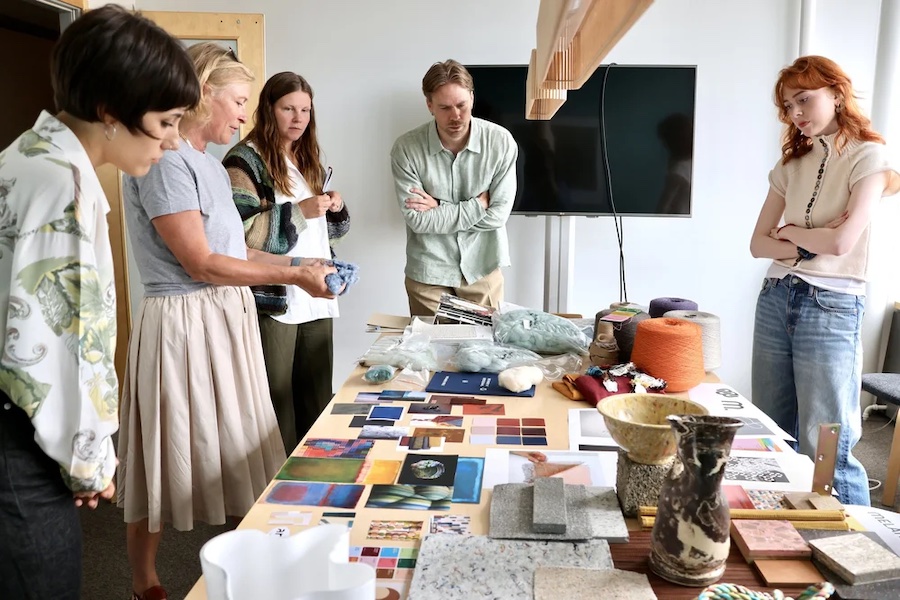
Following the plenary session, participants engaged in three breakout sessions aimed at shaping the partnership's Strategic Agenda, pivotal in defining themes for textile calls under Horizon Europe. Led by industry experts, the sessions gathered input to prioritize and assess technology readiness. Each session focused on a key R&I theme: Sustainable Materials and Clean Processes, Digital Supply Chain and New Business Models, and Advanced Manufacturing and High-Performance Textiles, moderated respectively by Lisa Bour from RI.SE and Guy Buyle from Centexbel, Carla Fité from UPC and Dieter Stellmach from DITF, and Jan Jordan from ITA Aachen.
In a final panel discussion, moderated by Aalto University's Maarit Salolainen, Braz Costa discussed the transition of research to industry, highlighting CITEVE's role and the services it offers in R&D. He emphasized key principles to accelerate technology adoption in the textile sector: blending scientific and business mindsets, anticipating business demand, inspiring, prototyping, demonstrating, facilitating knowledge flow, and influencing public policies. Sofia Ferrari from D-House & Pattern Group discussed innovative technologies and materials, highlighting their three-phase model (exploration, implementation, dissemination) facilitated by their innovation hub. Dalila Poggi from Pangaia elaborated on the company's transition from research to market, emphasizing Pangaia's certification as a B Corp and their experience in accelerating start-ups in materials science. Poggi also presented their portfolio of new technologies and trademarks.
At the end of the day, the Textile ETP team led an interactive General Assembly with members, providing insights into Textile ETP's progress and the services it offers, while introducing upcoming activities. Members were invited to provide feedback on service quality and share thoughts on new initiatives. The first day concluded with participants celebrating the 20th anniversary of Textile ETP.
Fostering Innovation and Collaboration
The second day kicked off with a panel moderated by Paolo Canonico from SAATI. Christine Goulay from Sustainabelle emphasized the importance of fostering relationships with venture capital (VC) and corporate venture capital (CVC) entities, highlighting increasing investments in the textile sector. Goulay outlined the due diligence process, stressing the critical role of sustainability and the innovator team in attracting CVC interest, leading to successful partnerships and innovation adoption. Maria Arroyo highlighted Fashion4Good's innovative platform for textile start-ups, operating on two core principles: an Innovation Platform and serving as a Convener for Change. The platform's approach revolves around scouting and screening, validating promising ideas, and scaling and adopting solutions. Annelie Radhall from Boras INK shared insights on their systematic approach to idea validation, emphasizing sustainable growth and impact. Alexandra de Raeve from HOGENT provided an overview of the CITE Project, which bridges academia and startups. By fostering collaboration among CITE partners and articulating a clear vision, the project aims to create a dynamic and agile ecosystem in higher education institutions to boost textile circularity and the circular economy in innovation and entrepreneurial courses.
Following these discussions, eight start-ups showcased pioneering innovations and shared insights into their journey towards scalability and the challenges they face. In the Circularity & Renewable Materials theme, Fabiana Fantinel of CO2Bioclean presented technology transforming industrial emissions into biopolymers, addressing textile waste. Raouf Medimagh from Recyc’Elit discussed recycling polyester-based fabrics, while Brian Jester of Synovance highlighted bio-produced dyes. Bruno Marengo of Fairbrics showcased a process using CO2 waste to create synthetic fabrics. In Textile Digitalisation and Sustainable Sourcing, Christian Lott of ColorDigital introduced a phygital ecosystem (physical+digital) simplifying supply chains, while Simon Johnson of Pattern Project unveiled an AI-driven solution for production planning. In Smart & High-Performance Textiles, Julien Payen of Lattice Medical presented innovative implants for reconstructive surgery, and Sam Issa from Nano Textile Solutions showcased nanotechnology-based solutions for a sustainable textile industry. The breakout sessions were respectively moderated by Juliette Jaupitre from Techtera and Textile ETP's Judith Bosch.
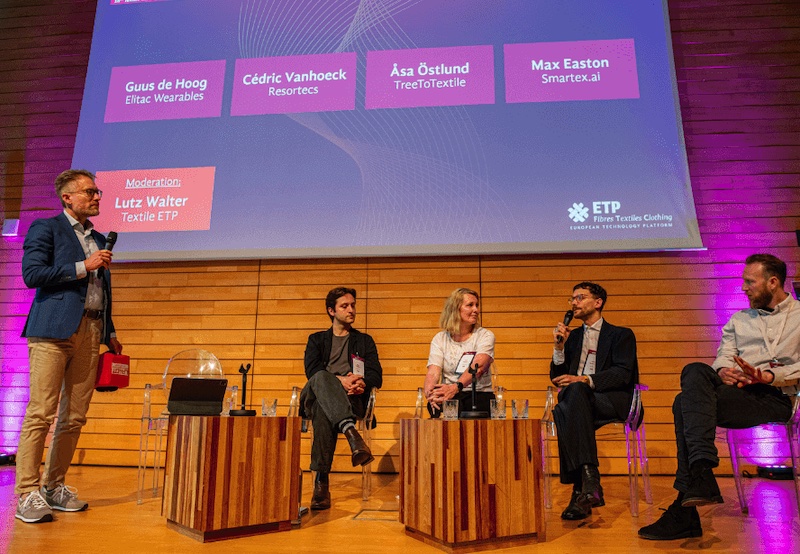
The final panel of the conference, moderated by Lutz Walter, featured presentations from four scale-ups. Guus de Hoog from Elitac Wearables showcased expertise in the smart textiles sector with innovative products. Cedric Vanhoeck from Resortecs delved into the recycling sector, discussing automated disassembly and sorting processes. Åsa Östlund from TreeToTextile elaborated on their cellulose-based fiber as a sustainable alternative to cotton and viscose. Max Easton from Smartex.ai explored the importance of quality control in the textile industry, highlighting challenges of manual inspection and the need for digitalization and traceability throughout the supply chain. Easton outlined strategies for effective quality control, emphasizing early detection of issues, preventive measures over reactive approaches, and the integration of AI-enabled real-time inspection technologies.
Across the two days of the 18th Textile ETP Annual Conference, attendees engaged in discussions, sharing knowledge and experiences while emphasizing the industry's commitment to sustainability, innovation, and collaboration. From launching EU funding programs to outlining strategic agendas and showcasing pioneering innovations, the conference provided a comprehensive overview of the challenges and opportunities facing the textile industry, setting the stage for a dynamic and vibrant future for the sector.