#INDEX 2026
“Needle punching technology is more universal and sustainable than ever!”
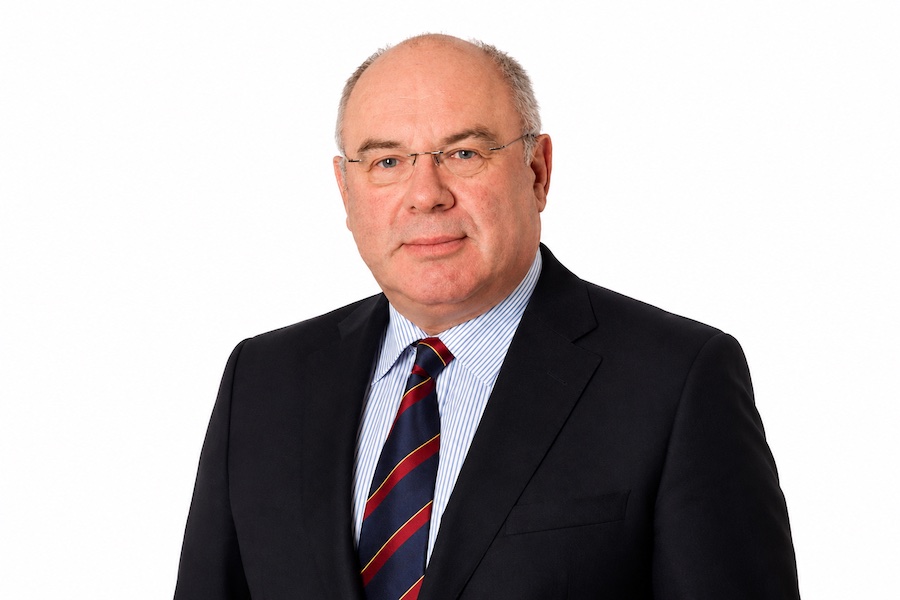
Interview
Johann Philipp Dilo, Managing Director, DILO GROUP
by Oliver Schmidt, Editor in Chief, TexData International
Needle punching technology was long regarded as an older or slower technology. Why do you still see it today at the forefront of modern nonwovens consolidation?
In earlier years, needle punching technology and needle looms were sometimes viewed rather critically, especially regarding production speed. The up-and-down kinematics were often considered outdated. In reality, however, this technology still represents one of the leading consolidation technologies for staple fibers and continuous filament webs.
One of the major advantages of needle punching is its enormous versatility. Virtually all types of fibers can be needle punched – from short staple fibers to endless filaments. There are also very few limitations regarding basis weights: applications range from lightweight materials of 30 or 40 g/m² up to several kilograms per square meter. This opens up an extremely broad spectrum of products and applications.
Other consolidation technologies are much more limited in comparison. Hydroentanglement, for example, is typically focused on lower basis weights, while thermobonding often performs best in very lightweight applications such as hygiene products. Needle punching, on the other hand, is far more universal.
Another important aspect is energy efficiency. Compared with other technologies, needle punching requires significantly less energy and does not require water. Against the backdrop of CO₂ reduction, energy consumption and growing concerns about water scarcity, this becomes increasingly important.
At the same time, we are continuing to develop the technology further for lower basis weight applications, particularly in hygiene, medical and technical products. We see considerable future potential in these areas.
Energy consumption, CO₂ footprint and water scarcity are increasingly becoming key issues for the industry. What advantages does needle punching offer compared with other consolidation technologies?
Needle punching technology offers major advantages, particularly regarding energy consumption. Compared with hydroentanglement, we require only around 20 to 30 percent of the energy per kilogram of fiber material. This not only concerns the electrical drive power of the line itself, but also the entire downstream process.
With hydroentanglement systems, the water must subsequently be removed and the web dried again. For standard production lines, this alone requires enormous amounts of heating energy, often several megawatts of gas heating capacity. This entire process step is eliminated in needle punching. As a result, the overall energy balance is extremely favorable, leading to a significantly lower CO₂ footprint.
Another increasingly important factor is water consumption. Hydroentanglement systems require large quantities of process water as well as additional chemicals for water treatment and filtration. Even traditionally water-rich regions are now facing periods of water scarcity.
Needle punching, by contrast, is a purely mechanical process and operates entirely without water. This makes the technology highly attractive not only from an energy perspective, but also in terms of sustainability and resource conservation.
You are working intensively on establishing needle punched products in hygiene and wipes applications. Where does this development stand today, and what challenges had to be overcome?
We see significant potential for needle punching technology particularly in lightweight applications, especially in hygiene, medical and technical products. We have been working on this topic for quite some time. However, hygiene materials and wipes involve extremely demanding requirements regarding cost efficiency, certification, safety and process stability.
At the same time, the market has seen massive investments in hydroentanglement lines in recent years, driven in part by the pandemic and the strong increase in demand for hygiene products. As a result, there are now certain overcapacities in the market. Many companies have already invested heavily in these technologies and are understandably cautious about exploring alternative solutions.
Today, it is therefore no longer sufficient to offer only a single machine solution. Customers expect complete industrial solutions – from web formation all the way to converting and packaging. This is precisely why our cooperation with KANSAN in Turkey has been so important. KANSAN is one of the market leaders in high-speed converting systems for hygiene materials.
Together, we were able to demonstrate that needle punched wipes can be cut, folded and packaged at high speeds without any problems. This allowed us to eliminate the remaining doubts regarding industrial feasibility.
Meanwhile, some major players in the hygiene sector have already started introducing needle punched hygiene products into the market for testing purposes. This demonstrates that the technology is not only technically viable, but also offers advantages regarding haptics, comfort and product performance. The development will certainly not happen overnight, but we see strong long-term potential.
With the new MODILOUS system, you are presenting a solution for modernizing needle board maintenance. What is behind this concept and what concrete benefits does it offer customers?
MODILOUS is a modular needle carrier concept designed for cleaning and replacing needles in needle boards. The name stands for modernization or modification while also emphasizing the universal nature of the system. The goal was to modernize an area that is still heavily dependent on manual labor.
Today, needles are often still inserted and removed manually one by one – a highly repetitive and physically demanding task. It is time-consuming, labor-intensive and increasingly problematic regarding labor availability and employee retention.
With MODILOUS, we move this process outside the machine and enable automatic or semi-automatic loading of the plastic carriers. This allows cleaning and needle replacement to be carried out much more efficiently while significantly reducing physical strain on employees.
Another major advantage is the system’s full compatibility with existing installations. MODILOUS can be integrated into existing needle boards or retrofitted. Even mixed configurations combining conventional and modular segments are possible. Existing boards can also be converted cost-effectively.
We additionally offer customers the opportunity to test the system in practical production conditions. This allows them to gain experience with a relatively low initial investment and evaluate the benefits directly in their own operations.
Interestingly, the issue is not limited to high-wage countries. Even customers in countries such as India tell us that labor cost itself is not necessarily the biggest challenge. The greater issue is finding people willing to perform such repetitive tasks day after day. This is exactly where MODILOUS provides a solution.
With Superpunch and Powerpunch, we are pursuing different technological approaches for further advancing needle punching technology. Both systems are designed to further increase machine performance for demanding applications.
Superpunch is based on superimposed kinematics, meaning a combination of two motion or drive systems. This allows us to achieve larger horizontal feed movements of up to around 20 mm. Especially for high-speed needling and lightweight nonwovens, this creates additional possibilities regarding productivity and process optimization.
Powerpunch, on the other hand, was developed for applications involving particularly high needle forces – for example heavy basis weights or reinforced materials combined with high production speeds. The main objective here is to significantly reduce machine vibration levels and improve overall system stability.
In needle punching machines, natural frequencies and resonances play a major role. If these areas are not properly controlled, vibration amplification can occur and negatively affect process stability. With the Powerpunch concept, we can control these vibrations much more effectively and shift them into less critical operating ranges.
As a result, the usable operating window for different feed rates and stroke frequencies becomes considerably larger. This provides more flexibility in process design while simultaneously increasing machine reliability.
Another important advantage is that such systems can also be integrated into or retrofitted onto existing lines. This is especially attractive for customers looking to develop new applications or expand their current production capabilities.
In addition to traditional applications, new areas such as decorative acoustic panels and functionalized nonwovens are emerging. What role do technologies such as the 3D-Lofter play here?
We are currently seeing a significant expansion of application areas for needle punched nonwovens – both in lightweight and heavyweight products. One interesting example is acoustic panels for interior construction or automotive applications. These are often relatively heavy needle punched structures with basis weights of several kilograms per square meter.
At the same time, demands regarding design and functionality are increasing. Acoustic panels today are expected not only to absorb sound, but also to offer attractive visual appearance. This is where our 3D-Lofter technology comes into play.
With this system, we can design surfaces very precisely and apply differently colored fibers in targeted patterns. This creates decorative effects, gradients and designs – what we refer to as “Sliding Colors.” In principle, even logos or customized graphics can be integrated.
Technologically, the system is based on numerous individual fiber feeding positions distributed across the machine width. This enables highly flexible combinations of different fibers and colors. Besides decorative effects, the technology also opens up functional possibilities, such as local reinforcement or targeted load absorption.
As a result, needle punching is increasingly evolving from a pure consolidation technology into a platform for functional and design-oriented nonwoven solutions. We see substantial future potential in this development.
Global investment restraint is creating major challenges for machinery manufacturers. How do you currently assess the market situation, and why does innovation remain such a central part of your strategy?
In many ways, the current situation resembles previous crisis periods such as the financial crisis in 2009 or the pandemic in 2020. For more than two years now, we have seen significant investment hesitation worldwide in the machinery sector. This is largely driven by geopolitical uncertainties related to the war in Ukraine and the unstable situation in the Middle East.
Naturally, we had to adapt to these conditions. At the same time, however, we have significantly expanded our modernization and service business in recent years. This includes retrofits, spare parts, service, consulting and product development. Today, this area represents an important and economically stable pillar of our business and provides a solid base workload.
This gives us the ability to continue investing consistently in innovation even during weaker market phases. In our view, this combination of a stable service business and continuous technological development is essential.
Of course, innovations today also need to be developed economically. At the same time, engineering and development capabilities have changed dramatically. Simulations, digital calculations and rapid prototyping now allow many concepts to be tested far more quickly and cost-effectively than in the past.
Components, for example, can now be 3D printed overnight and tested directly the next morning. This provides very rapid insights into geometry, kinematics and system behavior without immediately requiring expensive prototype machinery or extensive testing setups.
This significantly accelerates development processes and makes innovation possible even in economically difficult times.
Mr Dilo, thank you very much for the interesting insights and the interview.