[pageLogInLogOut]

#EU Textile Strategy

Textile ETP at the European Commission's event on the Textiles Ecosystem Transition Pathway
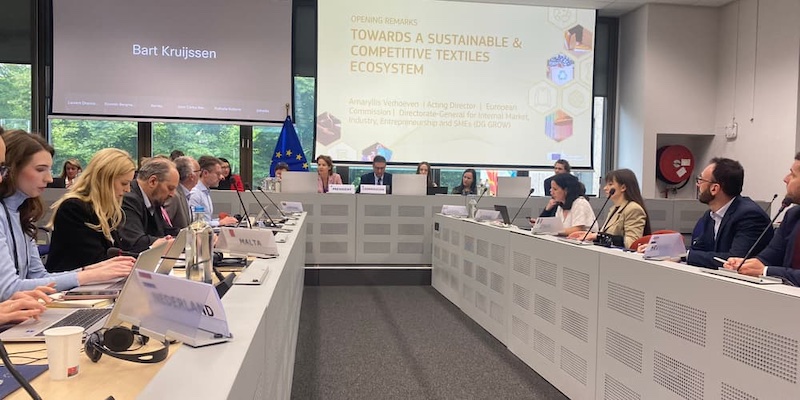
On 4 June 2024, the Textile ETP Secretary General Lutz Walter participated in the European Commission’s Directorate-General for Internal Market, Industry, Entrepreneurship & SMEs (DG GROW) stakeholder event for the Textiles Ecosystem Transition Pathway.
© 2024 Textile ETP
© 2024 Textile ETP


The event updated participants on essential regulatory initiatives under the EU Strategy for Sustainable and Circular Textiles, the EU Pact for Skills, and the implementation of the Transition Pathway for the Textiles Ecosystem. Discussions also covered the European Partnership on Textiles under Horizon Europe, emphasizing the need for industry resilience and competitiveness.

ETP Secretary General Lutz Walter introduced the Textiles of the Future Partnership under Horizon Europe, highlighting its strategic importance for more research and innovation in the sector. This initiative aims to support the textile industry's green and digital transformation while reinforcing Europe's leadership in textile research, technology development, and higher education.

Dirk Vantyghem, Director General of EURATEX, praised DG GROW’s efforts: "it was great to see so many stakeholders committed to implementing the Textiles Transition Pathway. EURATEX will continue its focus on ensuring quality legislation and helping our companies prepare for that transition."

This event also highlights the collaborative effort within the European textile sector to achieve sustainable growth and technological advancement. With the support from initiatives such as the Transition Pathway and Horizon Europe, stakeholders are working together to build a robust and ready for the future textile industry in Europe.

Published in June 2023, the Textiles Ecosystem Transition Pathway outlines 50 actions critical for the EU textiles ecosystem's green and digital transition, enhancing its resilience and competitiveness. For more information about the Transition Pathway for the Textiles Ecosystem, please visit here:

https://op.europa.eu/en/publication-detail/-/publication/6392f189-0416-11ee-87ec-01aa75ed71a1


More News from Textile ETP

#Research & Development

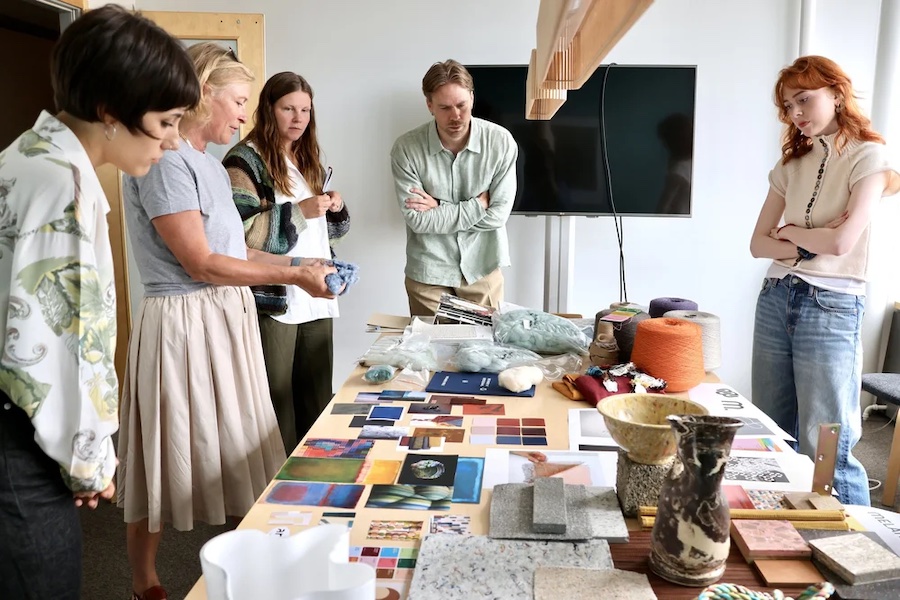
MELANGE starts with a co-creative design workshop at Aalto University to shape the visual identity of this new project transforming colouration in textiles

Over the next three years, MELANGE will lower the environmental impact of interior textile production by moving colour design to the beginning of the manufacturing process. This Horizon Europe project officially started on 1 August 2026, and will be publicly launched on 27 August 2026.

#Industry 4.0 / Digitalization

Textile ETP launches digital transformation strategy, calling for urgent collective action across the value chain

Textile ETP’s DigitX Innovation Hub published its strategic roadmap for the digital transformation of Europe's textile and apparel industry.

#Recycling / Circular Economy

From local actions to industrial innovations: SOLSTICE shares mid-project results

Since its launch in May 2024, the SOLSTICE project is accelerating the transition from linear models to circular regional ecosystems in the textile industry, focusing on four key territories: Grenoble-Alpes Métropole (France), Berlin (Germany), Prato (Italy), and Catalonia (Spain). By mid-project, SOLSTICE has already revealed both regional disparities and promising solutions to strengthen textile repair, reuse, and recycling infrastructure.

#Recycling / Circular Economy

Textile ETP wraps up T-REX's Policy Roundtable

The T-REX project’s policy roundtable in Brussels on November 12 was a pivotal gathering of experts and leaders committed to advancing Europe’s sustainability efforts. Concluding the event, Secretary General Lutz Walter reflected on the discussions and emphasized the core themes that resonated throughout the day.

More News on EU Textile Strategy

Latest News

#Raw Materials

Global cotton production projected to outpace consumption, but risks remain

Global cotton production is projected to reach 26.2 million tonnes in the 2026/27 season, marginally outpacing estimated consumption of 25.9 million tonnes. However, early-season production risks — including weather volatility and pest pressures — could narrow that buffer as the crop progresses, according to the September 2026 issue of Cotton This Month, published by the International Cotton Advisory Committee (ICAC).

#Europe

European textile industry calls for €10 handling fee on ultra-fast-fashion imports

The introduction of the €3 customs duty on low-value imports marks an important milestone in Europe’s efforts to address the challenges created by the rapid growth of ultra-fast-fashion imports. Together with the abolition of the €150 customs duty exemption, it demonstrates that policymakers are willing to act when market distortions become impossible to ignore. However, the European textile and clothing industry considers this a first step rather than the final destination.

#Research & Development

From smart jackets to laser technology: Mona Neubaur explores Textile Factory 7.0

As part of her summer tour, North Rhine-Westphalia’s Minister for Economic Affairs and Climate Action, Mona Neubaur, visited Textilfabrik 7.0 in Mönchengladbach to experience the project’s innovations first-hand. Under the motto “smart and clean”, the visit focused on innovative technologies and sustainable alternatives for textile production - from smart jackets to the decolourisation of textiles using fungal cultures.

#CINTE Techtextil China 2026

Cinte Techtextil China 2026 has opened today, bringing global innovations and resources to Shanghai

As Asia’s premier platform catering to the evolving needs in technical textiles and nonwovens, Cinte Techtextil China has opened today at the Shanghai New International Expo Centre, gathering over 300 exhibitors from 15 countries and regions. Across Halls W3 to W5, this edition will create chances for fast-growing sectors and emerging trends – such as Mobiltech, Medtech & Protech, Indutech and more. The curated zones, pavilions, and fringe programme are designed to better connect exhibitors with targeted buyers from across China, Asia-Pacific, and further afield. Meanwhile, the Association Village will gather international industry associations to foster even more global collaboration.

TOP