#INDEX 2026
“We clearly see that reliability, flexibility, service and total cost of ownership are becoming increasingly important again.”
Interview
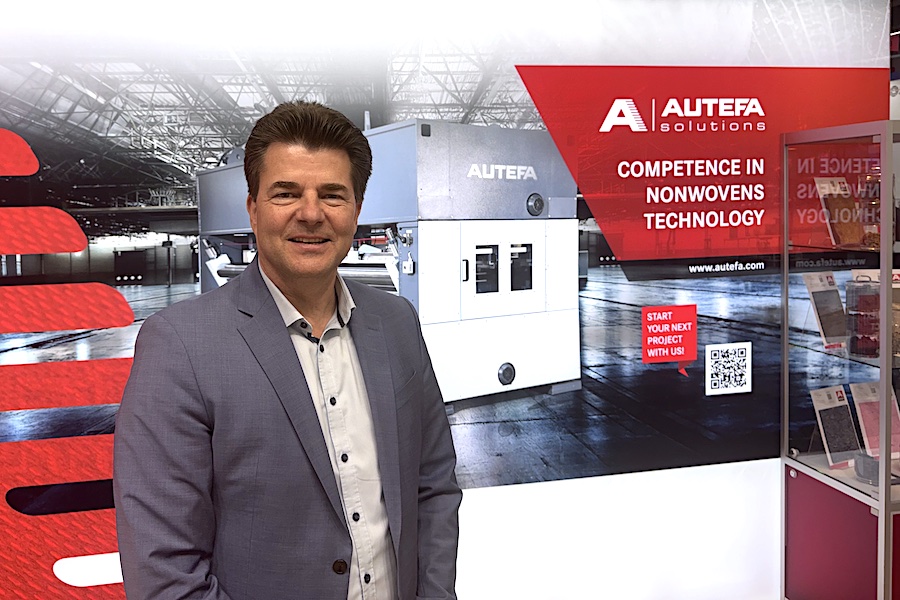
André Imhof, CEO AUTEFA Solutions Austria and Switzerland
by Oliver Schmidt, Editor in Chief, TexData International
The market situation for nonwovens and related machinery is currently considered difficult. How is business developing at AUTEFA Solutions?
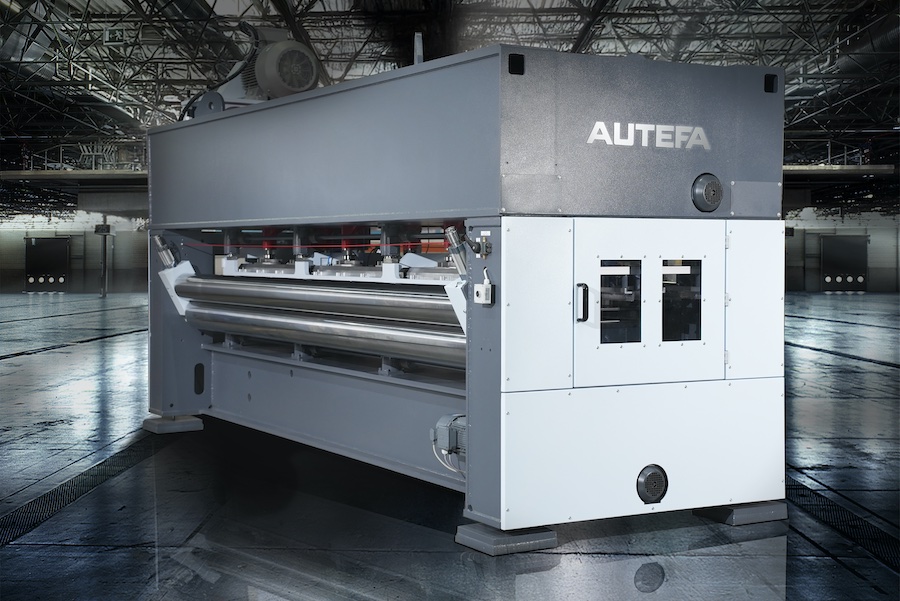
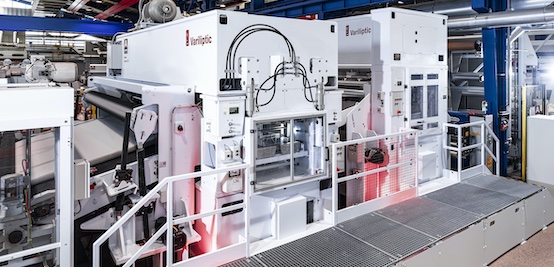
The markets are undoubtedly challenging. Nevertheless, our business is currently developing very positively. Our LineONE concept is performing very well and we have already delivered the first machines. Among other projects, we supplied the first twelve needling machines for a filter line to Zhejiang Heading Filter Material Co., Ltd., with the complete line currently being installed. If you were to visit our production facility in China right now, you would see an entire line with ten to twelve machines assembled one after another.
We are particularly pleased that we recently sold our first lines to Japan as well – to a very demanding customer who personally visited our production site in China and was convinced by the quality and performance of the equipment. This clearly shows that our concept works and is internationally competitive – even against very price-aggressive Chinese suppliers.
We have also recently sold a complete ADL line in India, along with several ovens to customers in China. Overall, we can see that the market is once again placing greater emphasis on quality, flexibility, reliability and performance – and not exclusively on the lowest price.
Which topics and requirements are currently most important for your customers?
Customers today are looking much more closely at the long-term value of an investment. Price naturally remains an important factor, but we clearly see that reliability, flexibility, service and total cost of ownership are becoming increasingly important again.
In some cases, customers have learned from experience that extremely low-cost solutions do not always deliver the expected performance in daily operation. This is where the real differences become visible. Our machines are manufactured in our Groups production facility in China, but customers also know that AUTEFA Solutions remains fully responsible for performance, quality and service throughout the entire lifecycle of the equipment. Ultimately, the discussion is increasingly shifting towards total cost of ownership. Many customers now recognize that a higher initial investment can be more economical in the long run – especially when machines operate reliably, remain flexible and consistently deliver stable quality.
What role do service, upgrades and energy assessments currently play for your business and for your customers?
These topics are becoming increasingly important at the moment. Many customers are investing more cautiously and are carefully evaluating how they can improve the efficiency of their existing equipment. As a result, we see significant potential in the service, upgrade and spare parts business.
We are also working intensively on these areas internally. Together with our international organizations, we recently conducted a global spare parts workshop focused on identifying additional opportunities and developing new service concepts. Existing installations still offer considerable potential for optimization and modernization.
At the same time, digital service solutions are becoming increasingly important. At INDEX, for example, we will present our new myAUTEFA & AUTEFA AI platform, which combines AI-supported service functions, machine documentation and spare parts management in one centralized customer portal.
The platform enables customers to access machine documentation via an AI-based assistant, identify spare parts more efficiently and generate structured service requests directly within the system. In addition, intelligent document search, centralized data management and integration with external systems help customers improve efficiency and simplify service processes.
With this approach, we are moving away from traditional PDF-based documentation towards a scalable digital service environment that supports customers throughout the entire machine lifecycle.
Another area developing particularly strongly at the moment is energy assessments. Hardly a week goes by without one of our teams visiting a customer site to carry out energy analyses. Based on these assessments, we then implement targeted upgrades to reduce energy consumption.
This topic directly addresses one of the industry’s current priorities. Depending on the application, energy costs account for a significant share of the overall value chain. If customers are able to significantly reduce their energy consumption, the impact on profitability can be substantial. This is exactly where our solutions come into play.
At the same time, many manufacturers are looking for new products and applications. How does AUTEFA Solutions support customers in this area?
Many customers are currently under considerable pressure to reposition themselves and enter new markets. Standard products alone are often no longer sufficient. As a result, we are seeing strong demand for new applications, specialized materials and customized solutions.
Today, it is no longer enough to simply supply individual machines. Customers increasingly expect support in developing complete processes and products. Internally, we sometimes describe it this way: it is no longer enough to supply only the “kitchen” – customers also want the “recipes”.
This is where our Nonwoven Competence Center plays a key role. Together with our customers, we develop new applications, test materials and validate processes. Over the past few years, we have handled more development projects in our technical center than ever before. Customers approach us with new fibers, specialized product ideas and individual requirements, and we develop these concepts together.
To support this, we have also invested heavily in application know-how and recruited additional specialists. Looking ahead, this could even lead to situations where not only machine solutions, but complete application and process concepts become central to our business. In our view, this topic will gain significant importance in the coming years.
Recycling and circularity remain key topics for the industry. What developments are you currently seeing in nonwovens and technical textiles?
For us, recycling is increasingly becoming an important future business area. While our focus in the past was mainly on the traditional process chain from fiber to web, we now see growing demand for solutions that start earlier in the value chain – particularly in the recycling of production waste.
This is why we are currently working intensively on flexible in-house recycling solutions directly at the manufacturer’s site. Many of our customers want to recycle production waste, edge trims or rejected material and feed it back into their own process. This requires compact, flexible and cost-effective systems that are also attractive for small and medium-sized recycling volumes.
In addition to increasing regulatory requirements, there is also a strong economic driver behind this development. In many applications, material costs account for a significant share of total production costs. If production waste can be reused, it creates direct economic value. For this reason, we see strong potential for recycling from both an environmental and an economic perspective.
In economically difficult periods, companies often hesitate to invest. How important is countercyclical investment from your point of view?
We definitely see different strategies in the market. Family-owned companies in particular often take a much longer-term view and deliberately use the current phase to invest. They know exactly which technologies and capacities they will need in the future and see opportunities even in the current market situation.
Companies that invest countercyclically can gain competitive advantages. Those investing in new technologies today are already gaining experience and optimizing their processes while others are still waiting. When the market recovers, these companies are often in a significantly stronger position.
In contrast, large management-driven corporations are often more cautious. Short-term financial results and quarterly performance targets tend to play a larger role there, which can make investment decisions more difficult.
At the same time, there are concrete examples showing that countercyclical investment can be successful. In Switzerland, for example, we are currently involved in one of the largest projects in the market, where a family-owned company has made major investments in new production capacities. A highly modern plant with a clear long-term perspective is being built there. Projects like this demonstrate how companies can create the foundation for future growth during difficult market phases.
Besides market developments, political and economic framework conditions also play a major role. Which challenges do you currently see for European machinery manufacturers?
The current framework conditions are definitely a major challenge for European machinery manufacturers. Energy costs in particular are a decisive factor. When competitors in Asia can operate with significantly lower energy prices than companies in Europe, this creates a clear competitive disadvantage.
In addition, there are state subsidies and different economic framework conditions in certain markets that further influence competition. This is why, from our perspective, closer cooperation between industry, politics and trade associations is becoming increasingly important.
Of course, there will never be completely equal competitive conditions worldwide. However, we would at least like to see fair framework conditions and no additional disadvantages for European companies. Or, to put it differently: the weather does not always have to be sunny – but at least it should not start raining on our own ski slope.
Investments in infrastructure are certainly important. At the same time, however, stronger support is also needed for future-oriented fields such as digitalization, AI, automation and new industrial technologies. In these areas, the long-term competitiveness of the European machinery and plant engineering industry will be decided.
In addition, regulatory developments are playing an increasingly important role, particularly in areas such as sustainability and recycling. Many customers are under growing pressure to meet new requirements. While this creates opportunities for innovative technologies and new business models, it also creates many additional challenges.
Mr Imhof, thank you very much for the interesting insights and the interview.