[pageLogInLogOut]

#Sustainability

PVH Corp. releases 14th annual Corporate Responsibility report

PVH Corp. (NYSE:PVH), the growth platform for Calvin Klein and TOMMY HILFIGER, published today its 2021 Corporate Responsibility (CR) report. PVH continues to collaborate with peers and partners to make progress on the company’s Forward Fashion strategy, while continuing to navigate an increasingly challenging global environment.

“While the operating environment around us changed dramatically due to the pandemic, our commitment to move our business and the fashion industry toward a more innovative and responsible future remained steadfast,” said Stefan Larsson, PVH Corp. Chief Executive Officer. “Forward Fashion, our global corporate responsibility strategy, continues to be our roadmap for making a positive impact.”

PVH is committed to continue driving meaningful and impactful change within the organization and across the apparel industry as part of the company’s purpose to drive fashion forward for good.

"We’re excited for the hard work ahead because much more progress is needed to achieve our Forward Fashion ambitions. We understand and recognize our responsibility to make a positive impact for both our stakeholders and our industry,” said Rick Relinger, PVH Corp. Chief Sustainability Officer.

This year’s report chronicles notable progress against PVH’s Forward Fashion commitments and also displays improvements on how and what the company reported.


PVH increased its delivery of sustainable products to consumers

  • Globally, increased by 50% the number of Calvin Klein products that used sustainable materials as compared to 2020.
  • Two-thirds of TOMMY HILFIGER collections included products incorporating sustainably-sourced materials, including recycled and organic materials.
  • One-third of the consumer packaging for products was manufactured using recycled materials, up from 0% in 2019.

PVH advanced climate action and human rights across the value chain

  • For the first time, the majority of energy consumption came from the use and support of renewable sources.
  • Became a founding member of the International Accord for Health and Safety in the Textile and Garment Industry.
  • Collaborated with fashion industry peers to launch The Resilience Fund for Women in Global Value Chains and the Power of Nutrition; expanded existing career advancement programs to support the women who make up the majority of PVH’s supply chain workforce.
  • Exceeded target to support 135,000 individuals worldwide through education services, resources and trainings.
  • Partnered with the Apparel Impact Institute to implement a new Carbon Leadership Program to tackle supply chain emissions using a standardized industry approach.

PVH increased transparency to stakeholders

  • Reported quantitative progress toward PVH’s Forward Fashion targets for the first time and included new Governance and Data Appendix sections.
  • Shared the results of a new materiality assessment that identified the issues a range of stakeholders view as being of greatest importance to PVH and its business.

https://pvh.com/-/media/Files/pvh/responsibility/PVH-CR-Report-2021.pdf

More News from TEXDATA International

#Digital Printing

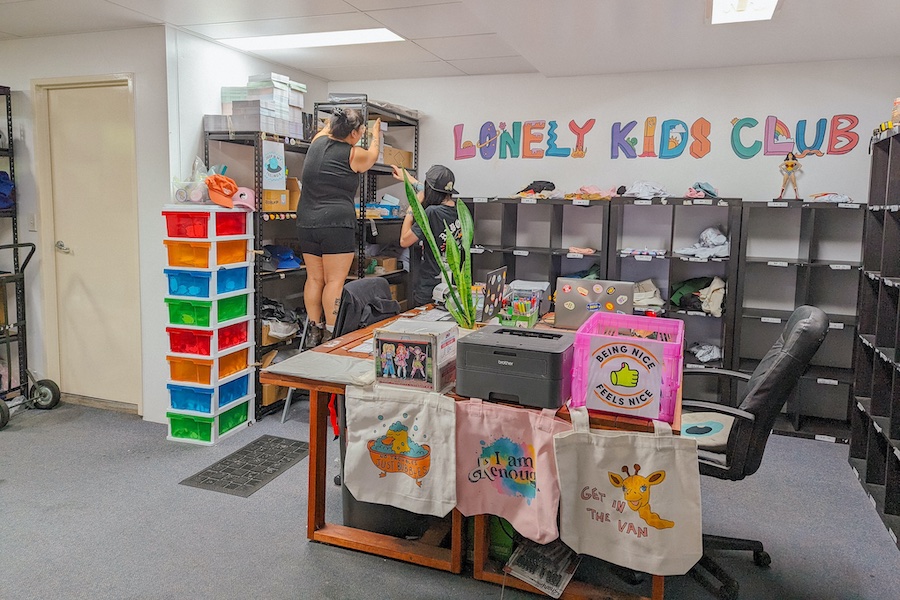
From a bedroom startup to 3,000 designs: How Lonely Kids Club built its business with DTG printing

Founded in Sydney in 2011, independent clothing label Lonely Kids Club has grown from a bedroom startup into a business offering around 3,000 graphic T-shirt designs. With its own production studio, direct-to-garment printing and a demand-driven manufacturing model, the company demonstrates how smaller apparel brands can combine creative independence with flexible production – while navigating the everyday challenges of quality control, workflow efficiency and sustainability.

#India ITME 2026

India’s textile industry: Current position, growth targets and industrial development

With ambitious export targets, major investments in manufacturing infrastructure and new international trade agreements, India is pursuing a comprehensive development strategy for its textile and apparel industry. An overview of the industry’s current position, government initiatives, progress achieved and challenges ahead.

#Weaving

“A complex design is only useful if the machine can reproduce it consistently”

Andreas Schnabel, Head of R&D for Technical Weaving Systems at Stäubli, discusses how 3D weaving can create textile reinforcements tailored to the loads within a composite component, where near-net-shape weaving can reduce processing steps and material waste, and what it takes to produce complex structures reliably and economically. He also explains how manufacturers can adapt Stäubli’s modular TF weaving platforms to new applications and how the company’s centre of excellence in Bayreuth supports the transition from research to industrial production.

#India ITME 2026

India ITME 2026: Textile technology meets India's investment ambitions

With ambitious growth targets, government incentive programmes and industrial development initiatives already underway, India is preparing for the next stage of its textile transformation. Against this backdrop, the 12th India ITME, taking place in Greater Noida from 4 to 9 December 2026, arrives at a particularly important moment for machinery manufacturers and textile producers alike.

More News on Sustainability

#Sustainability

Inside the Making at Ecomondo 2026: Textile supply chain calls for transparency and measurable sustainability

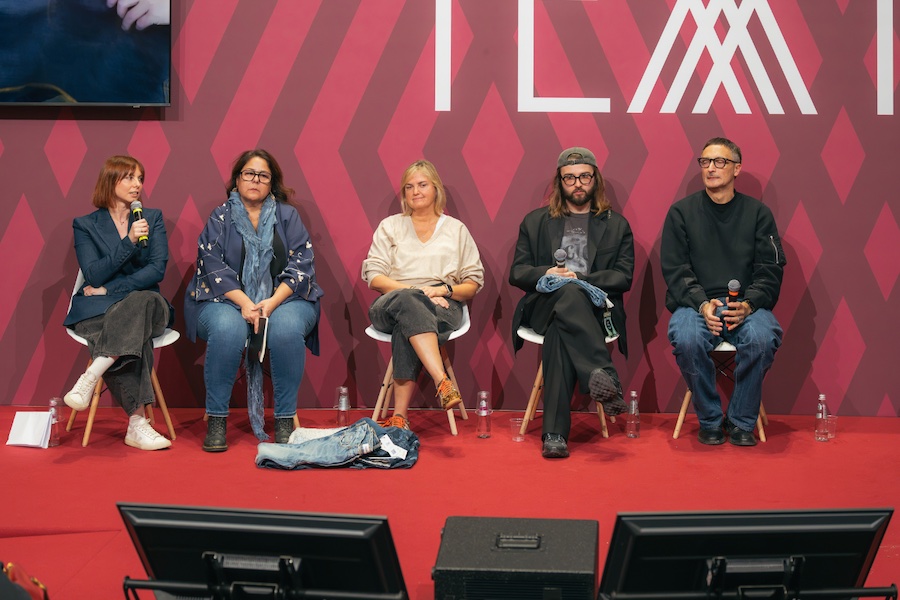
Transparency, verifiable environmental claims and closer cooperation across the textile value chain were the central themes of the “Inside the Making: The Power of the Process” panel at Ecomondo 2026 in Rimini. Representatives from denim and sportswear manufacturing, textile finishing, digital printing and branding discussed how technological innovation and supply chain collaboration can help companies meet new European regulatory requirements while making sustainability economically viable.

#Recycling / Circular Economy

H&M Foundation highlights economic barriers to scaling circular textile systems

Discussions at Textile Exchange 2026 underline the need for coordinated investment, reliable material flows and a fair distribution of costs and risks across the textile recycling value chain.

#Recycled Fibers

C&A and Zalando join Altag® Fiber Club to accelerate adoption of agricultural waste-based fibres

Fashion for Good and AltMat announced today that C&A and Zalando have joined the Altag® Fiber Club as its first brand signatories, marking a critical commercial milestone in the journey to mainstream adoption of next-generation fibres derived from agricultural waste.

#Industry 4.0 / Digitalization

Jeanologia and BCome connect factory data with Life Cycle Assessment and Digital Product Passports

A new white paper by EIM by Jeanologia and BCome demonstrates how primary environmental data from denim finishing processes can be integrated into a garment's Life Cycle Assessment (LCA) and prepared for use in a Digital Product Passport (DPP). A comparative case study highlights significant improvements at the production stage while also showing how these translate into the environmental performance of the finished garment.

Latest News

#Industry 4.0 / Digitalization

Smartex.ai names Tony Fadell chairman and previews new fabric inspection system

Smartex.ai has appointed Tony Fadell as chairman and will present its new fabric inspection hardware and software at SmartCollab Hong Kong on 27 November. Fadell co-designed Inspect, the hardware at the centre of the system, which Smartex developed with a supplier in H&M Group’s network.

#Recycled Fibers

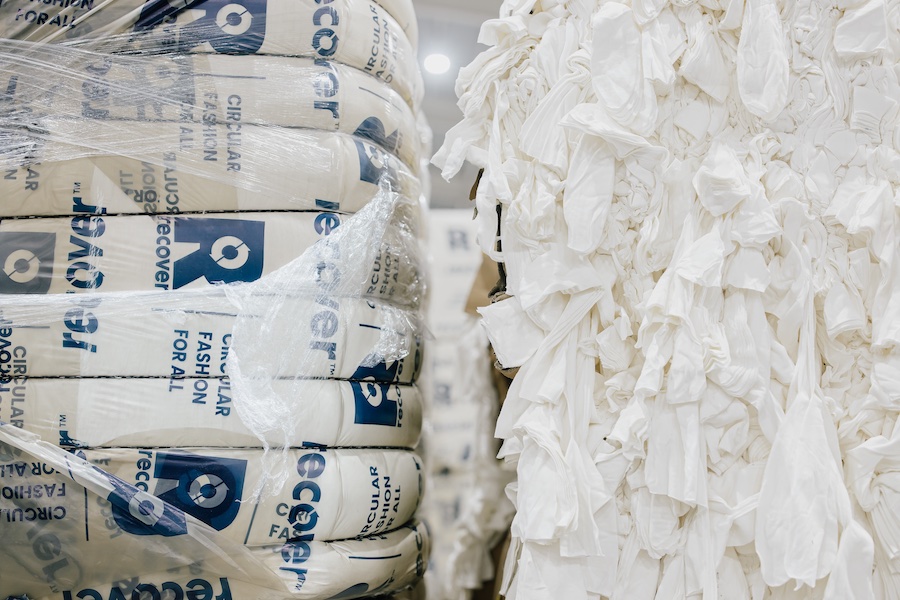
Recover and SUPIMA partner to develop recycled Pima cotton fibers and yarns

Recover and SUPIMA have partnered to turn waste from SUPIMA cotton production into a new line of recycled fibers and yarns. The collaboration will explore how recycled American-grown Pima cotton can be used in a wider range of yarns and garments for the premium market.

#Technical Textiles

Textile ETP sets out strategy to protect Europe’s technical textile capabilities

Textile ETP’s SmartX Innovation Hub has published a strategy to safeguard Europe’s ability to develop, test and manufacture advanced technical textiles for defence, personal protection and aerospace. The strategy calls for EU research funding that extends through qualification and initial industrial production, and for public procurement to give greater weight to quality and security of supply.

#Industry 4.0 / Digitalization

Coats Digital wins SaaS award for AI in apparel manufacturing

Coats Digital has been named Best Company in AI-Powered Fashion Technology at the 2026 Best in SaaS Awards. The company’s AI applications cover garment costing, the analysis of operational data and the use of computer vision to study how tasks are performed on the factory floor.

TOP