[pageLogInLogOut]

#Textiles & Apparel / Garment

The new Zara.com building fuses sustainability and technology

Zara.com building (c) 2021 Inditex
is set to inaugurate its new smart, ecoefficient and cutting-edge building at its head offices in Arteixo (A Coruña, Spain), which will house the new www.zara.com studios and the Zara Man central design department, on 17 March. Surrounded by a natural ecosystem landscaped with plants and trees, and as part of a total investment of €130 million to improve Inditex’s head office complex in Arteixo (A Coruña, Spain), the building features the latest developments in sustainability and technology.

• As part of a total investment of €130 million to improve Inditex’s head office complex in Arteixo, the new building, which spans 67,000m2 , runs on photovoltaic solar power and features WiFi 6 and 5G connectivity.

• Inditex’s Executive Chairman, Pablo Isla, highlights the importance of the new building, which represents the “best visual example of the company’s strategy, due to its investment in store and online integration technology and advanced sustainability systems”.

• It expects to obtain the most stringent green building seal - LEED Platinum - thanks to environmental novelties such as the façades clad with high-efficiency glass and the rainwater reusage systems.

Inditex’s Executive Chairman, Pablo Isla, highlights the importance of the new building as ”representing the best visual example of the company’s strategic transformation, due to its investment in store and online integration technology and advanced sustainability systems”.

Spanning 67,000m2 and with a height of 28m, the building stands out for the 720 high-energy-efficiency glass modules that clad the entire façade, intertwined with structural pillars made from aluminium. The modules allow the interior to be flooded with natural light.

The use of innovative engineering solutions, whereby all the structural weight runs through the external supports, paves the way for spacious and diaphanous interior work areas. Modular solutions will enable a highly flexible configuration of the new studios, enlarging or shrinking them as required. All of the interiors are open-plan and are articulated around a central agora, or open space, designed to provide a meeting point and area for relaxation, exchange of ideas and innovation that characterise the other recent expansions of the Arteixo head offices, which were designed by the same team of architects, Batlle i Roig, who have also worked with Inditex on the headquarters for Pull&Bear, Massimo Dutti and Stradivarius.

The building is equipped with the latest connectivity solutions -WiFi 6 and 5G -, which facilitates the use of innovative technology such as double-sided LED screens allowing users to project on them wirelessly through the local Wifi connection.

The ground floor and the first floor will be occupied by Zara Man's central design department and will provide room for an extensive pattern design area and extended showrooms. The pattern design area is an essential part of the designers' creative process: the designers work constantly with the pattern experts to create samples and prototypes which, following input from all the members of the product department, are destined for the new collections that arrive in store and on customers' devices. All those samples are displayed in the showrooms, where the upcoming collections are presented, debated and coordinated.

The second and third floors will accommodate the large, multidisciplinary Zara.com team: from the image professionals who work with the designers on the best way to present Zara's collections each season to the team of engineers and programmers who tirelessly service the needs of the integrated store and online platform. The latter do so enabled by the proprietary digital architecture known as the Inditex Open Platform (IOP), developed in-house, which services each phase of Inditex's business model. Thanks to modular solutions that are being added to the general architecture, the IOP responds to customers' needs in real time.


Integrated management

Those floors will also be home to the process teams devoted to the integrated management of store and online platform inventory, all customer service operations and R&D initiatives; such as the sustainability team working on new sustainable packaging solutions.

Located on the 9,000-m2 fourth floor are the studios, all filled with natural light, in which the photographers, models, stylists and make-up artists bring the clothing and looks available on www.zara.com to life. The fifth floor, which is currently fitted with eight permanent cycloramas, but is designed to cater to the versatility required by Zara's campaigns, is also home to the editors who select the best shots to upload onto the product pages and strive to ensure customers can visualise each product exactly as it is.

The new facilities are connected with the rest of Inditex's head office complex via a glass walkway located on the third floor, while the building's five floors are interconnected by means of three wide stairwells: a main staircase articulated around a 32m-tall vertical atrium and another two staircases which also allow in daylight and provide views outside. They are similarly connected with the underground floors, devoted to parking, including spaces for electric vehicle charging and places for bikes.

Energy efficiency and sustainable materials

One of the most noteworthy aspects of the new building, and one of the areas prioritised when designed, is its sustainability credentials. The building was designed using bioclimatic parameters and environmentally-friendly materials and is equipped with high-efficiency installations. It complies with the stringent requirements of the sustainable building benchmark US Green Building Council (USGBC) –and which it hopes to achieve its highest certification, LEED Platinum.

The building as a whole fosters conservation and efficient use of resources. The roof is fitted with 554 photovoltaic panels which, together with the 2,826 panels installed in the outdoor car park, supply half of the building's electricity. All the building’s energy comes from renewable sources. It also reuses rainwater for watering and sanitation thanks to a subterranean tank. The façade's design, with its high-performance glass modules and light-coloured finishes, also replicated on the roof, delivers energy savings of 22% with respect to the USGBC threshold.

The systems, managed centrally from a monitoring room, also play an essential role in energy efficiency and water consumption. Notably:

• A high-efficiency aerothermal HVAC system that can be adapted for room-specific requirements bringing a 15% energy saving versus a conventional system.

• A lighting system that can be modulated as a function of outside light and indoor occupancy.

• Energy-efficient direct-drive lifts with variable speeds and a stand-by mode for when they are not in use.

• Flushes and taps equipped with flow reduction devices.

• Water-efficient landscaping, comprised of indigenous plants and species adapted to the local climate to help with the water conservation efforts outdoors and preservation of regional biodiversity.

By the same token, the materials used comply with Inditex's environmental and circularity commitments. The pre-fabricated structure was made from recycled materials; the interior finishes are low in volatile organic compounds (VOCs), so helping improve indoor air quality, and the furniture and fittings come with environmental product certification (EDP); specifically the timber fittings boast FSC certification.




More News from TEXDATA International

#Texprocess 2026

Texprocess 2026: Automation, digitalisation and AI reshape textile processing

Investment decisions in textile processing have become increasingly complex. Rising energy prices, labour shortages and geopolitical uncertainties are forcing companies to prioritise technologies that deliver measurable improvements in efficiency and process stability. This applies not only to apparel production, but also to the processing of technical textiles and high-performance materials. Modernisation projects are therefore being evaluated more selectively – but the pressure to upgrade production systems continues to grow. Texprocess 2026 reflects this tension between cautious investment behaviour and increasing technological demand.

#Techtextil 2026

Textile Chemicals & Dyes: Innovation in Textile Chemistry moves into focus at Techtextil 2026

From PFAS-free finishes and water-saving dyeing technologies to advanced coatings and recycling-compatible formulations, innovation in textile chemistry is accelerating across the industry. Reflecting this development, Techtextil 2026 introduces Textile Chemicals & Dyes as a dedicated product segment, highlighting the growing role of chemical solutions in shaping the next generation of technical textiles.

#Recycling / Circular Economy

textile.4U publishes special edition “Top 100 Textile Recycling Companies 2025”

With a comprehensive 176-page special edition, textile.4U is dedicating its latest issue entirely to one of the most dynamic and influential topics in today’s textile industry: textile recycling. The new issue, published exclusively in high-quality print, presents the Top 100 textile recycling companies researched and selected by TexData – organizations that already play a key role in the transition to circular textiles or are expected to have a significant impact in the near future.

#Recycling / Circular Economy

Responsible Textile Recovery Act of 2024 signed by Governor

Senator Josh Newman (D-Fullerton) is proud to announce that Senate Bill 707 (SB 707), the Responsible Textile Recovery Act of 2024, has been signed into law by the Governor of California, Gavin Newsom. This groundbreaking legislation establishes the country’s first Extended Producer Responsibility (EPR) textile recycling program, marking a significant step forward in the state’s efforts to combat waste and promote sustainability.

More News on Textiles & Apparel / Garment

#Textiles & Apparel / Garment

Coats to showcase innovative reinforcement and filler materials for leather goods and accessories at APLF 2026

Coats, a world-class Tier 2 manufacturer and trusted partner for the apparel and footwear industries, will be promoting four advanced materials from its ‘Lifestyle Solutions’ portfolio at APLF 2026 in Hong Kong in March. Each innovation has been specifically engineered to help luxury and premium brands elevate the craft, durability, sustainability and creative expression required in the manufacturing of handbags, purses, and other high-end designer accessories.

#Textiles & Apparel / Garment

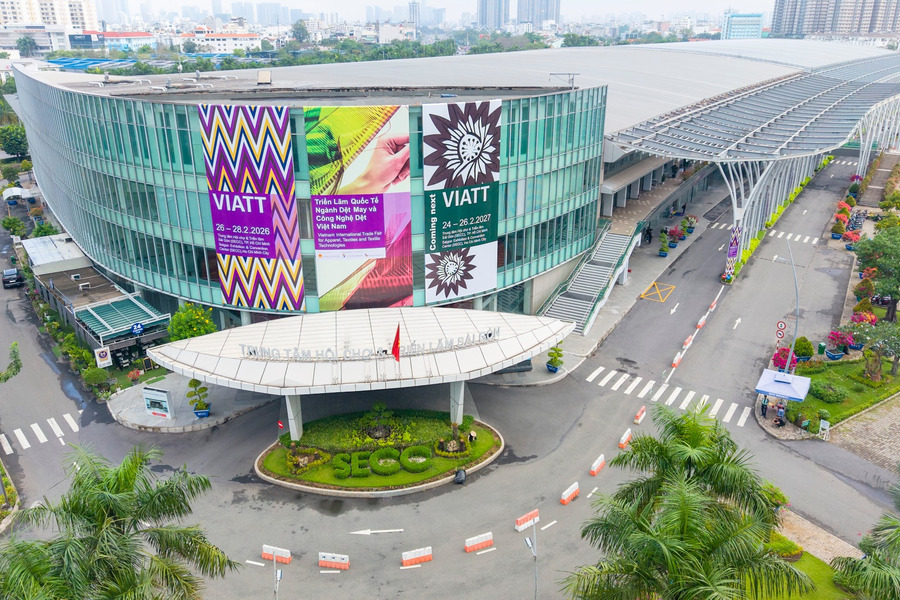
Design, innovation and sustainability propel VIATT 2026’s expanding role in ASEAN textile sourcing

At its third edition, the Vietnam International Trade Fair for Apparel, Textiles, and Textile Technologies (VIATT) further reinforced its role as a key sourcing and business platform for ASEAN’s textile industry. The three-day fair welcomed over 17,000 visits from 54 countries and regions, and featured over 460 exhibitors from 21 countries and regions across 18,000 sqm. The 2026 edition was marked by the introduction of new international pavilions and zones, broadening the fair’s sourcing scope across new geographies and product categories. The fringe programme, headlined by the debut Trend Forum, further distinguished VIATT as the region’s most integrated textile trade platform – uniquely spanning the entire value chain.

#Textiles & Apparel / Garment

Revived Replacement Elements for VISLON® wins the iF Design Award 2026

YKK Corporation (Headquarters: Chiyoda-ku, Tokyo; President: Koichi Matsushima; hereinafter “YKK”) is proud to announce that its Revived Replacement Elements for VISLON® has been awarded the prestigious iF DESIGN AWARD 2026, an award that recognizes excellence in design and quality, organized by iF Design Foundation.

#Knitting & Hosiery

Driving WARP KNIT Inspiration

KARL MAYER sees performance fabrics and next-level textile solutions in particular as potential growth drivers for its customers, as a motor for business development and as real game changers for the entire textile industry. Innovation does not happen by chance. It is the result of close exchange with customers & brands, textile expertise and competence in textile machine engineering. This is why KARL MAYER is investing in progress and collaborative development and opening its TEXTILE INNOVATION CEN-TER (TIC) – a place to be for the entire textile world.

Latest News

#Research & Development

Textilfabrik 7.0 launched: Mönchengladbach becomes a real-world lab for sustainable textile production

With the official kick-off event of the Textilfabrik 7.0 (T7), a major transformation project for the German textile and apparel industry has been launched in the Monforts Quarter in Mönchengladbach. At the “Textile Roundtable,” an event format organized by the Zukunftsagentur Rheinisches Revier, representatives from industry, research, politics, and the regional economy came together to jointly lay the foundation for CO₂-neutral, circular, and economically viable textile production in Germany.

#Techtextil 2026

Future ready nonwovens and fiber processing solutions – Meet Trützschler at Techtextil 2026

From April 21 to 24, 2026, the Trützschler Group will present its future‑ready solutions at Techtextil in Frankfurt, Germany. At Booth C61 in Hall 12.0, Trützschler Nonwovens will showcase its latest developments for efficient nonwovens production, including comprehensive service and consulting solutions. Highlights include the fully upgraded X‑Series nonwoven cards suitable for spunlace, needle‑punching and air‑through bonding (ATB) processes, as well as the T‑ONE digital working environment enhanced with new features. Trützschler Card Clothing will complement the presentation with a new card wire designed with a specially engineered surface for high‑performance nonwoven applications. Visitors can also take a closer look at Trützschler’s complete solution for the recycling of textile waste, TRUECYCLED.

#Recycling / Circular Economy

Europe needs tipping point to scale textile-to-textile recycling, BCG and ReHubs say

A new report from Boston Consulting Group (BCG) and ReHubs, titled “Advancing Textile Circularity – Europe’s textile waste challenge: Scaling Textile-to-Textile requires enabling mechanisms”, highlights the urgent need for systemic action to tackle Europe’s growing textile waste and scale a circular textile economy.

#Digital Printing

Former ASOS CEO Nick Beighton joins Kornit Digital to help shape the future of on-demand fashion

Kornit Digital LTD. (NASDAQ: KRNT) ("Kornit" or the "Company"), a global leader in sustainable, on-demand digital fashion and textile production technologies, today announced it has appointed Nick Beighton, former Chief Executive Officer of ASOS, as a strategic advisor to the Company and its Board of Directors. His appointment reflects Kornit’s continued focus on strengthening its connection to global brands, retailers, and digital commerce platforms as the industry transitions toward on-demand production. The Company plans to nominate Mr. Beighton for election to the Board at Kornit’s 2026 Annual Shareholder Meeting.

TOP