[pageLogInLogOut]

#Textile chemistry

HeiQ Viroblock certified as cosmetic grade & bio-based renewable
(c) 2020 HEIQ
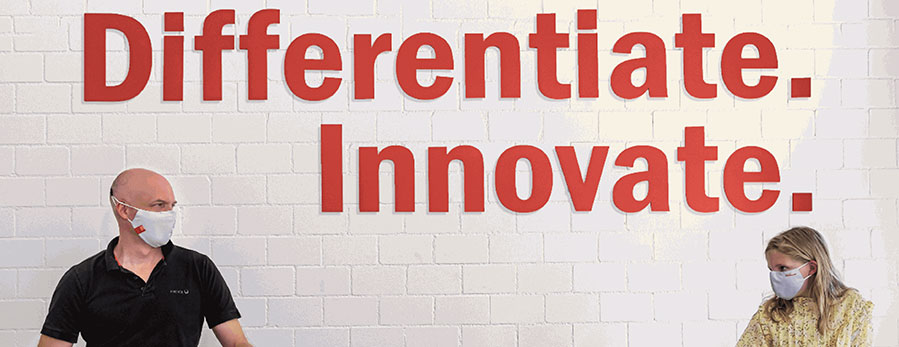
HeiQ’s antiviral textile technology, HeiQ Viroblock NPJ03 has been certified as safe and sustainable as all its ingredients are cosmetic grade, bio-based and recycled.

Leading the international textile industry to fight the COVID-19 pandemic, HeiQ recently launched HeiQ Viroblock NPJ03, an antiviral and antibacterial textile treatment proven to reduce 99.99% of human coronavirus SARS-CoV-2, the virus that causes COVID-19, along with other enveloped viruses and bacteria.

Viruses and bacteria can remain infective on textile surfaces for days. Human Coronavirus SARS-CoV persist for up to 2 days on surgical gowns* at room temperature. Antiviral treatments for textiles contribute to more hygienic and safer textile products and can help mitigate the risk of contamination and transmission. While the global textile industry is rapidly adopting antiviral textile treatments to bring antiviral masks, clothes and home fabrics to the market, it is important to consider the profile of different technologies including questions of toxicity, safety, antimicrobial resistance, and wastewater treatment.

The HeiQ Viroblock NPJ03 is a formulation that contains a minute amount of recycled silver active ingredient and fatty liposome vesicle components. It is EU REACH and US FIFRA compliant, OEKOTEX® certified, ZDHC and bluesign® homologized. Treated textile articles are compliant with EU BPR and US EPA. HeiQ Viroblock respirator masks with antibacterial and antiviral surface have been registered as medical device by Swissmedic and approved by US FDA.


“Since HeiQ Viroblock NPJ03 was designed for use on face masks to impart enhanced protection against viruses and bacteria, we selected only the most effective, safest and most sustainable ingredients. Furthermore, we are proud that HeiQ Viroblock NPJ03 qualifies as a bio-based renewable product and is 100% made from INCI approved cosmetic ingredients,” says Carlo Centonze, co-founder and Chief Executive Officer of HeiQ Group.

Beta Analytics Testing Laboratory has certified that HeiQ Viroblock NPJ03 contains 72% bio-based carbon. Test results are accredited to ISO/IEC 17025:2005 Testing Accreditation PJLA #59423 standards. HeiQ Viroblock NPJO3 is currently undergoing homologation for the USDA bio-preferred certification. Specialities S.R.L (Italy), a surface chemistry research and development company, has also confirmed that all ingredients of HeiQ Viroblock NPJ03 are selected from the International Nomenclature of Cosmetic Ingredients (INCI).

“HeiQ is grounded in the pursuit of innovation that helps to bring a positive benefit to the World. Designing products with safe and sustainable components, such as the HeiQ Viroblock technology, is central to that mission,” says Dr. Murray Height, co-founder and Chief Science Officer of HeiQ Group.

*Kampf G, Todt D, Pfaender S, Steinmann E. Persistence of coronaviruses on inanimate surfaces and its inactivation with biocidal agents. Journal of Hospital Infection. 2020 Feb 6.
More News from TEXDATA International

#ITM 2026

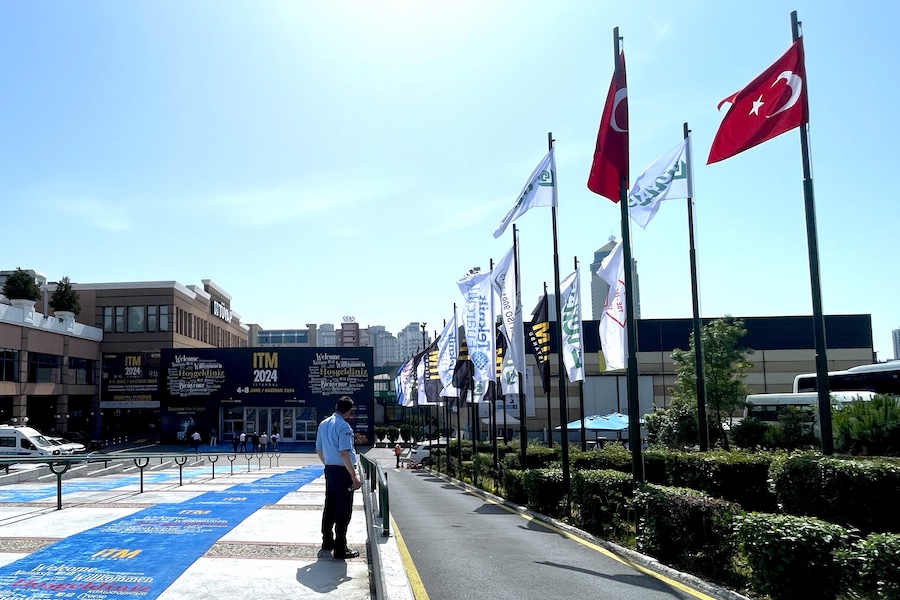
ITM 2026: The new geography of textile production

New production hubs are emerging across North Africa and Central Asia, while Türkiye is accelerating its transformation toward higher-value, technology-driven and more sustainable textile manufacturing.

#Research & Development

“Production is a product”

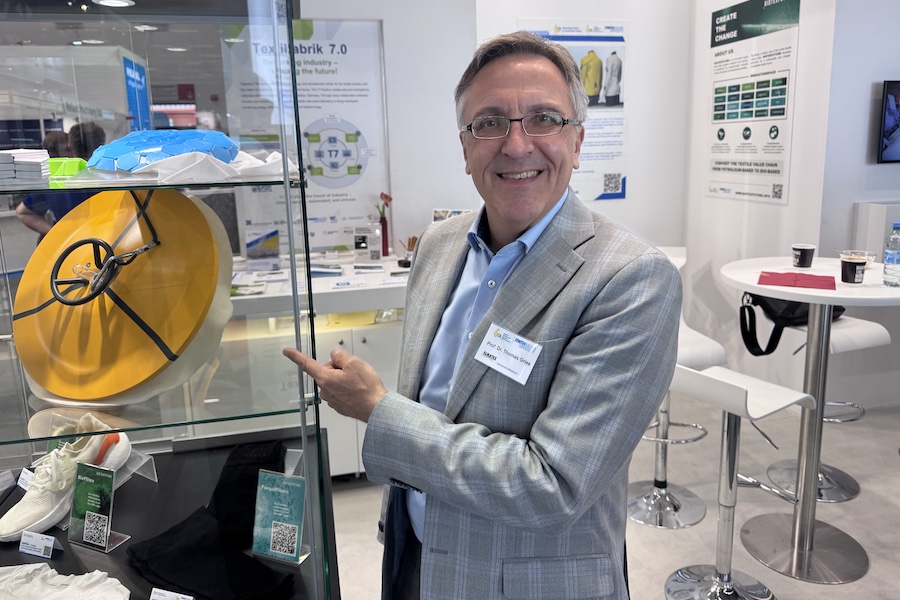
From technical textiles and AI-driven robotics to the limitations of textile circularity: Professor Dr Thomas Gries looks back on more than two decades of development at ITA Aachen. In the interview, he explains why production technology remains a decisive success factor, discusses international collaborations and innovation ecosystems, and shares his views on the transformation of production landscapes and the challenges facing an increasingly regulated industry.

#Knitting & Hosiery

“We need to move away from the price trap and return to a value-driven mindset.”

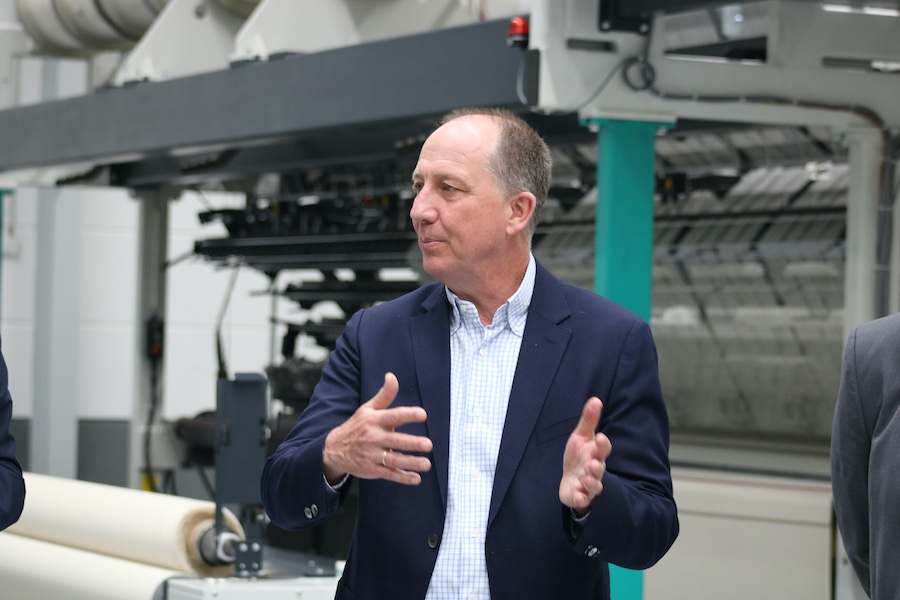
With its new Textile Innovation Center, KARL MAYER is sending a strong signal for innovation, collaboration, and the future of textile applications. In this interview, Karl Josef Mayer discusses new opportunities in warp knitting, the processing of staple fibres, recycling, the changing role of machinery manufacturers, and why the textile industry must once again focus more strongly on the value of textiles. by Oliver Schmidt

#Associations

“Innovation, resilience and international experience remain the great strengths of the Swiss textile machinery industry”

Geopolitical uncertainty, growing competitive pressure from China, new free trade agreements and the shift towards a circular economy are currently reshaping the global textile industry. In this interview, Cornelia Buchwalder discusses the current mood within the Swiss textile machinery sector, the industry’s distinctive innovative strength, new market opportunities in India and Asia, and the technological trends that could shape the upcoming trade fair cycle leading up to ITMA 2027.

More News on Textile chemistry

#Textile chemistry

Archroma and Lameirinho partner in pioneering deployment of InOneGO single-step dyeing

Archroma, a global leader in specialty chemicals, and Lameirinho, a leading home textiles manufacturer based in Portugal, are collaborating to bring InOneGO by Archroma, a new single-step dyeing process, into commercial production. Lameirinho’s first InOneGo bedlinens collection is now available worldwide.

#Textile chemistry

Archroma wins ICIS Innovation Award for sulfur dye breakthrough

Archroma, a global leader in specialty chemicals, has won a coveted 2026 ICIS Innovation Award for Best Product Innovation from a Large Company for FiberColors®. These high-performance sulfur dyes are synthesized from pre-consumer wool waste, reducing industry reliance on petroleum-based inputs while contributing to the circular economy by upcycling unwanted wool that farmers would otherwise pay to dispose of.

#Textile chemistry

ZymoChem secures $4 million in renewed federal funding to advance U.S. biomanufacturing of critical materials and their supply chains

ZymoChem, the specialty chemicals company dedicated to bringing decarbonization, sustainability, and supply chain resiliency to the chemical industry through innovative biological manufacturing, today announced the resumption and expansion of its federal research portfolio. The company has been notified that previously paused work under a $5 million U.S. Department of Energy (DOE) program is officially back on, to be joined by continuing collaborations with three of the nation's premier national laboratories.

#Textile chemistry

bluesign updates chemical reference lists with stronger PFAS restrictions

bluesign has published the 2026 editions of its three core chemical reference lists, introducing updated substance limits and testing requirements in line with the latest scientific findings and regulatory developments.

Latest News

#Industry 4.0 / Digitalization

Coats Digital launches AI-powered GSD RealMotion for motion analysis

Coats Digital has launched GSD RealMotion, an AI-powered solution designed to provide apparel manufacturers with greater visibility into factory-floor operations. By analysing shop-floor video and applying Coats Digital’s GSD methodology, the solution turns video recordings into structured, motion-by-motion method studies.

#Knitting & Hosiery

KARL MAYER launches extra-wide HKS 3-M EL for increased productivity

KARL MAYER has launched a new extra-wide version of its HKS 3-M EL tricot machine, designed to increase productivity particularly in the manufacture of textiles for sports, activewear and athleisure applications.

#Research & Development

Reducing development times for technical textiles by accelerated thermo-oxidative aging in a high-pressure autoclave

Synthetic polymers used in technical textiles can be effectively protected against degradation caused by heat, oxygen, and water through the use of stabilizer systems. This enables service lives of several decades, extending to more than 50 years. As the use of durable technical textiles continues to grow, so does the demand for reliable methods to predict their service life within economically feasible testing periods. For the first time the German Institutes of Textile and Fiber Research Denkendorf (DITF) developed methods for robust service life prediction for textiles in an IGF research project.

#Research & Development

ITA has developed a washable digital smart jacket with real-time feedback and an AI-powered app for rehabilitation

As part of the PhysioTaix research project, the Institut für Textiltechnik (ITA) of RWTH Aachen University is developing a digital smart jacket with integrated sensors. The jacket is washable and reusable; it tracks movements during rehabilitation exercises in real time and transmits the data to an app.

TOP