#Texprocess 2026
Texprocess 2026: Automation, digitalisation and AI reshape textile processing
by Oliver Schmidt
The leading international trade fair for processing textile and flexible materials brings together 200 exhibitors from 28 countries presenting solutions designed to increase productivity, integrate digital workflows and enable more automated manufacturing processes.
Automation stabilising production processes
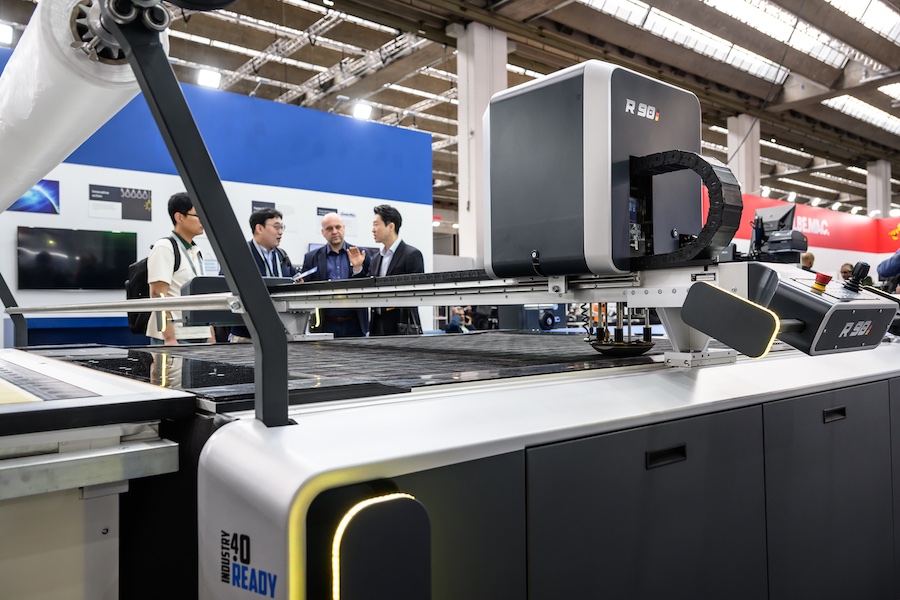
Automation remains one of the most visible technological developments in textile processing. Systems that automate material handling, cutting operations or sewing processes aim to reduce manual interventions while increasing consistency and productivity.
Companies such as bullmer illustrate how automated cutting room technologies are evolving toward integrated system environments that combine material spreading, cutting and sorting while processing a wide range of textiles and technical materials.
Automation is also advancing in material handling – an area that has traditionally relied heavily on manual labour. Robotextile focuses on technologies that automatically separate and position individual fabric layers for subsequent processing steps such as sewing, printing or laminating, addressing one of the most labour-intensive stages in textile processing.
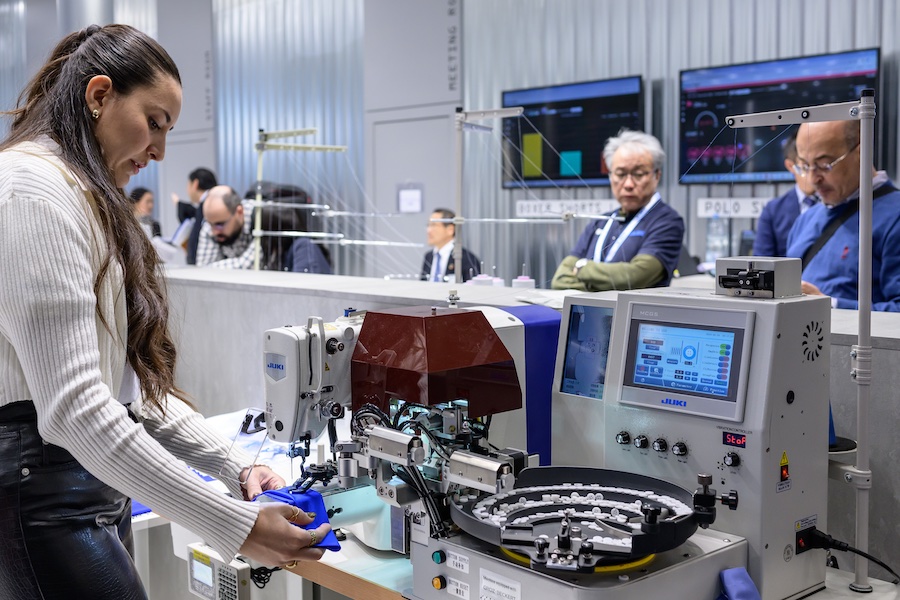
Automation is increasingly reaching the sewing stage as well. Dürkopp Adler develops automated and CNC-controlled sewing systems for a wide range of textile applications. In specialised segments, companies such as RSG Automation Technics focus on automated sewing lines for narrow fabrics such as belts and tapes, combining customised machinery with integrated process monitoring.
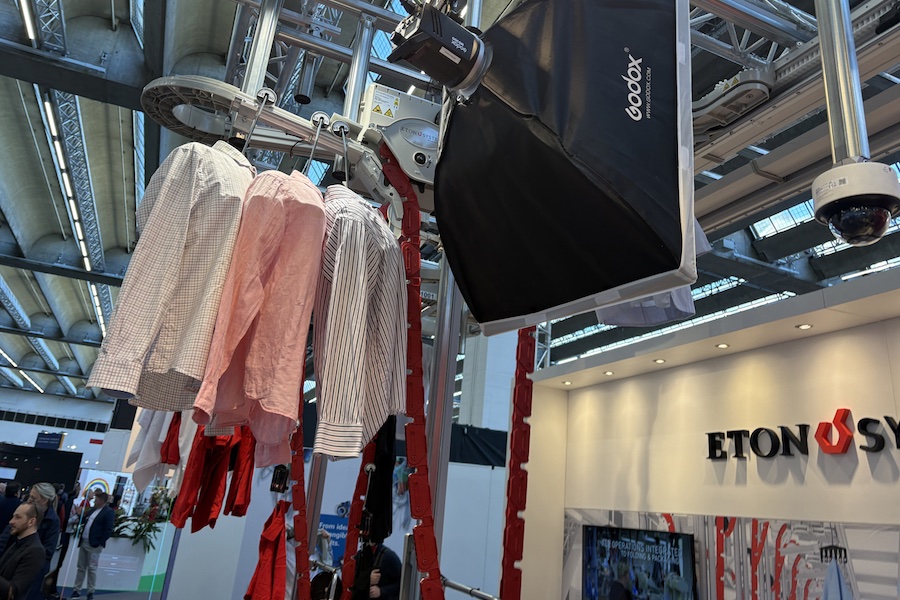
Efficient material flow between individual production steps is another key element of automated manufacturing. Eton Systems specialises in automated unit production systems in which individually addressable product carriers transport materials through the production process, helping manufacturers reduce manual transport and increase productive machine time.
Digital process chains from design to processing
Alongside automation, the digital integration of production processes is a central theme in textile processing. Digital product development tools, CAD/CAM systems and workflow platforms are increasingly linking design, planning and manufacturing into continuous data-driven process chains.
This integration enables manufacturers to shorten development cycles, optimise production planning and improve transparency across the entire value chain. Data generated during digital product development can now be transferred directly into cutting and manufacturing processes, reducing errors and increasing efficiency.
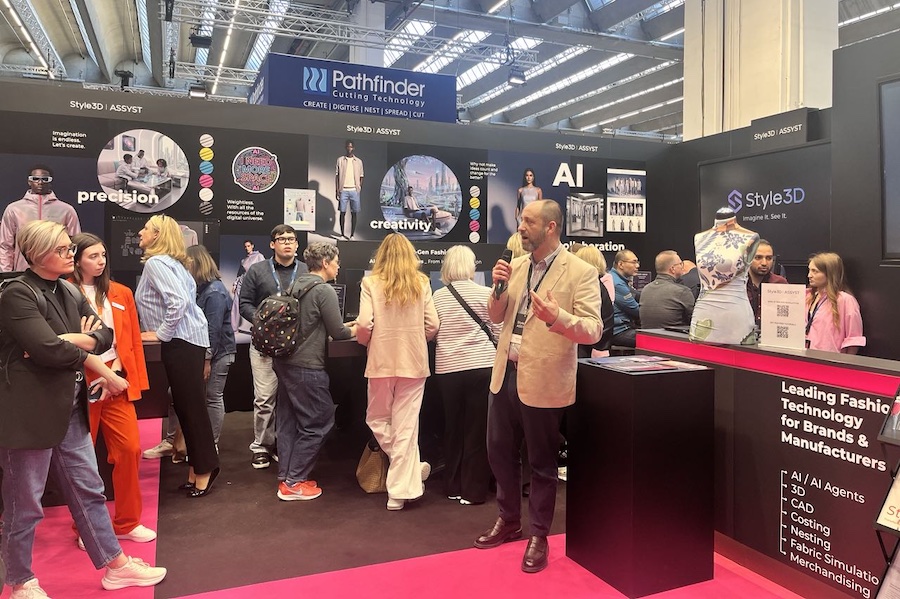
Digital product development platforms are increasingly used to simulate garments and production processes before physical samples are created. Companies such as Style3D | Assyst are developing environments that combine 3D garment simulation with CAD-based pattern development, allowing garments to be designed and visualised digitally before they enter physical production.
Design and pattern development tools also play a key role in this transformation. NedGraphics provides specialised design and CAD software enabling textile and apparel manufacturers to integrate creative design processes with digital product development while reducing sampling cycles and improving time-to-market.
Digitalisation also extends to product data management and collection planning. Koppermann Computer Systems develops PLM and visualisation platforms that allow fashion companies to manage product data, plan collections and visualise assortments digitally before physical development and production begin.
Artificial intelligence enters textile production
Artificial intelligence is rapidly becoming a new optimisation layer within increasingly digitalised production environments. While automation and digital workflows create the data foundation, AI technologies analyse this information in real time to improve process stability, reduce waste and optimise production decisions.
One prominent application is automated quality inspection based on image recognition. Companies such as the start-up Qsee.ai use AI-driven vision systems to detect defects during production and support real-time quality control.
Comparable approaches are appearing earlier in the textile value chain. Uster Technologies has introduced the system Fabriq Vision 2, which combines automated fabric inspection with machine-learning-based defect classification. The leading provider of quality control and testing systems for the textile industry is presenting at the parallel Techtextil, underlining the close connection across the two exhibitions.
In product development, intelligent algorithms are increasingly assisting creative processes. Platforms such as Style3D | Assyst integrate AI tools capable of generating garment designs, visual concepts or digital photoshoots automatically.
AI is also transforming production management on the shopfloor. The start-up ProdActive Solutions has developed an AI-enabled platform that provides real-time visibility of workers, machines and processes, while automatically generating corrective actions and optimising task allocation. By moving from intuition-based to data-driven decision-making, such systems aim to significantly increase productivity and operational efficiency.
Data-driven analysis is likewise transforming planning and costing tasks. Coats Group plc has introduced the AI-powered tool GSDQuest, which analyses garment images to identify design and construction elements and automatically generates a standardised Bill of Labour.
Beyond industrial applications, research institutions are exploring the broader potential of artificial intelligence in textile development. The AiDLab, a collaboration between The Hong Kong Polytechnic University and the Royal College of Art in London, focuses on interdisciplinary research linking AI with fashion design, textile quality control and ergonomic product development.
From material innovation to intelligent production
Taken together, these developments illustrate how textile processing and apparel manufacturing are entering a new phase of technological transformation. Automation is reducing manual intervention in production processes, digital platforms are linking design and manufacturing into continuous data-driven workflows, and artificial intelligence is beginning to optimise both creative and industrial decision-making.
At the heart of these developments lies a broader shift in how efficiency is defined in modern textile processing. Increasingly, productivity is measured in relation to the resources required to achieve it – in other words, how effectively materials, energy, time and labour are used throughout the production process. Technologies that improve productivity per unit of resource input are therefore becoming a central driver of investment decisions across the industry.
In combination with the parallel Techtextil, which focuses on textile production technologies advanced materials and textile applications, Texprocess highlights the technologies required to translate these innovations with efficient and competitive manufacturing processes into results. Together, the two exhibitions provide a comprehensive overview of how the textile industry is evolving – from material innovation to increasingly automated, digital and intelligent processing systems.