[pageLogInLogOut]

#Sustainability

YKK to exhibit at Textile Exchange Conference 2025 in Lisbon
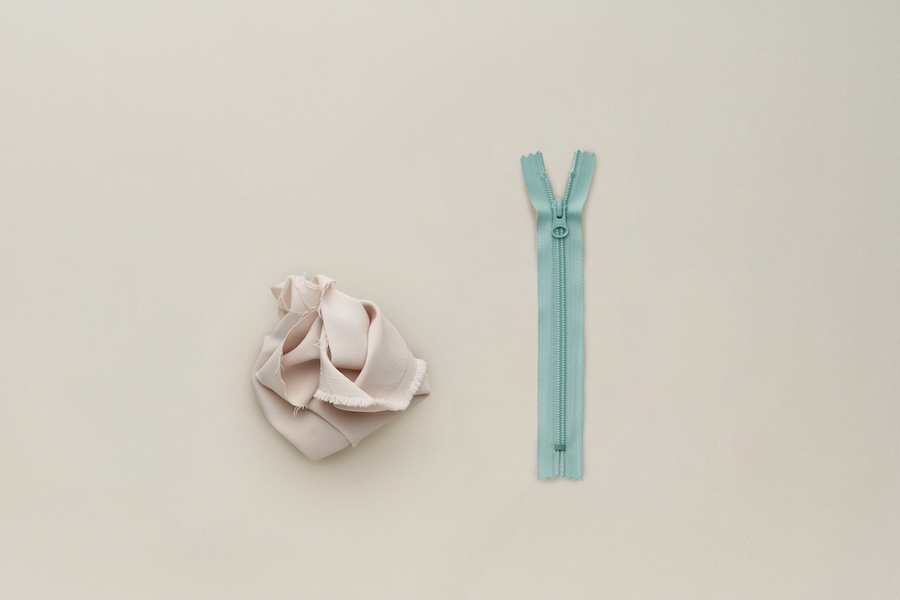
YKK Corporation (Headquarters: Chiyoda-ku, Tokyo; President: Koichi Matsushima; hereafter, YKK) will exhibit at the Textile Exchange Conference 2025 in Portugal, held from Monday, October 13 to Friday, October 17, to showcase its products and initiatives that contribute to the realization of a circular economy in the fashion industry.
NATULON® Fiber Sourced(TM) © 2025 YKK


Showcasing YKK’s initiatives toward a circular economy

The annual Textile Exchange Conference brings together global stakeholders from the fashion and textile industries—including brands, supply chain partners, innovators, farmers, NGOs, and academics—to explore solutions for a sustainable future. The 2025 theme, “Shifting Landscapes,” focuses on climate adaptation and systemic transformation.

As an active member of Textile Exchange, YKK is committed to advancing sustainability across the global textile value chain. At this year’s conference, YKK will present its efforts to accelerate the transition to a circular economy, including:

+++ Zipper and fastening products made from recycled inputs, including textile-to-textile and metal material recycling, contribute to the realization of a circular economy, such as: NATULON®, NATULON® Fiber Sourced™, NATULON Plus® with Recycled PET Open Parts, and the Recycled Mono-material Detachable Button & Rivet, recipient of the 2025 Red Dot Award in the Sustainable Design category.

+++ Zippers and fastening products that enable garment repair and recycling, such as Revived Renewal Components.

+++ Helping to enhance supply chain transparency through technologies like TouchLink®

+++ Initiatives to reduce environmental impact across the entire product lifecycle

+++ Progress updates on long-term goals under the “YKK Sustainability Vision 2050”

Textile Exchange Conference 2025

Dates: October 13 (Mon) – 17 (Fri), 2025

(Main sessions will be held from October 14 (Tue) to 16 (Thu))

Venue: Lisbon Congress Centre (Lisbon, Portugal)

Official Website: https://textileexchange.org/conference-2025/


YKK is focusing on the development of products and technologies which contribute to the circular economy – where materials and products are used for as long as possible and continuously circulated – to achieve the “YKK Sustainability Vision 2050.” Going forward, YKK will continue to promote the reduction of environmental impact and make contributions to the circular economy via initiatives such as using recycled materials, designing products with the assumption that they will be repaired and recycled, and recycling waste into new resources.
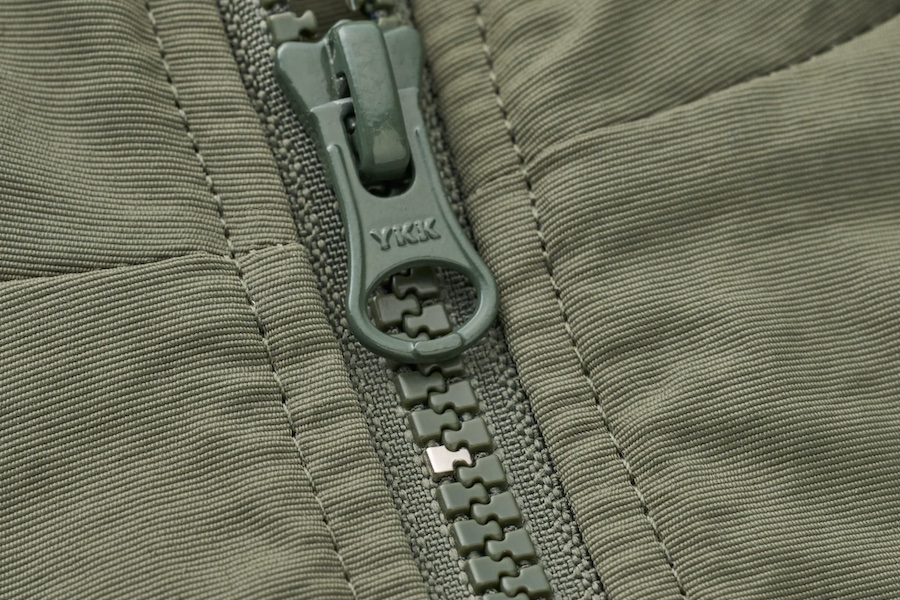
Revived Renewal Series © 2025 YKK


Recycled Polyester Challenge

The Recycled Polyester Challenge, a joint initiative between Textile Exchange and the United Nations Framework Convention on Climate Change’s (UNFCCC) Fashion Industry Charter for Climate Action, calls on the fashion industry to source 45% to 100% of its polyester from recycled materials by the end of 2025. This initiative aims to prevent an influx of virgin fossil-derived synthetic fibers, reduce greenhouse gas emissions, and facilitate a transition to circular materials.
More News from YKK

#Textile processing

YKK joins ZDHC as a Signatory Supplier, strengthening commitment to eliminating hazardous chemicals

YKK Corporation (Headquarters: Chiyoda-ku, Tokyo; President: Koichi Matsushima; hereafter, YKK) has joined ZDHC (Zero Discharge of Hazardous Chemicals) as a Signatory Supplier as of May 2026.

#Textile processing

NATULON® zipper series surpasses 50% of YKK’s global zipper sales

YKK Corporation (Headquarters: Chiyoda-ku, Tokyo; President: Koichi Matsushima; hereafter, YKK) announces that the global sales share of its NATULON® zipper series—zippers that incorporate recycled materials—has exceeded 50%.

#Textiles & Apparel / Garment

YKK launches “YZiP® Light” aluminum alloy zipper for cotton pants

YKK Corporation (Headquarters: Chiyoda-ku, Tokyo; President: Koichi Matsushima; hereafter, YKK) has launched YZiP® Light, a lightweight aluminum alloy zipper for cotton pants, with sales beginning in late March. The introduction of YZiP® Light expands YKK’s zipper portfolio—led by the flagship YZiP® copper alloy zipper—providing customers with greater flexibility to meet diverse garment needs.

#Textiles & Apparel / Garment

Revived Replacement Elements for VISLON® wins the iF Design Award 2026

YKK Corporation (Headquarters: Chiyoda-ku, Tokyo; President: Koichi Matsushima; hereinafter “YKK”) is proud to announce that its Revived Replacement Elements for VISLON® has been awarded the prestigious iF DESIGN AWARD 2026, an award that recognizes excellence in design and quality, organized by iF Design Foundation.

More News on Sustainability

#Sustainability

A new standard to combat plastic waste in forests

With DIN SPEC 35808 “Tree Shelter for Forestry Applications,” the testing and research service provider Hohenstein, in collaboration with Rottenburg University of Forestry, as well as forestry authorities and industry partners, has established a clear framework for bio-based and fully biodegradable tree shelters. The pre-standard defines requirements and practical testing methods designed to reduce plastic waste in forests and strengthen the long-term protection of soil and the environment.

#Denim

Denim moves towards sustainability

EIM (Environmental Impact Measurement), the global reference platform for measuring the environmental impact of garment finishing, presents the second edition of its annual report Denim Industry Progress & Insights 2025. The study analyses over 100,000 real denim finishing processes, providing an accurate and up-to-date view of the industry’s evolution towards more sustainable models.

#Recycling / Circular Economy

Europe’s textile future at a turning point: New 2030 Circularity Blueprint aims to scale recycling and unlock investment opportunities

The EU textile system is at a critical crossroads. Today, less than 1% of discarded garments are recycled into new garments, despite EU-wide obligations for separate collection. In response, Global Fashion Agenda (GFA) is launching the 2030 Circularity Blueprint, in partnership with ReHubs. This ambitious initiative is designed to support the transformation of the EU textile ecosystem to advance textile-to-textile recycling and drive the transition to a circular economy.

#Sustainability

Number of GOTS-certified facilities grow 15% globally as demand for credible sustainability standards continues to strengthen

Global Organic Textile Standard (GOTS) certification continued to grow in 2025, with nearly 18,000 certified facilities worldwide, despite ongoing geopolitical uncertainty and rapidly evolving regulatory requirements across global textile supply chains.

Latest News

#INDEX 2026

“We clearly see that reliability, flexibility, service and total cost of ownership are becoming increasingly important again.”

The nonwovens industry continues to face a challenging market environment. Nevertheless, AUTEFA Solutions reports successful projects, new line sales and growing demand for energy-efficient and flexible solutions. In this interview, André Imhof of AUTEFA Solutions talks about competitiveness against Chinese suppliers, new service and recycling concepts, the growing importance of application development and the opportunities created by countercyclical investments.

#INDEX 2026

“Needle punching technology is more universal and sustainable than ever!”

Needle punching technology was long regarded as a rather traditional and comparatively slow technology within the nonwovens industry. In this interview, Johann Philipp Dilo explains why needle punching is more relevant than ever today – ranging from energy efficiency and resource conservation to hygiene applications, new machine concepts and design-oriented nonwoven solutions.

#Research & Development

Textile climate control system in workwear – exhibition at the 2026 SME Innovation Day!

Conventional protective workwear often reaches its limits during strenuous physical activity. In particular, the transport of sweat and excess body heat poses a problem. The German Institutes of Textile and Fiber Research (DITF) conducted research on flow-optimized, air-conducting textile structures that enable targeted climate control directly on the body. These structures can be integrated straight into protective work garments. The textile climate control system supports the body’s natural thermoregulation. This contributes to improved workplace safety and comfort.

#Nonwovens

PET spunbond from China – EDANA welcomes imposition of provisional anti-dumping measures

On 13 May 2026, after eight months of investigation, the European Commission imposed provisional anti-dumping duties of 45.6-50.0% on imports of PET spunbond from China. EDANA welcomes this expression of the Commission’s clear determination to protect EU industries from the unfair trade practices of Chinese producers.

TOP