[pageLogInLogOut]

#Raw Materials

Better Cotton Initiative partners with Avalo in AI plant breeding for climate-resilient cotton
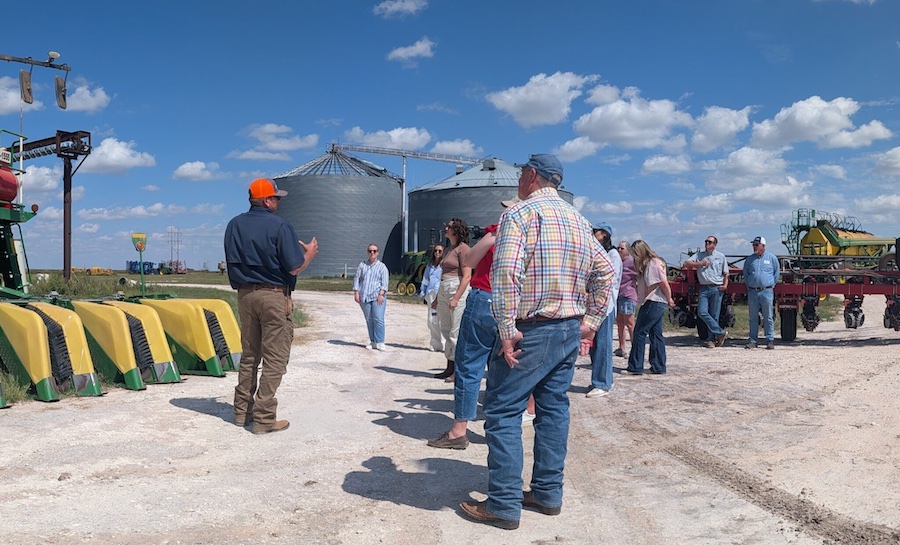
Avalo, Texas, USA 2026
The Better Cotton Initiative (BCI) has partnered with agriculture solutions company Avalo, whose platform accelerates the speed at which plants with key resiliency traits may be developed.


Informed by nature and powered by AI, Avalo’s platform revolutionises plant breeding for climate-resilient crops, including cotton, by identifying key plant traits to develop seeds requiring less water and fertiliser. In creating their own genetics, the company is able to shorten the time it takes to develop new and more locally-adapted varieties, which would enable producers to more quickly adapt to climatic issues.

Avalo has worked with BCI in enrolling a significant number of new producers for the 2026 season, testing an online platform intended for use among multiple programmes to collect and report data.

Ashley Barrington, BCI Senior Country Manager – US said: “Serving as both a BCI Member and local partner, Avalo is supporting the growers we work with by streamlining data collection and compliance processes across certifications while providing technical assistance in the field.”

The company’s developments in cotton would also mean fewer inputs needed at a time when prices are low and production costs have been mounting, signifying environmental as well as financial impacts. Avalo reported that roughly two-thirds of their cotton sold was based on brand demand from those committed to regenerative farming. Brands were interested in the programme not only for its advancement in regenerative agriculture, but also the data and farmer equity aspects.

BCI-Certified farms in the Texas High Plains have already begun contracting with Avalo to grow its cotton varieties. The company is working with BCI’s longtime US Programme Partner, Quarterway Cotton Growers, who were eager to get involved.

Quarterway CEO, BCI Group Manager and cotton farmer Todd Straley said: “If this works, it will save us. With limited water and more intense heat on the Texas High Plains, breeding for more extreme conditions is the only way growing cotton in our region will remain viable for farming families. By partnering with Avalo and BCI, our organisations work toward a common goal of ensuring the resilience of Texas High Plains cotton.”

Avalo was represented at BCI’s NYC Member & US Programme Partner Meeting this past June and will be participating in the organisation’s upcoming US field event Cotton & Beyond: Regenerative Agriculture in the Texas High Plains, in September. BCI’s Ashley Barrington will also take part in the region’s Avalo Farm Days later that month.

Tricia Carey, Avalo’s Chief Commercial Officer, said: “At Avalo, we work across data, agronomy and genetics to help farmers grow cotton that’s better for their land and their livelihoods, and partnering with the Better Cotton Initiative lets us bring that work directly to more growers, at scale. Together, we can lower the impact of cotton production while strengthening the resilience and profitability of the farmers at the heart of it.”

To learn more about BCI’s collaboration with Avalo, contact us.team@bettercotton.org.


More News from Better Cotton

More News on Raw Materials

#Raw Materials

Cotton Brazil Dialogues 2026 concludes with 50 international participants immersed in Brazilian cotton production

The Cotton Brazil Dialogues concludes its 2026 edition after a series of technical visits to farms, cotton gins and reference centers, as well as workshops focused on Brazilian cotton production. A total of 50 participants from 14 countries took part in the field trips. The initiative is led by the Brazilian Association of Cotton Growers (Abrapa) and the National Association of Cotton Exporters (Anea), with support from the Brazilian Trade and Investment Promotion Agency (ApexBrasil).

#Raw Materials

Global cotton production projected to outpace consumption, but risks remain

Global cotton production is projected to reach 26.2 million tonnes in the 2026/27 season, marginally outpacing estimated consumption of 25.9 million tonnes. However, early-season production risks — including weather volatility and pest pressures — could narrow that buffer as the crop progresses, according to the September 2026 issue of Cotton This Month, published by the International Cotton Advisory Committee (ICAC).

#Natural Fibers

Global garment trade nears USD 550 billion as competition intensifies

The global garment industry has undergone a dramatic transformation over the past two decades, with knit and woven garments together accounting for nearly 60% of world textile exports in 2025, according to the August 2026 issue of The Textiles Observer, a free publication from the International Cotton Advisory Committee (ICAC).

#Raw Materials

Brazil sets new cotton export record and consolidates global leadership

Brazil ended the 2025/26 commercial year with a new record, consolidating its position as the world’s largest cotton exporter. Between August 2025 and July 2026, the country shipped 3,373,941 tonnes of the fiber, 19% more than in the previous cycle, and reached record revenue of US$5.3 billion. The result represents a milestone in Brazil’s expansion in the international market and reinforces the country’s role as a strategic supplier to the global textile industry.

Latest News

#Weaving

Lindauer DORNIER GmbH welcomes new apprentices and dual-study students

For 22 new “DORNIER Talents”, these days mark the beginning of a new chapter at Lindauer DORNIER. For the family-owned company, in-house training is a key pillar in developing skilled professionals and retaining them within the company for the long term.

#Research & Development

Novel flame-retardant and recyclable fiber-reinforced composite

Airplanes and passenger trains must meet strict safety requirements, including fire safety standards. This calls for materials that are flame-retardant, lightweight, robust, and scalable. Empa researchers, in collaboration with their industry partner Elantas, have now succeeded for the first time in making such a material – a composite – fully recyclable.

#Composites

WHILL selects Teijin’s tough, lightweight Carbon Fiber Composite for new last-mile mobility

Teijin Limited announced today that WHILL Inc., a global leader in inclusive mobility technology, has selected Sereebo® P CFP series, a carbon fiber-reinforced thermoplastic (CFRTP) material, for key structural components of the upcoming WHILL Model C Lite. Sereebo® P CFP series provides high strength, light weight, design flexibility and system cost advantages to the Model C Lite, which is a battery powered, single-seat, last-mile device. This new model combines maneuverability with light weight and one-handed folding to ensure ease of handling and operation.

#Textile chemistry

ZymoChem secures $4 million in renewed federal funding to advance U.S. biomanufacturing of critical materials and their supply chains

ZymoChem, the specialty chemicals company dedicated to bringing decarbonization, sustainability, and supply chain resiliency to the chemical industry through innovative biological manufacturing, today announced the resumption and expansion of its federal research portfolio. The company has been notified that previously paused work under a $5 million U.S. Department of Energy (DOE) program is officially back on, to be joined by continuing collaborations with three of the nation's premier national laboratories.

TOP