[pageLogInLogOut]

#Textile chemistry

EMPA introduces friendly fibers for textiles without PFAS
Rain jackets, swimming trunks or upholstery fabrics: Textiles with water-repellent properties require chemical impregnation. Although fluorine-containing PFAS chemicals are effective, they are also harmful to human health and accumulate in the environment. Empa researchers are now developing a process with alternative substances that can be used to produce environmentally friendly water-repellent textile fibers. Initial analyses show: The "good" fibers repel water more effectively and dry faster than those of conventional products.
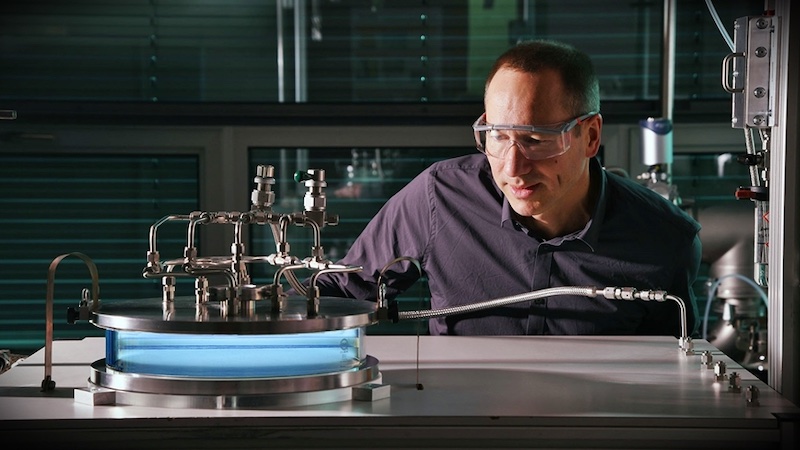
Empa researcher Dirk Hegemann develops plasma coating processes for environmentally friendly textiles © 2024  Empa
Empa researcher Dirk Hegemann develops plasma coating processes for environmentally friendly textiles © 2024 Empa


If swimming trunks are to retain their shape after swimming and to dry quickly, they must combine two properties: They must be elastic and must not soak up water. Such a water-repellent effect can be achieved by treating the textiles with chemicals that give the elastic garment so-called hydrophobic properties. In the 1970s, new synthetic fluorine compounds began to be used for this purpose – compounds that seemed to offer countless application possibilities, but later turned out to be highly problematic. This is because these fluorocarbon compounds, PFAS for short, accumulate in the environment and are harmful to our health (see box). Empa researchers are therefore working with Swiss textile companies to develop alternative environmentally friendly processes that can be used to give fibers a water-repellent finish. Dirk Hegemann from Empa's Advanced Fibers laboratory in St. Gallen explains the Innosuisse-funded project: "We use so-called highly cross-linked siloxanes, which create silicone-like layers and – unlike fluorine-containing PFAS – are harmless."

Shrouded in plasma clouds
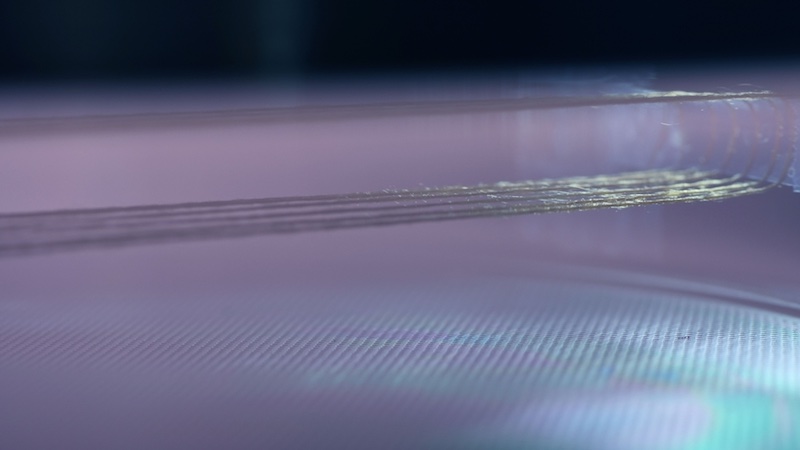
Plasma cloud: The plasma system atomizes environmentally friendly siloxanes into a cloud that can coat textile fibers with nanometer precision. Image: Empa


Empa's plasma coating facilities range from handy table-top models to room-filling devices. For the coating of textile fibers, the siloxanes are atomized and activated in a reactive gas. They thereby retain their functional properties and enclose the textile fibers in a water-repellent coating that is only 30 nanometers thin. Fibers coated this way can then be processed into water-repellent textiles of all kinds, for example garments or technical textiles such as upholstery fabrics.

The advantage over conventional wet-chemical processes: Even with complex structured textiles, the seamless distribution of the hydrophobic substances is guaranteed right into all turns of the intertwined fibers. This is crucial, because even a tiny wettable spot would be enough for water to penetrate into the depths of a pair of swimming trunks, preventing the garment from drying quickly. "We have even succeeded in permanently impregnating more demanding, elastic fibers with the new process, which was previously not possible," says Hegemann.


Great interest from industry

Where water cannot penetrate: Even stretched fibers allow the water droplet (blue) to roll off. (Microscopy, 30x magnification) Image: Cilander/Empa


In initial laboratory analyses, textiles made from the new fibers with an environmentally friendly coating are already performing slightly better than conventional PFAS-coated fabrics. They absorb less water and dry faster. However, the miraculous properties of the fluorine-free coating only really come into their own after the textiles have been washed several times: While the performance of conventional PFAS coatings in stretchy textiles declines considerably after repeated wash cycles, the fluorine-free fibers retain their water-repellent properties.

Hegemann and his team are now working on scaling up the fluorine-free laboratory process into efficient and economically viable industrial processes. "The industry is very interested in finding sustainable alternatives to PFAS," says Hegemann. The Swiss textile companies Lothos KLG, beag Bäumlin & Ernst AG and AG Cilander are already on board when it comes to developing environmentally friendly fluorine-free textiles. "This is a successful collaboration that combines materials, fiber technology and plasma coating and leads to an innovative, sustainable and effective solution," says Dominik Pregger from Lothos. And Bernd Schäfer, CEO of beag, adds: "The technology is environmentally friendly and also has interesting economic potential."
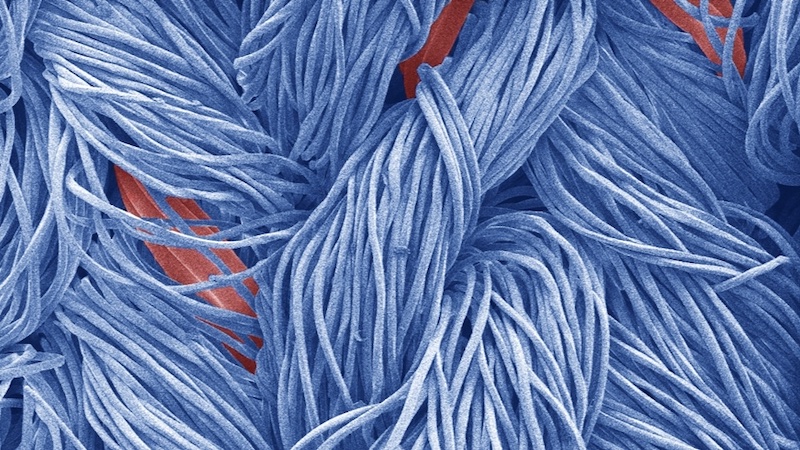

Textile fibers (blue) can be given a uniform water-repellent finish using plasma coating. Even more demanding elastic fibers (red) remain permanently impregnated thanks to the new process. (Scanning electron microscopy, colored) Image: Empa


More News from TEXDATA International

#Techtextil 2026

Textile Chemicals & Dyes: Innovation in Textile Chemistry moves into focus at Techtextil 2026

From PFAS-free finishes and water-saving dyeing technologies to advanced coatings and recycling-compatible formulations, innovation in textile chemistry is accelerating across the industry. Reflecting this development, Techtextil 2026 introduces Textile Chemicals & Dyes as a dedicated product segment, highlighting the growing role of chemical solutions in shaping the next generation of technical textiles.

#Recycling / Circular Economy

textile.4U publishes special edition “Top 100 Textile Recycling Companies 2025”

With a comprehensive 176-page special edition, textile.4U is dedicating its latest issue entirely to one of the most dynamic and influential topics in today’s textile industry: textile recycling. The new issue, published exclusively in high-quality print, presents the Top 100 textile recycling companies researched and selected by TexData – organizations that already play a key role in the transition to circular textiles or are expected to have a significant impact in the near future.

#Recycling / Circular Economy

Responsible Textile Recovery Act of 2024 signed by Governor

Senator Josh Newman (D-Fullerton) is proud to announce that Senate Bill 707 (SB 707), the Responsible Textile Recovery Act of 2024, has been signed into law by the Governor of California, Gavin Newsom. This groundbreaking legislation establishes the country’s first Extended Producer Responsibility (EPR) textile recycling program, marking a significant step forward in the state’s efforts to combat waste and promote sustainability.

#Textiles & Apparel / Garment

Modtissimo promotes sustainability with 28 coordinates in the Green Circle

Modtissimo is proving more and more to be a textile and clothing show that delivers the latest innovations in the area of sustainability, with the iTechStyle Green Circle being the main showcase for companies' creations. In this 60+4 edition, taking place on 12 and 13 September, 28 coordinates will be exhibited in a section organised by CITEVE and curated by Paulo Gomes.

More News on Textile chemistry

#Textile chemistry

DyStar Group announces Board transition to drive innovation

DyStar, a leading specialty chemical company with a heritage of more than a century in product development and innovation, announced today the appointment of Ruan Cunfan to its Board of Directors, effective 20 February 2026.

#Textile chemistry

Jeanologia urges industry to accelerate PP Spray phase-out following ZDHC Watchlist update

Potassium permanganate has officially entered the Chemical Watchlist of the ZDHC Foundation, signaling increased scrutiny and potential phase-out of one of the most hazardous chemicals still used in denim finishing. The inclusion confirms an industry shift that Jeanologia anticipated more than a decade ago.

#Textile chemistry

RUDOLF gets the exclusive global distribution rights for Sanitized® textile technologies

With effect from today, RUDOLF officially assumes exclusive global distribution rights for Sanitized® textile technologies from SANITIZED AG. This is the next milestone in the strategic collaboration announced in 2025, with the partnership between the two companies now fully implemented and expanded worldwide.

#Denim

organIQ seek: smart alternative to potassium permanganate

CHT Group announces new technical findings within its organIQ seek platform that significantly advance the transition toward permanganate-free denim bleaching. Through extensive industrial testing and application research, CHT confirms that organIQ seek can now be used with remarkable effectiveness as a substitute for potassium permanganate in spray bleach, while remaining aligned with sustainability expectations and cost realities in the European market. At the COLOMBIATEX in Medellín as well as at the Exintex in Puebla and the Kingpins Show in Amsterdam the CHT Group will present organIQ seek as an alternative to potassium permanganate.

Latest News

#INDEX 2026

EDANA unveils nominees for INDEX™26 Awards: Highlighting the next generation of nonwoven excellence

EDANA is proud to unveil the highly anticipated nominees for the INDEX™26 Awards, the nonwoven industry’s highest accolade for technical and sustainable excellence. Out of a record-breaking field of entries, these finalists represent the cutting edge of material science—from bio-based hygiene fibers and PFAS-free protective textiles to revolutionary water-filtration machinery. Each nominee has been selected by a jury of industry experts for their ability to solve critical global challenges, including the transition to a circular economy and the pursuit of enhanced consumer performance.

#Raw Materials

Lenzing Group positions bio‑based materials as a strategic asset for Europe’s economic security

The Lenzing Group, a leading supplier of regenerated cellulose fibers for the textile and nonwovens industries, hosted a high‑level roundtable in Brussels to discuss how bio‑based materials can strengthen Europe’s economic security and support the shift toward a fossil‑free future. Organized in cooperation with Euractiv, the event brought together representatives of the European Commission, the UK Mission to the EU, academia, civil society, and industry.

#Natural Fibers

Beyond Cotton: Natural Fibres in the Spotlight at the Bremen Cotton Conference - Branded by DNFI

Climate targets, fragile supply chains, and rising regulatory requirements are fundamentally changing the perspective of the textile industry - the focus is increasingly shifting toward the base material. Not only cotton, but natural fibres are gaining significant importance: they stand out not only because of their outstanding functional properties, but also because they make a valuable contribution to the bioeconomy and responsible product development.

#Textiles & Apparel / Garment

Coats to showcase innovative reinforcement and filler materials for leather goods and accessories at APLF 2026

Coats, a world-class Tier 2 manufacturer and trusted partner for the apparel and footwear industries, will be promoting four advanced materials from its ‘Lifestyle Solutions’ portfolio at APLF 2026 in Hong Kong in March. Each innovation has been specifically engineered to help luxury and premium brands elevate the craft, durability, sustainability and creative expression required in the manufacturing of handbags, purses, and other high-end designer accessories.

TOP