[pageLogInLogOut]

#Sustainability

Lenzing reaches a new milestone on the path to climate-neutral production

Lenzing Group, a leading provider of sustainably produced specialty fibers for the global textile and nonwoven industries, is continuing to make great strides toward achieving carbon neutrality across the Group. The successful completion and commissioning of an air purification and sulfur recovery plant at the Lenzing facility marks another milestone in the Group’s ambitious strategy. Lenzing has invested some EUR 40 mn in this project since construction began in 2019.
  • New air purification and sulfur recovery plant up and running at the Lenzing facility
  • Another step closer to meeting sustainability and climate targets
  • Self-sufficiency in raw materials further enhanced

Using state-of-the-art technology, the plant will enable carbon emissions to be reduced by 15,000 metric tons at the Lenzing facility. This will also make the group more self-sufficient in securing vital raw materials for processing, which will bolster the site’s competitive standing in terms of sustainability.


“As a result of this investment, Lenzing has made further progress towards implementing its climate targets, while achieving much greater autonomy with regard to one of its core raw materials”, says Christian Skilich, Member of the Managing Board at Lenzing Group.

In 2019, Lenzing set the strategic target of halving its group-wide greenhouse gas emissions per ton of product by 2030. Its goal for 2050 is to achieve climate neutrality.


More News from Lenzing

#Raw Materials

Lenzing Group positions bio‑based materials as a strategic asset for Europe’s economic security

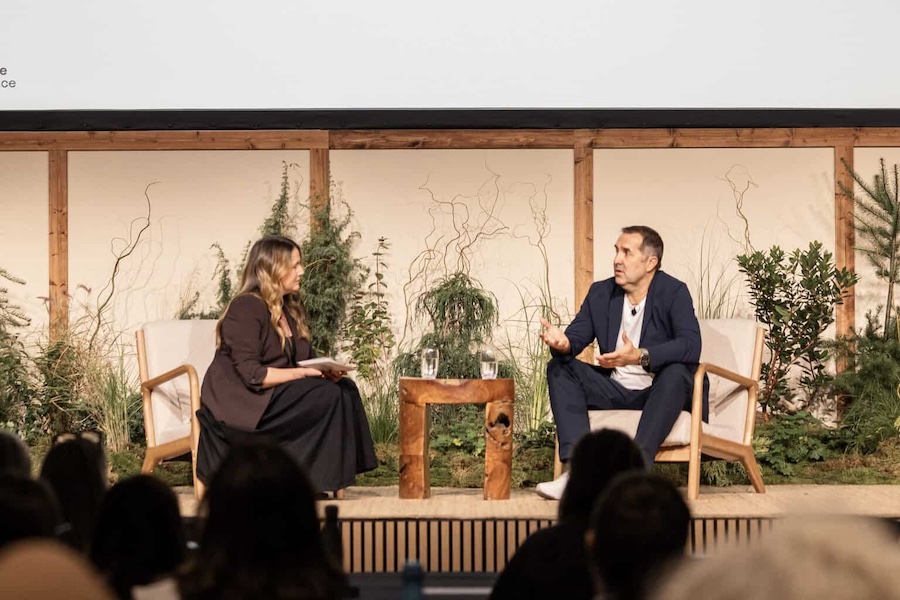
The Lenzing Group, a leading supplier of regenerated cellulose fibers for the textile and nonwovens industries, hosted a high‑level roundtable in Brussels to discuss how bio‑based materials can strengthen Europe’s economic security and support the shift toward a fossil‑free future. Organized in cooperation with Euractiv, the event brought together representatives of the European Commission, the UK Mission to the EU, academia, civil society, and industry.

#Man-Made Fibers

Lenzing AG to become majority owner of TreeToTextile AB and accelerates industrialization of new fibers

The Lenzing Group is taking another strategic milestone by acquiring a controlling majority in the Swedish innovation company TreeToTextile AB. This step strengthens Lenzing’s position as a leading provider of sustainable, wood‑based specialty fibers and expands its innovation pipeline with a highly scalable, patent‑protected technology platform. The transaction is executed through the issuance of new shares.

#Man-Made Fibers

Fourth CDP Triple “A” Rating reinforces Lenzing’s leadership in sustainability

Lenzing AG has once again been recognized by the global nonprofit organization CDP for its transparent reporting performance in the areas of climate change, forests, and water security. This places Lenzing among only 23 companies worldwide that made it on the “Corporate A List” across all three categories in 2025 – out of more than 22,000 companies that disclosed their environmental data. For Lenzing, this marks the fourth time the company has achieved this prestigious triple‑“A” rating.

#Man-Made Fibers

Lenzing AG announces new leadership and establishment of Executive Committee

Lenzing AG announced that Rohit Aggarwal, Managing Board Member and Chief Executive Officer of Lenzing AG, has informed the Supervisory Board of his decision to resign from his position due to personal reasons, effective 31 January 2026. To support a smooth transition, Mr. Aggarwal will remain with Lenzing AG as an advisor to the company until end of September 2026. The Supervisory Board expresses its appreciation for Mr. Aggarwal’s leadership and contributions during his tenure.

More News on Sustainability

#Sustainability

GOTS version 8.0 released: advanced supply chain accountability, from fibre to finished product

Global Standard is pleased to announce the release of GOTS Version 8.0, the latest update to the world's leading processing standard for organic textiles. The updated Standard strengthens requirements for air emissions and waste management, as well as criteria for product safety. It introduces new provisions on circularity, microfibre management and updates in residue testing. Version 8.0 also elevates due diligence obligations and formalises governance requirements, including ESG disclosure, anti-corruption policies and conflict-of-interest safeguards, to support credible, responsible business conduct.

#Sustainability

The nova-Institute establishes new Renewable Feedstock Department to lay the groundwork for industrial defossilisation

The transition from fossil-based to renewable carbon – sourced from biomass, CO₂ utilisation and recycling – is the cornerstone of a climate-neutral chemical industry. The nova-Institute’s new department is dedicated to providing the essential data, analyses and strategic roadmaps required to secure a reliable future feedstock supply and make this transition a commercial and ecological reality.

#Sustainability

Textile Exchange unveils commitment-based pathway for members to accelerate responsible raw material production

Textile Exchange has unveiled further details about its new membership structure, designed to guide the fashion, textile, and apparel industry in a collective course of action toward preferred production systems for raw materials and fibers.

#Textile chemistry

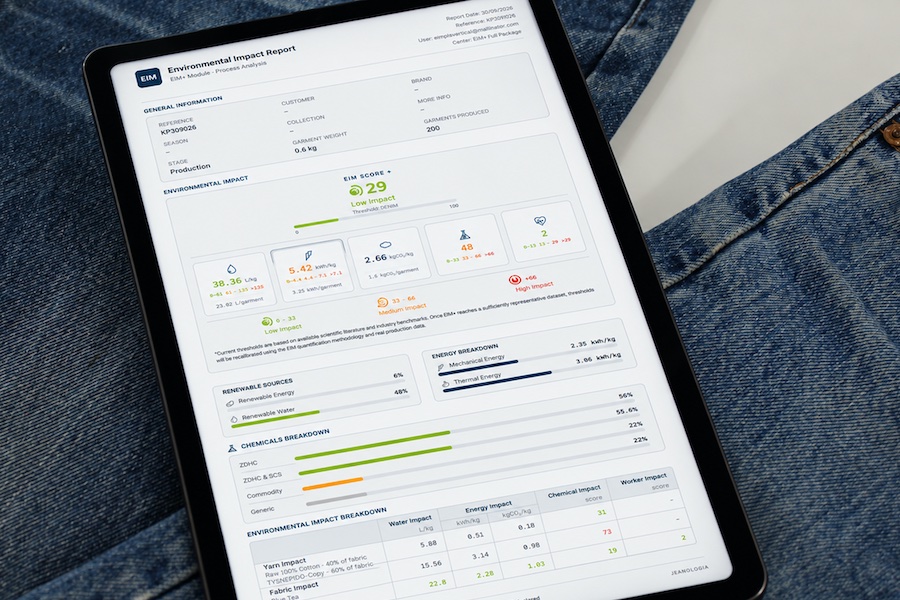
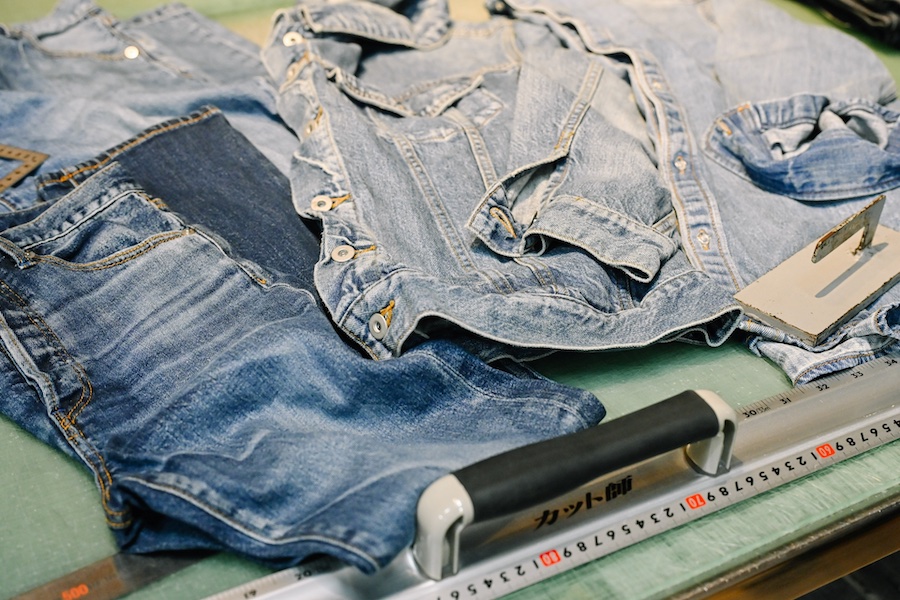
Jeanologia urges industry to accelerate PP Spray phase-out following ZDHC Watchlist update

Potassium permanganate has officially entered the Chemical Watchlist of the ZDHC Foundation, signaling increased scrutiny and potential phase-out of one of the most hazardous chemicals still used in denim finishing. The inclusion confirms an industry shift that Jeanologia anticipated more than a decade ago.

Latest News

#Techtextil 2026

DIENES at Techtextil 2026: Flexible pilot lines for bio-based fiber development

The growing relevance of bio-based materials in technical textiles is accompanied by increasing demands for reproducibility, high-quality data, and scalable process routes. Especially when working with cellulose and its derivatives, chitosan, lignin-based approaches, or bio-based PAN as a carbon-fiber precursor, R&D teams face variable feedstock quality, tighter process windows, and the need for reliable comparability across trials. This calls for flexible, data-driven experimental setups that can be reconfigured efficiently when recipes, solvents, and raw-material batches change.

#Texprocess 2026

Gunold showcases embroidery product range and services at Texprocess

At Texprocess 2026, GUNOLD will present numerous hands-on examples related to embroidery in Hall 8, Booth E20. The focus is on creative embroidery designs as well as the extensive product range of threads, nonwovens, and accessories for embroidery and embellishment. “Trade visitors can once again look forward to many new and creative embroidery designs. Of course, we will also showcase the matching products required to bring these ideas to life,” announces Marketing Manager Stephan Gunold.

#Nonwovens

EDANA and more than 70 industry organisations call for consistent exemptions in EU packaging regulation

EDANA, together with more than 70 industry associations and organisations, has issued a joint statement commenting on the European Commission’s Delegated Act under Article 29 of the Packaging and Packaging Waste Regulation (PPWR).

#Raw Materials

A Powerful Opening: Global thought leaders launch the International Cotton Conference Bremen

The International Cotton Conference Bremen will open on 25 March 2026 in the Parliament building of the Free Hanseatic City of Bremen with a keynote session of exceptional calibre. Distinguished international experts will set the stage for the conference by offering incisive perspectives on the most pressing challenges and the defining trends shaping the future of the global cotton trade. Their insights will span a broad spectrum — from geopolitically driven disruptions affecting global supply chains to the opportunities emerging from innovation-led agriculture capable of supporting a growing world population. Together, these opening keynotes will frame the dialogue of the conference, highlighting both the complexity of today’s market environment and the pathways toward a resilient and forward-looking cotton sector.

TOP