[pageLogInLogOut]
USTER Think Quality

#Spinning

Polymer Processing Solutions is operating under the Barmag brand again
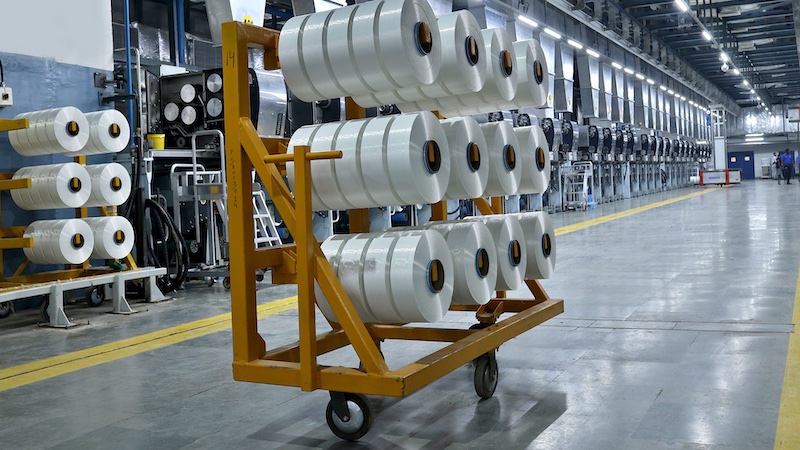
The Polymer Processing Solutions Division Of Swiss Oerlikon is returning to its roots and will now be operating under the renowned brand name Barmag again This step is part of Oerlikon's long-term pure-play strategy, with which the company intends to further expand its market position as a leading supplier of surface technologies while continuing to manage the manmade fibres business in an independent subsidiary. In 2024, the Polymer Processing Solutions business stabilised despite a challenging market environment.
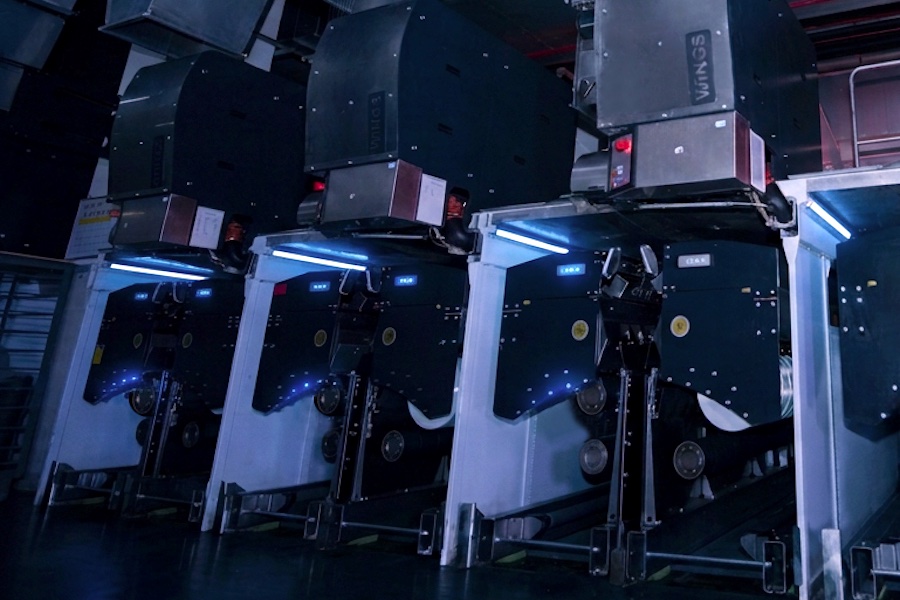
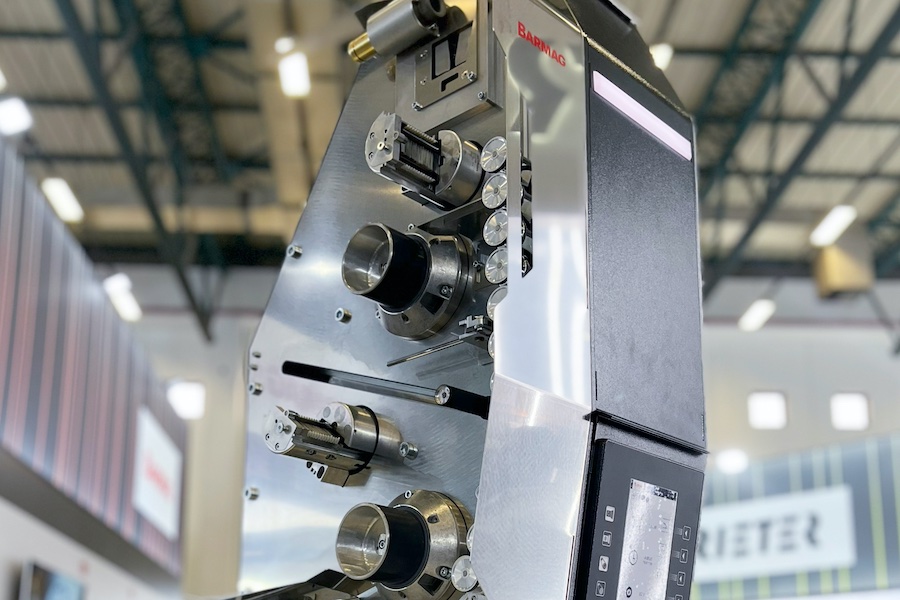
For decades, Barmag has been synonymous with innovation and quality in the manmade fibre and plastics processing industries © 2025 Oerlikon


Strengthening of market presence through return to the Barmag brand

With effect from 1 January 2025, the manmade fibre business was established as an independent subsidiary within the group and has since been operating under the traditional name Barmag. The organisational separation from Oerlikon Surface Solutions enables an even stronger focus on the specific needs of the market for manmade fibre solutions.

Michael Suess, Executive Chairman of Oerlikon, stated: “Our pure-play strategy has achieved an important milestone. Effective January 1, 2025, Oerlikon is a leader in surface technologies with its subsidiary for manmade fibers solutions, Barmag. For the final separation, we are making good progress in evaluating various options over the next 12-24 months. Our ultimate goal remains to create maximum value for all stakeholders.” 

Generational change in the company’s operational leadership

Oerlikon appoints Dirk Linzmeier, 48, as Chief Operating Officer (COO) and Member of the Executive Committee, effective April 1, 2025. As part of the company’s strategic transition to pure play the newly created COO role will lead the Surface Solutions business operations under the name Oerlikon and will report to Executive Chairman Michael Suess. 

Changes to the Board of Directors 

As part of its long-term succession planning, the Board of Directors has nominated Dr. Stefan Brupbacher, Marco Musetti and Dr. Eveline Steinberger for election as new members at the upcoming Annual General Meeting on April 1, 2025. They will succeed Irina Matveeva, Gerhard Pegam and Zhenguo Yao who will not stand for re-election. These announced changes to the Board are aligned with Oerlikon’s current strategic transformation into a leader in surface technologies, strongly rooted in Swiss quality and innovation culture.

Important pure-play milestone achieved: Oerlikon is a leader in surface technologies with a subsidiary for manmade fibers solutions 

In February 2024, Oerlikon announced the final step in its long-term pure-play strategy, stating that it will focus on high-tech surface solutions and advanced materials moving forward. 

Throughout 2024, Oerlikon initiated and progressed the organizational separation of Manmade Fibers (Polymer Processing Solutions excluding HRSflow). As of January 1, 2025, this business operates as a stand-alone subsidiary and will adopt the traditional Barmag name. Georg Stausberg will remain on the Executive Committee and continue to report to Executive Chairman Michael Suess. HRSflow will be reported as part of Surface Solutions, effective January 1, 2025. 

As announced in November 2024, Oerlikon began implementing its efficiency plan to combine the Corporate and Surface Solutions Division functions to align costs with the pure-play scope. To ensure business continuity and retain talent, Oerlikon introduced a retention plan. This streamlining will result in an agile and lean organization. 

These steps lay the groundwork for Oerlikon to focus exclusively on surface technologies. Oerlikon is on track with evaluating options for the separation of Barmag (Manmade Fibers) over the coming 12-24 months, with the aim of creating value for all stakeholders. 

Oerlikon has been transforming from an industrial conglomerate into a surface technologies leader over the last decade. The Group has streamlined from five divisions to its current two, using the proceeds for dividends and to develop both divisions organically and inorganically. Surface Solutions is now a resilient market leader, diversified across technologies, end markets and geographies. Barmag (Manmade Fibers) is the clear filament equipment market leader in terms of innovation and sustainability, showing growth through the cycle and attractive returns. 

Oerlikon Group 2024 financial overview

In 2024, the Group’s organic order intake was roughly stable year-over-year at constant FX (-1.8%) despite the difficult environment. Organic sales decreased (-10.1%) at constant FX, driven by Polymer Processing Solutions’ order downturn in 2023.

Operational EBITDA was CHF 393 million (2023: CHF 444 million), or 16.6% of sales (2023: 16.5%). This represents a strong margin in the context of lower sales, supported by efficiency, innovation, and pricing. Oerlikon’s net result was 72 million, an increase of 209.6% compared to last year's level which was impacted by one-off charges.

Dividend of CHF 0.20 per share

The Board will recommend to shareholders an ordinary dividend payout of CHF 0.20 per share at the AGM on April 1, 2025, taking place at ENTRA, Rapperswil-Jona, Switzerland.

2025 outlook 

At the Group level, Oerlikon expects organic sales at constant FX to be stable or to increase by a low single-digit percentage. Innovation, pricing and efficiency at Surface Solutions is expected to be offset by a transitorily lower margin at Barmag (Manmade Fibers). As a result, Oerlikon expects ~15.5% operational EBITDA margin for the Group. 

Barmag (Manmade Fibers) is expected to have stable or a low single-digit percentage increase in organic sales at constant FX. Order intake is expected to have seen the trough in 2024. Operational EBITDA margin is expected at ~7.5% (2024: 10.3%). This represents a year-over-year decrease as a result of transitory price concessions done in 2024 to maintain order volume. Beyond 2025, Barmag’s (Manmade Fibers) operational EBITDA margin is expected to be positively impacted by a pricing recovery and the ongoing optimization of manufacturing footprint.

Polymer Processing Solutions Division

Following the filament downturn in 2023, Polymer Processing Solutions’ order intake stabilized year-over-year throughout 2024 (-2.1% at constant FX) and showed a slight increase (+4.1% at constant FX) in Q4. The division saw positive momentum in small- and mid-sized filament orders in 2024. However, sluggish industrial production, as indicated by PMIs, impacted the non-filament business, where H2 orders decreased to 2016 trough levels.

Sales in 2024 at constant currency declined by 23.0%, reflecting the postponement of orders in 2023 (Q4 sales: +4.6% at constant FX). 

The division achieved a strong operational EBITDA margin of 12.8% in 2024 (15.2% in Q4) despite 25% lower sales than in 2023 and 43% lower sales than in 2022. This was supported by the early and effective cost measures implemented throughout the cyclical downturn, counteracting lower volume and limited pass-through of higher input costs to maintain volume. 

Notably, the Polymer Processing Solutions division launched important innovations in 2024, including advanced energy-efficient technologies and components for manmade fiber production, and new digital applications for atmos.io, the innovative digital environment solution for enhanced productivity and material quality.

Key figures as of December 31, 2024 (CHF million)
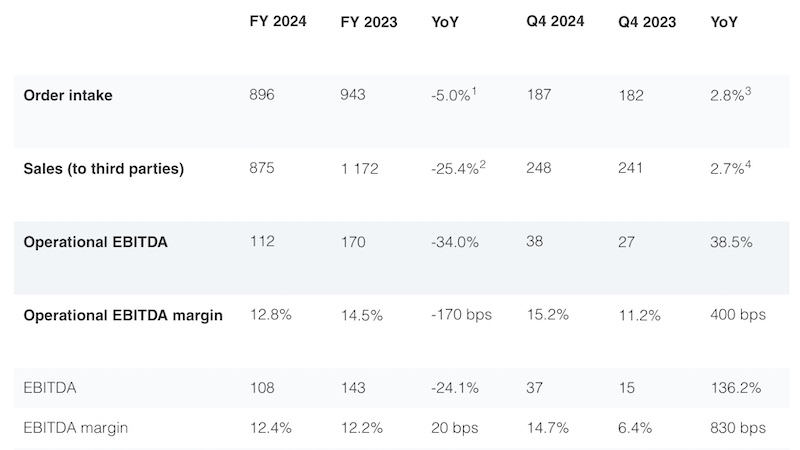
Due to rounding, some totals may not correspond with the sum of the separate figures. For the reconciliation of operational and reported EBITDA figures, please see earnings presentation. 1?Impact from M&A: +2.2%, foreign exchange (FX): -3.0%, organic: -1.6%. 2?Impact from M&A: +1.8%, FX: -3.2%, organic: -0.1%. 3 Impact from M&A: 0%, FX: -1.6%, organic: -3.0%. 4?Impact from M&A: 0%, FX: -2.2%, organic: -1.2%.


More News from Barmag, Zweigniederlassung der Barmag GmbH & Co. KG

#Spinning

Barmag’s single-stage Bi-Shrinkage concept impresses with yarn quality and efficiency

The Indian company Garden Silk Mills Pvt. Ltd. adopts Barmag's new single-stage Bi-Shrinkage Yarn (BSY) spinning concept based on WINGS FDY PLUS eco. The systems, which have been in operation for about a year, deliver excellent yarn quality with very good productivity.

#India ITME 2026

Barmag to showcase next-generation spinning technologies and smart factory solutions at India ITME 2026

The textile industry is entering a groundbreaking era. Manufacturers face rising energy prices, growing sustainability demands, increasing labor shortages, and an unprecedented need for flexibility. For a globally active textile industry, where competitiveness is closely linked to production efficiency and cost leadership, this means that technology is no longer merely a means of improving operational processes – it is increasingly becoming a strategic differentiator. Against this backdrop, Barmag will present a innovation portfolio at India ITME that goes far beyond incremental machine upgrades.

#Spinning

Barmag’s automated maintenance processes for quality, safety, and efficiency in spinning plants

Maintenance and service processes in chemical fiber spinning plants have a significant impact on product quality, equipment availability, and workplace safety. With three new retrofittable solutions, Barmag helps Producers make manual work processes more efficient, safer, and more reproducible.

#ITMA Asia + CITME 2026

ITMA Asia 2026: How Barmag is reshaping the future of man-made fiber production

The textile industry is entering a groundbreaking era. Manufacturers face rising energy prices, growing sustainability demands, increasing labor shortages, and an unprecedented need for flexibility. For a globally active textile industry, where competitiveness is closely linked to production efficiency and cost leadership, this means that technology is no longer merely a means of improving operational processes – it is increasingly becoming a strategic differentiator.

More News on Spinning

#Spinning

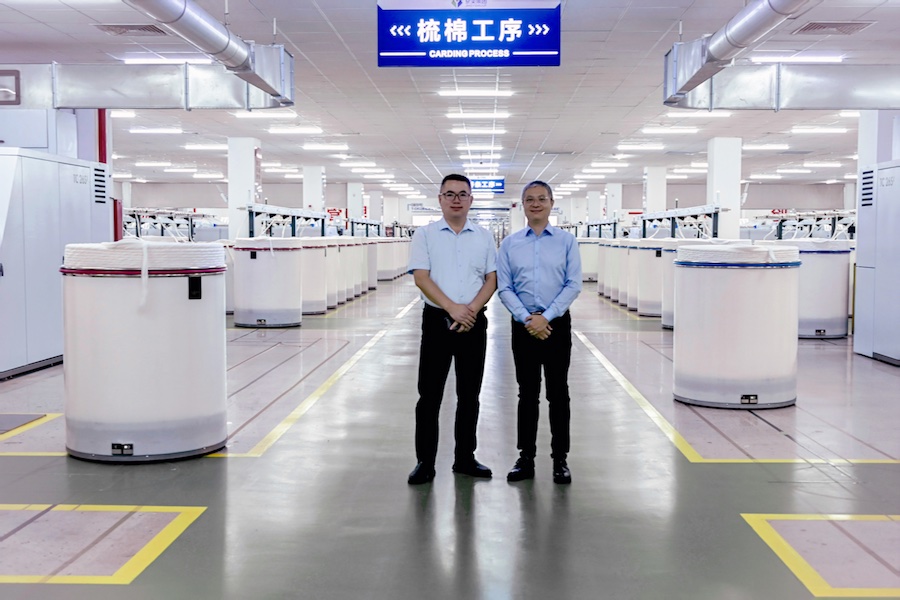
Trützschler's T-CAN reduces labor requirements by over 60% at Chinese spinning mill

Across the textile industry, mills are looking for ways to reduce labor dependency while maintaining full control of their production processes. However, manual can transport between spinning preparation machines often remains labor-intensive and prone to human error. To address this challenge, Trützschler developed T-CAN. The automated can transport system connects carding and drawing processes as well as drawing passages, ensures reliable material flow and reduces the need for manual intervention.

#ITMA Asia + CITME 2026

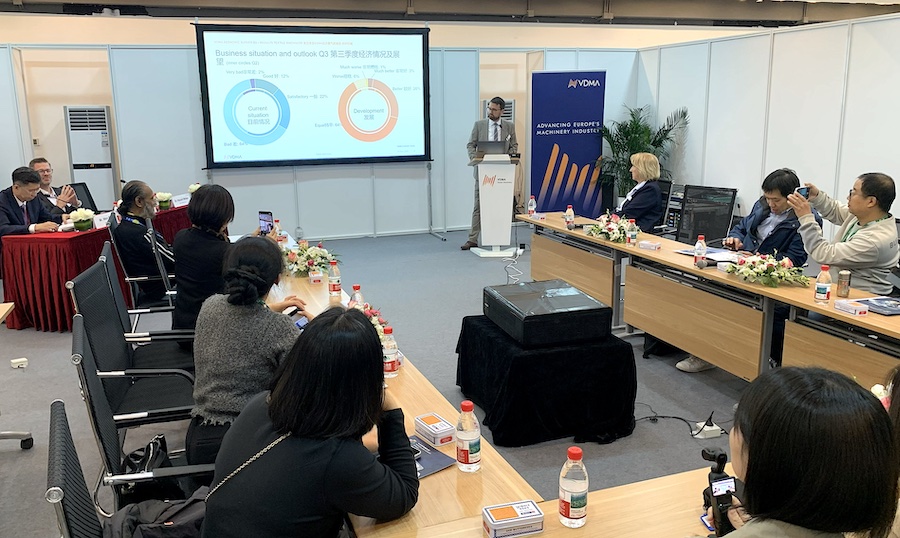
VDMA: German textile machinery manufacturers see signs of recovery as China remains a key market

Strong German participation at ITMA ASIA + CITME 2026 underscores China's importance for the textile machinery industry, while business surveys point to improving prospects for 2027.

#ITMA Asia + CITME 2026

Saurer showcases flexible spinning solutions from bale to yarn at ITMA ASIA + CITME 2026

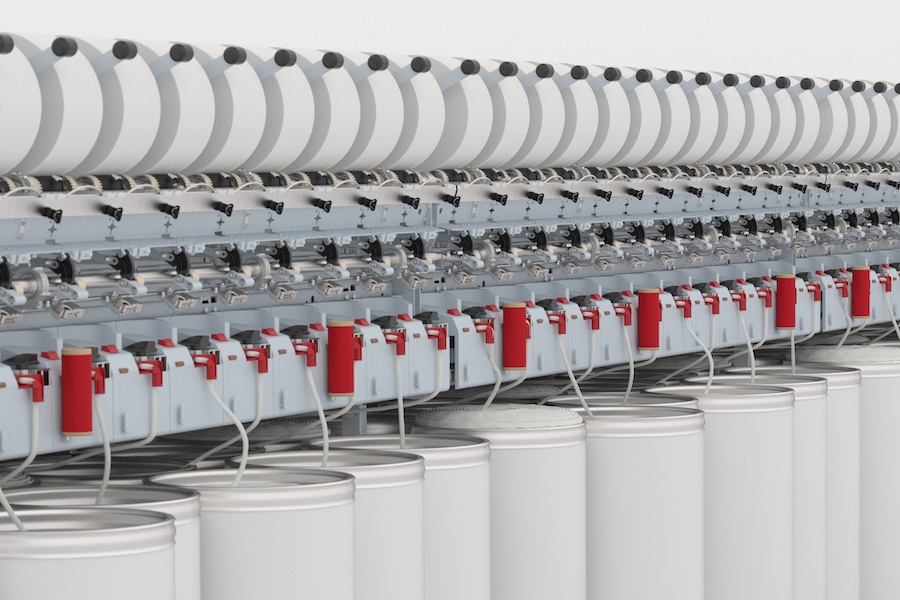
At ITMA ASIA + CITME 2026 in Shanghai, Saurer will demonstrate how its advanced technologies enable maximum flexibility across the entire spinning process, from bale to yarn and twisting. Visitors to hall 6.1, booth A58, can explore solutions designed to optimise production, improve efficiency and help mills respond quickly to changing market demands. Saurer's experts will be available to discuss individual production challenges and tailored solutions.

Latest News

#Textile processing

Jeanologia combines digitalisation, laser and ozone technology to strengthen China’s textile competitiveness

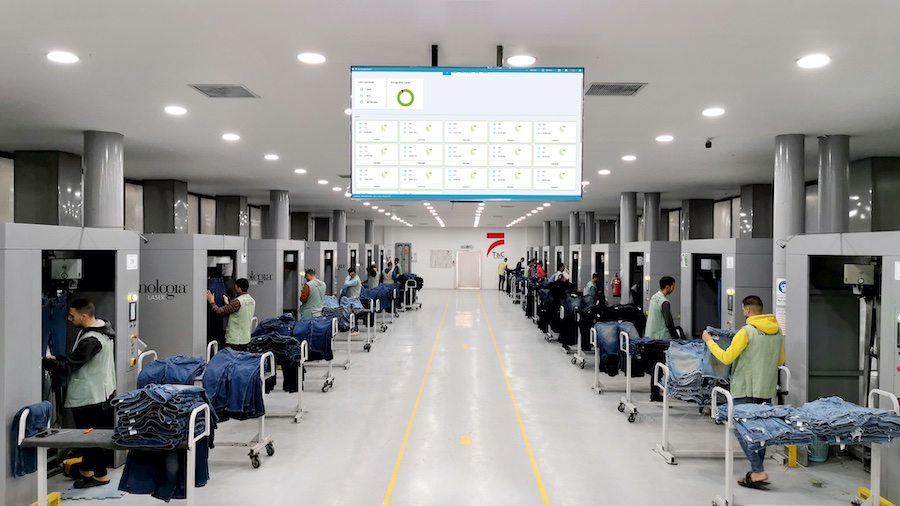
At ITMA Asia + CITME 2026 in Shanghai, Jeanologia showcased how the combination of digitalisation, laser technology and G2 Ozone can help China’s textile industry improve productivity, speed, quality and efficiency. With its Compact Super Flash laser system and integrated production concepts, the Spanish technology specialist demonstrated how connecting product development and industrial production can enable faster, more automated and sustainable manufacturing processes.

#Textile chemistry

Flame protection and OEKO-TEX® certification: Gulec Chemicals clears an important hurdle

Three halogen-free flame retardants from German specialist Gulec Chemicals have been included in the OEKO-TEX® list of accepted Active Chemical Products (ACP). The listing opens up additional opportunities for textile finishers, coaters and manufacturers of technical textiles seeking to combine demanding fire protection requirements with certification according to OEKO-TEX® STANDARD 100.

#Dyeing, Drying, Finishing

PLEVA improves dyeing consistency with inline microwave measurement of liquor pick-up

Consistent shades are essential in continuous textile dyeing. Yet variations in fabric absorbency or uneven padder pressure can go unnoticed until the end of the line. By then, hundreds of metres of fabric may already be affected and may become second-choice or rejected.

#Recycling / Circular Economy

DITF establishes CYCLOTEXUM recycling center to advance mechanical and solvent-based textile recycling

As part of the CYCLOTEXUM research project, the German Institutes of Textile and Fiber Research Denkendorf (DITF) established the CYCLOTEXUM recycling center. There, in collaboration with industry partners, the center develops application-oriented solutions for mechanical and solvent-based recycling processes. The technologies developed make a significant contribution along the textile value chain toward the efficient use of textile resources in the future and the transition of production in the German textile sector to a circular economy. The project was funded by the Ministry for the Environment, Climate and Energy Sector of the State of Baden-Württemberg.

TOP