[pageLogInLogOut]

#Spinning

World premiere: Innovative POY 2.0 spinning concept impresses at ITMA Asia + CITME 2025

Barmag presents the next generation of POY production – energy-efficient and partial-automated
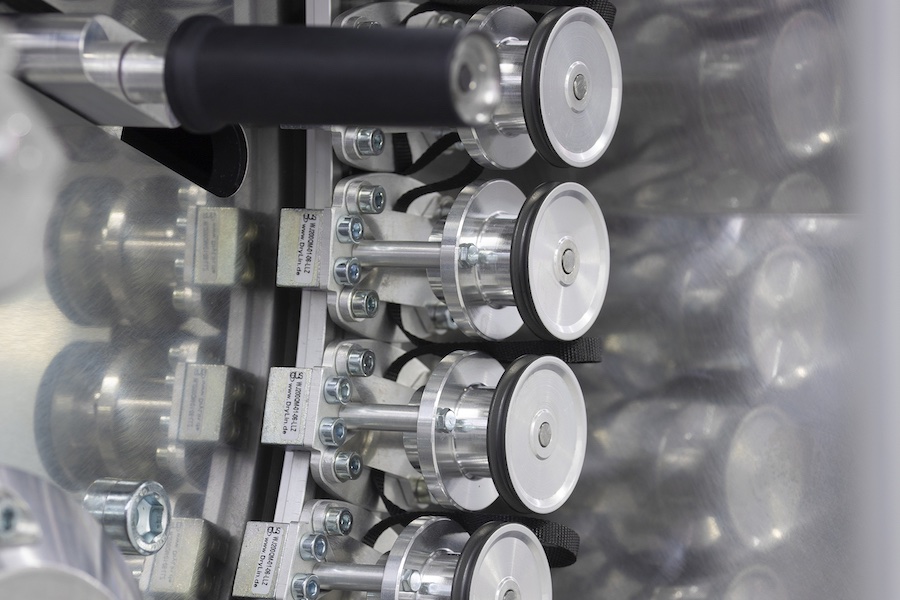
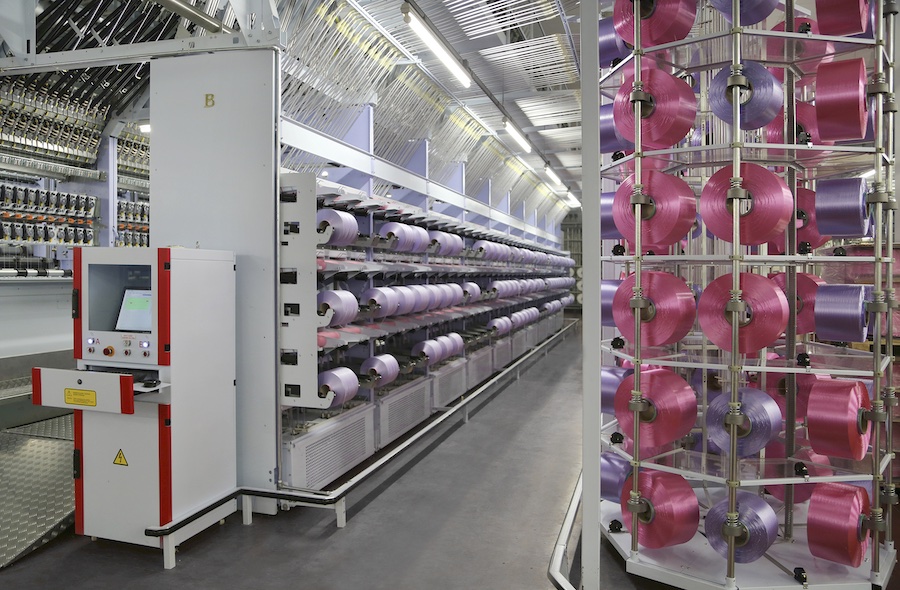
Barmag presented its innovative POY 2.0 spinning concept at ITMA Asia + CITME 2025 © 2026 Barmag
With POY 2.0, Barmag is introducing a completely redesigned spinning concept that takes the production of partially oriented yarn (POY) to a new level in terms of technology and economy. The solution, which was presented to a selected audience of experts for the first time at ITMA Asia + CITME 2025, was met with great enthusiasm: several yarn producers worldwide immediately expressed their interest in a pilot plant.

At the heart of the development of the new POY 2.0 spinning concept was a comprehensive analysis of the entire process chain – from spinning to winding – by Barmag engineers. The result: optimized core components, improved energy efficiency, and significantly simplified operating processes. The highlights along the production process:

Optimized DIO spin pack: more compact, more sustainable, more powerful.

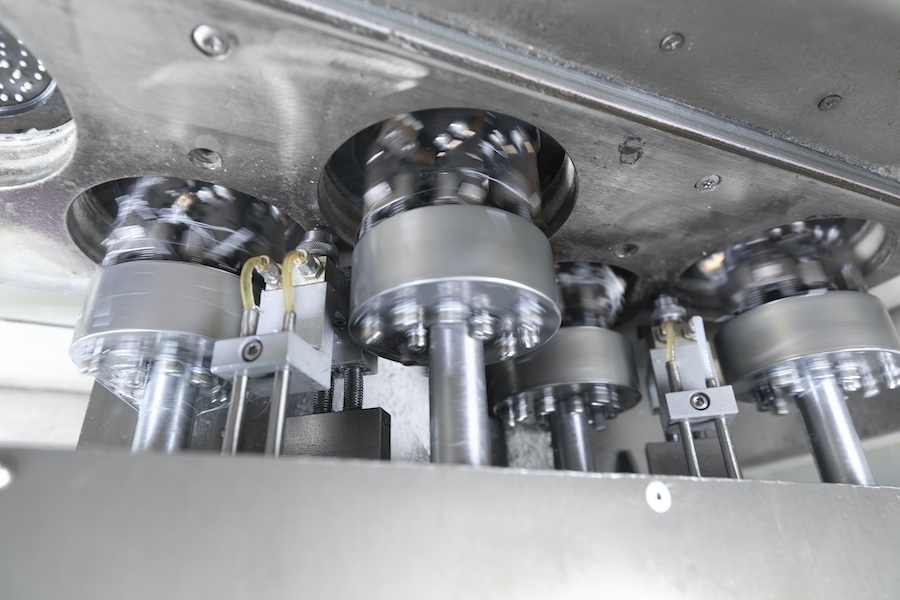
The new generation of the DIO spin pack has been further optimized in terms of its rheological properties and ensures even more homogeneous filament quality. The more compact design reduces the need for filter sand by around a third and the weight of the component by more than 30 percent. This lowers material consumption and makes handling easier. The spinning beam also benefits: the modified design reduces the surface area, resulting in energy savings of up to ten percent.

EvoQuench 2.0: higher process stability and easier operation

The EvoQuench radial quenching unit remains a central component of the process for uniform cooling of the filaments. The new EvoQuench 2.0 version makes it much easier to adjust the convergence length. More accessible controls shorten setup times and reduce the amount of waste material.

WINGS POY 2.0: automated string-up and lower waste rate

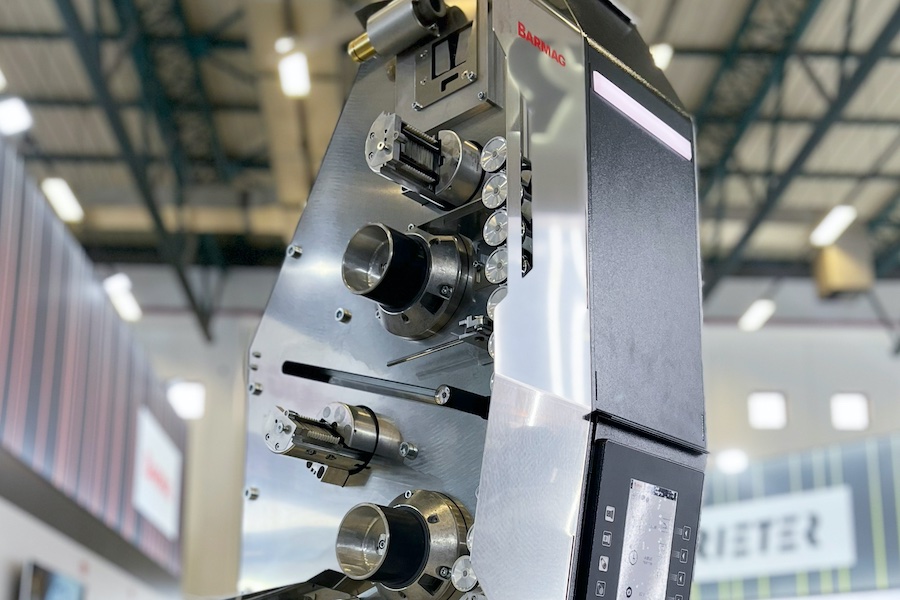
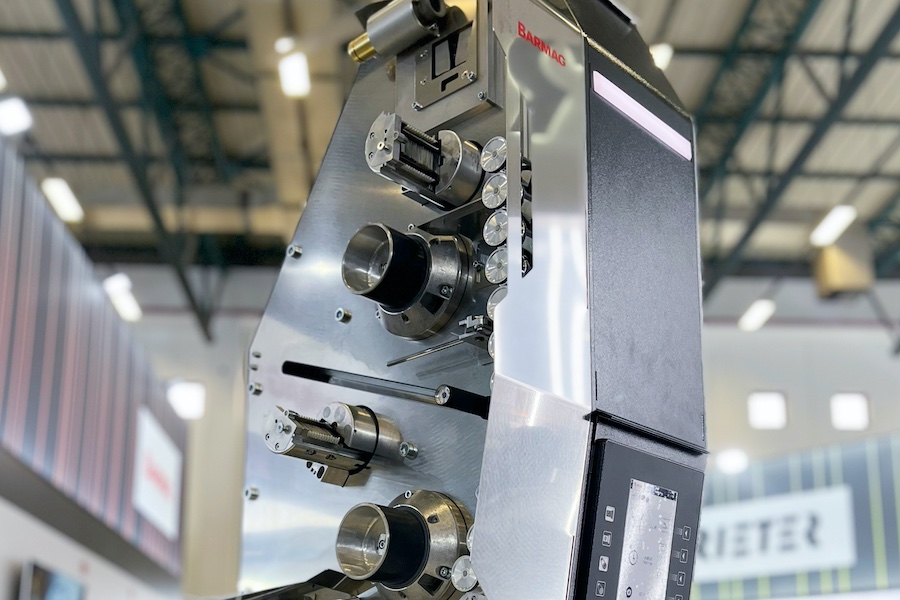
The heart of the new spinning line is the WINGS POY 2.0 winding machine. For the first time, the machine features an automatic string-up function – a long-awaited feature in the market that keeps string-up times consistently short and reduces waste in the long term. At the same time, the number of personnel required at the take-up level is reduced, which is a considerable advantage for many spinning companies given the increasing shortage of skilled personnel.

The new active quick returns facilitate the adjustment of product-specific parameters, especially for frequently changing yarn products and demanding qualities. They also ensure improved bobbin formation without overthrown yarn ends. Additional shielding of the chuck and bobbins permanently prevents the formation of fluffs. It stabilizes the yarn path and supports trouble-free production.

The new yarn end fixation also ensures greater process reliability: loose yarn ends are a thing of the past, which avoids unplanned machine downtime due to faulty sensor signals in subsequent automated logistics processes. The optimized XPT housing with a larger rotor stroke extends the parking time and increases flexibility during the doffing process. Overall, the system runs more stably and productively.
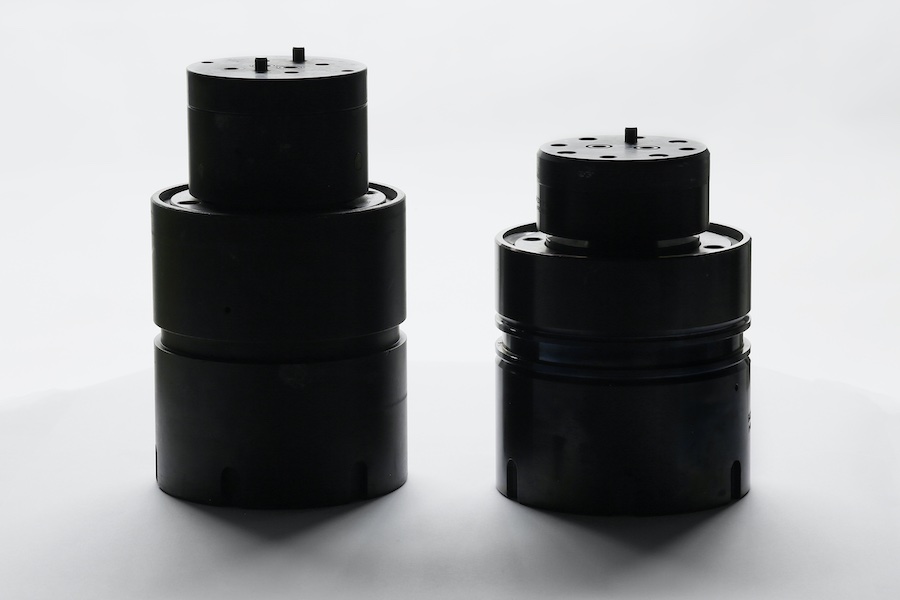
The new WINGS POY 2.0 winder integrated into this concept features an automatic string-up function for the first time. The new generation of the DIO spin pack (right) is significantly more compact. © 2026 Barmag


Digitally networked with atmos.io

POY 2.0 is fully integrated into the digital system world of atmos.io. Various apps give the operator a complete overview of the production process – from the polymer to the finished yarn. Quality parameters are continuously monitored so that operating personnel can intervene quickly if necessary. The result: reduced waste quantities, higher product quality, and improved margins thanks to fully networked production.
More News from Oerlikon Barmag, Zweigniederlassung der Oerlikon Textile GmbH & Co. KG

More News on Spinning

#Spinning

Temco launches a new DTY all-in-one solution

Temco introduces the DTY All-in-One Solution – a fully harmonized set of components engineered to give customers a highly stable, low maintenance and reproducible process environment. The solution reduces interruptions, extends component lifetimes and supports consistent yarn quality across all machine positions. All-in-One Solution – a fully harmonized set of components engineered to provide maintenance and reproducible process environment.

#Techtextil 2026

DIENES at Techtextil 2026: Flexible pilot lines for bio-based fiber development

The growing relevance of bio-based materials in technical textiles is accompanied by increasing demands for reproducibility, high-quality data, and scalable process routes. Especially when working with cellulose and its derivatives, chitosan, lignin-based approaches, or bio-based PAN as a carbon-fiber precursor, R&D teams face variable feedstock quality, tighter process windows, and the need for reliable comparability across trials. This calls for flexible, data-driven experimental setups that can be reconfigured efficiently when recipes, solvents, and raw-material batches change.

#Techtextil 2026

RETECH showcases high-precision godets for high-performance fiber processing at Techtextil 2026

RETECH designs and manufactures godets and draw frames for heated, ambient and cooled processes, enabling precise heat treatment and consistently high yarn quality for a wide range of polymers and applications, with process temperatures of up to 400 °C for high-performance fibers. The company’s key competence lies in exact and stable temperature and speed control, individually adapted to the specific material and process requirements.

#Spinning

Development of bio-based polyethylene fibers for textile applications – BB Engineering partici-pates in the bioPEtex research project

In the German research project bioPEtex, BB Engineering (BBE) is working with other partners to develop textiles made from 100% bio-based polyethylene (PE). The aim is to make use of this poly-mer, which has hardly been used in the chemical fiber industry to date. BBE is contributing its spinning and texturizing expertise and developing the texturing process on an industrial scale. The first promising results are already available – opening up new opportu-nities for sustainable and economically attractive applications in the textile industry.

Latest News

#Techtextil 2026

Performance Apparels: Functional textiles drive innovation at Techtextil 2026

From high-performance fibres and advanced membranes to smart textiles and sustainable material concepts – functional apparel is becoming one of the most dynamic innovation fields in technical textiles. At Techtextil 2026, exhibitors demonstrate how new materials, finishing technologies and digital functions are shaping the next generation of protective, workwear and outdoor systems.

#Textile chemistry

A flagship for chemical production: BASF inaugurates world-scale Verbund site in China

BASF today (March 26, 2026) celebrated the official inauguration of its newly built, world-scale Verbund site in Zhanjiang, Guangdong Province in southern China. Covering an area of around four square kilometers, it is more than a major BASF project in the chemical growth market of China. “Zhanjiang shows what the future of chemistry looks like: efficient, digital and sustainable by design. The site showcases a smart integrated Verbund structure on an industrial scale,” said Dr. Markus Kamieth, CEO of BASF, at the ceremony attended by representatives from government, customers, business partners and employees.

#Nonwovens

VEOCEL™ Lyocell production expands to Asia – Launching a new chapter for nonwovens in the region

VEOCEL™, Lenzing's flagship specialty nonwovens brand, expands production at its Thai plant in Prachinburi. This is the first-ever production of its nonwoven-grade lyocell fibers in Asia. Built in 2022 with a 100,000-ton annual production capacity, the facility - previously focused on fibers for textile applications - now can directly meet the demand for VEOCEL™’s biodegradable¹, wood-based lyocell fibers for nonwovens products. These fibers are an essential ingredient for high-quality nonwovens products, ranging from baby wipes to facial sheet masks and everyday personal hygiene items.

#Research & Development

Hof University develops sustainable textile coating for the fashion of tomorrow from mushrooms

Clothing is often treated as disposable: T-shirts for events, general merchandise, or short-term campaigns frequently end up in the trash after only a few uses. This is particularly problematic given that their production still largely relies on fossil-based materials. This is precisely where a new research project at Hof University of Applied Sciences comes in.

TOP