#ITMA 2019
USTER® Fabric Inspection presents top technology and quality management expertise at ITMA

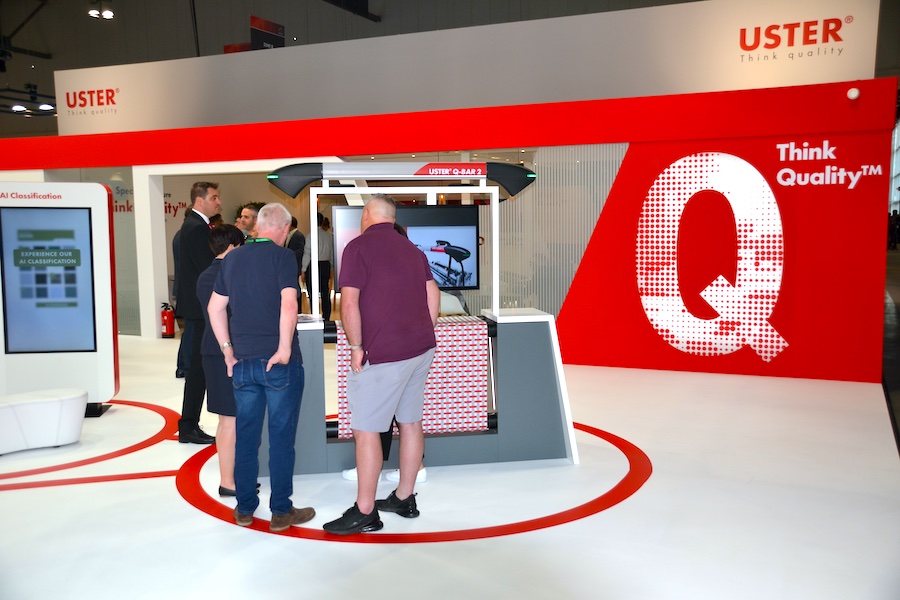
Fabric makers will already be familiar with the successful, industry-proven solutions USTER® EVS Q-BAR, FABRIQ VISION and FABRIQ SHADE, which today are used worldwide to inspect upwards of 60 million meters of fabric per day. At ITMA in Barcelona, USTER® Q-BAR 2 and USTER® FABRIQ EXPERT will be launched and explained to show visitors.
For fabric manufacturers, the competitive nature of the textile market means that reliable quality is a requirement, and defects are unacceptable to their customers.
USTER® FABRIQ EXPERT and USTER® Q-BAR 2 aim to support textile mills in guaranteeing the delivery of the desired roll quality, using the best technology available for monitoring and improving production at the earliest-possible stage. That includes locating any defects quickly, supporting identification of the root causes and initiating corrective action. The expertise of EVS technology – with intelligent visual detection and fault-recognition algorithms – is now enhanced by USTER’s overall experience in quality management systems for the wider textile industry.
Fault detection with direct impact on business success
USTER® Q-BAR 2 represents the next generation of the original on-loom monitoring and inspection system, offering user-friendly design and operational improvements for weaving. An inspiring USTER design built on years of EVS experience brings many advantages, including indication of the defect location, and better access to make maintenance tasks easier. The USTER® Q-BAR 2 is positioned immediately behind the reed on each machine – the ideal location for earliest detection of fabric defects. This means the operator can respond quickly to alarms and stop signals, to correct problems immediately and prevent quality issues from continuing, thus minimizing material waste. A red LED guides the operator to the exact position of defects, and lights at the side of the unit show system status.
Fabric faults are categorized and saved, creating a ‘defect map’ for each roll which can be recalled and reviewed later via the intuitive touchscreen.
The system reduces the need for postweaving inspection for most applications. USTER® Q-BAR is already making a significant impact on the business success of users. In one example, a US technical textiles producer reports that it has increased sales volumes through the ability to guarantee seamless fabrics to its customers. This firm produces base-layer material for coating, an application in which defects larger than 9 inches are unacceptable, as they would require cutting and seaming. The advantage of USTER® Q-BAR 2 here is the rapid stop of weaving when it identifies a defect – before it reaches the critical size for the subsequent processes.
Full on-loom quality transparency
USTER® FABRIQ EXPERT is the key to early detection of quality issues, based on comprehensive quality data gathered during on-loom inspection of fabrics. It provides weavers with an overview of their entire installation, via USTER® Q-BAR 2 systems fitted over each machine. The quality data can be used to compare the performance of the same styles on different machines, for example. Another benefit is an indication of when to replace spare parts, preventing faults which could occur with worn-out parts. Importantly, this knowledge is a considerable scale-up on the ‘normal’ weaving operator’s ability to feedback observations over several looms.
The whole-mill picture from USTER® FABRIQ EXPERT makes the results more representative of the true picture in the mill. It follows the USTER ‘Think Quality’ concept – supporting customers to make informed decisions for long-term business success through increased productive efficiency and effective quality management.
Quality partner for fabric producers
Combining the industry-leading technology of automated vision-based inspection with USTER’s unrivalled stature in quality management systems and services creates the perfect ‘dream team’ for fabric manufacturers.
They can now have access to highly-effective automated fault detection, as well as total transparency of weaving quality performance, provided during on-loom inspection. USTER® Fabric Inspection offers real benefits for weavers in terms of both customer satisfaction and their own long-term business success.