[pageLogInLogOut]

#Retail & Brands

adidas full-year results exceed latest expectations

adidas today published preliminary results for 2023. Based on preliminary unaudited numbers, adidas currency-neutral revenues were flat versus the prior year-level in 2023 (latest guidance: to decline at a low-single-digit rate) despite the drag from the devaluation of the Argentine Peso in the fourth quarter. In reported terms, sales were down 5% to € 21,427 million in 2023 (2022: € 22,511 million). Reported revenues include the negative translation impact of more than € 1,000 million from unfavorable currency movements, which are expected to remain a drag on the company’s top-line development in 2024.
The adidas World of Sports – the adidas AG headquarters in Herzogenaurach, Germany © adidas


The sales development in 2023 was impacted by significantly reduced sell-in to the wholesale channel as part of the company’s successful initiatives to reduce high inventory levels. In addition, the discontinuation of the Yeezy business had a negative effect on the top-line development during the year. This represented a drag of around € 500 million on the year-over-year comparison. The two Yeezy drops positively impacted net sales in an amount of around € 750 million in 2023. This compares to a total of more than € 1,200 million of Yeezy revenues in 2022. Excluding the Yeezy revenues in both years, currency-neutral revenues were up 2% in 2023.

Negative currency effects have also been significantly weighing on the company’s gross margin development throughout the year. Nevertheless, the adidas gross margin improved 0.2 percentage points to a level of 47.5% in 2023 (2022: 47.3%).

Despite the severe impact from the devaluation of the Argentine Peso at the end of the year, adidas generated an operating profit of € 268 million in 2023 (2022: € 669 million). According to its latest guidance the company was expecting an operating loss of € 100 million. The outperformance was driven by a better-than-expected operational business in Q4 and the company’s decision not to write off the vast majority of its existing Yeezy inventory. The latest outlook still included a potential write-off of its remaining Yeezy inventory in an amount of around € 300 million. Following the latest decision, the 2023 operating profit now only includes a low double-digit million amount of Yeezy-related inventory write-offs. Instead, the company plans to sell the remaining Yeezy product at least at cost in 2024.

The company’s underlying operating profit reached around € 200 million in 2023. This compares to the latest guidance of around € 100 million and reflects the operational outperformance in the fourth quarter. In its underlying operating profit adidas excludes the Yeezy profits generated in 2023 (around € 300 million) and adjusts its bottom-line for the one-off costs related to the strategic review the company conducted in 2023 (around € 200 million) as well as the Yeezy-related write-offs (low-double-digit million euro amount).

adidas also issued its financial guidance for the current year.

In 2024, the company expects currency-neutral sales to grow at a mid-single-digit rate. This top-line guidance assumes that adidas will sell the remaining Yeezy inventory at cost, which would result in sales of around € 250 million in 2024. Excluding the Yeezy revenues in both years, the top-line guidance reflects currency-neutral growth at a high-single-digit rate in the underlying adidas business.

As the sale of the remaining Yeezy inventory is currently assumed to occur at cost, the planned sale of the product is currently expected to have no effect on the company’s operating profit this year. Unfavorable currency effects are projected to weigh significantly on the company’s profitability in 2024 as they are expected to continue to impact both reported revenues and the gross margin development in 2024.

Taking all of this into account – the expected translational and transactional FX headwind as well as the current Yeezy assumptions – adidas expects to generate an operating profit of around € 500 million in 2024.


adidas CEO Bjørn Gulden:

“Our fourth quarter developed a little better than expected and we have decided to release preliminary numbers. For the full year our currency-neutral revenues were flat, and we reached an operating profit of € 268 million. This is € 368 million better than what we guided for. The improvement is due to the better operating business of around € 100 million and the decision to not write off € 268 million of Yeezy inventory. Our consumer, retail and trade research has shown that we can sell this remaining inventory in 2024 for at least the cost price. This is why we have only written off inventory that was either damaged or very broken in sizes.

We continue to feel we have improved our presence in front of the consumer, we have better products in the market with improved sell-throughs, we have increased our visibility by investing again in more teams and athletes, we have successfully launched our new Originals campaign, we feel we have improved our relationship with our retail partners and we have reduced our inventories substantially.

We do of course know that our financial performance is not good. But we are on the way of making adidas a good company again. As we said from the beginning, we just need the time to solidly build it up again. I feel that the attitude and agility in our teams are back and that we are showing the old adidas DNA again.

For 2024, we expect sales to start flattish, but to then improve every quarter. We expect the underlying adidas business (excluding Yeezy) to grow in the high-single-digits for the full year and to be up at least 10% in H2.

Despite no assumed profit contribution from Yeezy, the strong unfavorable currency effects, the ongoing challenges in North America, our continued investment in both marketing and sales and a world full of uncertainties, we expect an operating profit of around € 500 million in 2024.

This year is the next building block needed to bring adidas back to be a company with double-digit growth and 10% operating margin.”
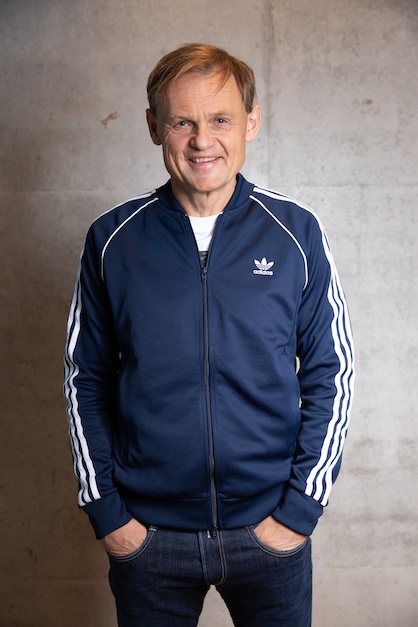

Bjørn Gulden, Chief Executive Officer of adidas AG and responsible for Global Brands © adidas


More News from TEXDATA International

#Texprocess 2026

Texprocess 2026: Automation, digitalisation and AI reshape textile processing

Investment decisions in textile processing have become increasingly complex. Rising energy prices, labour shortages and geopolitical uncertainties are forcing companies to prioritise technologies that deliver measurable improvements in efficiency and process stability. This applies not only to apparel production, but also to the processing of technical textiles and high-performance materials. Modernisation projects are therefore being evaluated more selectively – but the pressure to upgrade production systems continues to grow. Texprocess 2026 reflects this tension between cautious investment behaviour and increasing technological demand.

#Techtextil 2026

Textile Chemicals & Dyes: Innovation in Textile Chemistry moves into focus at Techtextil 2026

From PFAS-free finishes and water-saving dyeing technologies to advanced coatings and recycling-compatible formulations, innovation in textile chemistry is accelerating across the industry. Reflecting this development, Techtextil 2026 introduces Textile Chemicals & Dyes as a dedicated product segment, highlighting the growing role of chemical solutions in shaping the next generation of technical textiles.

#Recycling / Circular Economy

textile.4U publishes special edition “Top 100 Textile Recycling Companies 2025”

With a comprehensive 176-page special edition, textile.4U is dedicating its latest issue entirely to one of the most dynamic and influential topics in today’s textile industry: textile recycling. The new issue, published exclusively in high-quality print, presents the Top 100 textile recycling companies researched and selected by TexData – organizations that already play a key role in the transition to circular textiles or are expected to have a significant impact in the near future.

#Recycling / Circular Economy

Responsible Textile Recovery Act of 2024 signed by Governor

Senator Josh Newman (D-Fullerton) is proud to announce that Senate Bill 707 (SB 707), the Responsible Textile Recovery Act of 2024, has been signed into law by the Governor of California, Gavin Newsom. This groundbreaking legislation establishes the country’s first Extended Producer Responsibility (EPR) textile recycling program, marking a significant step forward in the state’s efforts to combat waste and promote sustainability.

More News on Retail & Brands

#Recycling / Circular Economy

Recover™ secures multi-year recycled cotton agreement with H&M

Recover™ has signed a multi-year agreement with H&M to support the integration of its recycled cotton fiber, RCotton, for use in H&M’s products. Since early 2024, H&M and Recover™ have collaborated on product development, which now enables scaled commercial introduction of Recover™ mechanically recycled cotton into H&M’s collections.

#Sustainability

GORE-TEX® KIDSWEAR launches innovative membership scheme for kids’ jackets

With its revolutionary new membership model, GORE-TEX® Kidswear now offers families a simple, flexible and sustainable way of kitting out their children in top-quality jackets. It is aimed at the parents of children aged between five and ten and kicks off with a choice of functional winter jackets.

#Sustainability

H&M Foundation funds pioneering initiative to build the factories of the future

The H&M Foundation is committing SEK 53 million (approx. EUR 5 million) towards Future Forward Factories, a five-year initiative led by Fashion for Good, to address fashion’s most polluting stage: tier 2 textile processing.

#Natural Fibers

Better Cotton Initiative marks World Cotton Day with launch of innovative product label

The Better Cotton Initiative (BCI) has launched an innovative product label for the fashion and textile sectors which allows retailer and brand members to provide consumers with greater clarity about the origin and percentage of BCI Cotton in their products.

Latest News

#Techtextil 2026

Gebr. Otto highlights versatility at Techtextil with regional supply chains, yarn innovations and new hygiene segment

At this year’s Techtextil, Gebr. Otto places its versatility at the center of its presentation. In addition to spinning, twisting and dyeing – traditionally focused on fine cotton – textile processors will also find a competent development partner for technical specialty solutions. The Dietenheim-based spinning mill has now built up a decade of experience in the production of technical yarns, particularly from aramids. A new hygiene segment has also been established, where yarns for medical and hygiene products are currently being produced. In the future, this department could also develop textile products for the food sector. Gebr. Otto will once again be present at the BW-i joint stand, booth D81, hall 12.1. What is wound onto the spool is determined by the customer: Gebr. Otto develops according to specific customer requirements and transforms its own ideas into yarn innovations.

#Europe

Commission presents proposal for EU Inc. - unlocking the full potential of the Single Market for Europe's entrepreneurs

Today, the European Commission presented its proposal for EU Inc., a new single set of corporate rules, building the cornerstone and starting point for the EU's 28th regime. EU Inc. is an optional, digital-by-default European corporate framework. It will make it easier for businesses to start, operate and grow across the EU – incentivising them to stay in Europe, and encourage those who once looked elsewhere to return.

#Man-Made Fibers

OnceMore® from Södra brings end-to-end traceability for circular Man-made Cellulosic Fibers (MMCF) using TextileGenesis

OnceMore® from Södra, the world’s first large-scale process for recycling blended fabrics into high‐quality dissolving pulp, will begin using TextileGenesis, a Lectra company, to strengthen traceability from raw material to retail across the value chain. OnceMore® produces dissolving pulp made from blended textile waste and wood sourced from responsibly managed Swedish forests. By integrating TextileGenesis, OnceMore® supports the growing need for verified data and secure, transparent tracking throughout increasingly complex supply chain.

#Sustainability

Experts publish APAC policy priorities

Cascale today announced the publication of its APAC Policy Priorities Paper, developed by the Asia-Pacific (APAC) Policy Member Expert Team (MET) to identify key regional sustainability challenges and provide practical, aligned recommendations for policymakers and industry stakeholders across Asia-Pacific.

TOP