[pageLogInLogOut]

#Sustainability

H&M Foundation funds pioneering initiative to build the factories of the future
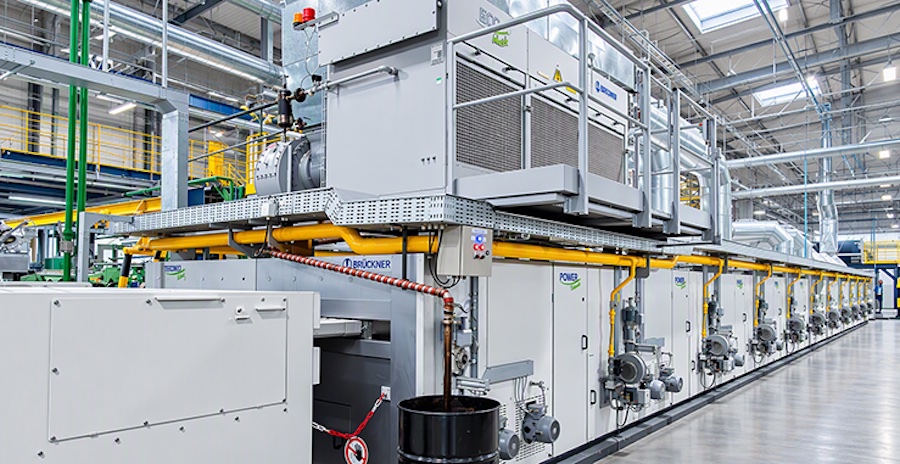
The H&M Foundation is committing SEK 53 million (approx. EUR 5 million) towards Future Forward Factories, a five-year initiative led by Fashion for Good, to address fashion’s most polluting stage: tier 2 textile processing.
© 2025 H&M
© 2025 H&M


Building on the initiative’s launch by anchor funders Laudes Foundation, Apparel Impact Institute and IDH earlier in June this year, H&M Foundation has now stepped in as main funder. Its contribution will enable open-source, regionally tailored blueprints for near net-zero manufacturing at scale. This work combines physical demonstration sites with digital toolkits, giving suppliers, brands and investors a proven roadmap for transformation that is environmentally responsible, socially just and economically viable.

“Future Forward Factories is not about running yet another headline pilot, it is about tackling the reasons adoption so often stalls. Too many good solutions end up in the pilot trap. By co-developing solutions directly with manufacturers and taking on the early risk, philanthropy can help break that cycle and unlock approaches that actually work at scale. What excites me is that this gives suppliers real tools, real examples and a real business case for change, that’s how transformation becomes possible, and replicable,” says Christiane Dolva, Head of Innovation, Research and Demonstration, H&M Foundation.

Manufacturers at the heart of systemic transformation

Tier 2 processes account for some of the industry’s highest emissions, yet suppliers face major barriers: high upfront costs, fragmented standards and uncertain technology pathways. Future Forward Factories removes these obstacles by co-developing solutions directly with manufacturers, validating them in live production and sharing all findings openly. The initiative also embeds equity, ensuring workers, communities and suppliers benefit from improved conditions and environmental outcomes.

The first demonstrator facility, to be built with anchor partner Arvind Limited in Gujarat, India, will show how near net-zero can look in practice. Designed for cotton fabrics, it is expected to cut greenhouse gas emissions by up to 93% and save around 60 litres of water per kilo of fabric.

“As manufacturers, we are often told what needs to change, but rarely engaged as true partners in shaping the solutions. Future Forward Factories change that dynamic. By working directly with us to co-develop and demonstrate near net-zero processes, this initiative proves that transformation is not only possible but practical. At our Gujarat facility, we are showing that significant reductions in emissions and water use can be achieved while maintaining commercial viability; setting a blueprint that other suppliers can follow,” says Punit Lalbhai, Vice Chairman, Arvind Ltd

Measurable results and systemic potential

By combining real-world testing with open access to knowledge, Future Forward Factories aims to catalyse adoption across the industry. Expected outcomes include:

+++ 7 open-source blueprints for near net-zero factories

+++ 7 demonstrator facilities operating with significant emission reductions and water savings

+++ 60+ supplier transformations, adopting full or partial blueprints

+++ 100+ low-impact technology installations in tier 2 facilities

Crucially, the approach is supplier-led and rooted in real-world constraints, increasing relevance and adoption. The project also embeds a just transition framework, ensuring that climate solutions also improve working conditions, protect local communities, and unlock new economic opportunities.

Catalytic role of philanthropy

The H&M Foundation’s donation demonstrates how philanthropic capital can act as a catalyst for scaled industry action. By bridging the critical gap between early validation and wide adoption, philanthropy gives brands, suppliers, and investors the confidence to step in at scale.

“Future Forward Factories is a critical step in driving system-level change across fashion. We are thrilled to have the support of H&M Foundation demonstrating how additional philanthropic capital can unlock scalable solutions. This initiative goes beyond pilots to deliver open-source, replicable blueprints that ensure transformation is both economically viable and socially just, laying the foundation for a more resilient and regenerative future for fashion,” says Katrin Ley, Managing Director, Fashion for Good.

Future Forward Factories will release seven regional blueprints throughout the duration of the project, designed for open adoption by manufacturers worldwide.

The H&M Foundation is calling on other philanthropies and financial actors to join in accelerating this systemic transformation.
More News from H&M Group

#Sustainability

Pioneering open-source framework shows how early innovation drives a just and net-zero fashion future

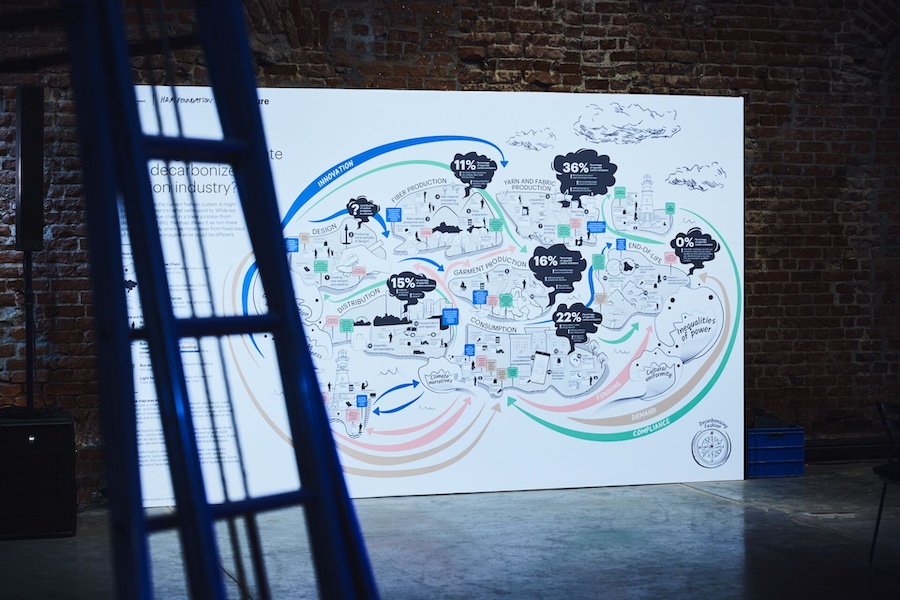
The non-profit H&M Foundation, in collaboration with Accenture, has unveiled From Signals to Systems Change, an insight report calling on the fashion industry to rethink its role in transformation. At its core is the Reimagined System Map, a pioneering open-source framework that visualises how early-stage innovation could drive a just and net-zero textile future.

#Textiles & Apparel / Garment

Global Change Award 2026: Nominations now open

On 1 September, the H&M Foundation launched the nomination round for the Global Change Award 2026. The international innovation challenge is looking for early-stage ideas that can drive the textile and fashion industry towards circularity and climate neutrality.

#Sustainability

Ten bold ideas to decarbonise fashion: Meet the winners of Global Change Award 2025

The H&M Foundation has revealed the ten winners of the Global Change Award 2025 – spotlighting groundbreaking ideas aimed at decarbonising the fashion industry in a just way. Each winner will receive a €200,000 grant and take part in the yearlong GCA Changemaker Programme – one of the few programmes of its kind focused on early-stage fashion innovation. Designed to accelerate the industry’s journey toward net-zero, the programme offers a mix of innovation support, systems thinking and personal growth.

#Recycling / Circular Economy

H&M Foundation launches new round of Global Change Award with a mission to accelerate innovation for a net-zero textile industry by 2050

The H&M Foundation today announces a significant shift in its overall strategic direction, with a new mission of promoting just and fair climate solutions for the textile industry, with the innovation challenge Global Change Award (GCA) being the first initiative to reflect this shift.

More News on Sustainability

#Sustainability

Experts publish APAC policy priorities

Cascale today announced the publication of its APAC Policy Priorities Paper, developed by the Asia-Pacific (APAC) Policy Member Expert Team (MET) to identify key regional sustainability challenges and provide practical, aligned recommendations for policymakers and industry stakeholders across Asia-Pacific.

#Sustainability

GOTS version 8.0 released: advanced supply chain accountability, from fibre to finished product

Global Standard is pleased to announce the release of GOTS Version 8.0, the latest update to the world's leading processing standard for organic textiles. The updated Standard strengthens requirements for air emissions and waste management, as well as criteria for product safety. It introduces new provisions on circularity, microfibre management and updates in residue testing. Version 8.0 also elevates due diligence obligations and formalises governance requirements, including ESG disclosure, anti-corruption policies and conflict-of-interest safeguards, to support credible, responsible business conduct.

#Sustainability

The nova-Institute establishes new Renewable Feedstock Department to lay the groundwork for industrial defossilisation

The transition from fossil-based to renewable carbon – sourced from biomass, CO₂ utilisation and recycling – is the cornerstone of a climate-neutral chemical industry. The nova-Institute’s new department is dedicated to providing the essential data, analyses and strategic roadmaps required to secure a reliable future feedstock supply and make this transition a commercial and ecological reality.

#Sustainability

Textile Exchange unveils commitment-based pathway for members to accelerate responsible raw material production

Textile Exchange has unveiled further details about its new membership structure, designed to guide the fashion, textile, and apparel industry in a collective course of action toward preferred production systems for raw materials and fibers.

Latest News

#Techtextil 2026

Gebr. Otto highlights versatility at Techtextil with regional supply chains, yarn innovations and new hygiene segment

At this year’s Techtextil, Gebr. Otto places its versatility at the center of its presentation. In addition to spinning, twisting and dyeing – traditionally focused on fine cotton – textile processors will also find a competent development partner for technical specialty solutions. The Dietenheim-based spinning mill has now built up a decade of experience in the production of technical yarns, particularly from aramids. A new hygiene segment has also been established, where yarns for medical and hygiene products are currently being produced. In the future, this department could also develop textile products for the food sector. Gebr. Otto will once again be present at the BW-i joint stand, booth D81, hall 12.1. What is wound onto the spool is determined by the customer: Gebr. Otto develops according to specific customer requirements and transforms its own ideas into yarn innovations.

#Europe

Commission presents proposal for EU Inc. - unlocking the full potential of the Single Market for Europe's entrepreneurs

Today, the European Commission presented its proposal for EU Inc., a new single set of corporate rules, building the cornerstone and starting point for the EU's 28th regime. EU Inc. is an optional, digital-by-default European corporate framework. It will make it easier for businesses to start, operate and grow across the EU – incentivising them to stay in Europe, and encourage those who once looked elsewhere to return.

#Man-Made Fibers

OnceMore® from Södra brings end-to-end traceability for circular Man-made Cellulosic Fibers (MMCF) using TextileGenesis

OnceMore® from Södra, the world’s first large-scale process for recycling blended fabrics into high‐quality dissolving pulp, will begin using TextileGenesis, a Lectra company, to strengthen traceability from raw material to retail across the value chain. OnceMore® produces dissolving pulp made from blended textile waste and wood sourced from responsibly managed Swedish forests. By integrating TextileGenesis, OnceMore® supports the growing need for verified data and secure, transparent tracking throughout increasingly complex supply chain.

#Spinning

Temco launches a new DTY all-in-one solution

Temco introduces the DTY All-in-One Solution – a fully harmonized set of components engineered to give customers a highly stable, low maintenance and reproducible process environment. The solution reduces interruptions, extends component lifetimes and supports consistent yarn quality across all machine positions. All-in-One Solution – a fully harmonized set of components engineered to provide maintenance and reproducible process environment.

TOP