[pageLogInLogOut]

#Research & Development

High-performance elastomers and plasma polymer coatings to replace fluoropolymers in technical applications: new Fraunhofer project
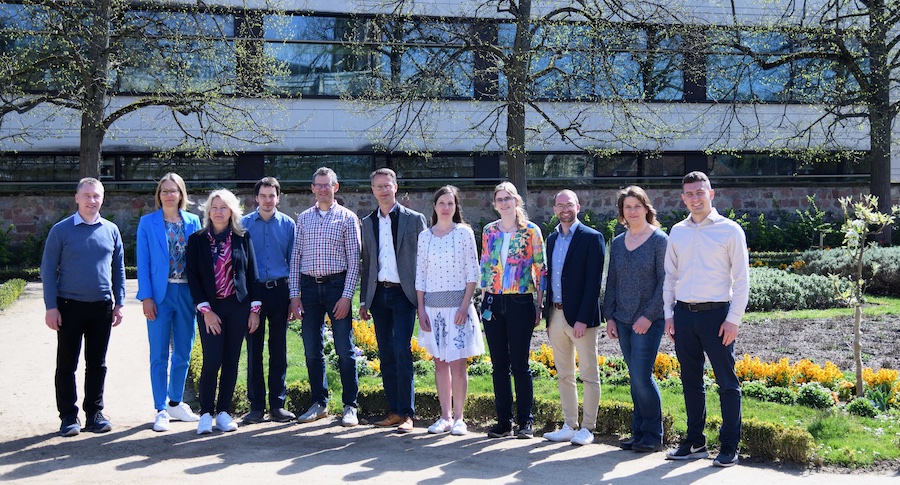
Users of poly- and perfluorinated alkyl compounds (PFAS), also known as "forever chemicals", are under pressure due to regulatory proposals from the European Chemicals Agency (ECHA). This also affects the use of fluoroelastomers, whose economic significance is enormous. Fraunhofer experts initiated the "HATE-Fluor" project at the beginning of February. Together, they want to develop high-performance elastomer compounds to replace fluoropolymers in certain technical applications.
Kick-off: The Fraunhofer project team and the industry advisory board of
Kick-off: The Fraunhofer project team and the industry advisory board of "HATE-Fluor" at the first meeting on Tuesday, April 8, 2025 © Fraunhofer IFAM


Various industries can benefit from this, including manufacturers of semi-finished and finished parts as well as companies in mechanical engineering industry, medical engineering, clean room and semiconductor technology, chemical process technology and electrical applications.

Many companies are looking for alternatives to poly- and perfluorinated alkyl compounds (PFAS), as their possible uses in the future are uncertain and voluntary commitments are expected. PFAS are found in everyday products such as coated pans, pizza boxes and outdoor jackets, as well as in medical engineering, heat pumps and batteries. While there are already fluorine-free substitutes for some everyday applications, there is a great need for new individual solutions to replace fluoropolymers for technical applications that have to withstand extreme conditions

PFAS replacement: coated elastomers and customizable modular solutions

In the newly initiated "HATE-Fluor" project, teams of experts at the Fraunhofer Institute for Structural Durability and System Reliability LBF and the Fraunhofer Institute for Manufacturing Technology and Advanced Materials IFAM will develop fluorine-free coated elastomers and offer customizable modular solutions to meet the growing market demand. The solution comprises three main steps: improving the thermal stability of fluorine-free elastomers with novel antioxidants, producing customized elastomer formulations and developing a coating system to protect the elastomer from oxidative and chemical attack.

The modular structure of this system, consisting of paint and plasma coatings, is intended to cover a broad spectrum in the section of fluorine alternative seals. The target properties are determined by the areas of application of the fluoroelastomers that are being replaced in the project.

Bundled Fraunhofer expertise

In the "HATE-Fluor" project, the Fraunhofer Institute for Structural Durability and System Reliability LBF is concentrating on the development of high-performance elastomers as a replacement for fluoropolymers in technical applications. One focus is on improving the thermal and thermo-oxidative stability of fluorine-free elastomers using innovative antioxidants. In addition, application-optimized elastomer formulations are being developed to ensure maximum resistance and optimum adhesion. This is complemented by the formulation of a coating system for the elastomers. The latter is being developed at the Fraunhofer Institute for Manufacturing Technology and Advanced Materials IFAM to protect the material from oxidative attack and chemical degradation.

Fraunhofer IFAM is also working within the project on coatings for these elastomers to improve their friction reduction and barrier properties. A particular focus is on the development of polyimide coatings in combination with layered silicates that prevent the permeation of harmful gases and moisture. These coatings are used in particular for high-performance electronics and other demanding applications. In addition, the modification of the layered silicates is being investigated to reduce the permeation of water vapor and oxygen through the coating by up to 99%. The application of these coatings shows significantly reduced ageing and prevents dendrite growth as a result of exposure to harmful gases.

The Fraunhofer institutes LBF and IFAM are combining their expertise to develop new solutions and application-ready technologies. Both institutes already have extensive expertise in PFAS substitution thanks to many years of development and project work. The "HATE-Fluor" project is funded by the Fraunhofer-Gesellschaft as part of the PREPARE program and will run for three years.


More News from Fraunhofer Institute for Structural Durability and System Reliability LBF

More News on Research & Development

#Research & Development

Sustainable athletic wear made from bio-based Polyethylene

Conventional sports textiles made from petroleum-based synthetic fibres are to be replaced in the future by sustainable, bio-based, cooling textiles. Polyethylene, previously used mainly in the packaging industry, is thus qualified for use in textiles and, as a bio-based drop-in solution, offers a cost-effective, sustainable alternative for the future.

#Research & Development

Innovation center for textile circular economy inaugurated

Just over eight months after the foundation stone was laid, the new Innovation Center for Textile Circular Economy was officially inaugurated today at TITK Rudolstadt. Thuringia's Minister President Mario Voigt, TITK Director Benjamin Redlingshöfer, and other guests of honor cut the ribbon to the modern building complex and viewed the premises, which are now ready for occupancy. The “DICE – Demonstration and Innovation Center for Textile Circular Economy” is TITK's largest single investment to date. The Free State of Thuringia supported the total cost of €11.5 million with €8 million in GRW and FTI funding.

#Research & Development

Sustainable design of Geosynthetics and roof underlayments made from recyclates

Is it possible to recover plastic recyclates from previously unused waste streams in order to produce high-quality fibers and films? How can bio-based polymer fibers be manufactured so as to allow adjustable biodegradability? These are the questions being addressed by researchers from the Fraunhofer Cluster of Excellence Circular Plastics Economy CCPE in the Zirk-Tex project.

#Research & Development

India, ITA and innovation – enhanced cooperation in research, implementation and bilateral projects such as hydrogen mobility

The Indian Consul General, Dr Shuchita Kishore, visited the Institut für Textiltechnik (ITA) of RWTH Aachen University on 15 December to inspect the joint project between the ITA, the Indian Institute of Technology (IIT) Bombay and industrial partners from India and Germany and to tour the ITA.

Latest News

#Fabrics

MUNICH FABRIC START: Between Attitude and Sensuality

The future begins where we reimagine it. After seasons of restraint, Spring.Summer 27 marks a conscious counter-trend: optimism, sensuality, and creative freedom are replacing pragmatism and neutrality. Physical presence and individuality are regaining importance – as a response to uncertainty, exhaustion, and algorithmic predictability. The overarching theme of PLEASURE stands for fashion as an emotional space, as an expression of attitude and cultural reflection. Colours, surfaces, and materials become vehicles for self-confidence and joie de vivre.

#Denim

organIQ seek: smart alternative to potassium permanganate

CHT Group announces new technical findings within its organIQ seek platform that significantly advance the transition toward permanganate-free denim bleaching. Through extensive industrial testing and application research, CHT confirms that organIQ seek can now be used with remarkable effectiveness as a substitute for potassium permanganate in spray bleach, while remaining aligned with sustainability expectations and cost realities in the European market. At the COLOMBIATEX in Medellín as well as at the Exintex in Puebla and the Kingpins Show in Amsterdam the CHT Group will present organIQ seek as an alternative to potassium permanganate.

#Functional Fabrics

PERFORMANCE DAYS: Focus topic shifts to the beginning of the value chain

Following the last Focus Topic in October 2025, which placed Textile-to-Textile Recycling at its core, PERFORMANCE DAYS continues to drive the conversation around circularity – this time with an expanded and more upstream perspective. The upcoming Focus Topic, “Textile to Textile: The Role of Collectors and Sorters,” presented during the spring edition on March 18–19, will spotlight one of the most essential yet often overlooked components of a functioning circular textile system: the efficient collection and sorting of post-consumer textiles.

#Knitting & Hosiery

Proven performance, optimised costs – the new RE 6 EL

Nowadays textile companies increasingly need to produce small production runs and respond to market changes with instantaneous pattern changes in order to operate profitably – meaning they require machines that offer maximum flexibility, reliability and cost efficiency. KARL MAYER understands the challenges of the market and is launching its new RE 6 EL. The Raschel machine offers the core strengths of the classic RSE 6 EL and essentially the same performance parameters, but has been further cost-optimised largely due to local production advantages. This makes the newcomer an efficiency champion in production, especially when it comes to frequent pattern changes.

TOP