[pageLogInLogOut]

#Research & Development

Fraunhofer CCPE presents the “Monomaterial Design Set” – Innovative solutions for circular product design
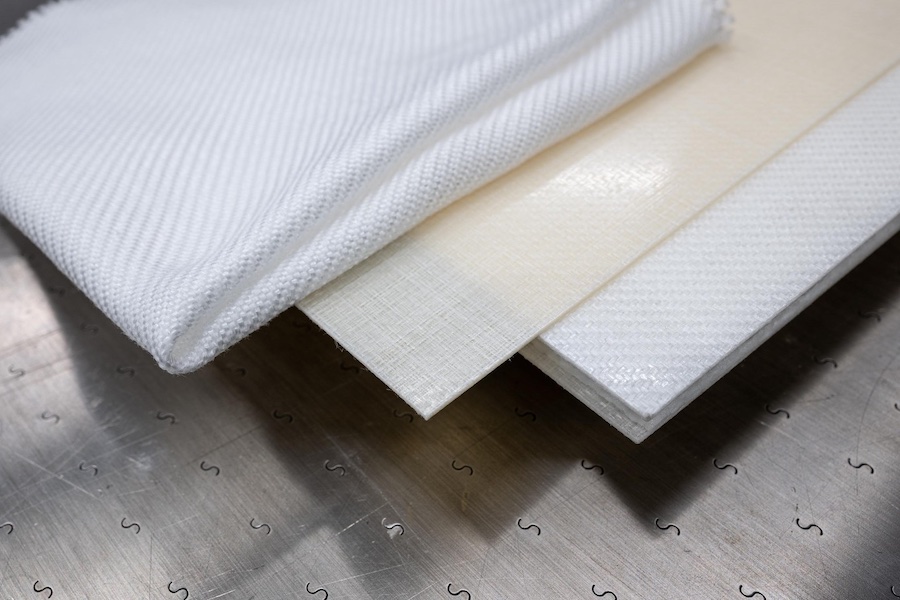
Monomaterial structures made of biopolymers (also possible in PET or polyamide) © Fraunhofer CCPE/Mike Henning
Composite materials made from different types of plastic often extend the lifetime of products but make recycling more difficult in the circular economy. That is why Fraunhofer CCPE has developed the “Monomaterial Design Set”. This new approach helps to reduce the variety of plastics used in durable products and offers circular solutions for designers and product developers.


The plastics processing industry faces a major challenge: How can companies develop durable products that are also circular? The Fraunhofer Cluster of Excellence Circular Plastics Economy CCPE has found a solution: the “Monomaterial Design Set”. This novel approach makes it possible to avoid combinations of different plastics in numerous applications, thereby increasing recyclability without compromising the performance of the end product.

Innovative approaches for designers and product developers

The “Monomaterial Design Set” is aimed at designers and product developers who want to make durable and high-specification products more recyclable. Thanks to research conducted by Fraunhofer CCPE, the same thermoplastic can be integrated into a product in different forms (e.g., as fibers, foam or casting compound). PET, PLA, and PA thermoplastics have already been tested. The structure of the design set allows different manufacturing technologies to be combined to create complex components with a wide variety of shapes and high performance. The processes used include injection molding, foam production, and the processing of textiles and self-reinforced panels.

A key objective of the Monomaterial Design Set is to achieve 100% recyclability of the products, as only one type of plastic is used, and so called “monomaterial.” By eliminating the use of adhesives, disassembly of components becomes unnecessary. In addition, Fraunhofer CCPE offers solutions for recyclable color pigments and flame retardant additives that ideally complement this approach. Depending on the selected material base and regional recycling infrastructure, companies are offered individual advice on how to make optimal use of existing collection systems or recycling facilities.

The heads of the Research Department Application and Demonstration, Dipl.-Des. Sabrina Schreiner and Dr. Jonathan Haas, see enormous innovation potential in the Monomaterial Design Set. This approach makes it possible to implement sustainability and circular economy goals as early as product development stage. Exciting demonstrators such as the “circular child seat” and an insulated “reusable transport box” made from monomaterials have already been developed in the cluster. The transferability of this concept to various industries and product segments is very promising.
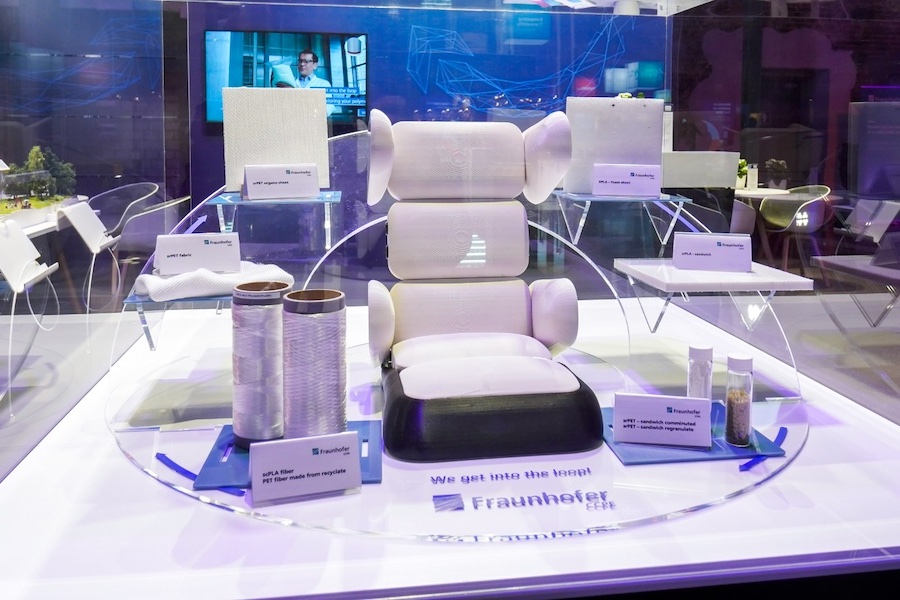
The “Circular Child Seat” demonstrator in monomaterial design © Fraunhofer CCPE


Design competition: Monomaterial furniture for tomorrow

In addition, Fraunhofer CCPE has taken on the scientific support of Nowy Styl DACH's “Re:think Design Competition”. The “Monomaterial Design Set” plays a decisive role here: designers can use it as a source of inspiration and technical framework to develop innovative designs for 100% recyclable soft seating furniture. The winners of the competition will be announced on April 23, 2026. Registration is open until December 3.
More News from Fraunhofer Cluster of Excellence Circular Plastics Economy CCPE

More News on Research & Development

#Research & Development

Sustainable athletic wear made from bio-based Polyethylene

Conventional sports textiles made from petroleum-based synthetic fibres are to be replaced in the future by sustainable, bio-based, cooling textiles. Polyethylene, previously used mainly in the packaging industry, is thus qualified for use in textiles and, as a bio-based drop-in solution, offers a cost-effective, sustainable alternative for the future.

#Research & Development

Innovation center for textile circular economy inaugurated

Just over eight months after the foundation stone was laid, the new Innovation Center for Textile Circular Economy was officially inaugurated today at TITK Rudolstadt. Thuringia's Minister President Mario Voigt, TITK Director Benjamin Redlingshöfer, and other guests of honor cut the ribbon to the modern building complex and viewed the premises, which are now ready for occupancy. The “DICE – Demonstration and Innovation Center for Textile Circular Economy” is TITK's largest single investment to date. The Free State of Thuringia supported the total cost of €11.5 million with €8 million in GRW and FTI funding.

#Research & Development

Sustainable design of Geosynthetics and roof underlayments made from recyclates

Is it possible to recover plastic recyclates from previously unused waste streams in order to produce high-quality fibers and films? How can bio-based polymer fibers be manufactured so as to allow adjustable biodegradability? These are the questions being addressed by researchers from the Fraunhofer Cluster of Excellence Circular Plastics Economy CCPE in the Zirk-Tex project.

#Research & Development

India, ITA and innovation – enhanced cooperation in research, implementation and bilateral projects such as hydrogen mobility

The Indian Consul General, Dr Shuchita Kishore, visited the Institut für Textiltechnik (ITA) of RWTH Aachen University on 15 December to inspect the joint project between the ITA, the Indian Institute of Technology (IIT) Bombay and industrial partners from India and Germany and to tour the ITA.

Latest News

#Textile chemistry

Devan unveils innovative textile solutions to enhance comfort during sleep at Heimtextil 2026

From 13 to 16 January 2026, Devan was exhibiting at Heimtextil in Frankfurt, the world’s leading international trade fair for home and contract textiles. The event brought together key players from across the global textile value chain, providing the ideal platform for Devan to present its latest innovations.

#Heimtextil 2026

Confidence driving the textile industry: Heimtextil 2026 sharpened its global market relevance by attracting more top-level decision-makers

With 148 participating nations, rising global relevance and a marked increase in visitor quality, Heimtextil 2026 stood for stability and reliability in a volatile market environment. Once again, 3,000 exhibitors from across the globe placed their trust in the industry’s central platform in Frankfurt, presenting current collections, materials and textile solutions for holistic interior design to over 48,000 buyers. Under the motto “Lead the Change”, Heimtextil brought evolving market dynamics, Artificial Intelligence (AI) and new business opportunities to life.

#Recycled_Fibers

Borealis invests EUR 49 million in Burghausen, Germany to accelerate design for circularity

Borealis announces a EUR 49 million strategic investment to scale up production of Borstar® Nextension polypropylene (PP) at its manufacturing site in Burghausen, Germany. This will expand commercial production of next-generation single-site polypropylene (ssPP) grades that deliver enhanced purity, processability, and performance - supporting customers in key sectors including packaging, healthcare, mobility, and fibers, to meet evolving market and regulatory demands.

#Associations

Latest news from Bremen: ICAC Plenary Meeting to take place right before the International Cotton Conference

The International Cotton Advisory Committee (ICAC) will hold its 83rd Plenary Meeting on 23–24 March 2026 at the Parliament building in Bremen. The meeting will take place immediately ahead of the 38th International Cotton Conference Bremen (25–27 March 2026) and marks a historic premiere: for the first time, the ICAC Plenary will be hosted in close cooperation with the Bremen Cotton Exchange and the Faserinstitut Bremen e.V. (FIBRE).

TOP