[pageLogInLogOut]

#Research & Development

Towards a circular and sustainable textile industry in Europe: BioFibreLoop has been started
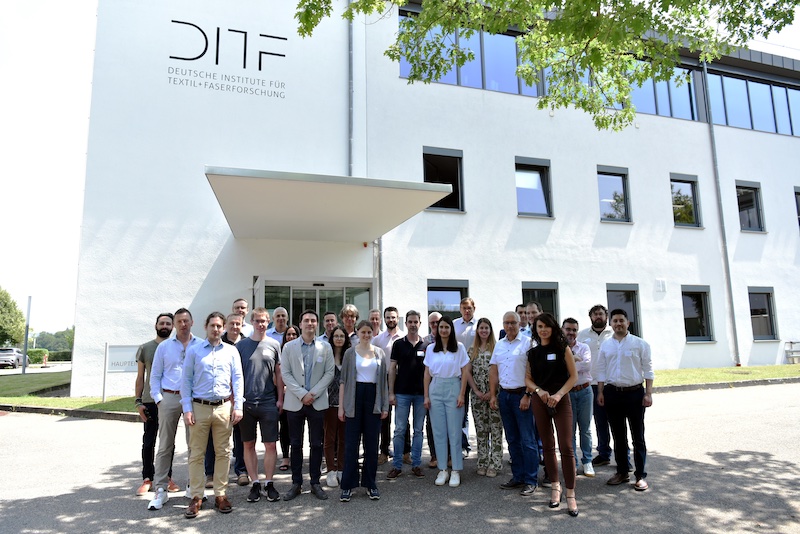
The German Institutes of Textile and Fiber Research Denkendorf (DITF) are coordinating the research project, which is funded as part of the European Union's Horizon Europe research and innovation program. The aim of BioFibreLoop is to develop recyclable outdoor and work clothing made from renewable bio-based materials. The kick-off event took place in Denkendorf on June 26 and 27, 2024.
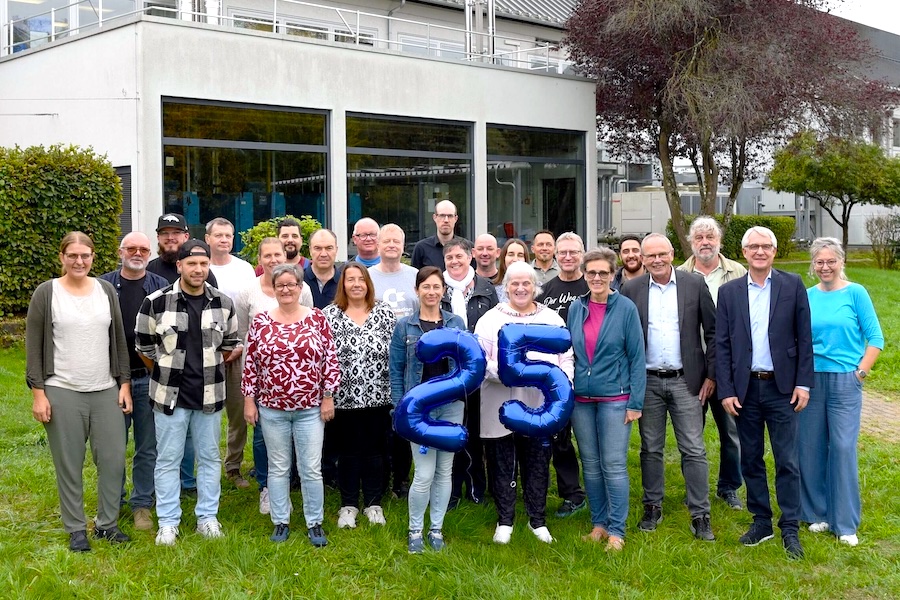
The partners at the BioFibreLoop kick-off event © 2024 DITF


The textile industry is facing two challenges: on the one hand, production must become more sustainable and environmentally friendly and, on the other, consumers are expecting more and more smart functions from clothing.

In addition, the production of functional textiles often involves the use of chemicals that are harmful to the environment and health and make subsequent recycling more difficult.

Intelligent innovations must therefore ensure that harmful chemicals are replaced, water is saved and more durable, recyclable bio-based materials are used, thereby reducing the usually considerable carbon footprint of textile products. Digitalized processes are intended to ensure greater efficiency and a closed cycle.

For example, the BioFibreLoop project uses laser technology to imitate natural structures in order to produce garments with water and oil-repellent, self-cleaning and antibacterial properties. At the end result of the research work will be affordable, resource and environmentally friendly, yet high-performance and durable fibers and textiles made from renewable sources such as lignin, cellulose and polylactic acid will be available. All processes are aimed at a circular economy with comprehensive recycling and virtually waste-free functionalization based on nature's example. In this way, greenhouse gas emissions could be reduced by 20 percent by 2035.

The technology for the functionalization and recycling of bio-based materials is being developed in three industrial demonstration projects in Austria, the Czech Republic and Germany. At the end of the project, a patented circular, sustainable and reliable process for the production of recyclable functional textiles will be established.

The BioFibreLoop project has a duration of 42 months and a total budget of almost 7 million euros, with 1.5 million going to the coordinator DITF.

The consortium consists of 13 partners from nine countries who contribute expertise and resources from science and industry:

+ German Institutes of Textile and Fiber Research Denkendorf (DITF), Coordinator, Germany

+ Next Technology Tecnotessile Società nazionale di ricerca R. L., Italy

+ Centre Technologique ALPhANOV, France

+ G. Knopf’s Sohn GmbH & Co. KG, Germany

+ FreyZein Urban Outdoor GmbH, Austria

+ BEES - BE Engineers for Society, Italy

+ BAT Graphics Vernitech, France

+ Interuniversitair Micro-Electronica Centrum, Belgium

+ Idener Research & Development Agrupacion de Interes Economico, Spain

+ Teknologian tutkimuskeskus VTT Oy, Finland

+ Det Nationale Forskningscenter for Arbejdsmiljø, Denmark

+ Steinbeis Innovation gGmbH, Germany

+ NIL Textile SRO, Czech Republic


More News from Institut für Textil- und Verfahrenstechnik Denkendorf

More News on Research & Development

#Research & Development

Kick-off for the Textile Production of the Future: Establishment of a Textile Technology and Development Centre in Mönchengladbach, Germany

The Institut für Textiltechnik (ITA) of RWTH Aachen University, together with its partners, is pleased to announce that it has received approval for its joint initiative, ‘Textile Factory 7.0’. The goal of the project is the establishment of a technology and development centre for the textile industry in Mönchengladbach.

#Research & Development

Exchange data between textile companies openly, securely and cost-effectively without a central platform – ITA makes it possible

The Institut für Textiltechnik (ITA) of RWTH Aachen University has launched a new demonstrator for an open and secure data space in the textile industry at the Digital Innovation Centre Europe (DICE). For the first time, the demonstrator shows directly and clearly how companies can share their data securely with each other without the need for a central platform. Data exchange is based on shared, freely usable technical foundations.

#Research & Development

Sustainable athletic wear made from bio-based Polyethylene

Conventional sports textiles made from petroleum-based synthetic fibres are to be replaced in the future by sustainable, bio-based, cooling textiles. Polyethylene, previously used mainly in the packaging industry, is thus qualified for use in textiles and, as a bio-based drop-in solution, offers a cost-effective, sustainable alternative for the future.

#Research & Development

Innovation center for textile circular economy inaugurated

Just over eight months after the foundation stone was laid, the new Innovation Center for Textile Circular Economy was officially inaugurated today at TITK Rudolstadt. Thuringia's Minister President Mario Voigt, TITK Director Benjamin Redlingshöfer, and other guests of honor cut the ribbon to the modern building complex and viewed the premises, which are now ready for occupancy. The “DICE – Demonstration and Innovation Center for Textile Circular Economy” is TITK's largest single investment to date. The Free State of Thuringia supported the total cost of €11.5 million with €8 million in GRW and FTI funding.

Latest News

#Functional Fabrics

“Action helps us change what we do!”

DAY 0 takes place deliberately before PERFORMANCE DAYS begins. It is conceived as a space for reflection, dialogue and active engagement — a moment to pause before the fair, rethink established systems and address sustainability not as a trend, but as a fundamental transformation challenge. Under the guiding metaphor “Turn the Tap Off”, DAY 0 focuses on root causes rather than symptoms, systemic change rather than isolated solutions, and collective responsibility rather than individual silos.

#Textiles & Apparel / Garment

Pets in fashion: functional and sustainable textiles find new market at Intertextile Apparel

China’s pet economy is booming, especially amongst younger generations, and pet apparel – from designer outfits to functional garments – was a RMB 3.5 billion (over USD 500 million) market in 2024, growing more than 20% annually¹. To help exhibitors harness this trend, Intertextile Shanghai Apparel Fabrics – Spring Edition 2026 will launch the Pet Boutique, presenting a range of innovative, sustainable materials that prioritise both functionality and comfort for pets.

#Sustainability

VAUDE eliminates PFAS from all products

PFAS (per- and polyfluoroalkyl substances) are now detectable worldwide – in drinking water, soil and the human body. These so-called “forever chemicals” are considered hazardous to health and potentially carcinogenic, as they do not break down and remain in the environment permanently. Despite these risks, PFAS are still used in a wide range of products. More than 15 years ago, VAUDE made a strategic decision to gradually eliminate PFAS from all product categories.

#Man-Made Fibers

Lenzing AG to become majority owner of TreeToTextile AB and accelerates industrialization of new fibers

The Lenzing Group is taking another strategic milestone by acquiring a controlling majority in the Swedish innovation company TreeToTextile AB. This step strengthens Lenzing’s position as a leading provider of sustainable, wood‑based specialty fibers and expands its innovation pipeline with a highly scalable, patent‑protected technology platform. The transaction is executed through the issuance of new shares.

TOP