[pageLogInLogOut]

#Recycling / Circular Economy

Love at first sight: OnceMore® by Södra and Rester announce a new partnership bringing change to the circular textile scene in the Nordic market

Rester Ltd was founded in 2019 and today has the largest mechanical textile recycling center of its kind in Northern Europe. This collaboration is to play an important role in growing OnceMore® by Södra towards its target of processing 25,000 tpy of textile waste by 2025.

Södra and Rester are launching a partnership that has a wider impact beyond these two companies. The collaboration brings synergies and provides a hub in Sweden for collecting all different kind of recyclable business textiles. These will then be processed and distributed to best possible and suitable streams of raw material for the textile industry, thereby closing the loop for business textiles. The new hub will be based in the Gothenburg area. At this hub Rester is providing an efficient collection point for all the clients, new and existing ones, in Sweden, Norway and Denmark. Furthermore, closing the loop for textile is in line with the proposal for EU textile strategy, that will have major affects to material flows in next few years.

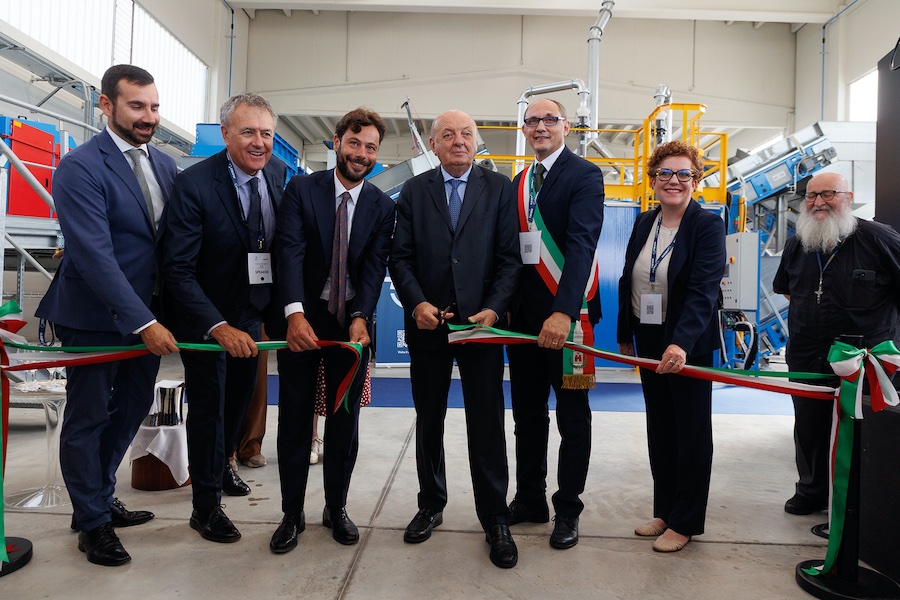
© 2022 Rester
© 2022 Rester


“Our collaboration and a joined goal with Södra gives us multiple possibilities to widen our end-of-life-textile services to cover Sweden, Denmark and Norway. This is an important milestone for us and for the whole Scandinavian textile industry towards circularity. Replacing virgin raw materials with recycled ones will become fast “a new normal” empowered by regulation, but at this stage forerunners such as Södra and Rester have an important role in the transition in textile industry. The movement will happen fast and working towards systemic change requires partners who are willing to share their expertise and who are ready to put effort into the task. Södra has a versatile, fantastically well organized business and I see their determination to keep materials in circulation as an essential fuel towards new, circular era. We are truly proud to be along as a partner in the narrative of “Once more – closing the loop for textile waste”, rejoices Outi Luukko, CEO of Rester Ltd.


“Our collaboration and a joined goal with Södra gives us multiple possibilities to widen our end-of-life-textile services to cover Sweden, Denmark and Norway. This is an important milestone for us and for the whole Scandinavian textile industry towards circularity. Replacing virgin raw materials with recycled ones will become fast “a new normal” empowered by regulation, but at this stage forerunners such as Södra and Rester have an important role in the transition in textile industry. The movement will happen fast and working towards systemic change requires partners who are willing to share their expertise and who are ready to put effort into the task. Södra has a versatile, fantastically well organized business and I see their determination to keep materials in circulation as an essential fuel towards new, circular era. We are truly proud to be along as a partner in the narrative of “Once more – closing the loop for textile waste”, rejoices Outi Luukko, CEO of Rester Ltd.

Environment:

Around 90 million tonnes of textiles are disposed annually worldwide and textile industry accounts for 10% percent of the world’s greenhouse gas emissions.

Within Rester process, for every tonne of recycled fibre produced, 525 thousand liters of water and 3700 kg of CO2 are saved, compared to producing completely new textile fibers.



More News from TEXDATA International

#Texprocess 2026

Texprocess 2026: Automation, digitalisation and AI redefine textile processing

Making investment decisions in textile processing has become significantly more demanding. Increasing energy costs, a shortage of skilled labour and ongoing geopolitical uncertainties are compelling companies to focus on technologies that deliver clear gains in efficiency and process reliability. This applies equally to apparel manufacturing and to the processing of technical textiles and high-performance materials. As a result, modernisation initiatives are assessed more carefully – even as the need to upgrade production systems continues to intensify.

#Techtextil 2026

Techtextil 2026: Between innovation pressure & market reality

From 21 to 24 April 2026, Techtextil in Frankfurt am Main will once again become the central meeting point for the international technical textiles and nonwovens industry. Running in parallel, Texprocess will focus on the industrial implementation of textile processing technologies as the leading platform in this field. Together, the two trade fairs form a closely integrated presentation and working platform along the entire textile value chain – from material development to finished applications.

#Techtextil 2026

Between geopolitical pressure and industrial resilience

In this interview, Dr. Janpeter Horn (VDMA) discusses the current challenges facing textile machinery manufacturers, shaped by geopolitical tensions, regulatory developments and subdued investment. He also outlines why innovation strength, integrated solutions and strategic positioning remain key to global competitiveness.

#Texprocess 2026

Between investment restraint and modernization pressure

Texprocess 2026 takes place in a complex market environment shaped by uncertainty and innovation pressure. In this interview, Elgar Straub (VDMA) explains why the trade fair is particularly relevant this year and which technologies are driving efficiency and competitiveness.

More News on Recycling / Circular Economy

#Recycling / Circular Economy

Efficient recycling of textile PET

At the upcoming Plastics Recycling Show Europe in Amsterdam on May 5–6, BB Engineering will present its portfolio of PET recycling technologies. The German machinery manufacturer will once again focus on textile recycling and melt filtration.

#Recycled Fibers

Circulose and CTA announce collaboration to enable lyocell fibers using CIRCULOSE® pulp

Circulose has announced an agreement with China Textile Academy Green Fibre (CTA) to offer lyocell fibers produced using CIRCULOSE® pulp. Producing lyocell from recycled pulp at commercial scale is an important step in making textile-to-textile recycled materials available across a wider range of textile applications.

#Recycling / Circular Economy

Solving the Feedstock Gap: Unlocking Post-consumer Feedstocks for Textile-to-Textile Recycling in Europe

Fashion for Good launches Project FAE (Feedstock Activation Europe) to develop the sorting and pre-processing infrastructure needed to channel non-rewearable post-consumer textiles into textile-to-textile (T2T) recycling at scale. The project is a practical response to one of the most pressing problems in textile circularity: making post-consumer waste a viable, commercially competitive raw material for recyclers.

#Techtextil 2026

BASF at Techtextil 2026: Helping to shape the future of the textile industry with tangible solutions

At the leading international trade fair for technical textiles and nonwovens from April 21 to 24, 2026 at the Messe Frankfurt, BASF will present numerous solutions and new projects in the textile sector to customers and partners at booth B 68 in hall 11.0. The focus is on product innovations and future-oriented technologies.

Latest News

#Associations

BTMA backs global growth while investing in future UK leaders

As one of a number of new initiatives launched this year, the British Textile Machinery Association (BTMA) is launching the UK-India Textile Machinery Coalition. The UK-India Free Trade Agreement, signed in July 2025, has implications that extend across sourcing, competitiveness and long-term trade dynamics, believes BTMA CEO Jason Kent.

#Raw Materials

China projected to increase cotton production, yields, and imports in 2026/27

World cotton production in the 2026/27 season is projected at 25.9 million tonnes, exceeding global consumption of 25.2 million tonnes, according to the May 2026 issue of Cotton This Month. That means both production and consumption are expected to remain close to current season levels, while global cotton trade is projected to decline by 2.7% to approximately 9.6-9.7 million tonnes.

#Raw Materials

ICAC launches Carbon Credits Initiative to deliver new income streams to cotton farmers

The International Cotton Advisory Committee (ICAC) has announced a new initiative designed to unlock additional income streams for cotton farmers through participation in carbon credit markets, linking sustainable production practices directly to financial returns.

#Sustainability

Number of GOTS-certified facilities grow 15% globally as demand for credible sustainability standards continues to strengthen

Global Organic Textile Standard (GOTS) certification continued to grow in 2025, with nearly 18,000 certified facilities worldwide, despite ongoing geopolitical uncertainty and rapidly evolving regulatory requirements across global textile supply chains.

TOP