[pageLogInLogOut]

#Raw Materials

Aid by Trade Foundation partners with Lectra’s TextileGenesis™ to enhance traceability of Cotton Made in Africa® fiber
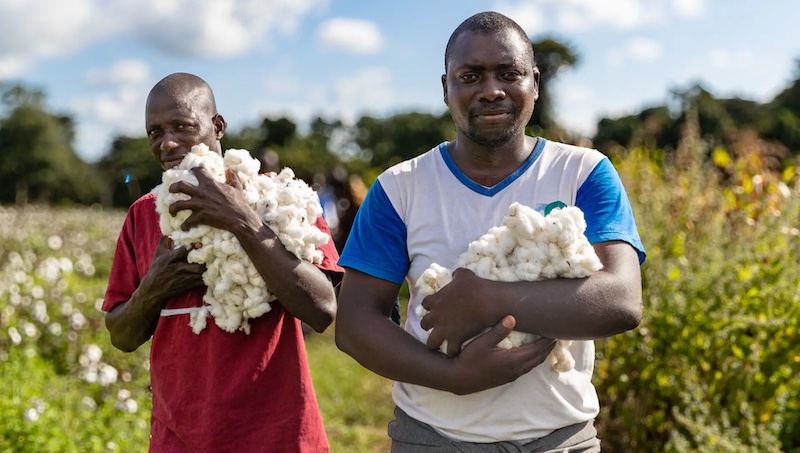
The Aid by Trade Foundation (AbTF) and TextileGenesis, a Lectra Group company, have announced the continuation of their partnership to strengthen the traceability of Cotton made in Africa® (CmiA) verified fiber. Building on the success of their previous collaboration for The Good Cashmere Standard® earlier this year, this renewed alliance underscores their shared commitment to advancing sustainable and ethical practices in the textile industry.
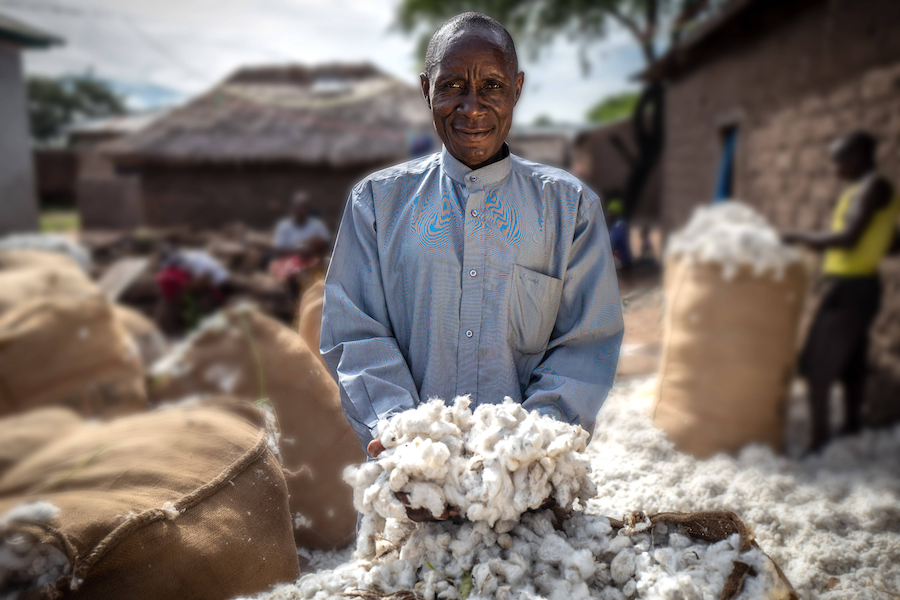
CmiA-Baumwolle © 2024 Martin J. Kielmann for AbTF


Cotton made in Africa® is one of the world’s leading sustainability standards for cotton, dedicated to improving the livelihoods of African smallholder farmers while safeguarding the environment. Through the integration of TextileGenesis’s Fibercoins™ technology, the collaboration ensures full traceability of CmiA cotton from the cotton bale to finished products, enabling brands to confidently verify their supply chains and uphold accurate sustainability claims.

This continuation of their collaboration builds on the success of the previous collaboration between TextileGenesis and AbTF on The Good Cashmere Standard®, focused on enhancing traceability, which launched earlier in 2024. The extension of this partnership to CmiA further strengthens both organizations’ efforts towards scalable and impactful sustainable practices in the textile industry.

“At Cotton made in Africa®, we highly value transparency and strive to create meaningful change for both nature and farming communities. By making CmiA cotton traceable through TextileGenesis, we empower brands already utilizing TextileGenesis to not only source ethically but also benefit from established tracking tools in their business practices. This collaboration promotes long-term sustainability for farmers, nature, and transparency while offering practical options for implementing traceability requirements within the industry,” said Christian Barthel, Head of Business Development at the Aid by Trade Foundation. “We are excited to expand our collaboration with the Aid by Trade Foundation and bring our cutting-edge technology to Cotton made in Africa®. This partnership empowers brands to ensure the integrity and sustainability of their supply chains, while also supporting the livelihoods of smallholder farmers in Africa,” adds Amit Gautam, founder and CEO of TextileGenesis.

The cooperation between TextileGenesis and Cotton made in Africa® empowers brands to confidently verify the origins of CmiA verified cotton, ensuring accurate sustainability claims while improving annual reporting. In addition, brands using TextileGenesis will have access to the industry’s largest supplier network, enabling them to track their entire production ecosystem, gaining comprehensive visibility across their entire supply chain—from fiber producers to third-party auditors. Through this new partnership, retailers and brands can benefit from two established tracking systems that provide transparency for CmiA-verified cotton from field to fashion, offering great flexibility in tracking their cotton. Those already collaborating with TextileGenesis benefit from using a single platform to manage traceability across multiple material sustainability standards, including Cotton made in Africa®. This streamlined approach improves efficiency and creates synergies across the supply chain. Others can continue to rely on CmiA’s own established SCOT system to monitor CmiA-verified cotton throughout their entire textile supply chain.

It is notable that 90% of material sustainability standards, including CmiA, have adopted TextileGenesis as their traceability backbone. This adoption highlights TextileGenesis as a single, easy-to-access platform for traceability across a variety of certified materials, making it the industry standard for ensuring authenticity and compliance across diverse certification systems.

More News from Aid by Trade Foundation (AbTF)

#Natural Fibers

Cashmere specialist joins AbTF Board of Trustees

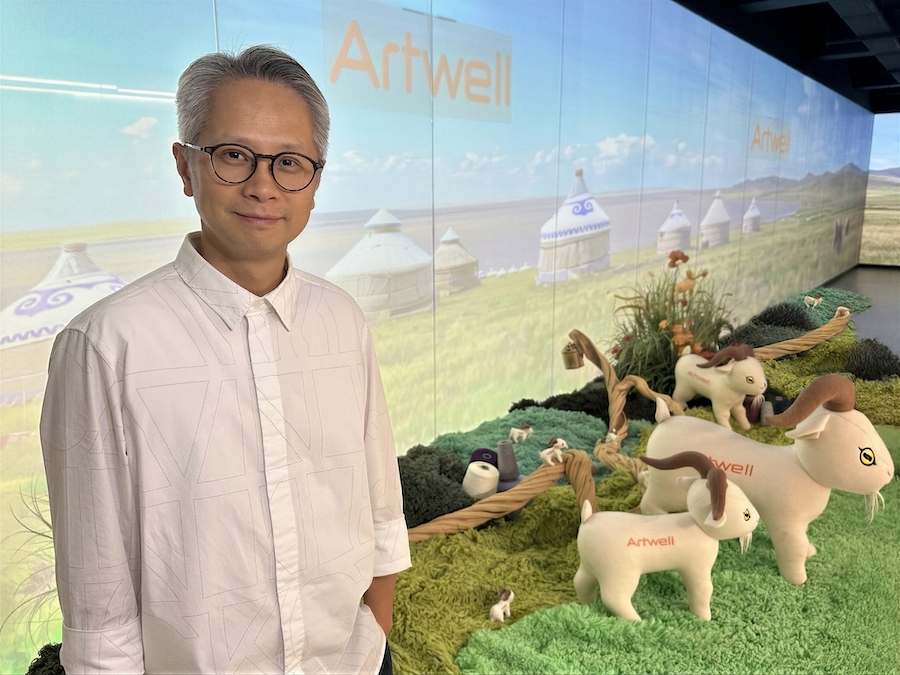
The Aid by Trade Foundation (AbTF) is pleased to welcome Brian Yu, the chief executive officer of the Artwell Group, to its board of trustees. As CEO, Brian Yu developed Artwell into the world’s largest supplier of responsibly produced cashmere knitwear.

#Natural Fibers

The Good Cashmere Standard expands Animal Welfare Assessment on audited farms

With the Animal-related Animal Welfare Assessment (ARAWA), the Aid by Trade Foundation (AbTF) conducts a pioneering project for the second consecutive year in 2025, parallel to the independent verifications of The Good Cashmere Standard® (GCS). ARAWA assessments provide a comprehensive overview of the health status of a herd on an audited farm, going beyond standard verification procedures. They are inherently complex, which still makes them a rarity in the standard sector, but offer support in identifying non-conformities and provide a holistic overview of the herd's well-being. Therefore, the Aid by Trade Foundation will continue this crucial project and even further expand it by 2027.

#Raw Materials

Aid by Trade Foundation reaches new milestones in supply chain transparency

The Aid by Trade Foundation (AbTF) is reaching new milestones as it leads the way towards greater physical traceability for Cotton made in Africa® (CmiA) cotton. With around 700 suppliers and producers in a total of 25 countries, the Aid by Trade Foundation has reached a new record number of partners who can trace CmiA cotton from the product back to its origin. This is more than double the previous year’s figure.

#Natural Fibers

Cashmere producers stress the importance of The Good Cashmere Standard®

At the invitation of the Aid by Trade Foundation (AbTF), over 70 experts from the cashmere production and supply chain, as well as other specialists, met at the GCS Unit Meeting in Shanghai, China to discuss the progress and new objectives of The Good Cashmere Standard (GCS). The meeting focused on implementation and verification of the standard, important aspects of animal welfare and the importance of the standard in the global textile market.

More News on Raw Materials

#Recycling / Circular Economy

Indorama Ventures advances circularity tthrough PETValue Philippines' “Zero Waste to Landfill Partnership” with Republic Cement

Indorama Ventures Public Company Limited, a global sustainable chemical company, is advancing the circular economy through a new Zero Waste to Landfill initiative at its recycling site PETValue Philippines, further demonstrating how collaboration across industries can maximize resource efficiency and reduce waste.

#Natural Fibers

2026 ICAC report projects World cotton trade to reach 10.3 million tonnes by 2028/29

The International Cotton Advisory Committee has released the 2026 World Cotton Trade Report, which provides analysis of global cotton trade patterns, key trading relationships, import and export trends, and the geopolitical and policy developments shaping cotton trade flows.

#Natural Fibers

Better Cotton Initiative multistakeholder event in US unpacks regenerative agriculture potential

The Better Cotton Initiative (BCI), in collaboration with Texas-based partner, Quarterway Cotton Growers, will expand upon its annual US field event to relay the vast potential of regenerative agriculture through an immersive experience of tours and demonstrations.

#Sustainability

The first widely accessible Life Cycle Assessment study for cashmere production published by Textile Exchange.

Crucial new data to better understand, measure, and address the impacts of cashmere production has been made available to the fashion, textile, and apparel industry through a new Life Cycle Assessment (LCA) published by Textile Exchange.

Latest News

#Man-Made Fibers

Ministry of Industry Delegation visits NatureWorks’ second global manufacturing site at Nakhon Sawan Biocomplex

NatureWorks Asia Pacific Limited welcomed a high-level delegation led by Mr. Varawut Silpa-archa, Minister of Industry, to its manufacturing site at the Nakhon Sawan Biocomplex (NBC). The visit follows the successful inauguration of the site on April 29, 2026, and highlights the role of public-private collaboration in advancing Thailand’s sustainable industrial development and bioeconomy ambitions.

#Associations

IVGT membership: expertise that pays off

For energy-intensive textile companies, government compensation mechanisms are an important economic factor. The IVGT successfully supports its member companies in applying for state aid and thereby regularly contributes to significant financial relief.

#Research & Development

Networking Day 2026: Industry stakeholders unite around textile recycling

In 2026, the Industry Research Group (IRG) Polymer Recycling once again brought together some of the key stakeholders in textile recycling for its annual Networking Day. This year, the event took place at EREMA’s premises in Ansfelden, Austria. It brought together key players from across the textile recycling value chain for a day of structured exchange and in-depth discussions.

#Knitting & Hosiery

The new RDJ 7/3 defines the design footprint of modern athletic shoes

Stylish, functional, and efficient to produce – spacer fabrics are the all-arounders among textile materials. These versatile fabrics are particularly in demand in the sports and casual footwear sector, as they combine comfort, breathability, and design freedom. At the same time, this industry is trend-driven, dynamic, and price-sensitive like few others. Innovations are therefore a decisive factor for success. With the RDJ 7/3, KARL MAYER offers a solution specifically tailored to these requirements. The particular strength of the new double raschel machine: its exceptional flexibility, thanks to its three jacquard bars.

TOP