[pageLogInLogOut]

#Raw Materials

Cotton Decoded - 36th International Cotton Conference Bremen shows new ways forward for the EU Cotton Textile Industry

Bremen Session © 2022 Bremen Cotton Exchange
Embedded in the celebrations marking the 150th birthday of the Bremen Cotton Exchange, the 36th International Cotton Conference under the motto “Cotton Decoded” took place on September 29 and 30. It is the first of its kind offered in hybrid format. Participation in the conference was possible in presence on site in Bremen as well as online. Far more than 400 experts and interested parties from almost 40 countries discussed current questions around cotton in Bremen. Many visitors met already in the run-up to the conference at the “Cotton made in Africa” stakeholder meeting that was also held in Bremen.

Conference and Jubilee Inspire the Branch

“We can be proud of the result of our recent International Cotton Conference. It was accompanied this time by the celebrations of the 150th birthday and, as another highlight, a cotton exhibition at the Bremen Übersee-Museum. The conference originated from a meeting of laboratory managers for cotton quality testing in 1965 and has now developed into an important exchange platform for participants from the entire textile supply chain,” emphasises Stephanie Silber, President of the Bremen Cotton Exchange and Managing Director of the cotton trading company Otto Stadtlander GmbH. “The joint planning and implementation of the International Cotton Conference by the Bremen Fibre Institute and the Bremen Cotton Exchange has always been an example of how science and practice can complement and benefit from each other. This becomes clear once more in the compilation of the conference programme and the many expert meetings on the fringes of the conference,” says Prof. Dr. Axel Herrmann for the Bremen Fibre Institute (FIBRE).
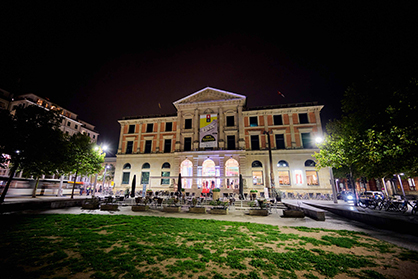
Bremen Cotton Night © 2022 Bremen Cotton Exchange


Embedded in the celebrations marking the 150th birthday of the Bremen Cotton Exchange, the 36th International Cotton Conference under the motto “Cotton Decoded” took place on September 29 and 30. It is the first of its kind offered in hybrid format. Participation in the conference was possible in presence on site in Bremen as well as online. Far more than 400 experts and interested parties from almost 40 countries discussed current questions around cotton in Bremen. Many visitors met already in the run-up to the conference at the “Cotton made in Africa” stakeholder meeting that was also held in Bremen.

The Conference Location

This time, the venue of the 36th International Cotton Conference Bremen was listed building of the Bremen Chamber of Commerce directly on the market square and in the vicinity of the Cotton Exchange. The Chamber of Commerce has represented the interests of Bremen´s trade since 1451, to which the Bremen Cotton Exchange Association has belonged since its foundation in 1872.

The Programme

The International Cotton Conference was opened on the morning of September 29 with speeches by Stephanie Silber, President of the Bremen Cotton Exchange, by Prof. Dr. Axel Herrmann, Director of the Bremen Fibre Institute, and by the host, Eduard Dubbers-Albrecht, President of the Bremen Chamber of Commerce. The programme of the International Cotton Conference consisted sessions with presentations in attendance as well as sessions that were performed exclusively online. Almost 70 speakers added to the success of the conference with their contributions. Each conference day started with keynotes in which personalities from the branch critically addressed challenges within the world economy and politics. They dealt with trends on the raw materials markets and with questions about the currently much discussed shortages in logistics, but also with the situation on the financial markets. The speakers included Colin Iles, Executive Manager, Cotton & Sugar at the internationally operating commodities trader Glencore/Viterra, Nils Haupt, Head of Communications at Hapag-Lloyd AG, John Baffes, commodities expert at the World Bank, D.C., and Jörg de Vries-Hippen, Chief Investment Officer and member of the European Executive Committee of Alliance Global Investors.

Sustainability and Climate Protection

In the field of climate protection, the ability of the cotton plant to store carbon in the soil in a climate-neutral manner played a special role. The session illustrated the methods used in agriculture to improve the storage of carbon in the soil and the legal framework that enables the financing of investments in these methods. Life cycle assessment methods play an important role here in order to show the entire carbon footprint over the life of the product from the field to its disposal. 
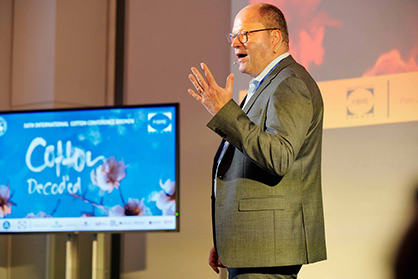
Key Note Session Finance and Commodities © 2022 Bremen Cotton Exchange


Circular Economy, Transparency and Traceability, Cotton Quality

In addition, the conference dealt with processes of the circular economy, in which modern methods of textile recycling were the focus. The biodegradability of cotton also played a key role once more. The conference addressed questions of transparency and traceability within the supply chain and presented efficient, digitally managed control methods, e.g. by means of distributed ledger technology. Using isotope analysis, it could soon be possible to trace the origin of a cotton fibre harvested from the field back to a finished textile. 


Innovative Products Made of Cotton

The discussion about new and innovative ways of processing cotton set new accents. It also addressed the need to advance supply chain technology in the apparel industry with digital design programmes for selecting cotton fabrics using 3D views. Also worth mentioning is the presentation by the internationally renowned Italian denim weaver Candiani, who has developed a blend of cotton and natural rubber yarns in his denim fabrics to create a stretch effect. The jeans fabrics produced this way are 100 percent biodegradable. To date, for this purpose elastane made of man-made fibres has primarily been used in fabrics.

In Focus: EU Cotton Textile Industry and Clothing Retail

A special feature: on Friday, September 30, the conference highlighted the top quality cotton production within the European Union in the network of the highly specialised downstream textile and clothing industry under the headline “Region in Focus”. During the online session, the opportunities for a stronger positioning and assertiveness of the sector in international competition were shown and discussed.

The total of 13 poster presentations also offered valuable additional inspiration, which increased the added value for the conference participants in Bremen. The posters usefully informed the visitors about relevant topics of the cotton economy sector.

Reason to Celebrate: 150 years of Bremen Cotton Exchange in the Conference Year

On September 24, 1872, 12 Bremen cotton traders decided to found the Bremen Cotton Exchange. Consequently, the Bremen Cotton Exchange can celebrate its 150th birthday this year. To set the mood for the anniversary, a book entitled ”150 Years of the Bremen Cotton Exchange – Cotton, Our World Since 1872” was already published in May this year, which illustrates the tasks of the association in the past, present and future and its position in the international market.On the evening of September 29, the Bremen Cotton Exchange invited to an anniversary party in the Bremen Übersee-Museum. The celebrations did not take place here without reason: At the same time, a large cotton exhibition entitled “100% Cotton” on the cultural history of the raw material was opened. 
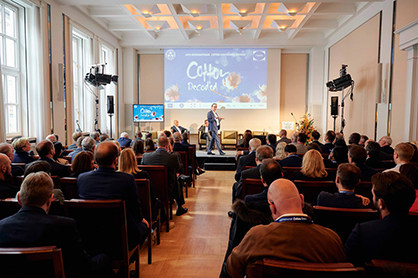
Bremen Session © 2022 Bremen Cotton Exchange


Sessions still online for conference participants

All sessions of the conference were recorded and are accessible on the talque platform. Every participant in the conference – regardless of whether they attended in person or online – has got access and can use the platform to look up missed sessions and to contact speakers or participants. The presentations provided by the speakers will soon be available on the website of the Bremen Cotton Exchange.

News and programme details are still available on the conference website: https://cotton-conference-bremen.de/program/. We look forward to active reporting and are happy to support press representatives in selecting suitable discussion and interview partners. Inquiries will be processed as quickly as possible.

The 37th International Cotton Conference Bremen will take place in March 2024. The exact date is still to be announced.
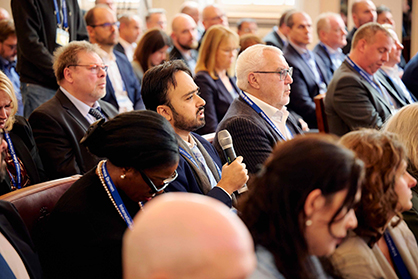
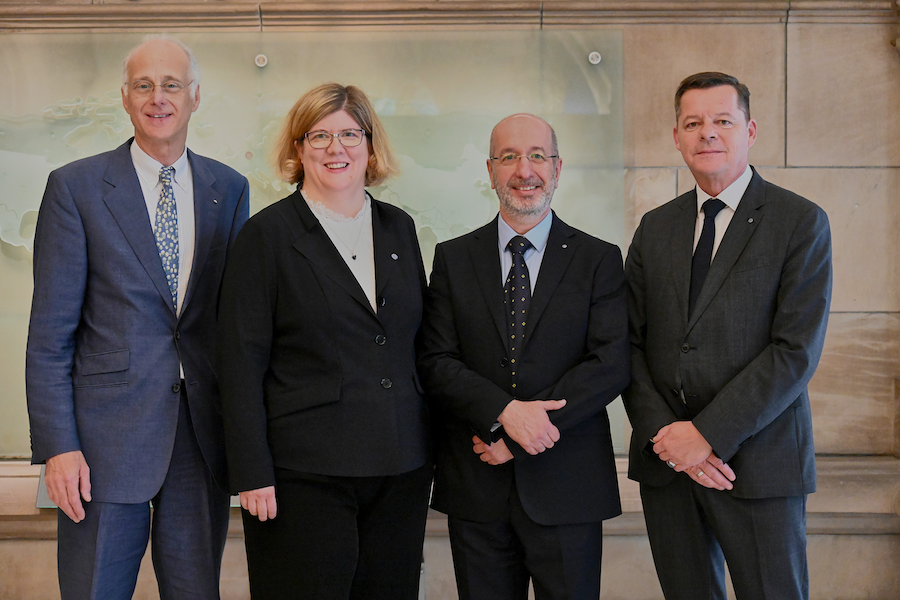
Session Bremen Cotton Conference © 2022 Bremen Cotton Exchange


More News from Bremer Baumwollbörse

#Raw Materials

A Powerful Opening: Global thought leaders launch the International Cotton Conference Bremen

The International Cotton Conference Bremen will open on 25 March 2026 in the Parliament building of the Free Hanseatic City of Bremen with a keynote session of exceptional calibre. Distinguished international experts will set the stage for the conference by offering incisive perspectives on the most pressing challenges and the defining trends shaping the future of the global cotton trade. Their insights will span a broad spectrum — from geopolitically driven disruptions affecting global supply chains to the opportunities emerging from innovation-led agriculture capable of supporting a growing world population. Together, these opening keynotes will frame the dialogue of the conference, highlighting both the complexity of today’s market environment and the pathways toward a resilient and forward-looking cotton sector.

#Natural Fibers

Beyond Cotton: Natural Fibres in the Spotlight at the Bremen Cotton Conference - Branded by DNFI

Climate targets, fragile supply chains, and rising regulatory requirements are fundamentally changing the perspective of the textile industry - the focus is increasingly shifting toward the base material. Not only cotton, but natural fibres are gaining significant importance: they stand out not only because of their outstanding functional properties, but also because they make a valuable contribution to the bioeconomy and responsible product development.

#Raw Materials

Beyond the wardrobe – innovative cotton takes the spotlight

Cotton can do more – a lot more. Cutting-edge textiles and high-tech products made from 100% cotton prove just how powerfully performance and sustainability can come together. That very surge of innovation is front and centre at the 38th Bremen Cotton Conference, taking place March 25–27, 2026, at Bremen’s Parliament on the historic market square – culminating in a bold and dedicated closing session on Friday. In the spotlight: performance upgrades for pure cotton, smart strategies for circular textile waste solutions, and pioneering concepts for demanding technical applications. From natural fibre–reinforced composites to highly effective flame-retardant solutions, cotton steps out of the closet and shows the future potential woven into every fibre.

#Raw Materials

Modern testing methods for raw cotton

The 38th International Cotton Conference Bremen will take place from 25 to 27 March 2026 at the Bremen Parliament. This conference has traditionally stood for in-depth expertise and international exchange. The program will focus on technical innovations, market trends, and regulatory frameworks across the entire value chain – from agriculture to the circular economy. With high-profile speakers, the conference is regarded as the key meeting point for the global cotton industry. Today’s focus: Cotton quality and testing methods.

More News on Raw Materials

#Raw Materials

New study shows low environmental impact by Cotton made in Africa Organic Cotton from Tanzania

Today, the Aid by Trade Foundation (AbTF) is announcing the results of a comprehensive life-cycle analysis (LCA) for cotton produced in Tanzania under the Cotton made in Africa Organic (CmiA Organic) standard. The study emphasises the small ecological footprint of CmiA Organic verified cotton. This can largely be traced back to the absence of synthetic pesticides, artificial fertilisers, and artificial irrigation. Consequently, CmiA Organic cotton can help the textile industry meet regulatory requirements as well as science-based targets. The results also show that the consequences of climate change threaten the livelihoods of these cotton farmers, even though the type of agriculture they practise barely contributes to climate change.

#Raw Materials

Better Cotton Initiative strengthens regenerative focus in standard update

The Better Cotton Initiative (BCI) has strengthened the regenerative focus of its field-level standard with the launch of a new version of its Principles & Criteria (P&C), which marks the next step in the organisation’s journey to becoming a regenerative standards system.

#Raw Materials

Global production expected to decline in 2026/27 as policy shifts and weak demand reshape trade

Early projections for the 2026/27 season indicate that global cotton lint production will decline by 4% to 24.9 million tonnes, while world consumption is expected to remain stable at approximately 25 million tonnes, according to the April 2026 issue of Cotton This Month.

#Raw Materials

Textile Exchange publishes cotton Life Cycle Assessment study to strengthen impact data

Textile Exchange has published the first in a series of seven Life Cycle Assessment (LCA) studies designed to improve the quality and robustness of environmental impact data for raw material production across the fashion, textile, and apparel industry. The first LCA study focuses on cotton and addresses critical data gaps and methodology variability through new high-quality data across key producing countries. The study includes organic, regenerative, recycled, and country averages for conventional cotton production systems, providing a clearer picture of the associated environmental impact.

Latest News

#Man-Made Fibers

Selenis and Kintra Fibers partner to scale 100% bio-based synthetic fiber technology

Selenis, a leading global specialty polyester manufacturer, today announced a strategic manufacturing partnership with materials science company Kintra Fibers to scale Kintra’s patented fiber-grade PBS resin - a 100% bio-based and biodegradable material designed for textile applications.

#Functional Fabrics

PERFORMANCE DAYS proves its relevance as the industry’s key meeting point

Held on March 18–19, 2026, PERFORMANCE DAYS once again confirmed its position as a leading international platform for functional textiles. A total of 3.366 trade visitors and around 560 exhibitors gathered in Munich, with the event already kicking off successfully on DAY 0, which received highly positive feedback for its interactive format. Despite challenging conditions caused by the public transport strike in Munich, the event saw strong attendance and a consistently high level of activity across both exhibition days.

#Recycling / Circular Economy

Reju secures €135 Million in Dutch NIKI Funding for industrial-scale textile-to-textile regeneration hub at Chemelot Industrial Park, the Netherlands

Reju™, the progressive textile-to-textile regeneration company, has been awarded €135 million in funding under the Netherlands’ Nationale Investeringsregeling Klimaatprojecten Industrie (NIKI) program. The funding will support Reju’s planned industrial-scale Regeneration Hub at Chemelot Industrial Park in Sittard-Geleen, covering both the investment phase and ongoing operations, and represents a critical milestone on the path toward final investment decision.

#Techtextil 2026

TTL showcases nonwoven and needlefelt solutions at Techtextil 2026

Technische Textilien Lörrach GmbH & Co. KG (TTL), part of the Yanpai Group, will present its latest nonwoven and needlefelt solutions for industrial applications at Techtextil 2026 in Frankfurt.

TOP