[pageLogInLogOut]

#Nonwovens

EDANA and INDA advocate for global collaboration on trade policies affecting the nonwovens industry

EDANA, the global association and voice representing the nonwovens and related industries, and INDA, the Association of the Nonwoven Fabrics Industry, jointly express their concerns regarding escalating trade tensions.

EDANA, the global association and voice representing the nonwovens and related industries, and INDA, the Association of the Nonwoven Fabrics Industry, jointly express their concerns regarding escalating trade tensions.

Both associations recognize the potential for countermeasures and reciprocal tariffs to negatively impact the nonwovens industry globally. The nonwovens industry is a global sector, with many companies having significant operations worldwide, including in Europe and the United States. It is crucial to avoid a harmful cycle of retaliatory tariffs that could have a net negative effect on economies worldwide.

Both EDANA and INDA urge policymakers to prioritize negotiations and seek mutually beneficial resolutions. “While we understand the need to address unfair trade practices, we urge regions to prioritize negotiations and seek mutually beneficial resolutions,” stated Murat Dogru, General Manager at EDANA. “Escalating tariffs create uncertainty and can disrupt supply chains, ultimately harming industries and consumers.”

Tony Fragnito, INDA’s President & CEO added, “The nonwovens industry supports fair trade and a level playing field. We encourage policymakers to consider the broader impact of trade measures and to pursue policies that foster collaboration and free trade.”

EDANA and INDA highlight the significant role of the nonwovens industry in providing essential materials for various sectors, including hygiene, healthcare, and manufacturing in many regions, including Europe and the United States. The associations urge the US and EU to recognize the interconnectedness of the industry and the importance of maintaining open trade between the regions. At a time when manufacturers are facing cost pressures from many angles, it is imperative that American and European manufacturers remain competitive globally and have long-term clarity on import costs.

EDANA and INDA remain dedicated to promoting trade policies that support a strong and adaptable nonwovens industry worldwide. Choosing collaboration over conflict, and commitment to open markets and productive engagement, will pave the way for a future where trade acts as a catalyst for shared prosperity and innovation, to the advantage of industries and consumers alike.



More News from EDANA

#Nonwovens

25 years in the room: EDANA’s OUTLOOK™ returns to Cascais to shape a changing industry

The market does not wait, and it does not grant easy answers. Across the absorbent hygiene, personal care, and wipes sectors, business is undergoing a period of intense, necessary adjustment. New European rules on packaging, single-use items, product safety, and end-of-life are forcing companies to drop old assumptions about materials and performance. At the same time, producers must keep their goods safe, reliable, and affordable for the babies and aging adults, who rely on them every day.

#Technical Textiles

FILTREX™ India 2026 to bring global filtration leaders together in New Delhi

EDANA, the voice of nonwovens, in partnership with the Business Coordination House (BCH), will welcome filtration professionals from across the world to FILTREX™ India 2026, taking place on 7–8 October 2026 at the Eros Hotel, New Delhi.

#Associations

Sustainability: European industry calls on EU to keep Single-Use Plastics Directive unchanged

A broad coalition of European industry associations, including EDANA, Euratex and Plastics Europe, has urged EU institutions to maintain the current legal framework of the Single-Use Plastics Directive (SUPD). In a joint statement, the organisations argue that reopening the Directive at this stage would create legal uncertainty, increase regulatory complexity and undermine investment, while its implementation across the European Union is still incomplete.

#Nonwovens

EDANA announces five new board members following 2026 Annual General Meeting

The EDANA Board of Governors is elected or re-elected at the Annual General Meeting by the member companies. The Governors are senior executives (business leaders) from member companies, based in different countries and representing different sectors of the nonwovens industry. The Board has central responsibility for guiding EDANA's overall strategy and approving its policies and priorities. It meets three times a year.

More News on Nonwovens

#CINTE Techtextil China 2026

Cinte Techtextil China 2026 wraps up successfully, setting stage for next-gen advancement across key applications

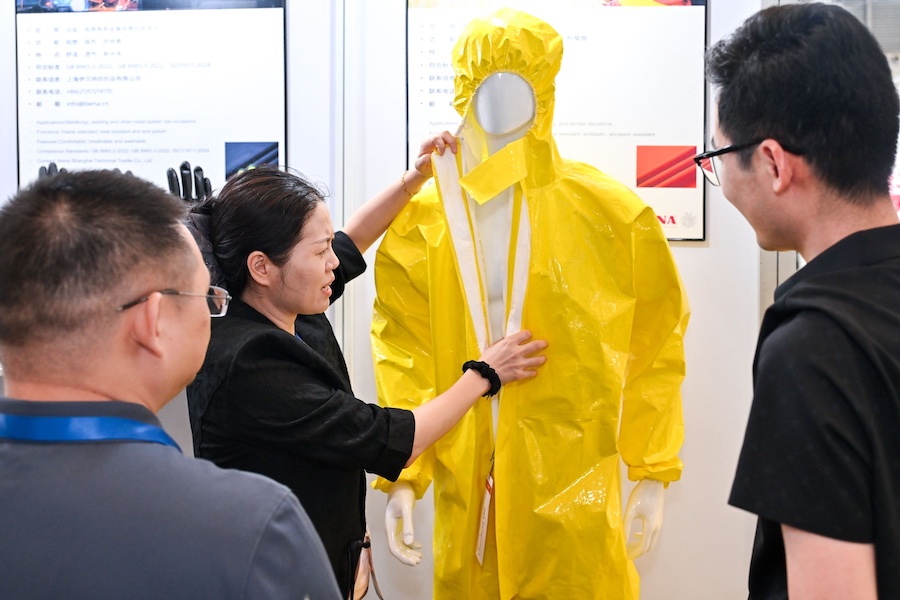
Asia’s premier trade fair for technical textiles and nonwovens delivered a vibrant and productive edition this year, bringing together key players from around the world. Featuring over 300 exhibitors from 15 countries and regions across 32,000 sqm, the platform drew nearly 19,000 visits from an increasingly diverse international audience spanning 86 represented markets.

#Nonwovens

INDA hires Ben Muller as executive director

INDA, the Association of the Nonwoven Fabrics Industry, announced that Ben Muller has joined the association as executive director. Muller brings more than 20 years of leadership experience spanning nonprofit organizations, corporations and trade associations.

#ITMA Asia + CITME 2026

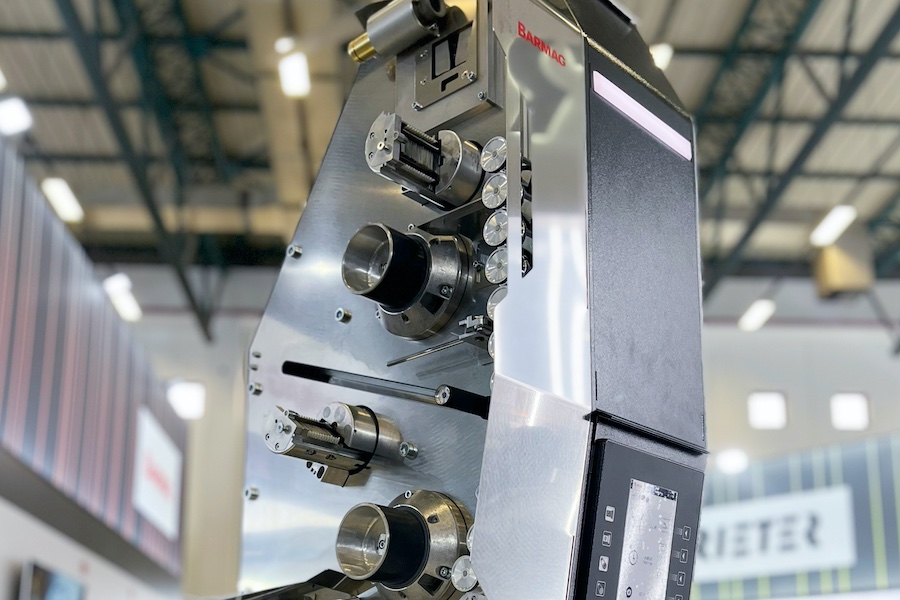
ITMA Asia 2026: How Barmag is reshaping the future of man-made fiber production

The textile industry is entering a groundbreaking era. Manufacturers face rising energy prices, growing sustainability demands, increasing labor shortages, and an unprecedented need for flexibility. For a globally active textile industry, where competitiveness is closely linked to production efficiency and cost leadership, this means that technology is no longer merely a means of improving operational processes – it is increasingly becoming a strategic differentiator.

#Nonwovens

From convenience to compliance: How regulations are reshaping consumer wipes

Regulatory developments are becoming an increasingly important driver of wipes innovation. At OUTLOOK™ 2026, Elisabeth Swennenhuis, Product Line Manager, Consumer Wipes at Magnera, will discuss how regulations such as the Single-Use Plastics Directive (SUPD), Extended Producer Responsibility (EPR) schemes, environmental claims legislation, and emerging circular economy policies are influencing product development and shaping the future of the wipes market.

Latest News

#Knitting & Hosiery

SHIMA SEIKI to showcase digital product creation at Apparel Sourcing Week

Leading digital textile solutions provider SHIMA SEIKI MFG., LTD. of Wakayama, Japan will exhibit at Apparel Sourcing Week 2026 in Bengaluru, India next month. The exhibition provides a platform for the entire apparel value chain, bringing together manufacturers, brands, suppliers and solution providers in one location.

#Digital Printing

SNA GZ accelerates its on-demand production strategy with Kornit Digital

SNA GZ is leveraging the Kornit Atlas MAX PLUS to expand its music merchandise production, streamline e-commerce order fulfillment, and grow its print-on-demand business across Europe. This investment increases SNA GZ's textile production capacity by 150% (2.5×), enabling the company to meet growing demand and support its continued expansion.

#Recycling / Circular Economy

NEUMÜHLE launches mono-material hoodie designed for textile recycling

With the Circular Mono Hoodie, Zurich-based label NEUMÜHLE introduces a new essential designed around a single-material principle. The textile construction is cotton throughout, right down to the sewing thread. Entirely free from elastane, the hoodie launches as a Limited Drop for CHF 139. Take-back, collection and existing recycling partnerships complement its circular design.

#Raw Materials

New Cotton Review examines competitiveness, market risk, and opportunities

From moving record volumes of Brazilian cotton to market, to managing price volatility, unlocking Ethiopia’s production potential, and strengthening African textile trade, the latest edition of Cotton: Review of the World Situation examines some of the most consequential opportunities and challenges facing the global cotton industry.

TOP