[pageLogInLogOut]

#Sustainability

Suominen is offering a wide range of sustainable nonwovens
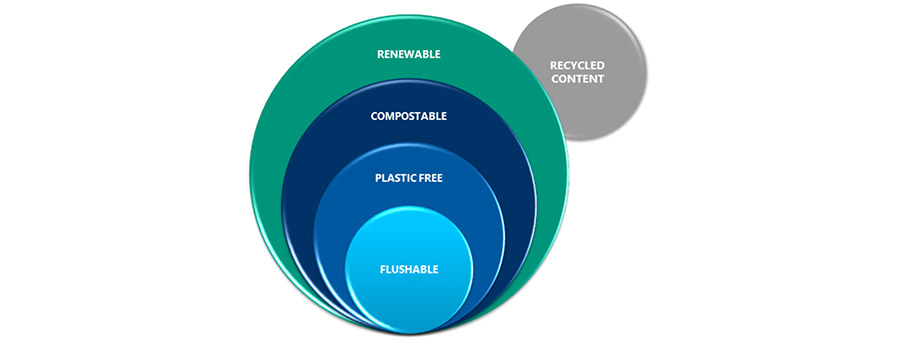
(c) 2020 Suominen
Sustainability is a multidimensional issue, and different aspects of it are important to different customers. That is why Suominen has developed a wide offering of sustainable nonwovens that meet the different sustainability needs of their customers – and end users.

"Suominen’s vision is to be the frontrunner for nonwovens innovation and sustainability. We want to do our share in addressing the most topical global environmental concerns of our time, including scarcity of resources, climate change and marine plastic pollution. By constantly developing new and innovative solutions with a reduced environmental impact, we are able to provide a wide range of sustainable nonwovens for our customers", the company recently announced.

Innovation and sustainability are certainly nothing new for Suominen. Already ten years ago they launched the compostable and biodegradable BIOLACE® family of products produced solely from renewable raw materials. Since then, they have further developed and expanded their sustainable offering; the comprehensive Sustainable Product Portfolio was created in 2018.

Sustainability categories for Suominen’s nonwovens

Suominen’s Sustainable Product Portfolio consists of products made from renewable, recycled and/or plastic-free raw materials as well as compostable and totally dispersible nonwovens. By offering solutions in these different sustainability categories, they can meet the varying sustainability-related needs of customers and end uses.


The sustainability categories

  • Recycled content means that the nonwoven contains at least 15% of recycled fibers, such as recycled post-consumer polyester, polypropylene or post-industrial cotton fibers.
  • Renewable means that all the raw materials used are from plant-based sources. We offer nonwovens made from a wide variety of renewable fibers, from biobased plastics to natural fibers.
  • Compostable nonwovens are produced by using fibers from renewable resources that are compostable in industrial composting process as defined by international compostability standards.
  • Plastic-free nonwovens contain raw materials made of biodegradable fibers of a natural origin, such as viscose, pulp and cotton.
  • Flushable products are biodegradable and dispersible in water and comply with or exceed the latest industry flushability standards.

"From our Sustainable Product Portfolio, our customers can choose the sustainability category that is most relevant to them and then decide which of the products in the category are most suitable for their end products. At the same time, we also have a number of sustainable nonwoven alternatives available for various end uses, including baby, household, hygiene, medical, personal care and workplace", the company announced.


More News from Suominen Corporation

#Nonwovens

Change in Suominen Leadership Team: Minna Rouru to pursue new opportunities outside the company

Suominen Chief People and Communications Officer (CPCO) Minna Rouru has announced her decision to leave Suominen to take on a role in another company. She will leave Suominen at the latest on August 26, 2026. The CPCO succession process has been initiated and will be announced in due course.

#Nonwovens

Suominen launches three-year profitability improvement program and introduces new operating model and leadership team

Suominen is launching a three-year program to improve the company’s profitability. The Full Potential Program targets 10% EBITDA by 2028. Suominen is also introducing a new functional operating model, with a dedicated focus on customers and factories, designed to strengthen expertise and effectiveness.

#Nonwovens

Suominen reports weaker 2025 results amid market pressure and US supply incidents; no dividend proposed

Suominen Corporation has published its unaudited Financial Statements Release for January 1–December 31, 2025, describing the year as an “unsatisfactory performance in a challenging environment”. Net sales and profitability declined year-on-year, reflecting lower volumes, adverse currency effects and intensified competition, while the company points to two significant incidents at its US facilities that constrained supply and weighed on both sales and profitability in the third and fourth quarters.

#Nonwovens

Francois Guetat joins Suominen as COO

Francois Guetat brings over two decades of global experience in operations, supply chain, and manufacturing excellence. Most recently, he served as SVP of Integrated Supply Chain at Kalmar, where he led business across sourcing, manufacturing, logistics and strategy. His leadership has been shaped by 22 years at Volvo, where he held key roles in Sweden, USA, and Poland.

More News on Sustainability

#Sustainability

Practical toolkit to drive coordinated climate action launched

An open-access workshop toolkit enables brands, suppliers, policymakers and investors across the textile industry to apply the System Map in their own work, identifying leverage points to halve emissions and enable a just transition.

#Raw Materials

Textile Exchange publishes cotton Life Cycle Assessment study to strengthen impact data

Textile Exchange has published the first in a series of seven Life Cycle Assessment (LCA) studies designed to improve the quality and robustness of environmental impact data for raw material production across the fashion, textile, and apparel industry. The first LCA study focuses on cotton and addresses critical data gaps and methodology variability through new high-quality data across key producing countries. The study includes organic, regenerative, recycled, and country averages for conventional cotton production systems, providing a clearer picture of the associated environmental impact.

#Sustainability

Experts publish APAC policy priorities

Cascale today announced the publication of its APAC Policy Priorities Paper, developed by the Asia-Pacific (APAC) Policy Member Expert Team (MET) to identify key regional sustainability challenges and provide practical, aligned recommendations for policymakers and industry stakeholders across Asia-Pacific.

#Sustainability

GOTS version 8.0 released: advanced supply chain accountability, from fibre to finished product

Global Standard is pleased to announce the release of GOTS Version 8.0, the latest update to the world's leading processing standard for organic textiles. The updated Standard strengthens requirements for air emissions and waste management, as well as criteria for product safety. It introduces new provisions on circularity, microfibre management and updates in residue testing. Version 8.0 also elevates due diligence obligations and formalises governance requirements, including ESG disclosure, anti-corruption policies and conflict-of-interest safeguards, to support credible, responsible business conduct.

Latest News

#Composites

KARL MAYER strengthens partnerships in the composites industry at JEC World 2026

KARL MAYER further strengthened its role as a reliable and competent partner to the composites industry at JEC World 2026. The global market leader in textile machinery manufacturing used the trade show to meet key customers, establish numerous new contacts, and engage in in-depth technical discussions.

#Recycling / Circular Economy

ABB and Syre partner to explore technologies for industrial-scale textile recycling

ABB has signed a Memorandum of Understanding (MoU) with Swedish textile impact company Syre to jointly explore technologies to support the development of Syre’s first textile-to-textile recycling plant in Vietnam. The agreement establishes a framework for collaboration to investigate how ABB’s automation, electrification and digital technologies could contribute to safe, efficient and scalable operations. It will also explore how these capabilities could further optimize process and quality control performance as Syre advances its ambition to produce circular polyester at industrial scale.

#Techtextil 2026

From Nature Performance to Circular Economy: Techtextil 2026 focuses on the future market for technical textiles

Alternative materials and recycling technologies are one of the most important future segments and drivers of innovation in technical textiles. Sustainability goals and regulatory requirements increase their relevance, while advances in performance and economic viability enhance their market competitiveness. Taking place from 21 to 24 April 2026, Techtextil reflects this key industry trend with a growing number of specialised exhibitors. With the new “Nature Performance” label, the leading global trade fair bundles relevant market offerings and facilitates access to new solutions – from natural fibres and yarns to bio-based materials and circular approaches.

#Research & Development

Textile cascade filter for removing microplastics from wastewater

Microplastics are now found almost everywhere, even in remote regions of Antarctica. They enter the human body through the food chain. Studies indicate that microplastics may have negative effects on the human health.

TOP