[pageLogInLogOut]

#Industry 4.0 / Digitalization

Birla Cellulose now maps 100% forest sources on Traceability platform GreenTrack™

Birla Cellulose has advanced the capability of the well-established blockchain-enabled traceability platform, GreenTrack™, which now enables the consumers to see the forests from where the wood is sourced and thus providing a complete end-to-end visibility of forest to fashion. The visibility of forest sources for all the Birla Cellulose’s eco-enhanced products has been achieved by collaboration with Sappi Ltd., the largest supplier of dissolving pulp.The forest information of pulp produced by Birla Cellulose was available on the platform thus far.

The GreenTrack™ platform was introduced in early 2019 and has since been used widely to trace and track the material flow in the fashion value chain, and is currently being used by over 20 leading global brands & retailers and their respective supply chain partners across the globe, while many others are in the process of onboarding it. In addition to brands, many large garment producers and exporters are also using this platform to trace their supply chains. The traceability of the value chain through the use of this platform comes without any additional cost to the supply chain partners or to the brands & retailers. This unique platform already handles thousands of ‘live’ transactions and has a potential to reach millions of consumers across the globe. Brands have started to pass on the power of traceability to their end consumers through QR codes on their garment hangtags. 

“Expanding the capability of the GreenTrackTM platform and our collaboration with Sappi to provide the visibility of sustainably managed forests from where the wood was sourced, would help the sustainability focused consumers, brands and retailers to make a more informed buying decision, said Mukul Agrawal, Chief Sustainability Officer of Birla Cellulose. He informed “this initiative simplifies the verification of sustainability of complete supply chain, from forest to retail, validation of which otherwise would be a cumbersome process involving compilation of many certifications and manual tracking of the material in a long complex value chain”. 


This is one more step towards our commitment for building fully transparent supply chain and creating visibility to the sustainably managed forests, that are among the most important aspect of responsibly produced viscose. Birla Cellulose leads sustainable wood sourcing practices in MMCF industry and ranks no. 1 in Canopy’s Hot Button Report 2020 that ranks the MMCF producers on sustainable wood sourcing practices and next generation solutions. 

According to Krelyne Andrew, General Manager - Sustainability for Sappi Verve, “we are committed to enhancing trust and creating shared value within our supply chain, working closely with our partners to promote and shape the sustainability of the MMCF sector towards a Net Positive vision.” Traceable and transparent supply chains are integral stepping stones to providing brand owners and consumers with the confidence that their products originate from sustainable and renewable sources of wood, free from deforestation, where biodiversity is promoted and customary, traditional or civil rights of people are upheld. 

The platform is unique in the sense that it tracks orders as well as shipments (actual material flow) at the same time, thereby, eliminating any chance of inconsistent practices in the supply chain. The platform ensures information access only to relevant parties and full details of transparent supply chain is visible to end buyers or brands only. In addition to live tracking of material, the platform offers a series of value added features such as auto-generation of transaction certificates, easing quality management efforts, business analytics, amongst other features. 


More News from TEXDATA International

#Texprocess 2026

Texprocess 2026: Automation, digitalisation and AI redefine textile processing

Making investment decisions in textile processing has become significantly more demanding. Increasing energy costs, a shortage of skilled labour and ongoing geopolitical uncertainties are compelling companies to focus on technologies that deliver clear gains in efficiency and process reliability. This applies equally to apparel manufacturing and to the processing of technical textiles and high-performance materials. As a result, modernisation initiatives are assessed more carefully – even as the need to upgrade production systems continues to intensify.

#Techtextil 2026

Techtextil 2026: Between innovation pressure & market reality

From 21 to 24 April 2026, Techtextil in Frankfurt am Main will once again become the central meeting point for the international technical textiles and nonwovens industry. Running in parallel, Texprocess will focus on the industrial implementation of textile processing technologies as the leading platform in this field. Together, the two trade fairs form a closely integrated presentation and working platform along the entire textile value chain – from material development to finished applications.

#Techtextil 2026

Between geopolitical pressure and industrial resilience

In this interview, Dr. Janpeter Horn (VDMA) discusses the current challenges facing textile machinery manufacturers, shaped by geopolitical tensions, regulatory developments and subdued investment. He also outlines why innovation strength, integrated solutions and strategic positioning remain key to global competitiveness.

#Texprocess 2026

Between investment restraint and modernization pressure

Texprocess 2026 takes place in a complex market environment shaped by uncertainty and innovation pressure. In this interview, Elgar Straub (VDMA) explains why the trade fair is particularly relevant this year and which technologies are driving efficiency and competitiveness.

More News on Industry 4.0 / Digitalization

#Research & Development

Textilfabrik 7.0 launched: Mönchengladbach becomes a real-world lab for sustainable textile production

With the official kick-off event of the Textilfabrik 7.0 (T7), a major transformation project for the German textile and apparel industry has been launched in the Monforts Quarter in Mönchengladbach. At the “Textile Roundtable,” an event format organized by the Zukunftsagentur Rheinisches Revier, representatives from industry, research, politics, and the regional economy came together to jointly lay the foundation for CO₂-neutral, circular, and economically viable textile production in Germany.

#Man-Made Fibers

OnceMore® from Södra brings end-to-end traceability for circular Man-made Cellulosic Fibers (MMCF) using TextileGenesis

OnceMore® from Södra, the world’s first large-scale process for recycling blended fabrics into high‐quality dissolving pulp, will begin using TextileGenesis, a Lectra company, to strengthen traceability from raw material to retail across the value chain. OnceMore® produces dissolving pulp made from blended textile waste and wood sourced from responsibly managed Swedish forests. By integrating TextileGenesis, OnceMore® supports the growing need for verified data and secure, transparent tracking throughout increasingly complex supply chain.

#Denim

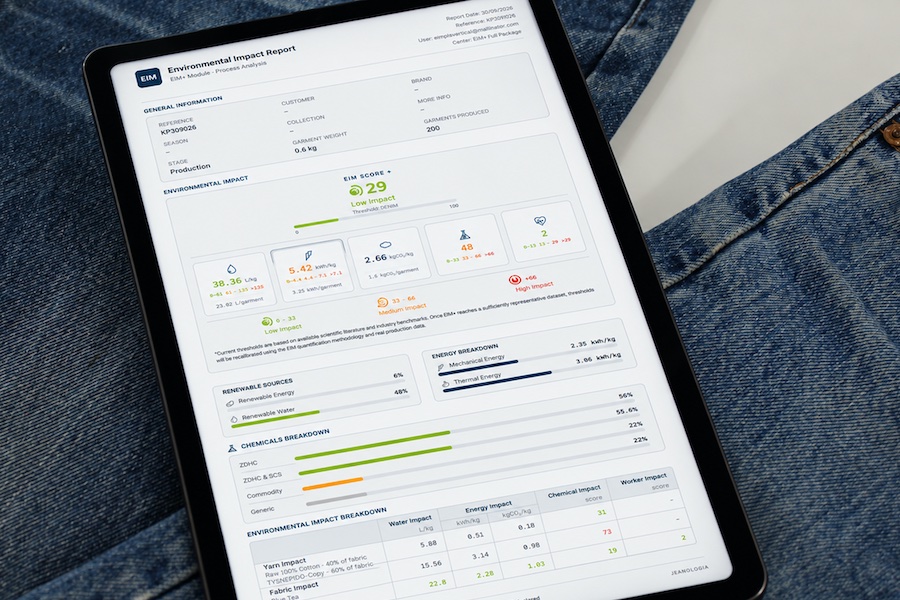
Jeanologia launches Billy

The new AI extracts precise laser designs from a garment image in minutes, transforming how vintage denim is recreated for production. If Jeanologia’s laser changed the way jeans were made at the end of the last century, its AI now takes the next step: moving from reproducing wear to designing it. / archive photo © 2026 Jeanologia

#Dyeing, Drying, Finishing

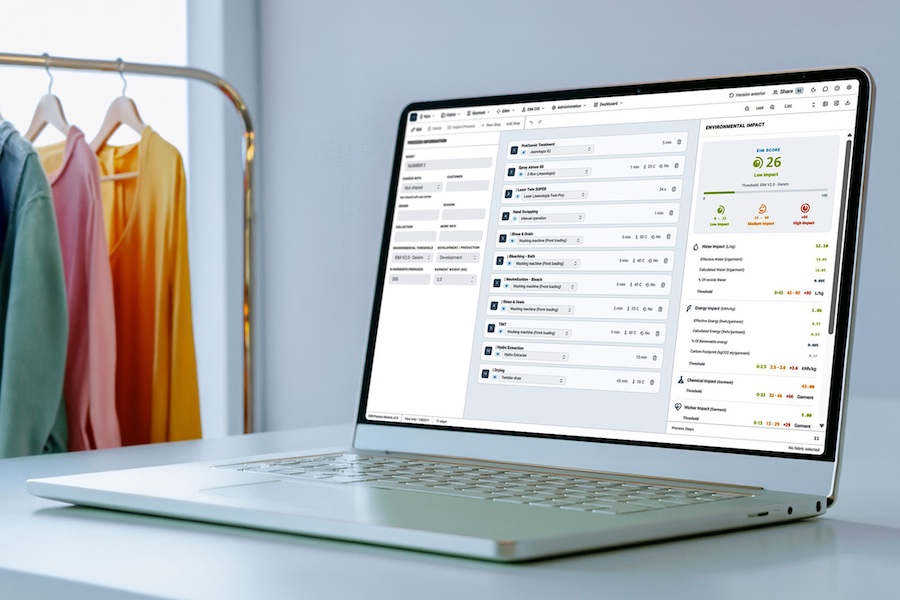
Monforts unveils interactive digital platform for textile finishers

Monforts has launched a new digital platform designed to give textile manufacturers faster, more intuitive access to the company’s finishing technologies, technical expertise and aftersales support worldwide.

Latest News

#INDEX 2026

STFI highlights textile circular economy and alternative fibres at INDEX™ 2026

From 19 to 22 May 2026, INDEX will invite visitors to Lake Geneva for the world's leading nonwovens trade fair. The Centre of Excellence in Nonwovens at the Sächsisches Textilforschung- sinstitut e.V. (STFI) will be in attendance to present the latest developments in nonwovens research. In the field of the textile circular economy, the STFI will present acoustically effective nonwovens made from chemical recycling residues. The range also includes innovations aimed at replacing conventional raw materials, such as the biobased and biodegradable polymer polybutylene succinate (PBS) and Kendyr as an alternative to cotton.

#Associations

Italian textile machinery sector faces weak start to 2026 despite domestic growth

In the first quarter of 2026, order intake for Italian textile machinery manufacturers recorded a decrease of 5% compared to the same period in 2025, reflecting a still challenging start to the year. The decline affected foreign markets (-7%), while the domestic market showed growth (+21%).

#Nonwovens

Temafa Maschinenfabrik GmbH supplies a complete decortication plant for processing hemp straw to Hanffaser Geiseltal eG

Temafa Maschinenfabrik GmbH, a leading supplier of machinery and plants for fibre processing, has successfully secured an order to supply a complete plant for processing hemp straw to Hanffaser Geiseltal eG, based in Mücheln.

#Techtextil 2026

FET’s revolutionary gel spinning system wins Techtextil Innovation Award

FET has received the prestigious Techtextil Innovation Award 2026 in the New Production Technology category. The Techtextil Innovation Award honours outstanding ideas in textile technology, sustainability, AI and the creation of technical textiles, selected by an international jury of experts. Ranging from new materials to new production technologies, this award recognises progressive ideas that are driving forces for numerous industries, such as automotive, medical and construction.

TOP