#Techtextil 2026
Textile Chemicals & Dyes: Innovation in Textile Chemistry moves into focus at Techtextil 2026
by Oliver Schmidt
Rethinking Textile Chemistry
Innovation in technical textiles is often associated with new fibres, advanced materials or increasingly automated production technologies. Yet many of the decisive performance characteristics of modern textiles originate elsewhere – in chemical processes that determine colour, functionality and durability. From protective finishes and flame-retardant coatings to specialised dyes and auxiliaries, textile chemistry plays a central role in shaping the properties of modern materials.
Reflecting this growing importance, Techtextil 2026 introduces Textile Chemicals & Dyes as a dedicated product segment for the first time. From 21 to 24 April in Frankfurt am Main, more than 30 exhibitors from eleven countries will present chemical solutions ranging from dyes and auxiliaries to functional finishes and polymer technologies. The new area in Hall 9.0 is located in direct proximity to fibres, yarns and performance apparel textiles, enabling closer interaction between chemical suppliers, material producers and textile manufacturers.
Exhibitors include companies such as Archroma, CHT, EMS-Chemie, Rudolf, Schill+Seilacher, Sarex Chemicals and Tanatex Chemicals, reflecting the broad spectrum of chemistry used across technical textile applications – from protective clothing and outdoor textiles to filtration, automotive and medical products.
PFAS regulation driving innovation in textile chemistry
Few developments illustrate the transformation of textile chemistry more clearly than the growing debate around per- and polyfluoroalkyl substances (PFAS). These chemicals have long been used to achieve water-, oil- and stain-repellent properties in textiles ranging from outdoor apparel to medical protective clothing. However, because PFAS persist in the environment and can accumulate in water, soil and the human body, regulators worldwide are increasingly restricting their use.
As a result, textile manufacturers and chemical suppliers are accelerating the search for alternative solutions that can deliver comparable performance without the environmental risks associated with fluorinated compounds. Recent developments across the industry illustrate how broadly this transition is unfolding across the value chain.
Chemical suppliers are introducing new fluorine-free finishing technologies designed to replace conventional water-repellent treatments. Rudolf Group, for example, has developed BIONIC-FINISH® ECO, a fluorine-free finishing system that provides durable water repellency across a wide range of fibre types. Similarly, CHT offers its ECOPERL range of PFC-free hydrophobic finishes, which use optimised waxes and fluorine-free polymers to achieve high water repellency while complying with recognised sustainability standards.
Innovation is also taking place in adjacent material technologies. Magnera has recently introduced PFAS-free solutions for nonwoven applications used in healthcare and protective textiles. At the polymer level, Asahi Kasei is developing PFAS-free polyamide technologies alongside recycling concepts for high-performance fibres. Even in firefighter turnout gear, where performance requirements are particularly demanding, PFAS-free fabric constructions are beginning to demonstrate comparable protection levels.
Together, these developments illustrate a broader shift towards alternative chemistries designed to combine high functionality with improved environmental compatibility.
Reducing water and energy consumption in dyeing
Another major field of innovation concerns the reduction of water and energy consumption in textile dyeing and finishing. Conventional wet processing – including pre-treatment, dyeing and finishing – remains among the most resource-intensive stages of textile manufacturing. With increasing regulatory pressure and rising energy costs, manufacturers are seeking ways to significantly reduce resource consumption without compromising quality or productivity.
Chemical suppliers are therefore developing dye systems that shorten processing times and reduce the amount of water and auxiliaries required. CHT, for example, has developed its BEMACRON HP-LTD dyes for low-temperature dyeing of polyester and elastane blends. By enabling dyeing processes at around 120 °C, these dyes help protect sensitive fibres while lowering energy requirements.
Other companies are pursuing similar approaches through optimised dye chemistry and process control. Archroma’s AVITERA® reactive dyes are designed to significantly reduce water and energy consumption in cotton dyeing. DyStar’s Cadira® process focuses on improving resource efficiency throughout the dyeing process by optimising dye selection and processing conditions.
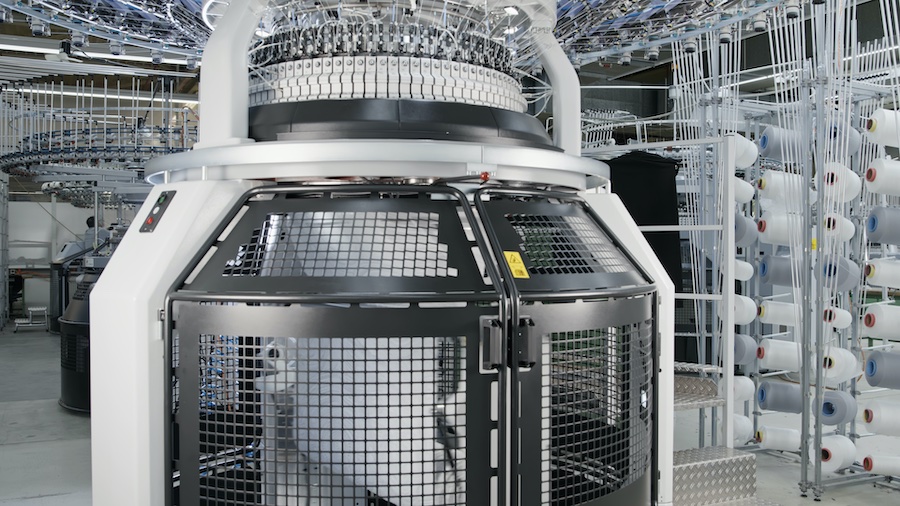
Machinery manufacturers complement these developments with new process technologies. German dyeing machine manufacturer Thies, for example, has introduced its Signature Series systems aimed at significantly reducing the consumption of water, energy and chemicals during textile wet processing while improving productivity and shortening production cycles.
Functional coatings expanding the capabilities of technical textiles
Beyond dyes and auxiliaries, functional coatings represent another crucial field of textile chemistry. Many technical textiles only achieve their final performance characteristics through specialised finishing processes that add protective or functional properties to the base material. Modern finishing systems can provide antimicrobial protection, odour control, thermal regulation, flame retardancy or specialised barrier functions against liquids and chemicals.
Belgian company Devan, for example, offers technologies such as Devan® BI-OME for odour control as well as its patented Insecta microencapsulation system, which protects textile substrates against insects such as mosquitoes, moths or ticks.
Comfort-enhancing technologies are another important field of development. Swiss specialist HeiQ has introduced HeiQ Cool™, a textile finish designed to combine immediate contact cooling with continuous evaporative cooling in order to improve thermal comfort in garments and home textiles.
Protective applications remain another key area of innovation. Chemical suppliers such as CHT have developed flame-retardant finishing systems like the APYROL range. Other companies are focusing on high-temperature resistant coatings for technical textiles. Dupré Minerals, for example, offers MicaShield®, a vermiculite-based dispersion designed to enhance the heat resistance of glass fibre fabrics. These coatings can withstand temperatures of more than 1000 °C and are widely used in industrial applications where thermal protection and fire resistance are critical.
Machinery manufacturers also play an important role in enabling such technologies. Companies like Monforts develop coating and finishing machines designed to apply functional layers efficiently and precisely across a wide range of technical textiles.
Bio-based chemistry and renewable raw materials
Alongside efficiency improvements, many companies are exploring new approaches to textile chemistry based on renewable raw materials. Bio-based dyes and finishing agents derived from natural sources are gaining increasing attention as the industry seeks to reduce its dependence on fossil-based feedstocks.
Archroma’s EarthColors® technology, for example, uses agricultural waste such as almond shells, onion skins or pomegranate residues as raw materials for textile dyes. By transforming by-products from the food industry into colourants, the process creates new circular value streams.
Bio-based approaches are also emerging in textile finishing. Rudolf Group has introduced products such as FERAN® BIO ICR with a high certified bio-based content designed to improve moisture management and wearing comfort in performance textiles. Similarly, Tanatex has developed TANAFINISH™ Bio-Dry, a moisture-management finish for synthetic textiles based on bio-derived ingredients such as Aloe Vera.
Companies such as Senbis Polymer Innovations are also exploring bio-based polymer solutions for textile applications, demonstrating how renewable and potentially biodegradable raw materials are gradually finding their way into different segments of textile chemistry.
Circular chemistry and recycling compatibility
Another emerging field in textile chemistry concerns the compatibility of chemical treatments with future recycling systems. As the textile industry moves towards circular production models, many existing coatings and finishes are being reassessed for their impact on recyclability. One challenge is the widespread use of multi-material constructions, which can make separation and fibre recovery difficult at the end of a product’s life cycle. Chemical suppliers are therefore developing new solutions designed to enable mono-material systems.
Zschimmer & Schwarz, for example, has introduced its FASALOOP technology, which replaces conventional latex or polyurethane back coatings in artificial turf and carpet systems with polyester- or polyolefin-based alternatives. This approach allows the entire construction to remain within a single material stream, making recycling significantly easier.
Such developments highlight the growing importance of “circular chemistry” – the idea that chemical formulations should not only provide functionality during a product’s life but also support efficient recycling at the end of it.
A platform for collaboration across the value chain
The growing complexity of textile materials means that innovation rarely takes place in isolation. Chemical formulations, fibre properties, textile structures and processing technologies must increasingly be developed in parallel to achieve the desired functionality and sustainability performance.
By bringing suppliers of dyes, auxiliaries and functional chemicals together in one dedicated area, Techtextil 2026 highlights the strategic importance of textile chemistry within the broader innovation landscape of technical textiles. The close proximity of chemical suppliers to fibre producers, textile manufacturers and application specialists aims to encourage dialogue across the value chain – and accelerate the development of the next generation of textile materials and processes.