[pageLogInLogOut]
TRÜTZSCHLER SPINNING - THE NEW CARD

#Industry 4.0 / Digitalization

At the heart of it all despite the distance
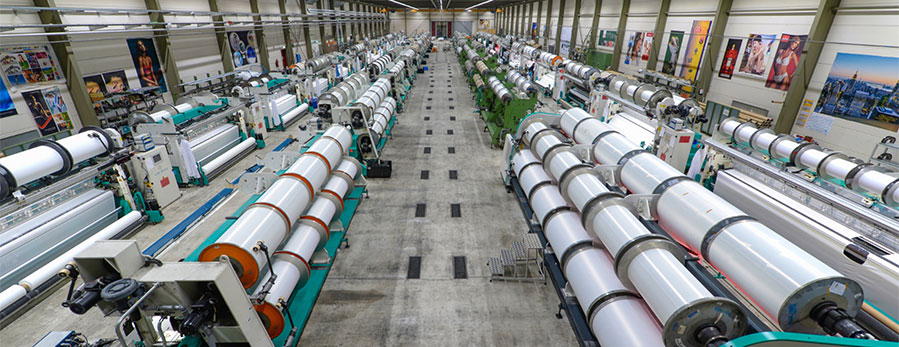
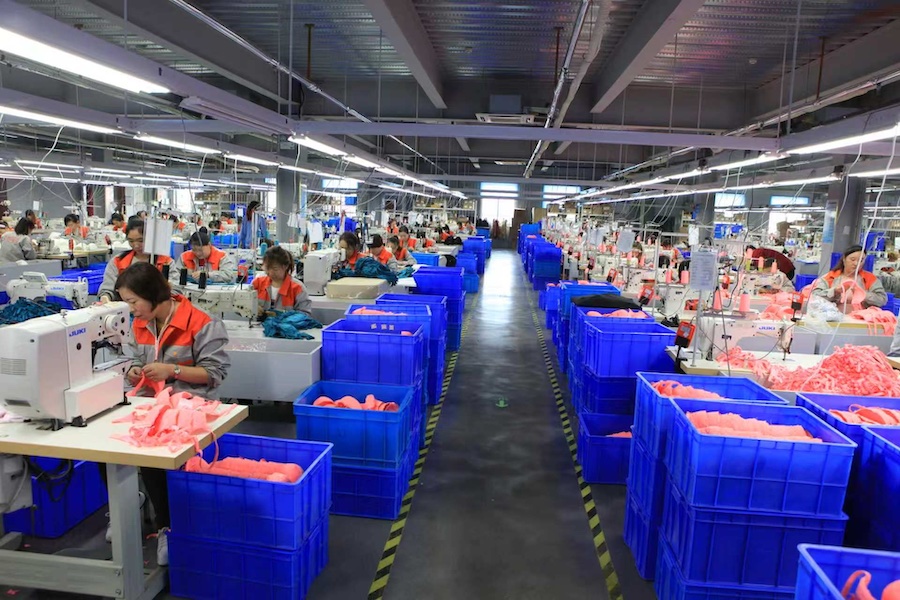
A view of production operations at Georg+Otto Friedrich (© Georg+Otto Friedrich) (c) 2020 KARL MAYER
In these times of coronavirus-induced travel and contact restrictions, the advantages of innovative digital solutions are becoming apparent, especially for daily working life. For example, leading European warp knitting company Georg+Otto Friedrich uses KM.ON’s k.management software to establish the production performance of its machines, regardless of time and place.

Always up to date – Georg+Otto Friedrich GmbH tests k.management from KM.ON

KARL MAYER’s high-performance tricot machines are in operation at its headquarters in Groß-Zimmern, Hesse, and in Limbach- Oberfrohna, Saxony. At the end of last year, Georg+Otto Friedrich used k.ey to network its machines at these two sites with the KM.ON cloud so that staff could access an overview of the factory halls via mobile phone or tablet. k.management has been being trialled at the company since January 2020. “We are now saving a lot of time and have real-time information to assist with our planning and decision-making,” says Kai Trippel, responsible for production, of his initial experience with the technology. Previously, it was impossible to get an overall impression of the production situation without daily tours of factory headquarters and inconvenient phone calls with the extremely busy shift managers at the plant in Saxony. Georg+Otto Friedrich is acting as KM.ON’s development partner for the k.management project, thus continuing a long-running tradition. This warp knitted fabric specialist was one of the first customers to KARL MAYER, KM.ON’s parent company. The company began business activities in 1950, using KARL MAYER machines. The two long-standing partners are now working together to tackle the challenge of digitalisation.

A fruitful development partnership

In order to optimise k.management for customers, several weekly user workshops were held between March and May 2020. The online video conferences brought Product Manager Marcel Wenzel and UX/UI Designer Pia Keller from KM.ON together with Kai Trippel and those responsible for purchasing, production and technology at Georg+Otto Friedrich, and were extremely successful. The participants were able to use the details they shared on their production practices to draw up important requirements for preparing and presenting performance data. “We were able to quickly prioritise and work out issues such as which key figures are needed in which order at the first click, and which data should lead to deeper menu hierarchies,” explains Marcel Wenzel. On the customer side, Kai Trippel welcomes the opportunity to clear up his questions directly and provide suggestions for improvement effectively. “Things are now being fleshed out, and the software solution is getting its final touch before it’s ready for practical use,” he says. Following the workshop phase, the requirements laid out during the dialogue with Georg+Otto Friedrich will be examined to determine their general validity for the market, and solutions for meeting these requirements will be worked out step by step. “We are taking an interactive and agile approach to the optimisation work,” says Marcel Wenzel. Kai Trippel is already looking forward to the next test version, which software developers Hristiyan Petrov and Martin Dederer are currently hard at work on.


Planning using efficiently acquired real-time data

The digital k.management solution delivers a well thought-out dashboard with key figures on the machines used in production. The data ensures that processes are transparent, provides a basis for well-founded decisions, and can be called up easily at any time and from any location. Simply open the KM.ON homepage and log into your personal area using your unique login information. All the machines that are networked via k.ey are listed in this area. The first menu level provides an overview of all the machines. It provides key information on each machine, such as speed, effectiveness and the next upcoming beam change, summarised in a button-like display area. Clicking on this machine item displays more detailed data on the selected machine. In addition to this, the detailed view shows information such as speed and stop time curves with a choice of monitoring intervals, availability, and the processing status of orders in relation to the planned production time and production duration.

Pushing boundaries during the design process

In addition to k.management, KM.ON’s customers also appreciate k.innovation for the range of products offered by the KARL MAYER software start-up – particularly in the age of corona. The web-based design tool for warp knitting helps to shorten the time to market and, to this end, connects all those involved in the design process with appropriate access rights during the development and design of new products. Customers benefit from efficient teamwork and communication – without needing to travel – throughout the online creative process, from brainstorming to the finished fabric. Pattern data is transferred directly from the software to the machine. This saves time and prevents errors.
More News from KARL MAYER Textilmaschinenfabrik GmbH

#Knitting & Hosiery

KARL MAYER launches extra-wide HKS 3-M EL for increased productivity

KARL MAYER has launched a new extra-wide version of its HKS 3-M EL tricot machine, designed to increase productivity particularly in the manufacture of textiles for sports, activewear and athleisure applications.

#ITMA Asia + CITME 2026

Three stages, multiple customer benefits: KARL MAYER during ITMA ASIA 2026

At ITMA ASIA in Shanghai, KARL MAYER will once again demonstrate that it understands the challenges facing the Asian textile industry – and will present tailor-made solutions.

#Technical Textiles

RDJ 6/2 in E 32: Finesse in Motion

The appearance of sports and casual shoes is as diverse as their applications, ranging from sporty to stylish and from functional to fashionably practical. In particular, spacer fabrics produced on highly flexible KARL MAYER double needle bar raschel machines with Jacquard technology are in high demand for manufacturing these trendy shoes. These efficient production machines enable attractive designs with integrated multifunctional zones on one or both fabric surfaces, such as breathable mesh structures. Flexible in size and positioning, these features enhance both aesthetics and wearing comfort.

#Knitting & Hosiery

3D designs with a wow factor made on HKS 4-M EL ECO: When crepe, ruffles, and sheer fabrics redefine fashion

Seersucker, flip-flap items, Fırfır, or crepe materials: structured fabrics have long been more than just a passing trend. They lend timeless looks depth, dynamism, and an exciting tactile dimension. Whether classic striped patterns or modern solid-color interpretations, these versatile pieces pair perfectly with casual and business-casual outfits and effortlessly create a modern look.

More News on Industry 4.0 / Digitalization

#Industry 4.0 / Digitalization

Coats Digital launches AI-powered GSD RealMotion for motion analysis

Coats Digital has launched GSD RealMotion, an AI-powered solution designed to provide apparel manufacturers with greater visibility into factory-floor operations. By analysing shop-floor video and applying Coats Digital’s GSD methodology, the solution turns video recordings into structured, motion-by-motion method studies.

#ITM 2026

Driving digitalization, efficiency, and Smart Manufacturing across textiles and carpets

At this year’s ITM, BMSvision proudly showcases its next leap forward in digital manufacturing excellence. As a long-standing global pioneer in Manufacturing Execution Systems (MES) for the textile and plastics industries, BMSvision continues to accelerate digital transformation by delivering powerful, data-driven solutions that boost productivity, enhance quality and support sustainable growth. Visit BMSvision at the Vandewiele booth in Hall 7, Booth 710, to experience the future of textiles manufacturing.

#Industry 4.0 / Digitalization

Textile ETP launches digital transformation strategy, calling for urgent collective action across the value chain

Textile ETP’s DigitX Innovation Hub published its strategic roadmap for the digital transformation of Europe's textile and apparel industry.

#Research & Development

Textilfabrik 7.0 launched: Mönchengladbach becomes a real-world lab for sustainable textile production

With the official kick-off event of the Textilfabrik 7.0 (T7), a major transformation project for the German textile and apparel industry has been launched in the Monforts Quarter in Mönchengladbach. At the “Textile Roundtable,” an event format organized by the Zukunftsagentur Rheinisches Revier, representatives from industry, research, politics, and the regional economy came together to jointly lay the foundation for CO₂-neutral, circular, and economically viable textile production in Germany.

Latest News

#Raw Materials

Cotton made in Africa puts farmer dialogue at the heart of agricultural training

A new manual created by the Aid by Trade Foundation and African People & Wildlife shows how Cotton made in Africa aims to transform cotton cultivation through dialogue rather than directives.

#Sustainability

Wendy Woods named Chair of the Fashion for Good BV Board

Fashion for Good is pleased to welcome Wendy Woods as its new board chair, succeeding Jill Beraud as of 1 September 2026, who had led the board since 2022.

#Textile chemistry

Archroma and Lameirinho partner in pioneering deployment of InOneGO single-step dyeing

Archroma, a global leader in specialty chemicals, and Lameirinho, a leading home textiles manufacturer based in Portugal, are collaborating to bring InOneGO by Archroma, a new single-step dyeing process, into commercial production. Lameirinho’s first InOneGo bedlinens collection is now available worldwide.

#Research & Development

Reducing development times for technical textiles by accelerated thermo-oxidative aging in a high-pressure autoclave

Synthetic polymers used in technical textiles can be effectively protected against degradation caused by heat, oxygen, and water through the use of stabilizer systems. This enables service lives of several decades, extending to more than 50 years. As the use of durable technical textiles continues to grow, so does the demand for reliable methods to predict their service life within economically feasible testing periods. For the first time the German Institutes of Textile and Fiber Research Denkendorf (DITF) developed methods for robust service life prediction for textiles in an IGF research project.

TOP