[pageLogInLogOut]

#Research & Development

Exchange data between textile companies openly, securely and cost-effectively without a central platform – ITA makes it possible

ITA PhD student Florian Pohlmeyer demonstrates the open secure data room live to interested visitors
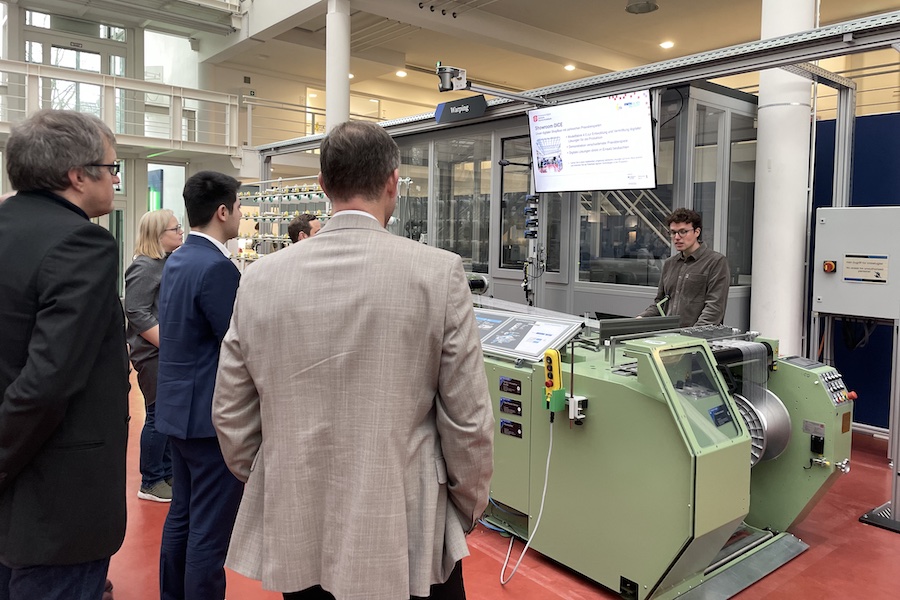
ITA doctoral researcher Florian Pohlmeyer demonstrates the open and secure data space live to an interested audience © 2026 ITA
The Institut für Textiltechnik (ITA) of RWTH Aachen University has launched a new demonstrator for an open and secure data space in the textile industry at the Digital Innovation Centre Europe (DICE). For the first time, the demonstrator shows directly and clearly how companies can share their data securely with each other without the need for a central platform. Data exchange is based on shared, freely usable technical foundations.

The participating companies thus share important information about materials, processes or supply chains directly. This increases transparency and helps, for example, with sustainability assessments, traceability or compliance with legal requirements. At the same time, companies retain control over their data at all times.

What is new and special is that, for the first time, the data room can be experienced in practice – not just as a concept on paper. Using real data and real processes, the demonstrator shows how secure data exchange works in the textile industry.

Companies can see directly how information flows between businesses without having to submit it to a central platform. This makes it clear that getting started with modern data rooms is easier, more secure and more cost-effective than many expect.

ITA developed and implemented the demonstrator from a technical perspective. It provides the textile production environments, supplies the technical expertise and ensures that the demonstrator works with real industrial applications.

The demonstrator is publicly accessible at DICE and can be used in workshops, guided tours or company visits. The technological components are already suitable for industrial use and serve as a starting point for companies to launch their own data room projects.

If you are interested, please contact Florian Pohlmeyer directly:

florian.pohlmeyer@ita.rwth-aachen.de


More News from Institut für Textiltechnik of RWTH Aachen University (ITA)

#Research & Development

Solid Air Dynamics wins second place at RWTH Innovation Award

On 30 January, RWTH spin-off Solid Air Dynamics was awarded second place in the RWTH Innovation Awards for its research in the field of aerogel fibres. Manufactured from renewable raw materials, aerogel fibres offer outstanding thermal insulation, are extremely lightweight and completely biodegradable, and can consist of over 90 per cent air.

#Research & Development

Award-winning research for sustainable carbon fibre cycles

Sustainable recycling of carbon fibres is possible through targeted electrochemical surface modification, which makes the sizing of carbon fibres resistant to solvolysis. ITA PhD student Sabina Dann was awarded the MSW Award from RWTH Aachen University for her master's thesis on this development. The award ceremony took place on 12 November 2025 in Aachen.

#Research & Development

Kick-off for the Textile Production of the Future: Establishment of a Textile Technology and Development Centre in Mönchengladbach, Germany

The Institut für Textiltechnik (ITA) of RWTH Aachen University, together with its partners, is pleased to announce that it has received approval for its joint initiative, ‘Textile Factory 7.0’. The goal of the project is the establishment of a technology and development centre for the textile industry in Mönchengladbach.

#Research & Development

Sustainable athletic wear made from bio-based Polyethylene

Conventional sports textiles made from petroleum-based synthetic fibres are to be replaced in the future by sustainable, bio-based, cooling textiles. Polyethylene, previously used mainly in the packaging industry, is thus qualified for use in textiles and, as a bio-based drop-in solution, offers a cost-effective, sustainable alternative for the future.

More News on Research & Development

#Research & Development

New DIN SPEC assesses environmental impact of textile fragments in soil

Textile products made from synthetic fibres, finished fabrics or dyed materials release fibre fragments into the environment at every stage of their life cycle. With the new DIN SPEC 19296, Hohenstein has developed a standardised testing method to analyse how these fragments behave in soil under natural conditions. Until now, little was known about their environmental behaviour or potential ecological effects once released.

#Research & Development

Testing and research laboratory ensures safe and more sustainable products worldwide

For 80 years, Hohenstein has stood for independent testing, scientific expertise and practical solutions. Today, the testing and research service provider supports manufacturers and brands worldwide in making textiles, hardlines and medical devices safe, more sustainable and market-ready – thereby building trust among consumers. With an international presence and interdisciplinary expertise, Hohenstein supports its customers from production through to market launch, helping them navigate an environment of growing regulatory and societal demands.

#Research & Development

Bio-based fibers with good flame retardancy

Fibers made from bio-based plastics reduce dependence on fossil raw materials and promote the circular economy. The covalent bonding of flame-retardant additives can open the way for these fibers to enter the mass market.

#Research & Development

Innovation center for textile circular economy inaugurated

Just over eight months after the foundation stone was laid, the new Innovation Center for Textile Circular Economy was officially inaugurated today at TITK Rudolstadt. Thuringia's Minister President Mario Voigt, TITK Director Benjamin Redlingshöfer, and other guests of honor cut the ribbon to the modern building complex and viewed the premises, which are now ready for occupancy. The “DICE – Demonstration and Innovation Center for Textile Circular Economy” is TITK's largest single investment to date. The Free State of Thuringia supported the total cost of €11.5 million with €8 million in GRW and FTI funding.

Latest News

#Recycling / Circular Economy

Circulose restarts commercial-scale production at Ortviken plant in Sundsvall

Circulose today announced the restart of its commercial-scale production plant at Ortviken in Sundsvall, Sweden, marking a significant step in scaling next-generation materials for the global fashion industry. The company plans to resume production of CIRCULOSE®, a recycled pulp made entirely from discarded cotton textiles, in the fourth quarter of 2026.

#Textiles & Apparel / Garment

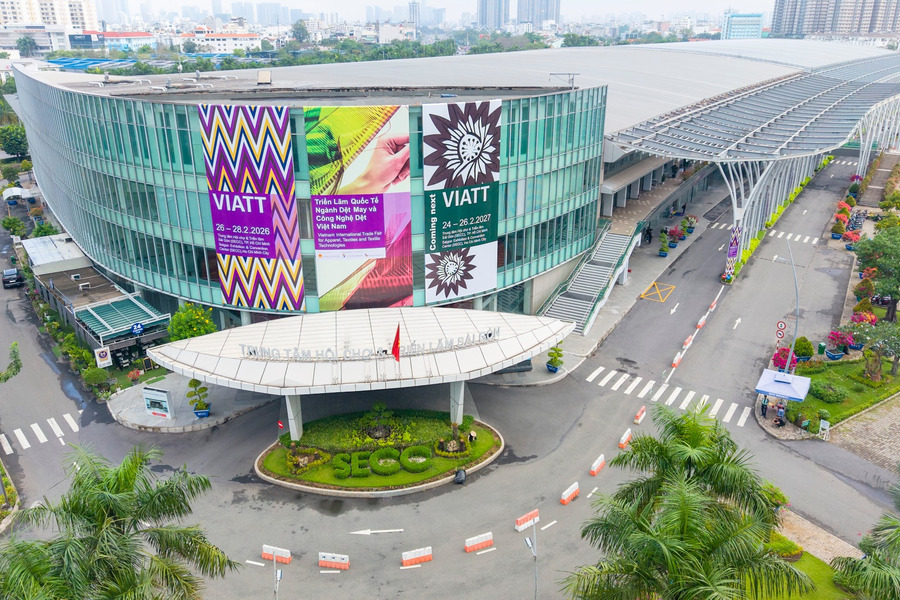
VIATT 2026 to debut German Pavilion, strengthening European participation alongside key Asian textile hubs

Vietnam’s textile and garment sector continues to be a major contributor to the country’s economic growth, with export revenues expected to reach USD 46 billion in 2025, a 5.6% increase from 2024 . From 26 – 28 February, the Vietnam International Trade Fair for Apparel, Textiles and Textile Technologies (VIATT) is set to contribute to economic growth opportunities by accelerating digital transformation and green transition across the entire textile value chain. The upcoming edition will respond to the rising demand for advanced technologies and sustainable materials with the introduction of the German Pavilion, alongside strong exhibitor participation from key Asian sectors, as well as several high-profile fringe events.

#Sustainability

Ying McGuire becomes new CEO of Cascale

Cascale today announced the appointment of Ying McGuire as Chief Executive Officer, effective June 1, 2026.

#Technical Textiles

Sustainable, lightweight, and sound absorbing: Polyester-based front trunk solution for BEVs

As car manufacturers look to further reduce their carbon footprint, Autoneum has developed an innovative front trunk solution for battery electric vehicles (BEVs), made entirely from polyester-based textile. The Ultra-Silent Frunk offers significant weight reduction, improved acoustic and thermal insulation, and uses up to 70 percent recycled material, supporting sustainable and efficient vehicle design. Autoneum, global technology leader in acoustic and thermal management for vehicles, has already received orders for the new frunk from three major OEMs in Asia and Europe to be built in three BEV models. Series production for two BEVs has been underway in China and Germany since last year.

TOP