[pageLogInLogOut]
TRÜTZSCHLER SPINNING - THE NEW CARD

#Industry 4.0 / Digitalization

Lenze receives IEC 62443-4-1 certification: TÜV Rheinland confirms cyber-secure development process
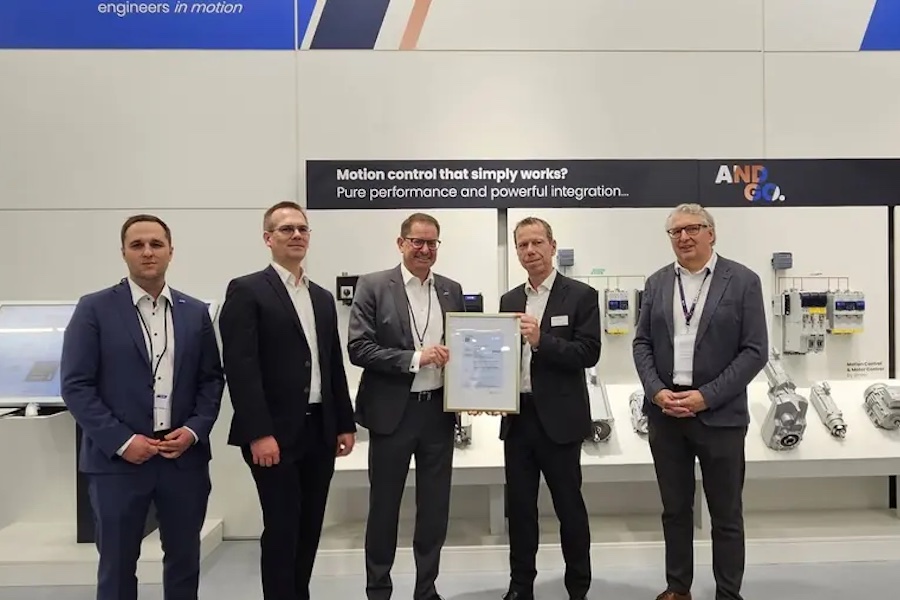
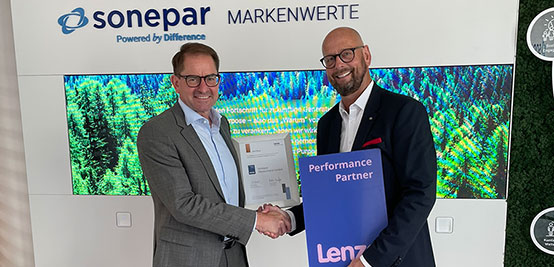
Handing over the certification by TÜV Rheinland © 2025 Lenze
Lenze SE has been certified according to IEC 62443-4-1 since November 2025. TÜV Rheinland thus confirms that Lenze meets the requirements of this internationally recognized standard for a secure development process for industrial automation and drive products. The certification is an important milestone on the way to implementing the EU Cyber Resilience Act (CRA), which will become mandatory for machine manufacturers and their suppliers from December 2027.

The official handover of the certificate by TÜV Rheinland took place on November 25, 2025 at the Lenze stand at the SPS trade fair in Nuremberg. Representatives from Lenze emphasized the importance of TÜV Rheinland certification for the entire mechanical and plant engineering industry.

Cyber security as an integral part of product development

With the IEC 62443-4-1 certification, Lenze proves that security "by design" is consistently implemented throughout the entire product life cycle - from conception to development and maintenance. "The requirements for cyber security are increasing rapidly. Our customers can rest assured that Lenze products are developed to the highest security standards right from the start," emphasizes Dr. Marc Wucherer, CEO of Lenze SE. "The certification is a strong signal to the market and a clear competitive advantage for our customers."

Structured processes for maximum safety

The IEC 62443-4-1 standard ensures that threat analyses, vulnerability management and patch strategies are systematically integrated into the development process. "With this certification, we are reducing the risk of cyber attacks and significantly increasing operational security for machine manufacturers and operators," explains Denis Göllner, cyber security expert at Lenze. "Our customers benefit from clear processes for security updates and a reliable security strategy over the entire life cycle of their systems."

Internationally recognized standard as a door opener

IEC 62443-4-1 certification is an internationally recognized seal of quality and a prerequisite for access to projects with high cyber security requirements. Many operators today demand that manufacturers in the supply chain have verifiably certified processes. With Lenze as a partner, machine builders meet these requirements and secure access to new markets," concludes Denis Göllner.
More News from Lenze SE

More News on Industry 4.0 / Digitalization

#ITM 2026

Driving digitalization, efficiency, and Smart Manufacturing across textiles and carpets

At this year’s ITM, BMSvision proudly showcases its next leap forward in digital manufacturing excellence. As a long-standing global pioneer in Manufacturing Execution Systems (MES) for the textile and plastics industries, BMSvision continues to accelerate digital transformation by delivering powerful, data-driven solutions that boost productivity, enhance quality and support sustainable growth. Visit BMSvision at the Vandewiele booth in Hall 7, Booth 710, to experience the future of textiles manufacturing.

#Industry 4.0 / Digitalization

Textile ETP launches digital transformation strategy, calling for urgent collective action across the value chain

Textile ETP’s DigitX Innovation Hub published its strategic roadmap for the digital transformation of Europe's textile and apparel industry.

#Research & Development

Textilfabrik 7.0 launched: Mönchengladbach becomes a real-world lab for sustainable textile production

With the official kick-off event of the Textilfabrik 7.0 (T7), a major transformation project for the German textile and apparel industry has been launched in the Monforts Quarter in Mönchengladbach. At the “Textile Roundtable,” an event format organized by the Zukunftsagentur Rheinisches Revier, representatives from industry, research, politics, and the regional economy came together to jointly lay the foundation for CO₂-neutral, circular, and economically viable textile production in Germany.

#Man-Made Fibers

OnceMore® from Södra brings end-to-end traceability for circular Man-made Cellulosic Fibers (MMCF) using TextileGenesis

OnceMore® from Södra, the world’s first large-scale process for recycling blended fabrics into high‐quality dissolving pulp, will begin using TextileGenesis, a Lectra company, to strengthen traceability from raw material to retail across the value chain. OnceMore® produces dissolving pulp made from blended textile waste and wood sourced from responsibly managed Swedish forests. By integrating TextileGenesis, OnceMore® supports the growing need for verified data and secure, transparent tracking throughout increasingly complex supply chain.

Latest News

#Recycled Fibers

RE&UP’s Next-Gen Cotton fibers power Zalando private label t-shirt collection crafted from innovative recycled textiles

RE&UP Recycling Technologies’ Next-Gen Cotton powers a new collection from Zalando’s private labels, marking a step forward in bringing textile-to-textile recycled fibers into commercial fashion production. Launching on Zalando in August, the collection comprises five t-shirts across YOURTURN by Zalando and Even&Odd by Zalando, made from a circular-knit fabric blending 80% organic cotton with 20% RE&UP Next-Gen Cotton — textile-to-textile recycled fiber produced from textile waste. This is the first time RE&UP's recycled fibers feature in Zalando's private label assortment.

#Heimtextil 2027

Heimtextil Trends 27/28: ‘Home-Maxxing’ between performance and respite

Sleep better, recover faster, live more efficiently: the desire for optimisation has long since reached our homes. Under the title ‘Home-Maxxing – The Performance of Everyday Living’, Heimtextil Trends 27/28 show how our relationship with efficiency-driven thinking and technology is influencing the design of spaces and textiles. The more sleep, wellness, routines, materials and spaces are optimised, the stronger the desire for a home that does not demand even more of us.

#Recycled Fibers

Driving circularity with Uster Recycled Fiber Matrix

The textile industry’s commitment to circularity continues to accelerate, and mechanical recycling is viewed as a targeted approach to cutting textile waste and its environmental impact. At the forefront of this drive, Uster has developed the Recycled Fiber Matrix, a two-dimensional assessment of mechanically recycled fibers to guide optimum processing and end-uses.

#Digital Printing

Mimaki advances DTF productivity and stability with new TxF330-800

Mimaki Europe, a leading manufacturer of industrial inkjet printers and cutting plotters, announces the TxF330-800, its new direct-to-film (DTF) printer. Designed to support stable, high-quality garment decoration in demanding print environments, the system combines automated maintenance, expanded white ink capacity and advanced production capabilities to streamline workflow.

TOP