[pageLogInLogOut]

#Dyeing, Drying, Finishing

BTMA welcomes digital dyeing and finishing pioneer Alchemie

Taiwan-based JSRTEX completed its first full run using the Endeavour waterless dyeing system in November last year and interest from international brands has subsequently been intense. © 2023 Alchemie / BTMA
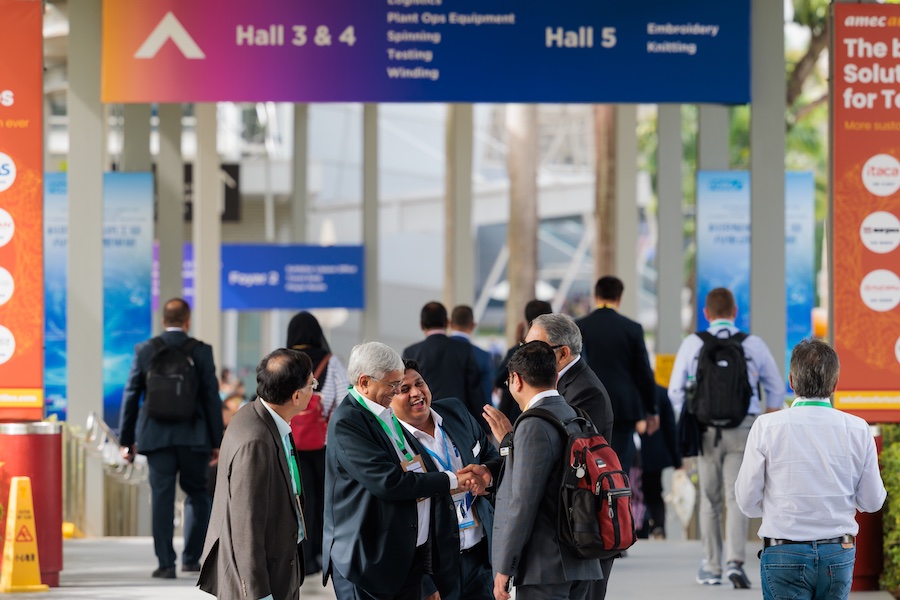
Alchemie Technology is the latest fast-rising company to join the British Textile Machinery Association (BTMA), as all of the organisation’s members gear up to showcase an array of new innovations at ITMA 2023 in Milan from June 8-14 this year.

Cambridge-headquartered Alchemie is the inventor of two ground breaking technologies – Endeavour™ and Novara™.

The Endeavour digital dyeing system produces no wastewater and reduces water consumption by up to 95% compared to traditional dyeing. The virtually waterless process delivers dyed fabric with high colour consistency and colour fastness and does not require post dyeing washing steps which leads to an energy reduction up to 85%. It can deliver any colour shade required and enables on-demand digital colour changeovers in any run length, from a few metres to several kilometres.

Similar energy savings can be achieved with the Novara precision finishing system which utilises a nozzle array to deliver finishing chemistry with millimetre resolution. Finishing chemistries penetrate deeply into the fabric due to the combination of high velocity liquid jetting and precisely-controlled vacuum and textile finishes are applied only where needed, reducing chemistry usage and enabling multi-functionality.

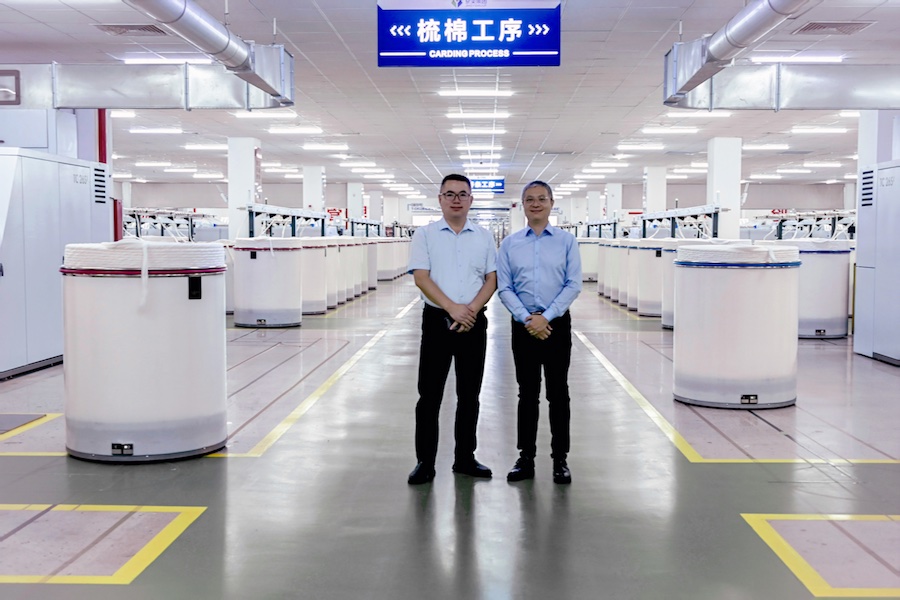
In the past year, Alchemie, backed by Swedish fashion giant H&M, has established a first demonstration hub at customer JSRTEX in Taiwan. It is now progressing plans to set up further centres at customer sites around the world.


“The textile manufacturing industry has a significant impact on the environment, and with our Endeavour, waterless, low energy dyeing and Novara, low energy textile finishing technologies, we are disrupting manufacturing processes that are responsible for over 3% of global CO2 emissions and 20% of global water pollution,” says Alchemie founder and CEO Dr Alan Hudd. “Our solutions both dramatically reduce the environmental impact and the cost of dyeing and finishing, which has proven to be a compelling combination.”

“The time for Alchemie’s technologies is surely now,” adds BTMA CEO Jason Kent. “International brands and textile producers from around the world have been flocking to see these new highly automated and sustainable technologies in action we’re very pleased to welcome Alchemie to the association. We’re also really looking forward to rewarding discussions in Milan about the range of new sustainable solutions our members will be introducing at ITMA 2023 – from technologies for the production of fibres to those for finished products.”

More News from TEXDATA International

#Digital Printing

From a bedroom startup to 3,000 designs: How Lonely Kids Club built its business with DTG printing

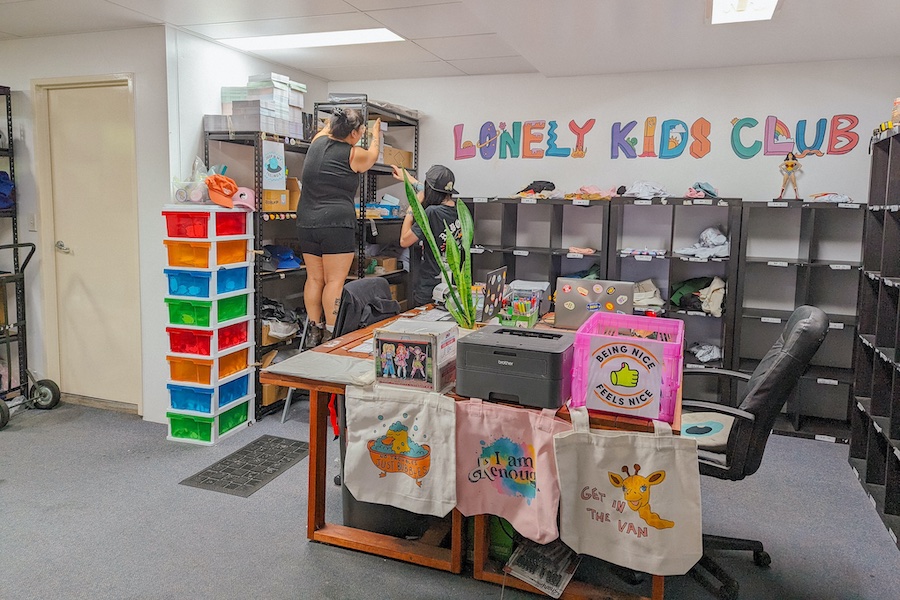
Founded in Sydney in 2011, independent clothing label Lonely Kids Club has grown from a bedroom startup into a business offering around 3,000 graphic T-shirt designs. With its own production studio, direct-to-garment printing and a demand-driven manufacturing model, the company demonstrates how smaller apparel brands can combine creative independence with flexible production – while navigating the everyday challenges of quality control, workflow efficiency and sustainability.

#India ITME 2026

India’s textile industry: Current position, growth targets and industrial development

With ambitious export targets, major investments in manufacturing infrastructure and new international trade agreements, India is pursuing a comprehensive development strategy for its textile and apparel industry. An overview of the industry’s current position, government initiatives, progress achieved and challenges ahead.

#Weaving

“A complex design is only useful if the machine can reproduce it consistently”

Andreas Schnabel, Head of R&D for Technical Weaving Systems at Stäubli, discusses how 3D weaving can create textile reinforcements tailored to the loads within a composite component, where near-net-shape weaving can reduce processing steps and material waste, and what it takes to produce complex structures reliably and economically. He also explains how manufacturers can adapt Stäubli’s modular TF weaving platforms to new applications and how the company’s centre of excellence in Bayreuth supports the transition from research to industrial production.

#India ITME 2026

India ITME 2026: Textile technology meets India's investment ambitions

With ambitious growth targets, government incentive programmes and industrial development initiatives already underway, India is preparing for the next stage of its textile transformation. Against this backdrop, the 12th India ITME, taking place in Greater Noida from 4 to 9 December 2026, arrives at a particularly important moment for machinery manufacturers and textile producers alike.

More News on Dyeing, Drying, Finishing

Latest News

#ITMA Asia + CITME 2026

KARL MAYER sets new speed benchmark with RD 7/2-6 MAX for high-performance spacer fabrics

During ITMA ASIA, KARL MAYER is launching a superlative machine for the production of spacer fabrics. The new RD 7/2-6 MAX is the fastest seven-bar double needle bar raschel machine on the market and is currently attracting a great deal of attention at the Product Show accompanying the trade fair at KARL MAYER in Changzhou.

#ITMA Asia Singapore 2029

CEMATEX and Chinese partners explore new forms of cooperation as ITMA ASIA returns to Singapore in 2029

CEMATEX and the Chinese Consortium have jointly announced the conclusion of the first phase of their 20-year collaboration as co-owners and co-organisers of ITMA ASIA + CITME in China. At the same time, CEMATEX has confirmed that ITMA ASIA will return to Singapore in October 2029 as part of a broader strategic realignment. Both parties have reaffirmed their commitment to continued industry cooperation, while pursuing their respective strategic directions.

#Spinning

Trützschler's T-CAN reduces labor requirements by over 60% at Chinese spinning mill

Across the textile industry, mills are looking for ways to reduce labor dependency while maintaining full control of their production processes. However, manual can transport between spinning preparation machines often remains labor-intensive and prone to human error. To address this challenge, Trützschler developed T-CAN. The automated can transport system connects carding and drawing processes as well as drawing passages, ensures reliable material flow and reduces the need for manual intervention.

#ITMA Asia + CITME 2026

ITMA ASIA + CITME 2026 opens in Shanghai, showcasing intelligent and sustainable textile manufacturing

ITMA ASIA + CITME 2026 opened today at the National Exhibition and Convention Center in Shanghai, bringing the global textile machinery industry together from 20 to 24 November.

TOP