[pageLogInLogOut]

#Sustainability

IAF criticises too little participation in the OECD Forum

IAF participated extensively in the OECD’s Forum on Due Diligence in the Garment and Footwear Sector in Paris, in February 2023. The event, which brings together brands, suppliers, NGOs, CSOs, international bodies and government representatives from around the globe, was the first event since the Covid-19 pandemic to be held in-person, and a great opportunity to reconnect with existing colleagues after several years, and force new connections and alliances.

At this event, IAF represents mostly the interests of garment manufacturers and small and medium sized brands. In that capacity, they expressed their support for European corporate sustainability due diligence legislation, while calling for the legislation to be implemented along the lines set by the OECD’s due diligence guidance, and for effective enforcement, so as to create a level playing field.

“Purchasing practices are fundamental to effective due diligence”

IAF and several of its partners in the global Sustainable Terms of Trade Initiative (STTI) emphasized that purchasing practices are fundamental to effective due diligence. STTI, a coalition of 13 associations from 10 garment manufacturing countries supported by the IAF, GIZ Fabric and the Better Buying Institute was represented by Dr. Liang Xiaohui of CNTAC from China; Cem Altan, President of IAF and member of the Board of TCMA from Turkey; Faruque Hassan, President of BGMEA and IAF Board Member from Turkey; Matthijs Crietee, Secretary General of IAF; Lisa Ramershoven and Marc Beckman of GIZ Fabric; Marsha Dickson, President and Co-Founder, and Lindsay Wright, Senior Manager of Communications at Better Buying Institute.

“Ironically, the way due diligence is implemented in a supply chain can lead to bad purchasing practices in itself. Corporate Sustainability Due Diligence is inherently a risk sharing exercise and not a risk transfer exercise”, Matthijs Crietee.

Matthijs Crietee also participated in a panel hosted simultaneously by The Industry We Want (TIWW) and by another STTI participant, VITAS in Vietnam, who participated remotely, from Hanoi. It was moderated by Alexander Kohnstamm, the Executive Director of the Fair Wear Foundation. Other participants in the Paris panel were Anosha Wahidi, Head of Division of the German Federal Ministry for Economic Cooperation and Development and Joy Roeterdink, Head of Corporate Sustainability of Suit Supply. The panel agreed that although due diligence legislation potentially holds advantages for manufacturers, including better enforcement of improved purchasing practices, the road leading there is full of pitfalls, with Matthijs Crietee commenting: “Ironically, the way due diligence is implemented in a supply chain can lead to bad purchasing practices in itself. Corporate Sustainability Due Diligence is inherently a risk sharing exercise and not a risk transfer exercise”.


Dr. Liang Xiaohui participated in a panel on looking at how brands and suppliers could best collaborate on sharing the costs and responsibilities of due diligence more fairly, which also included Michael Bride of PVH, Anant Ahuja of Shahi Exports, and Sarah Dadush of the Responsible Contracting Project at Rutgers Law School. Dr. Liang talked about STTI’s origins within the STAR Network, IAF and the Covid-Pandemic, and the coming together of manufacturer associations from different sourcing countries to create a collaborative solution. Sarah Dadush highlighted contracts that acknowledge the impact of purchasing practices on human rights outcomes, and commit buyers to supporting their suppliers’ own HRDD performance. And Michael Bride called on brands to accept that the days when they could point to and blame a supplier whenever something goes wrong were coming to an end, and for the whole industry to adjust its mindset to the increasing regulation heading its way.

As always, as much can be learned from who was not present at the Forum, as from who was. Several senior sustainability executives from a small number of forward-thinking brands were there, but their colleagues from other departments, or from C-suite and senior leadership, were conspicuously missing. Also, given the importance of the topic for them, more manufacturers should have been present. Improving purchasing practices requires work that stretches across companies and across supply chains and it is a challenge for all ‘Paris regulars’ to see this reflected in the 2024 Forum’s attendance.


More News from TEXDATA International

#ITM 2026

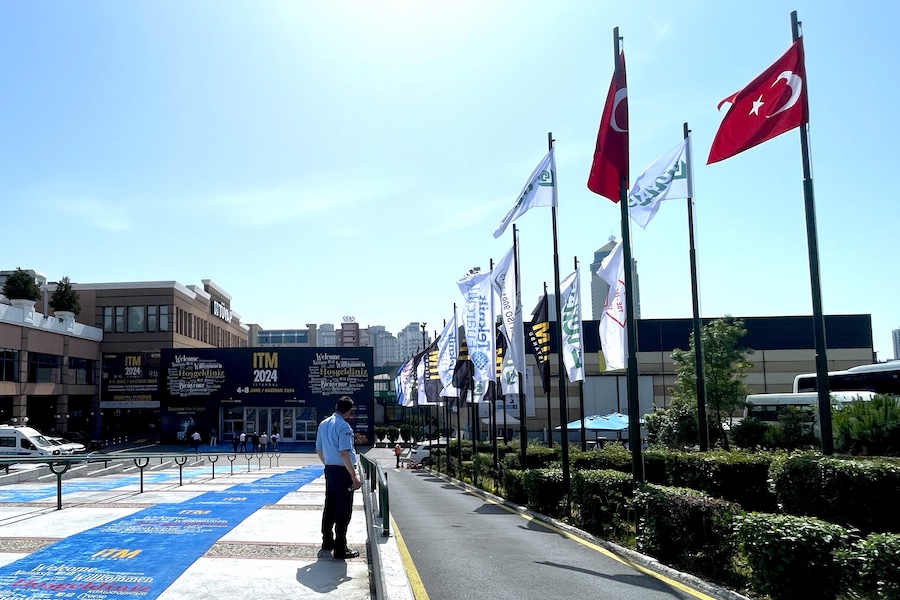
ITM 2026: The new geography of textile production

New production hubs are emerging across North Africa and Central Asia, while Türkiye is accelerating its transformation toward higher-value, technology-driven and more sustainable textile manufacturing.

#Research & Development

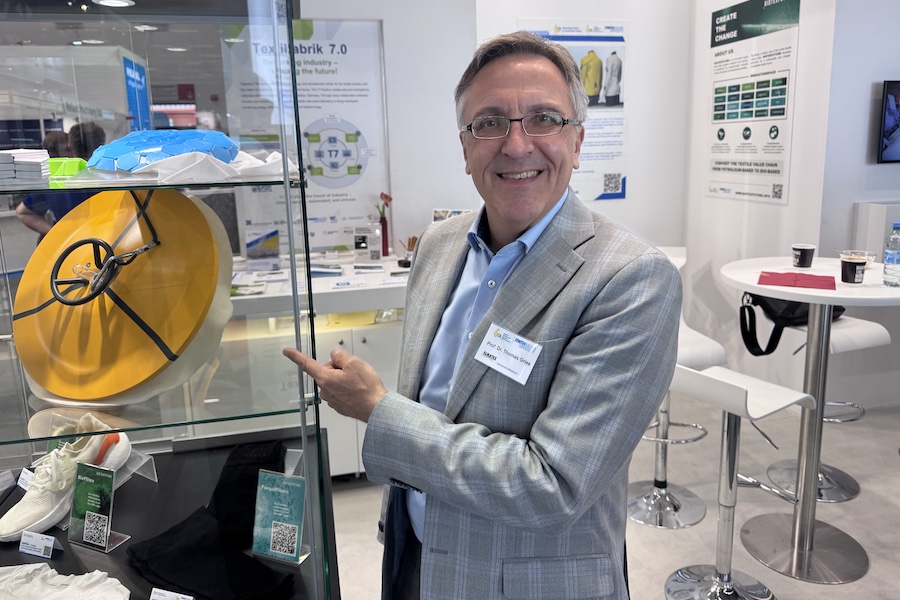
“Production is a product”

From technical textiles and AI-driven robotics to the limitations of textile circularity: Professor Dr Thomas Gries looks back on more than two decades of development at ITA Aachen. In the interview, he explains why production technology remains a decisive success factor, discusses international collaborations and innovation ecosystems, and shares his views on the transformation of production landscapes and the challenges facing an increasingly regulated industry.

#Knitting & Hosiery

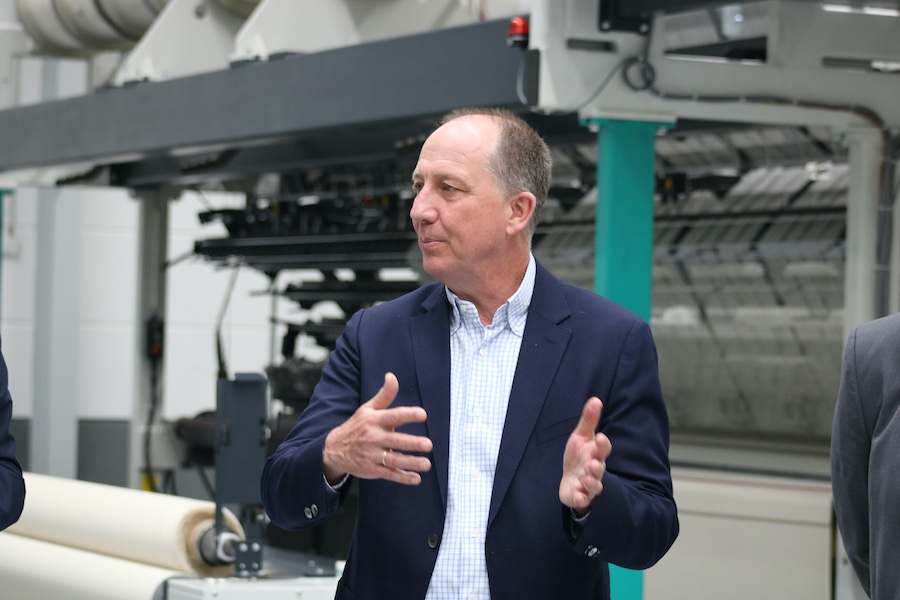
“We need to move away from the price trap and return to a value-driven mindset.”

With its new Textile Innovation Center, KARL MAYER is sending a strong signal for innovation, collaboration, and the future of textile applications. In this interview, Karl Josef Mayer discusses new opportunities in warp knitting, the processing of staple fibres, recycling, the changing role of machinery manufacturers, and why the textile industry must once again focus more strongly on the value of textiles. by Oliver Schmidt

#Associations

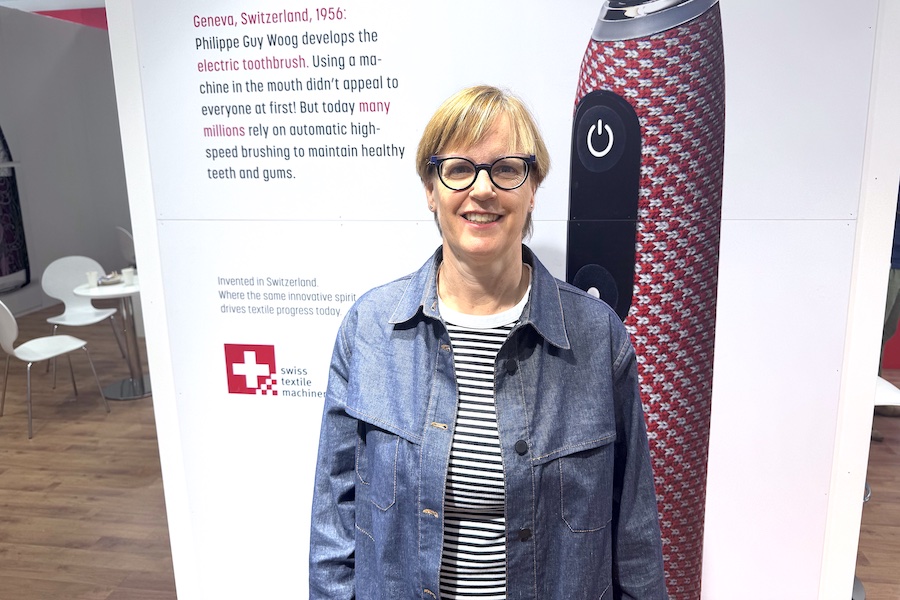
“Innovation, resilience and international experience remain the great strengths of the Swiss textile machinery industry”

Geopolitical uncertainty, growing competitive pressure from China, new free trade agreements and the shift towards a circular economy are currently reshaping the global textile industry. In this interview, Cornelia Buchwalder discusses the current mood within the Swiss textile machinery sector, the industry’s distinctive innovative strength, new market opportunities in India and Asia, and the technological trends that could shape the upcoming trade fair cycle leading up to ITMA 2027.

More News on Sustainability

#Sustainability

Textile Exchange unveils agenda for 2026 conference in Vancouver

Textile Exchange has released the agenda for its 2026 Conference, which will take place from October 12–16 in Vancouver, Canada. Under the theme “The Implementation Era,” the event will focus on translating sustainability commitments into practical action and scaling solutions across businesses, supply systems, and landscapes.

#Associations

Textile PRO Forum calls for greater harmonisation of textile EPR systems across Europe

The Textile PRO Forum has published a new analysis highlighting the need for greater harmonisation of textile Extended Producer Responsibility systems across Europe. The document, Toward harmonised Textile EPR Systems in Europe: analysis and recommendations, presents the results of work carried out by Workstream 1 of the Textile PRO Forum, led by Dr. Eng. Viola Corbellini, Strategic Development and Innovation Expert at Erion Textiles, and Eng. Luca Campadello, General Director at Erion Textiles. The workstream focused on reducing administrative burden for textile producers by identifying areas where procedures could be better aligned across countries.

#Associations

Results of the 38th ITMF Global Textile Industry Survey

The global textile industry appears to be turning a corner, but this is more likely a fragile and possibly temporary improvement than the start of a durable recovery. According to the 38th ITMF Global Textile Industry Survey, conducted worldwide during the second half of May 2026, business sentiment, order intake, order backlogs and capacity utilization all improved versus March — yet every indicator remains weak by historical standards, and rising costs cast doubt on how long the upturn can last.

#Sustainability

Closing the Footwear Loop reveals challenges and opportunities for circular footwear

The footwear industry faces one of the most complex circularity challenges in the fashion sector. A new Phase 1 report from the Fashion for Good initiative Closing the Footwear Loop, developed together with Circle Economy, provides new insights into the composition, condition and recycling potential of post-consumer footwear waste.

Latest News

#Research & Development

GenuTrace client advisory: Is your cotton supply chain UFLPA ready?

U.S. Customs and Border Protection has released updated operational guidance (CBP Publication No. 5560-0526) expanding its forced labor enforcement framework. The guidance supersedes the original 2022 UFLPA Operational Guidance and now covers all forced labor enforcement authorities — UFLPA, CAATSA, and WROs/Findings — in a single unified document. For cotton importers, the enforcement posture has not softened. It has become more structured, more documented, and more demanding. Learn more about UFLPA.

#Carpets

DOMOTEX Hannover 2028 off to a strong start with expanded portfolio

Preparations for DOMOTEX 2028 are already gaining strong momentum. Following its successful repositioning as the Home of Flooring & Interior Finishing, around 100 international manufacturers have already secured their place during the initial registration phase.

#Knitting & Hosiery

STOLL: Agreement signed for the divestiture of selected assets

In early 2025, KARL MAYER announced its strategic decision to focus on its core business areas of WARP KNITTING, WARP PREPARATION, and TECHNICAL TEXTILES. As part of this move, the flat knitting machine business under the STOLL brand was discontinued and the production site in Reutlingen was closed in October 2025.

#Research & Development

TERNAfil wins first place at PitchMiUp Night 2026 in Minden

The RWTH spin-off TERNAfil has developed MAXCarbon, a new high-performance hybrid fibre that combines the mechanical performance of carbon with the temperature and corrosion resistance of ceramic materials. For this development, TERNAfil was awarded first prize at the PitchMiUp Night in Minden on 21 May 2026.

TOP