[pageLogInLogOut]

#Research & Development

3rd Dresden International Colloquium on Tailored Carbon Fibres
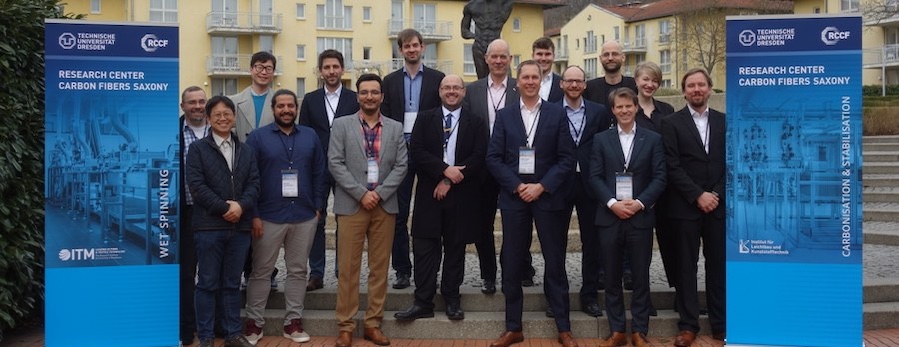
3rd Dresden International Colloquium on Tailored Carbon Fibers : International experts discuss the future of sustainable carbon fibers © RCCF
From March 20th to 22nd, 2024, the 3rd Dresden International Colloquium on Tailored Carbon Fibers took place after 2018 and 2021. This time, the RCCF hosted the event at the Radisson Blu Conference & Hotel Center in Radebeul, Dresden. The event was attended by leading international researchers in the field of carbon fiber research, including guests from the Korea Institute of Science and Technology (KIST Jeonbuk, South Korea), the National Technical University of Athens (NTUA, Greece), Deakin University Geelong/CarbonNexus (Australia) and the technology and research institutions CANOE (Pessac, France) and WoodK+ (Linz, Austria).

The high-ranking international field of participants was complemented by national scientists and early-career researchers from the Technical University of Munich (TUM), the Max Planck Institute of Microstructure Physics (Halle/Saale), the Leibniz Institute of Polymer Research (IPF, Dresden), the University of Applied Sciences Leipzig (HTWK, Leipzig) and the University of Applied Sciences Dresden (HTW, Dresden).

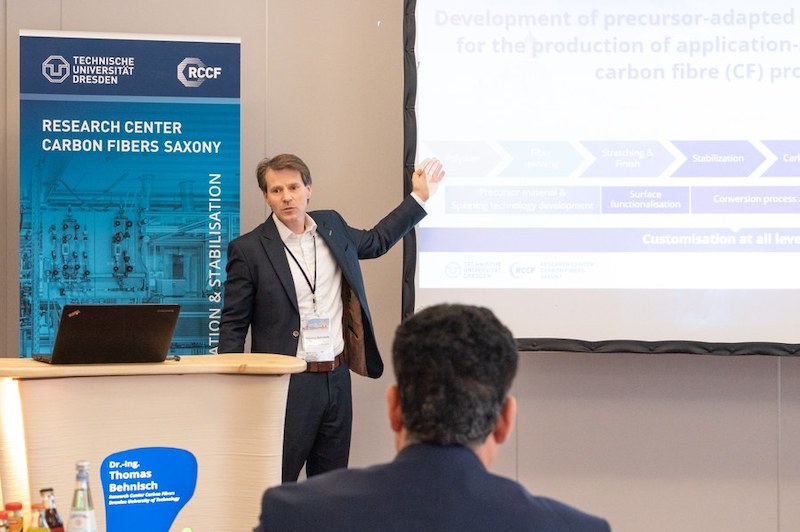
The approximately 30 participants dealt with scientific topics along the entire production and process chain of carbon fibers. The speakers came from different fields relevant to carbon fiber research, such as (bio)chemistry, physics, materials science, process engineering, lightweight engineering or textile technology, so that a mutual, in-depth understanding of the respective core research areas could be achieved.
© RCCF
© RCCF

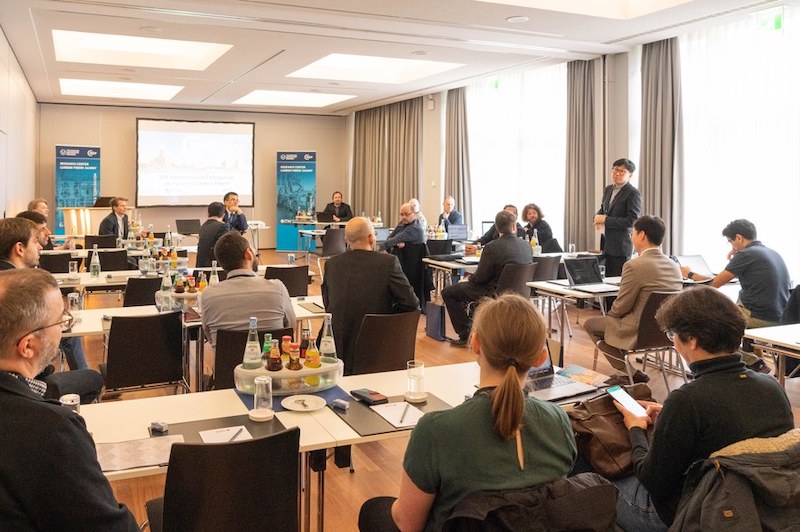
In addition to the main topic of the development of sustainable / renewable carbon fibers, this year's focus was also on multifunctional carbon fibers, for example with sensory or energy-storing properties, for individual applications in a wide range of industries and sectors. Over two days, the participating researchers were able to exchange the latest findings of cutting-edge research in this field in three consecutive sessions on 1) "Precursor fibers from renewable/alternative raw material sources", 2) "Processing/thermal conversion/structure-property relationships of carbon fibers" and 3) "Analytics, sizing systems and application scenarios for carbon fibers" as well as a separate discussion round on the development of lignin-based carbon fibers and discuss the future, in particular the future application areas, of this lightweight material.

Carbon fibers are a high-performance material whose importance and influence on industrial progress will increase enormously in the future. Especially with regard to global, continental and national climate goals, carbon fibers can develop into a key material. At most composite and textile conferences, however, this field of research is only dealt with marginally and with a few individual presentations. In order to close this gap, the Research Center Carbon Fibers Saxony (RCCF), a joint initiative of the Institutes of Textile Machinery and High Performance Material Technology (ITM) and of Lightweight Engineering and Polymer Technology (ILK) at TU Dresden, is organizing the Dresden International Colloquium on Tailored Carbon Fibers.
© RCCF
© RCCF


More News from Institute of Textile Machinery and High Performance Material Technology (ITM)

#Techtextil 2026

ITM presents cutting-edge textile research at Techtextil

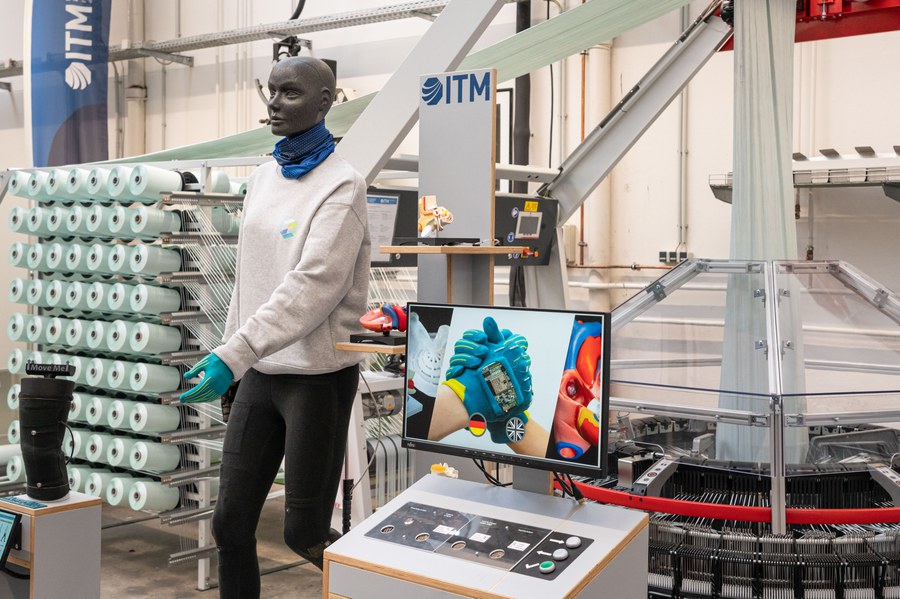
From April 21 to 24, 2026, the Chair of Textile Machinery and High Performance Material Technology (ITM) at TUD Dresden University of Technology will be presenting its current research at Techtextil, the leading international trade fair for technical textiles and nonwovens. In Hall 12.0, Stand D41, the team will be demonstrating how it combines high-performance fibers, AI-supported digital development tools and innovative machine technologies to develop textile solutions for lightweight construction, construction, medical technology and sustainable production from atom to product.

#Research & Development

Teaching Award for the Day Of The Faculty of mechanical science and engineering 2025

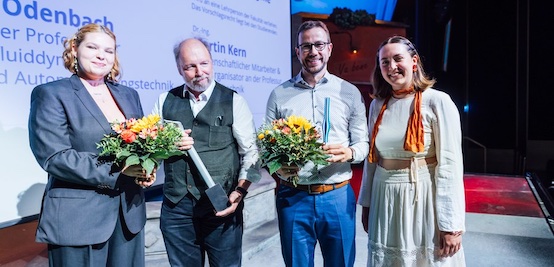
On June 28, 2025, almost 300 guests celebrated the Day of the Faculty of Mechanical Science and Engineering at the Boulevardtheater Dresden. At this year's ceremony, over 60 graduates from the Mechanical Engineering, Process Engineering and Natural Materials Technology and Material Science degree programs were given a ceremonial send-off into professional life, 9 doctoral graduates were congratulated on the successful completion of their dissertations and prizes worth a total of 13,500 euros were awarded.

#Research & Development

Award at the SAMPE Germany Symposium 2025 for outstanding dissertation

Hung Le Xuan was awarded the Innovation Prize at the SAMPE Germany Symposium 2025 last week for his dissertation "Novel textile reinforcements with integrated textile-based in-situ sensors for the reinforcement of existing concrete structures against short-term dynamic events".

#Research & Development

Commissioning of the FRS 1800 high-temperature rheometer at the ITM

In March 2025, the new Furnace System 1800 (FRS 1800) high-temperature rheometer from Anton Paar was put into operation at the Institute of Textile Machinery and High Performance Material Technology (ITM) at TU Dresden. The installation was carried out by Fabian Barth and Peter Brandes from Anton Paar in collaboration with Florian Pötzsch and Dr. Dilbar Aibibu from the ITM.

More News on Research & Development

#Research & Development

TERIS reaches milestone: Fraunhofer consortium develops new standards for tire analysis

In the “TERIS” project, the Fraunhofer institutes ICT, IGD, and IWM—led by the Fraunhofer Institute for Structural Durability and System Reliability LBF—have reached a decisive milestone. For the first time, the teams aim to generate, analyse, and predict tire wear in the laboratory in a standardized and practical manner. As part of this milestone, results are now available on reference abrasion, particle analysis, tribological models, AI-based surface analysis, a test bench concept, and methods for accelerated aging and VOC detection. The tire industry, testing services, and environmental agencies will in future benefit from reliable, rapid laboratory procedures for emissions assessment.

#Research & Development

Geotextiles made from recycled materials: GREEN leads the way into the industry

For the industry, recycled materials are creating new opportunities in geotextile production. In the GREEN project, the Fraunhofer Cluster of Excellence Circular Plastics Economy CCPE demonstrates that recycled polypro-pylene (PP), polyethylene terephthalate (PET), and high-density polyeth-ylene (HDPE) can be processed into nonwovens, fibers, and membranes that meet industrial requirements. This creates opportunities for use in existing production lines and new value chains in the geotextile market.

#Research & Development

2026 general meeting of the Friends and Supporters of RWTH Aachen at ITA

The Friends and Supporters of RWTH Aachen e. V. (proRWTH) looked back on a successful year of support at their 2026 general meeting. The meeting took place at Institut für Textiltechnik (ITA) of RWTH Aachen and was combined with a joint session of the Executive Board and the Administrative Board. Before the general meeting began, participants were given a guided tour of ITA, providing them with fascinating insights into current research and development topics in textile engineering.

#Research & Development

GenuTrace client advisory: Is your cotton supply chain UFLPA ready?

U.S. Customs and Border Protection has released updated operational guidance (CBP Publication No. 5560-0526) expanding its forced labor enforcement framework. The guidance supersedes the original 2022 UFLPA Operational Guidance and now covers all forced labor enforcement authorities — UFLPA, CAATSA, and WROs/Findings — in a single unified document. For cotton importers, the enforcement posture has not softened. It has become more structured, more documented, and more demanding. Learn more about UFLPA.

Latest News

#Recycling / Circular Economy

Ence and ShareTex begin initial testing of the ATENEA innovation project to promote textile recycling in Spain

Ence and ShareTex are making progress on the Atenea R&D project, which aims to develop a complete value chain for textile recycling in Spain. Specifically, the goal of the ATENEA project—which is funded by the Center for Technological Development and Innovation (CDTI)—is to connect all the necessary stages for the recovery of textile waste, from collection and management, through recycling and transformation into new raw materials, to their incorporation into new textile products.

#Recycling / Circular Economy

DePoly Inaugurates its Showcase Plant in Monthey Switzerland

What if used plastic bottles, PET packaging material and polyester textiles could become raw materials just as high performing as virgin resources? That is the ambition of DePoly, a circular materials company based in Sion, Switzerland which inaugurated its Showcase Plant in Monthey on July 6th & 7th. The first depolymerization facility of its kind and scale in Switzerland, this industrial Showcase Plant represents a major milestone in the company's growth and its journey toward commercialization.

#Recycling / Circular Economy

Commission clarifies rules on plastic bottles recycling

The European Commission today adopted new rules on recycling of single-use plastic beverage bottles made primarily of polyethylene terephthalate (PET bottles). These rules establish, for the first time, a methodology to calculate, verify and report chemically recycled content. This is part of the Commission’s December 2025 plastics package.

#Sustainability

Global Standards establishes new non-profit foundation to strengthen governance

Global Standards gGmbH, the nonprofit organisation behind the globally recognised Global Organic Textile Standard (GOTS), announced a new governance structure designed to support its long-term mission and reinforce organisational autonomy of its Voluntary Sustainability Standards and programmes.

TOP