[pageLogInLogOut]

#Research & Development

Antiviral tests on protective clothing for infection control
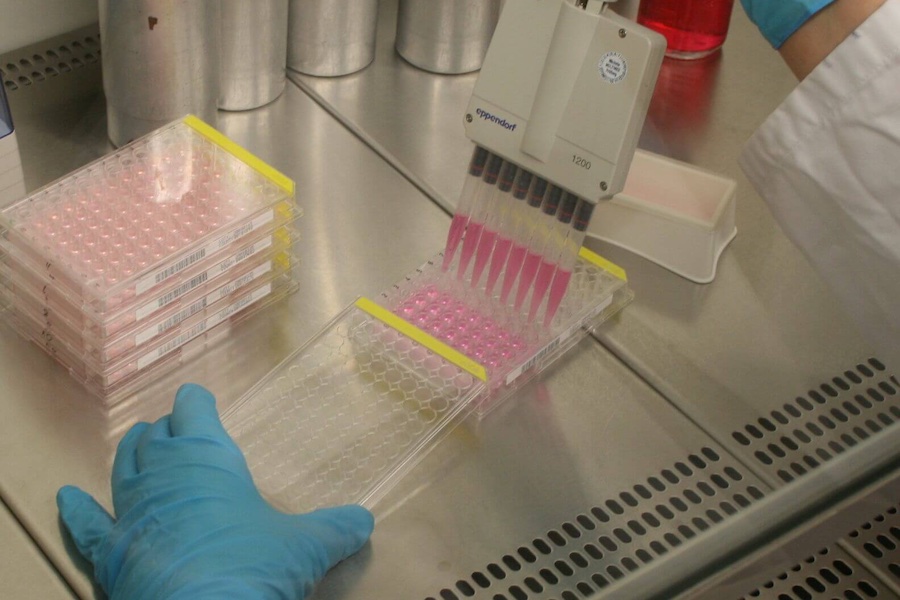
Textiles functionalized with antiviral agents are intended to reduce the risk of transmission of pathogens, particularly in a medical environment. These antiviral properties must be carefully tested and verified in laboratory tests. The biological testing laboratory of the German Institutes of Textile and Fiber Research Denkendorf (DITF) has examined antiviral activities with coronaviruses as part of an interdisciplinary research project on textiles for infection control.
Cell seeding of host cells to determine the number of viruses. © 2025 DITF


Viruses can survive on plastic surfaces or textiles for several hours to days. These surfaces therefore play an important role in the transmission of viruses as pathogens. Numerous studies were done on this topic during the SARS-CoV-2 pandemic. Textiles treated with antiviral agents can help to reduce this risk of transmission. This offers added value, especially for textiles used in medical environments.

In order to confirm these antiviral properties, laboratory tests are the state of the art and help to minimize trials in a medical environment. However, working with viruses is very complex and elaborate, as viruses cannot be proliferated on culture media like bacteria. By definition, viruses are not living organisms because they are dependent on host cells to replicate. For laboratory tests, this means that both technical expertise in microbiology and in cell culture technology must be combined for successful work. For laboratory activities involving human and animal pathogens, official authorization is required. The DITF biological testing laboratory is authorized for work with pathogens in accordance with the German Infection Protection Act and the Animal Pathogens Ordinance up to risk group 2. These are microorganisms that can cause disease in humans or animals which can be well controlled generally.
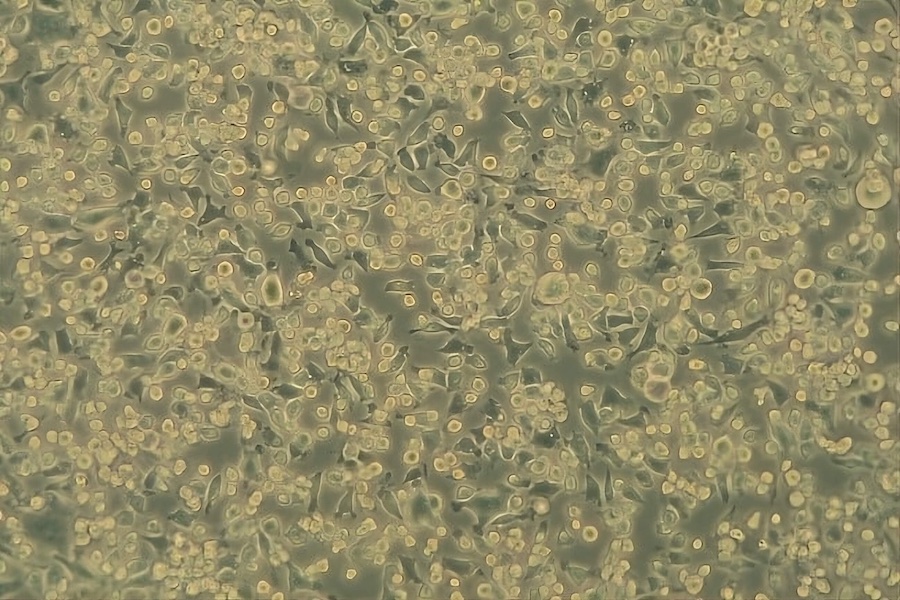
Intact host cells (NCTC) before virus contact (100 x). © 2025  DITF
Intact host cells (NCTC) before virus contact (100 x). © 2025 DITF
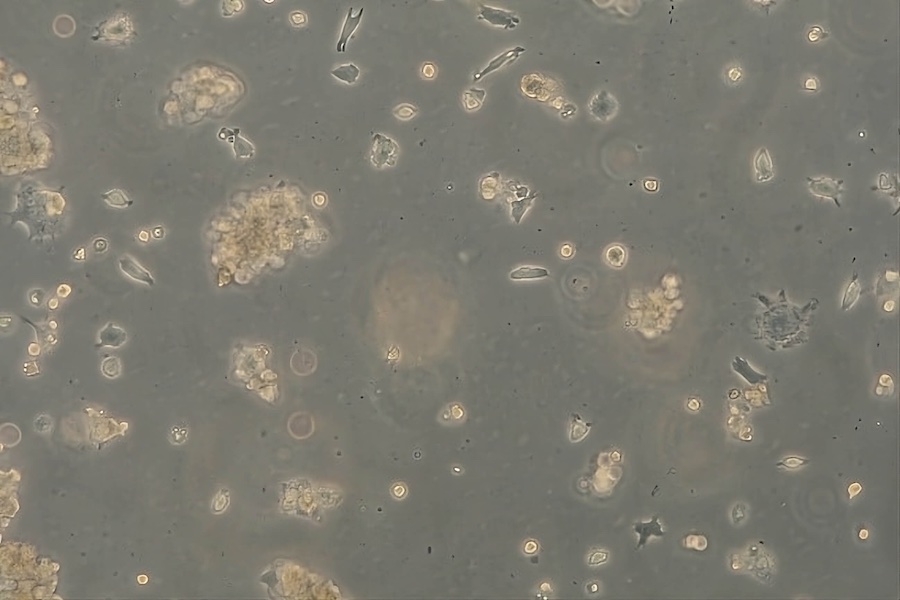
Cytopathic effects on host cells by viruses (100 x). © 2025 DITF


Usually test laboratories carry out antiviral tests with so-called bacteriophages because they are easier to handle. These viruses use bacteria as host cells to replicate. A different, more realistic approach was taken at the DITF as part of a research project. Here, antiviral activity was determined against a coronavirus. With the MHV virus, a corona virus was chosen that is genetically very closely related to the SARS-CoV-2 virus and uses eukaryotic cells as a host. Eukaryotic cells are cells with a nucleus such as those found in humans and animals. The test procedure for determining the antiviral efficacy against coronaviruses had to be adapted to both the viruses and the host cells. In case the host cells are infected by the viruses and used as a “replication machine”, these cells show damages, so-called cytopathic effects, which are clearly visible under the light microscope. The visible damages to the host cells are used to determine the number of viruses indirectly as they are not visible under the light microscope due to their very small size.

As part of the joint research project with Heraeus Precious Metals GmbH & Co. KG to develop antimicrobial protective clothing for infection control based on AGXX® technology, a test protocol was developed at the DITF biological laboratory to determine the antiviral activity against a coronavirus. A significant inactivation of MHV coronaviruses of more than 99 percent was demonstrated in textiles finished with AGXX®. The tests on the antiviral properties of textiles against a coronavirus make an important contribution to the development and quality control of antiviral textiles.
More News from Deutsche Institute für Textil- und Faserforschung Denkendorf

#Research & Development

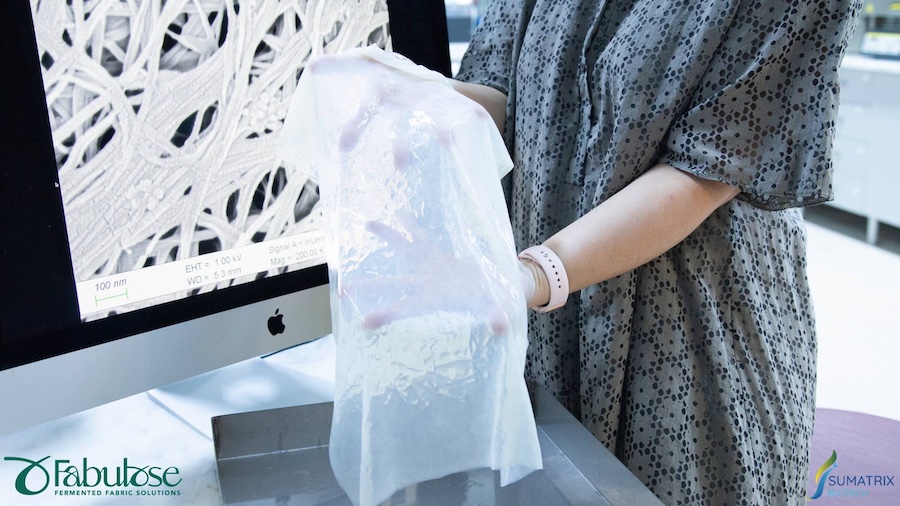
Fabolose: Fabricating vegan and circular leather alternatives from bio-tech-derived cellulose

Fabulose is an EU funded project coordinated by the German Institutes of Textile and Fiber Research (DITF). Its consortium consists of leading research institutes, biotech innovators, and industry stakeholders who aim to create high-performance, biobased and recyclable leather-like fabrics, using efficient biotech production routes for bacterial cellulose, cyanophycin and bacterial pigments

#Research & Development

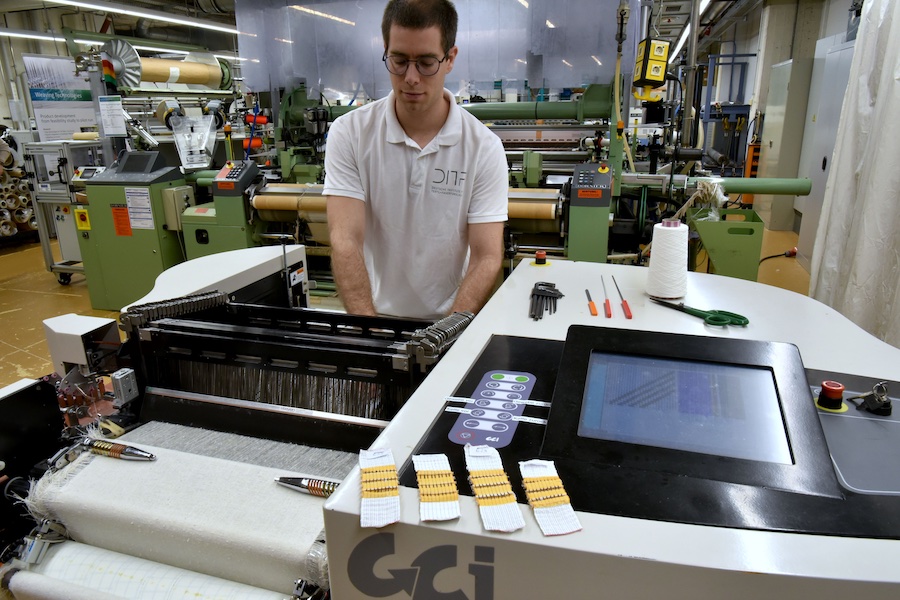
More safety and comfort for protective clothing thanks to auxetic fabrics

When everyday materials are pulled, they stretch or elongate in the direction of the pull and become narrower in cross-section. We can also observe this property in two-dimensional textiles. Auxetic structures behave differently here. They have the striking property of not changing under tensile stress or even increasing their width or thickness. These properties are advantageous, for example, in protective textiles or textile filter media. The DITF are researching auxetic fabrics for various applications.

#Research & Development

Panty liners prevent bacterial vaginosis

Worldwide, almost one third of women of childbearing age suffer from bacterial vaginosis. This is when the sensitive microbiome of the vagina becomes unbalanced. Such a disorder of the vaginal flora can cause urogenital infections, abscesses on the ovaries or fallopian tubes or premature births. This significantly increases the risk of infertility in women and of contracting a sexually transmitted disease or HIV.

#Research & Development

DITF send a signal for climate protection

The German Institutes of Textile and Fiber Research Denkendorf (DITF) have successfully implemented extensive investments in photovoltaic systems at their site in Denkendorf. The systems installed on the roofs of the buildings and covered parking lots have a total installed capacity of 840 kilowatt peak (kWp). The DITF invested 1.6 million euros in this with the support of the state of Baden-Württemberg. The system was ceremonially put into operation on September 17, 2025.

More News on Research & Development

#Composites

More affordable, environmentally friendly hydrogen pressure tanks at ITA-JEC booth

As a highlight of the JEC, the Institut für Textiltechnik (ITA) of RWTH Aachen University will be presenting hydrogen pressure tanks manufactured using multifilament winding processes at the NRW joint booth in Hall 5, Stand G65.

#Research & Development

Pioneer of the first hour: Michael Carus steps down after more than 30 years from nova-Institute’s Management

After more than three decades at the helm, founder and CEO Michael Carus is set to step down as head of the Renewable Carbon division on 1 March 2026. Lars Börger as the new CEO, will take over this key position of the nova-Institute together with COO Linda Engel, while Carus will remain with the research and consulting company as a senior advisor and shareholder. This change takes place after a one-year transition phase, as planned.

#Man-Made Fibers

Toray develops AURLIST™ polyester filament fiber with luxurious luster and ultra-fine structure

Toray Industries has developed AURLIST™, a new polyester filament fiber designed to combine luxurious luster, soft loft and a subtle fibrillated surface texture. The company primarily targets applications in women’s apparel such as tops, bottoms and dresses.

#Sustainability

The nova-Institute establishes new Renewable Feedstock Department to lay the groundwork for industrial defossilisation

The transition from fossil-based to renewable carbon – sourced from biomass, CO₂ utilisation and recycling – is the cornerstone of a climate-neutral chemical industry. The nova-Institute’s new department is dedicated to providing the essential data, analyses and strategic roadmaps required to secure a reliable future feedstock supply and make this transition a commercial and ecological reality.

Latest News

#Techtextil 2026

Knowledge that drives progress: Techtextil and Texprocess forums strengthen the global textile industry with a future-oriented programme

From AI-supported production optimisation and digital manufacturing solutions to circular technologies and bio-based high-performance materials: the Techtextil and Texprocess forums provide answers to the key challenges of the global textile industry with a curated content programme. As hubs for innovation and knowledge, they enhance competitiveness and offer orientation in changing markets. From 21 to 24 April 2026, Frankfurt is once again the global meeting point for thought leaders from industry, research and business.

#Techtextil 2026

Enhanced protection without added weight: Innovative technology for flame-retardant textiles doubles reaction time and ensures high wearing comfort

Flame-retardant textiles have long faced the same dilemma: the higher the level of protection, the greater the compromise in comfort, weight and breathability. This is especially important for workwear and protective clothing worn for long hours, where comfort is crucial to wearer acceptance and satisfaction. At Techtextil 2026 in Frankfurt, Swiss company Textilcolor AG will unveil pyroshell™, an innovative flame-retardant technology designed to tackle this challenge. Protection is provided by a graphite-based functional layer integrated into the textile structure, which doubles the reaction time before burns occur while significantly enhancing comfort. The material does not release any toxic fumes and offers textile manufacturers entirely new opportunities to design and produce protective and functional garments. It is also durable enough to withstand up to 50 industrial washes.

#Composites

JEC WORLD 2026 opens: Paris becomes the World Capital of composites

JEC World 2026 opens tomorrow, March 10, at Paris Nord Villepinte, bringing together the entire composites ecosystem for three days of exhibitions, conferences, technical sessions, strategic industry gatherings, and business meetings. As the “festival of composites”, JEC World is also a destination for a broad spectrum of other professional visitors, eager to discover how these advanced materials can offer sustainable solutions to their industries.

#Spinning

Barmag presents the next generation of POY production – energy-efficient and partial-automated

With POY 2.0, Barmag is introducing a completely redesigned spinning concept that takes the production of partially oriented yarn (POY) to a new level in terms of technology and economy. The solution, which was presented to a selected audience of experts for the first time at ITMA Asia + CITME 2025, was met with great enthusiasm: several yarn producers worldwide immediately expressed their interest in a pilot plant.

TOP