[pageLogInLogOut]

#Yarn & Fiber

Toray creates carbon fiber composite material with excellent heat dissipation that enables flexible thermal management design

Toray Industries, Inc., announced today that it has developed a high thermal conductivity technology that lifts the heat-dissipating properties of carbon fiber-reinforced plastic (CFRP) to that of metals. Applying this technology to CFRP dissipates heat effectively from their sources through thermal conduction paths inside that material. This helps suppress battery degradation in mobility applications while boosting performance in electronic device applications.

Common applications for this light, strong, and rigid plastic are aircraft, automobiles, infrastructure components, sporting goods, and electronic devices. There is a great need to boost the heat dissipation of CFRP as a structural material in advanced mobility services collectively called CASE (for connected, autonomous, shared, and electric) to prevent batteries from deteriorating because of heat building up during charging. CFRP is less thermally conductive than aluminum alloys and other metals. This has prompted efforts to enhance heat dissipation by employing external or internal graphite sheets offering excellent thermal conductivity and heat dissipation and diffusion. These sheets are easy to fracture, scatter, and damage, however, compromising the performance of CFRP.

Over the years, Toray has used proprietary technology to develop and apply highly rigid porous CFRP forming three-dimensional networks with short carbon fibers. On this occasion, Toray created a heat-conductive layer employing a porous CFRP support that safeguards the graphite sheets. Laminating CFRP prepreg on this thermally conductive layer enabled Toray to attain a thermal conductivity above that of metals, which would be impossible with regular CFRP, without compromising the mechanical properties and quality of that material. Prepreg is a sheet-like intermediate material made by impregnating fibers with resin to reinforce them. Common applications are aircraft fuselages, main and tail wings, and other primary structural components, as well as golf club shafts, fishing rods, tennis racket frames, and other sports equipment.


Toray made it possible to determine the thickness and lamination positions of graphite sheets forming thermal conduction paths. This enabled a flexible thermal management design, which controls the paths to release or use heat, for CFRP cooling efficiency and heat diffusion paths.

Toray’s breakthrough is a technological solution for efficiently dissipating heat from batteries and electronic circuits without undermining the lightness of CFRP. The company anticipates that CFRP applications employing its technology will include advanced mobility, mobile electronic devices, and wearables demanding lightness and heat dissipation.

Toray will keep developing revolutionary materials that transform societies in keeping with its commitment to innovating ideas, technologies, and products that deliver new value.
More News from Toray Engineering Co. Ltd.

#Man-Made Fibers

Toray develops AURLIST™ polyester filament fiber with luxurious luster and ultra-fine structure

Toray Industries has developed AURLIST™, a new polyester filament fiber designed to combine luxurious luster, soft loft and a subtle fibrillated surface texture. The company primarily targets applications in women’s apparel such as tops, bottoms and dresses.

#Recycling / Circular Economy

Toray develops recycling technology that retains carbon fiber strength and surface quality

Toray Industries, Inc., announced today that it has developed a recycling technology that can decompose diverse carbon fiber reinforced plastics (CFRP) made from thermosetting resins while retaining the strength and surface quality of those fibers. The company drew on this technology to create a nonwoven fabric employing recycled carbon fibers.

#Composites

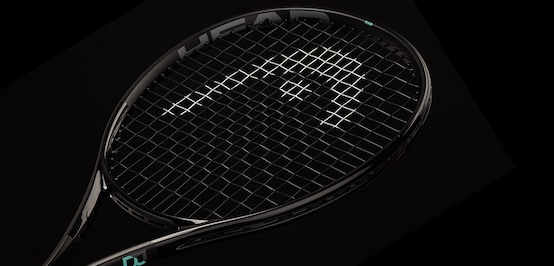
HEAD launches more sustainable(1) BOOM RAW racquet on Earth Day by using Toray’s bio-circular carbon fibers

HEAD continues to innovate with the launch of the BOOM RAW tennis racquet, an encouraging development in the search for a more sustainable future for racquet sports. All of the carbon fibers are bio-circular carbon fibers in the limited-edition and highly innovative BOOM RAW racquet, which offers the same explosive power - along with the same fun, feel and easy playability - as the regular, in-line BOOM racquet. The bio-circular carbon fibers are manufactured by Toray and its subsidiary Toray Carbon Fibers Europe.

#Recycling / Circular Economy

Companies in Japan initiate demonstration to expand the automotive recycling process

DENSO CORPORATION and other partners have been chosen by an industry-government-academia collaborative project aiming to expand the recycle content for automobile in the fiscal year 2023 supported by Ministry of the Environment, Japan.

More News on Yarn & Fiber

#Man-Made Fibers

Indorama Ventures supports Southeast Asia’s textile customers with reliable regional supply and global innovative portfolio

Indorama Ventures, one of the leading global polyester fiber and filament yarn suppliers globally, will participate in Indo Intertex 2026 in Jakarta this April, making its diverse global portfolio available to apparel, home textile, and hygiene customers across Southeast Asia.

#Yarns

Yarn Expo Spring 2026 concludes, connecting buyers with innovative selection of sustainable yarns and fibres

Yarn Expo Spring 2026 wrapped up successfully on 13 March, as a record-high of over 600 exhibitors from 12 countries and regions welcomed more than 25,000 visitors from 113 countries and regions. Held across 27,000 sqm in Hall 8.2 of the National Exhibition and Convention Center (Shanghai), the fair highlighted the textile industry’s accelerating shift toward a lower-impact, more functional future. Exhibitors presented eco-friendly organic, regenerated and recycled yarns and fibres, alongside innovative options such as sweat-resistant and high-performance materials. A comprehensive fringe programme further enriched the event, offering practical market insights and new networking opportunities.

#Man-Made Fibers

Lenzing advances its transformation: Higher EBITDA, stronger free cash flow and more than EUR 200 million in cost savings

The business performance of the Lenzing Group in 2025 was affected particularly in the second half of the year by external factors such as international tariff measures, subdued demand and declining market prices. As a result, revenue decreased slightly by 2.3 percent to EUR 2.6 billion, primarily due to lower fiber sales volumes and lower prices for fibers and pulp, which were further negatively impacted by currency developments. Nevertheless, thanks to the comprehensive Performance Program, Lenzing was able to improve its operating performance and key financial indicators compared with the previous year.

#Man-Made Fibers

“Lead Transformation – Generate Impact”: Lenzing presents its 2025 Annual and Sustainability Report

The Lenzing Group has published its 2025 Annual and Sustainability Report, entitled LEAD TRANSFORMATION – GENERATE IMPACT. The report shows how Lenzing is actively shaping change in the industry and making a lasting impact: economically, ecologically, and socially. Lenzing is consistently focused on the future: with targeted investments in premiumization, excellence, innovation, and sustainability, the company is strengthening its position as a leading provider of sustainable, cellulose-based premium fibers. The combined report is available in digital format.

Latest News

#INDEX 2026

“We clearly see that reliability, flexibility, service and total cost of ownership are becoming increasingly important again.”

The nonwovens industry continues to face a challenging market environment. Nevertheless, AUTEFA Solutions reports successful projects, new line sales and growing demand for energy-efficient and flexible solutions. In this interview, André Imhof of AUTEFA Solutions talks about competitiveness against Chinese suppliers, new service and recycling concepts, the growing importance of application development and the opportunities created by countercyclical investments.

#INDEX 2026

“Needle punching technology is more universal and sustainable than ever!”

Needle punching technology was long regarded as a rather traditional and comparatively slow technology within the nonwovens industry. In this interview, Johann Philipp Dilo explains why needle punching is more relevant than ever today – ranging from energy efficiency and resource conservation to hygiene applications, new machine concepts and design-oriented nonwoven solutions.

#Research & Development

Textile climate control system in workwear – exhibition at the 2026 SME Innovation Day!

Conventional protective workwear often reaches its limits during strenuous physical activity. In particular, the transport of sweat and excess body heat poses a problem. The German Institutes of Textile and Fiber Research (DITF) conducted research on flow-optimized, air-conducting textile structures that enable targeted climate control directly on the body. These structures can be integrated straight into protective work garments. The textile climate control system supports the body’s natural thermoregulation. This contributes to improved workplace safety and comfort.

#Nonwovens

PET spunbond from China – EDANA welcomes imposition of provisional anti-dumping measures

On 13 May 2026, after eight months of investigation, the European Commission imposed provisional anti-dumping duties of 45.6-50.0% on imports of PET spunbond from China. EDANA welcomes this expression of the Commission’s clear determination to protect EU industries from the unfair trade practices of Chinese producers.

TOP