[pageLogInLogOut]

#Weaving

NIEN HSING buys the first GREENDYE unit from KARL MAYER // environmental pioneer relies on GREENDYE

Jeans are the evergreens of the clothing industry, but are increasingly criticized for their negative impact on the environment. Manufacturers are looking for efficient as well as green production technologies for the indigo fabric - and they have found them at KARL MAYER.

KARL MAYER ROTAL, the site with the KARL MAYER Group's denim center of excellence, has developed GREENDYE, a technology that offers both: Sustainability and at the same time more economic efficiency than conventional plants.

The innovation was launched in 2019. The first sale followed this year. The premiere machine goes to Taiwan, to the innovative global player NIEN HSING.

A company with a sense of responsibility

The fully integrated denim manufacturer has written the topic of sustainability at the top of its corporate agenda. Already in 2015, a development and innovation center was established to promote ecological finishing processes. In 2017, NIEN HSING's corporate policy committed to reducing its ecological footprint and using clean production technologies for this purpose. In warp preparation, the environmentally conscious denim player aims to improve its eco-balance, especially with KARL MAYER's GREENDYE unit. "We got to know the pilot plant at KARL MAYER ROTAL and studied its operation in detail in terms of output, costs and sustainability. The results convinced us." says Chairman Chen, Chao Kuo.

With GREENDYE, indigo dyeing is two times cleaner and at the same time three times more efficient than with the processes of conventional equipment. The basis for the excellent performance is the use of nitrogen (NOX) technology to control the chemical dyeing process.

Tripling of dyeing efficiency, halving of resource consumption

The nitrogen atmosphere temporarily prevents the necessary oxidation of the indigo dye. In the NOX reactor, the indigo dye has time to create a more solid physical bond into the fiber composite, adhere there and be fixed.

It is also possible to increase the indigo concentration in the dye bath. These effects enable the yarn to absorb three times more dye than in case of conventional processes.

Further advantages result from the design of the dyeing vats. A high-flow, low-speed indigo circulation system and a design that avoids turbulence and surface foaming significantly reduce chemical consumption. A saving of up to 50% of hydrosulphite and caustic soda – the main environmental polluters of the process - and thus a halving of the gray water footprint is possible.

A reduction of 50% is also possible in the final washing water consumption. Thanks to the NOX reactor, the GREENDYE system requires only three dyeing baths instead of nine - like conventional systems - to achieve the same indigo dye shade, with correspondingly lower water consumption. In addition, the washing process is more economical due to the higher fixation of the indigo dye on the fiber.

Fewer dyeing baths also mean shorter dyeing sections. The difference in length is two-thirds and reduces the amount of yarn waste.

The reduction of daily water and chemical consumption as well as waste water and yarn waste optimizes not only the environmental balance but also the production cost in indigo dyeing. In addition, the operating costs are extremely low. Compared to traditional indigo dyeing systems, the GREENDYE system requires less space due to its shorter design, less maintenance, less time for operation and less spare parts for the same output.

Role model for the sector

From next year, NIEN HSING will benefit from the advantages of the GREENDYE technology. The delivery of the first machine on the market is scheduled for November 2022.

Stefano Agazzi, Chief of Technology and Products at KARL MAYER ROTAL is delighted with the sales success. "With our GREENDYE line, NIEN HSING can set completely new sustainability and efficiency standards in denim production. We hope to see significant impetus for change throughout the industry," says the indigo dyeing specialist. He will continue to support NIEN HSING with his team and the possibilities offered by KARL MAYER ROTAL's denim center of excellence. In Mezzolombardo, samples can be made with the customers' specific materials, staff can be trained, and joint projects can be developed.
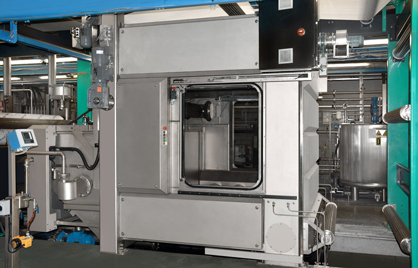
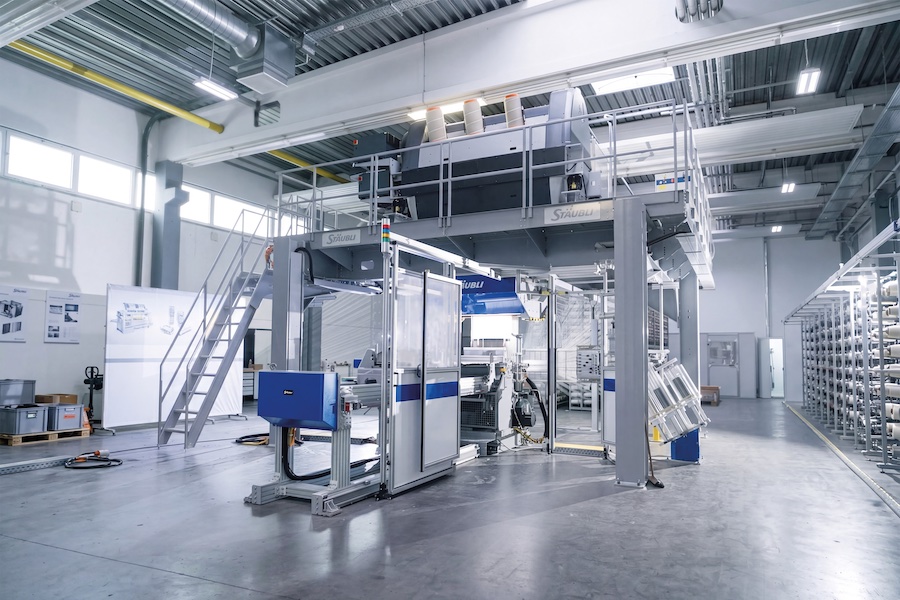
(c)2022 KARL MAYER - The NOX reactor of GREENDYE


More News from KARL MAYER Textilmaschinenfabrik GmbH

#Knitting & Hosiery

The newcomers HKS 3-M EL ECO and HKS 4-M EL ECO set new standards in the tricot market

Short development cycles, frequent pattern changes, and maximum efficiency – even with small batch sizes: Today's global fashion and apparel market demands more flexibility than ever before. High-performance warp knitting machines with compound needles (HKS) and EL pattern drive are KARL MAYER's answer to this challenge.

#Knitting & Hosiery

KARL MAYER celebrates 35 years of EL pattern drive

KARL MAYER is celebrating an anniversary this year: on 30 November 1990, the first warp knitting machine with electronic guide bar control, the KS 4 EL, was delivered – another milestone for patterning. As early as 1980, the SU gearbox with the MRS42SU had initiated the transition from mechanical chains to digital data.

#ITMA Asia + CITME Singapore 2025

India becomes growth engine for the warp knitting industry

ITMA ASIA 2025 exceeded all expectations for KARL MAYER – above all thanks to the strong interest from India: around 30% of the qualified discussions were held with partners from this traditional textile country. The response underlines the growing importance of the Indian market, which could become the second largest sales region for KARL MAYER after China. The warp knitting industry in particular is developing dynamically.

#Weaving

Solution for lower energy consumption proves itself in practice

Getzner Textil is one of KARL MAYER’s first customers to use PROSIZE with CASCADE. The innovative weaving specialist has tested the steam and condensation system by KARL MAYER and determined the energy savings it achieves. Karl-Heinz Vaaßen, Head of Textile Drying at KARL MAYER, assisted Getzner Textil’s production specialists both with the tests and with all questions relating to CASCADE. In a conversation with Werner Egger, Head of Weaving, and Thomas Rossi, Head of Warp Preparation at Getzner Textil, he learnt more about the system’s benefits for his customer.

More News on Weaving

#Weaving

Lindauer Dornier announces leadership transition in weaving machine business

After more than ten successful years at Lindauer DORNIER GmbH, Mr Wolfgang Schöffl will leave the family-owned company at the end of the year to enter well-deserved retirement.

#Research & Development

More safety and comfort for protective clothing thanks to auxetic fabrics

When everyday materials are pulled, they stretch or elongate in the direction of the pull and become narrower in cross-section. We can also observe this property in two-dimensional textiles. Auxetic structures behave differently here. They have the striking property of not changing under tensile stress or even increasing their width or thickness. These properties are advantageous, for example, in protective textiles or textile filter media. The DITF are researching auxetic fabrics for various applications.

#Weaving

Itema announces strategic partnership with Ivy Decarb to accelerate decarbonization in weaving process

Itema is pleased to announce the strategic partnership with Ivy Decarb, the digital platform helping textile companies measure and reduce their carbon footprint.

#Exhibitions & Events

Groz-Beckert showcases textile innovation at ShanghaiTex 2025

From December 16 to 19, 2025, the global textile industry will gather at ShanghaiTex at the Shanghai New International Expo Center (SNIEC), where Groz-Beckert will present its latest highlights and innovations across its five product areas – Knitting, Weaving, Nonwovens, Sewing, and Spinning – at Hall N3, Booth A05.

Latest News

#People

Happy Holidays!

Dear reader, the year 2025 is drawing to a close. We are entering what we hope will be a peaceful holiday season, spending time with our families and taking a moment to pause and reflect. We hope we have been able to support you once again this year with relevant news and articles, and we look forward to surprising you with many innovations in the coming year. Enjoy the festive season, stay healthy, and we wish you a happy and joyful holiday season.

#Heimtextil 2026

Texpertise Focus AI: Messe Frankfurt puts Artificial Intelligence centre stage at its international textile and apparel trade fairs

Under the banner 'Texpertise Focus AI, Messe Frankfurt will place a strong emphasis on Artificial Intelligence (AI) across its international textile and apparel trade fairs from 2026 onwards, setting a future-shaping signal for the industry. The initiative highlights the responsible use of AI along the entire textile value chain, from fibre production to the point of sale. The programme will launch at Heimtextil in Frankfurt in January 2026.

#Technical Textiles

Autoneum and Polestar set new benchmarks for passenger experience and sustainability

As the global market leader in sustainable acoustic and thermal management, Autoneum is a key supplier of interior and exterior components for the highly anticipated Polestar 5 model. The successful collaboration between Autoneum and Polestar marks a significant milestone in sustainable automotive engineering: the electric grand tourer sports car features several innovations in lightweight, fully recyclable polyester-based components that ensure a superior driving experience. Polestar 5 was revealed at the IAA Mobility 2025 in Munich and is available in 24 markets.

#Natural Fibers

Cashmere producers stress the importance of The Good Cashmere Standard®

At the invitation of the Aid by Trade Foundation (AbTF), over 70 experts from the cashmere production and supply chain, as well as other specialists, met at the GCS Unit Meeting in Shanghai, China to discuss the progress and new objectives of The Good Cashmere Standard (GCS). The meeting focused on implementation and verification of the standard, important aspects of animal welfare and the importance of the standard in the global textile market.

TOP