[pageLogInLogOut]

#Weaving

Woven art created on the P2 rapier weaving machine
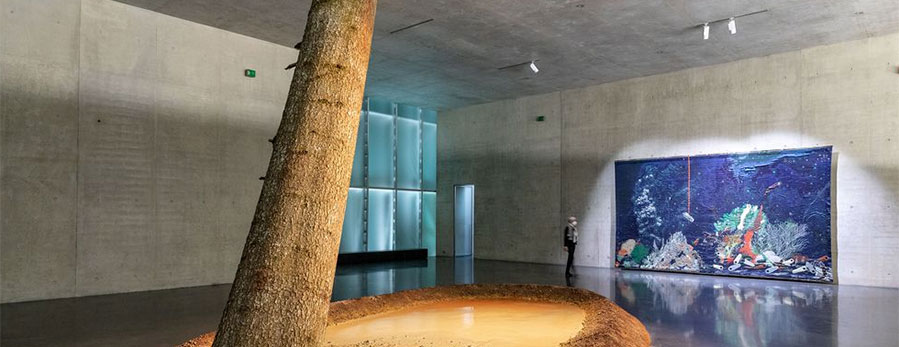
Otobong Nkanga’s exhibition tells the (hi)story of the elements earth and water. © 2021 Lindauer DORNIER
An exhibition by Otobong Nkanga at the Kunsthaus Bregenz shows: On weaving machines made by Lindauer DORNIER GmbH, not only functional fabrics and fashionable clothing, but also impressive works of art can be produced.

Normally, DORNIER customers weave – to name just a few – sophisticated clothing, shading or filter fabrics on their rapier weaving machines. But visitors to the Kunsthaus Bregenz can now also admire the artistic skills of the P2: Since October, four large-scale, brightly coloured tapestries have been hanging in the Kunsthaus, which is one of the outstanding exhibition houses for contemporary art in Europe. They were woven by the artist Otobong Nkanga, whose works have already been exhibited at the Tate Gallery of Modern Art in London. The performance artist, who made these fabrics especially for the huge concrete walls in the Kunsthaus Bregenz, wants to draw attention to the exploitation of nature by man. The carpets, distributed over various rooms, symbolise ocean depths, seasons and climate zones.
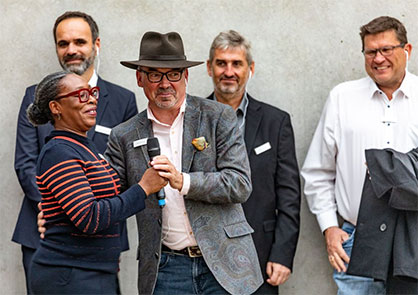
Otobong Nkanga (lhs) and Peter D. Dornier (rhs) during their joint gallery tour at KUB. © 2021 Lindauer DORNIER


The P2 rapier weaving machine – "a long-cherished dream"?Nkanga's work is the first result of the cooperation between the "TextielLab", which is part of the "TextielMuseum" in Tilburg (Netherlands), and the Lindauer DORNIER. According to Hebe Verstappen, head of the textile laboratory, "a long-cherished dream has been fulfilled" with the acquisition of a P2 rapier weaving machine: It enables a wide range of applications opening doors to completely new technical possibilities for students, artists and designers to realise their textile ideas. At the same time, issues about sustainability, climate protection and resource consumption are becoming increasingly important. "As a value-guided family business, we highly welcome this development," says Florian Boch, Head of Central Marketing and Communication at DORNIER.


Christo’s last work realized with fabric produced on the P2?The tapestries are not the only one-of-a-kind artistic creation that has recently been produced on a P2 rapier weaving machine: The fabric for Christo's last work, the covering of the Arc de Triomphe in Paris, also came from the P2. A nephew of the late artist had commissioned a DORNIER customer to produce the 25,000 square meters of silver-blue textile specifically for the covering of the Arc de Triomphe.
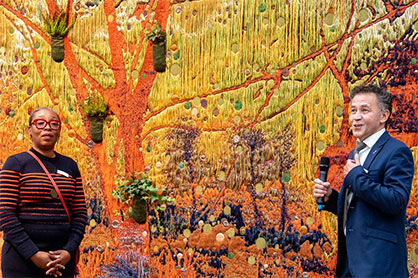
Otobong Nkanga (lhs) together with her master weaver Stef Miro (rhs). © 2021 Lindauer DORNIER


Link to press release:

https://www.lindauerdornier.com/en/company/news/christos-last-work-art/

A public guided tour of the exhibition is planned for 29 January in Bregenz, followed by an exclusive visit to the DORNIER Technology Centre. (Link to registration)


Find out more about the exhibition at Kunsthaus Bregenz.


More News from Lindauer DORNIER GmbH

#Techtextil 2026

From carbon to canvas: DORNIER presents flexible and reliable weaving technologies for 3D weaving and dynamic markets at Techtextil

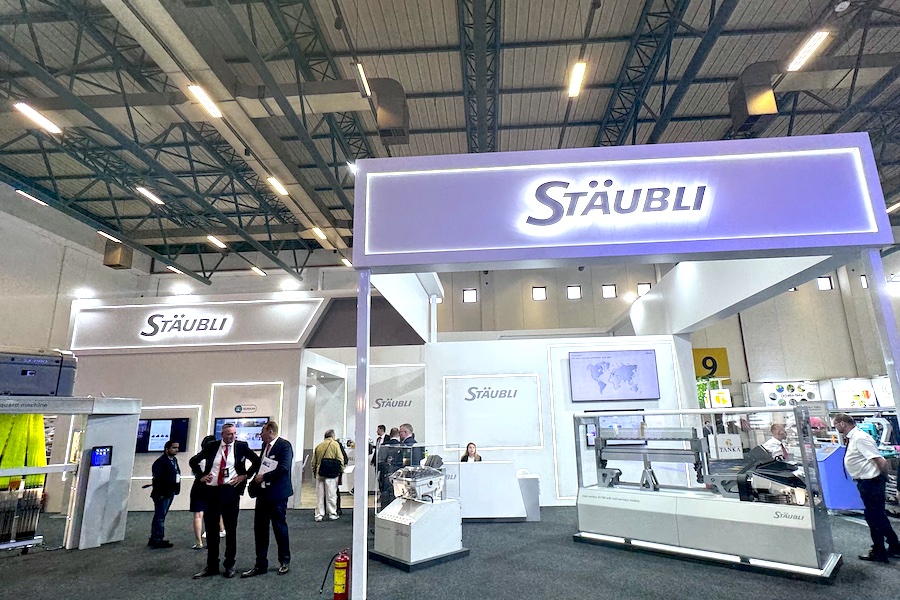
At Techtextil from 21 to 24 April 2026 in Frankfurt am Main (Hall 12.0, Stand D95), Lindauer DORNIER will be showcasing reliable and flexible weaving technologies for ever-changing market requirements. The machine and plant manufacturer will present retrofits for existing machines, the new TRITOS® FLEX 3D weaving technology, intuitive automation concepts and software solutions for data-sovereign networking of the weaving machine fleet.

#Weaving

Lindauer Dornier announces leadership transition in weaving machine business

After more than ten successful years at Lindauer DORNIER GmbH, Mr Wolfgang Schöffl will leave the family-owned company at the end of the year to enter well-deserved retirement.

#ITMA Asia + CITME Singapore 2025

DORNIER celebrates its anniversary at ITMA Asia + CITME

To mark its 75th anniversary, machine and plant manufacturer Lindauer DORNIER will be presenting the latest developments in its rapier and air-jet weaving machines at ITMA Asia + CITME in Singapore (Hall 2, Stand B401) from 28 to 31 October 2025. The focus will be on energy-efficient weaving technologies, new IoT solutions for networked textile production and systems for the series production of modern fibre composite components.

#Weaving

From the Venus flytrap to foldable aircraft wings: Peter Dornier Foundation Prize 2025 honours bionic research on 3D weaving technology

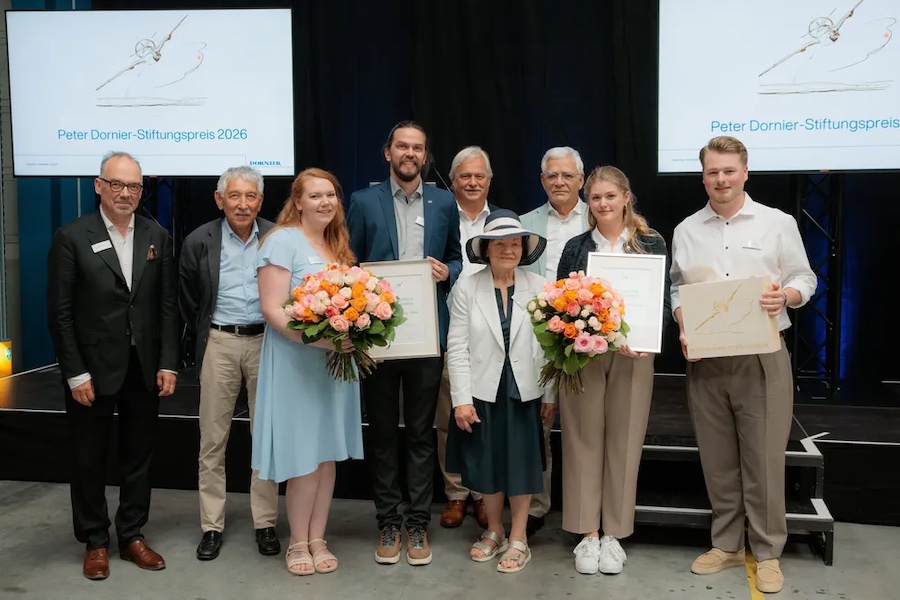
Long wings with foldable tips have the potential to reduce aircraft fuel consumption and make aviation more sustainable. An interdisciplinary research team has now developed a new solution based on the Venus flytrap: Freely movable wingtips made of fibre composites which are produced using innovative 3D weaving technology. For this pioneering combination of textile technology, aviation and bionics, researchers Patrick Meyer (TU Braunschweig) and Michael Vorhof (TU Dresden) were awarded the Peter Dornier Foundation Prize 2025 in mid-July.

More News on Weaving

Latest News

#INDEX 2026

“We clearly see that reliability, flexibility, service and total cost of ownership are becoming increasingly important again.”

The nonwovens industry continues to face a challenging market environment. Nevertheless, AUTEFA Solutions reports successful projects, new line sales and growing demand for energy-efficient and flexible solutions. In this interview, André Imhof of AUTEFA Solutions talks about competitiveness against Chinese suppliers, new service and recycling concepts, the growing importance of application development and the opportunities created by countercyclical investments.

#INDEX 2026

“Needle punching technology is more universal and sustainable than ever!”

Needle punching technology was long regarded as a rather traditional and comparatively slow technology within the nonwovens industry. In this interview, Johann Philipp Dilo explains why needle punching is more relevant than ever today – ranging from energy efficiency and resource conservation to hygiene applications, new machine concepts and design-oriented nonwoven solutions.

#Research & Development

Textile climate control system in workwear – exhibition at the 2026 SME Innovation Day!

Conventional protective workwear often reaches its limits during strenuous physical activity. In particular, the transport of sweat and excess body heat poses a problem. The German Institutes of Textile and Fiber Research (DITF) conducted research on flow-optimized, air-conducting textile structures that enable targeted climate control directly on the body. These structures can be integrated straight into protective work garments. The textile climate control system supports the body’s natural thermoregulation. This contributes to improved workplace safety and comfort.

#Nonwovens

PET spunbond from China – EDANA welcomes imposition of provisional anti-dumping measures

On 13 May 2026, after eight months of investigation, the European Commission imposed provisional anti-dumping duties of 45.6-50.0% on imports of PET spunbond from China. EDANA welcomes this expression of the Commission’s clear determination to protect EU industries from the unfair trade practices of Chinese producers.

TOP