[pageLogInLogOut]

#Weaving

The double security stress-busting solution for weavers
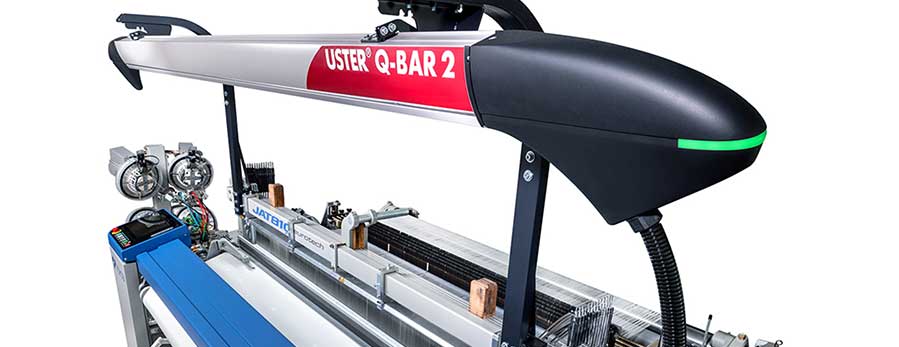
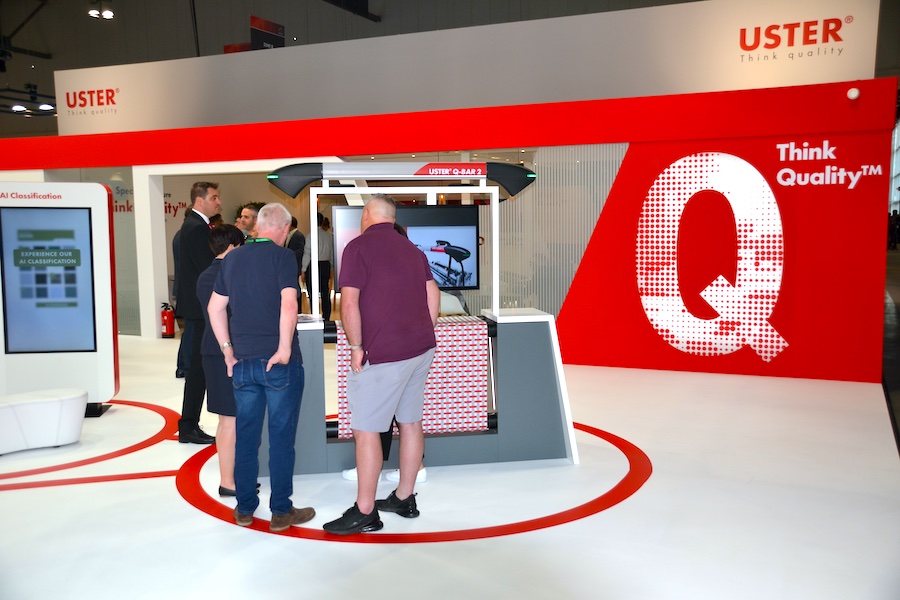
Uster Q-Bar 2 © 2021 Uster
What do weavers need? In a word, it’s security – for both fabric quality and profit margins. And for this double security, there’s only one solution: the Uster Q-Bar 2 formation monitoring system. It’s like having an extra operator dedicated to a single weaving machine…

Why Uster Q-Bar 2 should be a standard in fabric inspection

Operators should be everywhere at the same time – checking, fixing, keeping the machines continuously running – no matter in which weaving mill, all around the globe. Operators should be as fast as world record sprinter Usain Bolt, see as good as an eagle and with the knowhow of an engineer and service technician for different kinds of weaving machines. As operators with this skill set are really rare it’s a matter of fact that most of them are stressed.

Don’t risk profitability

This kind of stress can be a risk to weavers’ profitability. For example, a worn-out part might be overlooked, setting off a drama affecting margins. Defects could be repeated, showing up again and again – linear meter by linear meter – for as long as it takes to identify the fault and fix the issue. If only someone could have an eye on things, constantly.

Long-running defects can also arise from dirty parts, or from missing or inadequate maintenance. Whatever the issue, what they have in common is that they spoil lots of good fabric – worst of all in the middle of the web – and yet they can be automatically detected and damage avoided. Q-Bar 2 is the solution, working with various weaving machine types (except water-jet and jacquard).

Uster Q-Bar 2 has its inspection position within the fabric formation area, allowing it to respond quickly when a defect appears and avoid long-running or repeating faults. Alarms and stop signals alert the operator to correct problems immediately. This early detection reduces second quality and material loss.

Q-Bar 2 also monitors critical machine units in the formation zone. If there is a problem here, the system makes it easy to identify and eliminate it, preventing further defects, and again maximizing fabric yield.

Smarter than loom sensors

To err is human – which makes it essential to have machines. Smart weaving machines do point out issues to the operator, but Q-Bar 2 sees what weaving machines can’t. For example: the constantly stressed operator fixes a broken warp yarn, picking the yarn and drawing it in the reed position; loom sensors get the signal that the missing yarn is now available and accelerate to full speed within milliseconds. Immediately, an alert starts at Q-Bar 2, with a red light indicating the location of the issue. What happened? The operator picked the wrong reed position. Without the Uster formation monitoring system, the defect stayed undetected, as the operator had already moved on to fix the next issue at another machine.

Time pressure is not the only worry. Complex patterns, fine yarns and a lack of experience can all lead to wrongly drawn-in warp yarns – defects that are hard to recognize with the human eye. Without an automatic solution in place, the problem with wrong draw-ins is usually unnoticed until it’s woven into the fabric for some meters of length.


Security for management and shop floor

The best way to avoid off-quality is simply not to make it. A zero-defect standard is what many weavers wish to achieve. Q-Bar 2 is the way forward. Weaving defects can have various root causes, so Uster Q-Bar 2 provides different algorithms to identify specific defects and their causes. With this knowledge, it is possible to prevent defects during the actual weaving process. 

Wrong drawn-in defect in fabric formation zone  © 2021 Uster
Wrong drawn-in defect in fabric formation zone © 2021 Uster


Uster Q-Bar 2 monitors the fabric already at the critical stage in fabric formation with automatic, in-line inspection. Identifying problems here brings enormous benefits and enables weavers to deliver constant quality and stay competitive in the market.

Operators would surely vote for Q-Bar 2 as a standard on every weaving machine. They would appreciate Q-Bar 2 as the new colleague in their team, reliably keeping an eye on the web all day long. Whether a single or repeating defect occurs, the integrated LEDs used by Q-Bar 2 would highlight the system status and pinpoint the location of defects with red lights. Wouldn’t it be great to empower operators to secure both profitability and quality for the boss!
More News from Uster Technologies AG

#ITMA Asia + CITME Singapore 2025

Uster presents novelties at ITMA Asia + CITME 2025

There’s news from Uster Technologies to be announced for the industry’s upcoming event in Singapore. The Uster 360Q universe is growing with new products, solutions and services. Innovation developments can also be recorded in the fields of man-made fiber testing and fabric inspection. Uster innovations address the industry’s trending topics as mill management and process control, optimization of delivered fabric quality and yield.

#Spinning

Uster Technologies marks 150 years of empowering quality excellence

Uster Technologies marks 150 years of excellence – a milestone that reflects continuous adaptation to customer needs and industry change. Over the decades, Uster has evolved from manufacturing quality testing instruments into a trusted partner shaping the future of textile production.

#Recycling / Circular Economy

Challenges of making yarn from recycled fibers

What does it take to spin quality yarn from recycled fibers? Uster Technologies brought textile industry leaders together to discuss the role of technology, data and automation – as well as the current challenges in using recycled raw material. Experts from Rieter, Säntis Textiles, Otto Yarns, and TVU commented on the current situation and looked into the future of spinning in a panel discussion organized at Uster headquarters.

#Spinning

Uster Technologies wins another infringement lawsuit

In a ‘victory for innovation in China’ Uster Technologies has secured a decisive judgment in a patent infringement lawsuit against a competitor. The final ruling by the Supreme People’s Court of PR China confirms that the competitor’s actions in copying the patented yarn feeder of the Uster Tester 6 constitute unlawful infringement.

More News on Weaving

#Weaving

Stäubli demonstrates how innovation translates into real benefits for weaving mills at SITEX 2026

One of India’s most prominent textile industry events, SITEX 2026, is held from February 21 to 23 in Surat. Committed to empowering Indian weaving mills with state‑of‑the‑art solutions tailored to regional needs, Stäubli will present a selection of solutions designed for performance, reliability, and power efficiency. Through its weaving preparation, cam and dobby shedding solutions and Jacquard technologies, Stäubli highlights its global expertise tailored to the specific needs of the local market.

#Weaving

Itema exhibits the two best-selling high-end rapier weaving machines of the Region, R9500EVO and Galileo-RX at SITEX 2026

Following the opening of its new Surat Service Center in November, Itema will exhibit at SITEX (Stand 286) from February 21st to 23rd at the Surat International Exhibition and Convention Centre (SIECC). Surat has long been one of Itema’s most strategic markets, a role further reinforced by the inauguration of the Surat Service Center last November. Equipped with an advanced electronic repair center, a weaving machine behavior simulator, and a local spare parts warehouse, the new facility strengthens Itema’s presence in the region while bringing the company even closer to its Customers.

#Composites

Breaking new ground in Technical Textiles: Stäubli at JEC World 2026

Stäubli, a global leader in industrial and mechatronic solutions, will showcase its cutting-edge weaving machinery solutions for technical textiles at JEC World 2026, from 10 to 12 March in Paris-Nord Villepinte.

#Weaving

Groz-Beckert launches comprehensive Reed Portfolio in Ichalkaranji to advance weaving excellence in India

Groz-Beckert, the world’s leading provider of industrial machine needles, precision parts, and systems for the textile industry, hosted an exclusive customer event titled “Advancing Weaving Excellence – Reed Portfolio Launch” in Ichalkaranji, one of India’s most prominent weaving hubs.

Latest News

#Recycling / Circular Economy

Circulose restarts commercial-scale production at Ortviken plant in Sundsvall

Circulose today announced the restart of its commercial-scale production plant at Ortviken in Sundsvall, Sweden, marking a significant step in scaling next-generation materials for the global fashion industry. The company plans to resume production of CIRCULOSE®, a recycled pulp made entirely from discarded cotton textiles, in the fourth quarter of 2026.

#Textiles & Apparel / Garment

VIATT 2026 to debut German Pavilion, strengthening European participation alongside key Asian textile hubs

Vietnam’s textile and garment sector continues to be a major contributor to the country’s economic growth, with export revenues expected to reach USD 46 billion in 2025, a 5.6% increase from 2024 . From 26 – 28 February, the Vietnam International Trade Fair for Apparel, Textiles and Textile Technologies (VIATT) is set to contribute to economic growth opportunities by accelerating digital transformation and green transition across the entire textile value chain. The upcoming edition will respond to the rising demand for advanced technologies and sustainable materials with the introduction of the German Pavilion, alongside strong exhibitor participation from key Asian sectors, as well as several high-profile fringe events.

#Sustainability

Ying McGuire becomes new CEO of Cascale

Cascale today announced the appointment of Ying McGuire as Chief Executive Officer, effective June 1, 2026.

#Technical Textiles

Sustainable, lightweight, and sound absorbing: Polyester-based front trunk solution for BEVs

As car manufacturers look to further reduce their carbon footprint, Autoneum has developed an innovative front trunk solution for battery electric vehicles (BEVs), made entirely from polyester-based textile. The Ultra-Silent Frunk offers significant weight reduction, improved acoustic and thermal insulation, and uses up to 70 percent recycled material, supporting sustainable and efficient vehicle design. Autoneum, global technology leader in acoustic and thermal management for vehicles, has already received orders for the new frunk from three major OEMs in Asia and Europe to be built in three BEV models. Series production for two BEVs has been underway in China and Germany since last year.

TOP