[pageLogInLogOut]

#Recycling / Circular Economy

Challenges of making yarn from recycled fibers

What does it take to spin quality yarn from recycled fibers? Uster Technologies brought textile industry leaders together to discuss the role of technology, data and automation – as well as the current challenges in using recycled raw material. Experts from Rieter, Säntis Textiles, Otto Yarns, and TVU commented on the current situation and looked into the future of spinning in a panel discussion organized at Uster headquarters.
Uster hosted a dynamic panel discussion featuring representatives from across the value chain to address the challenges of recycled yarns at each production stage. © 2025 USTER


The role of latest technologies in sustainable spinning

It’s more than just machinery – it’s about rethinking processes, embracing AI, data and machine automation as well as building industry-wide collaboration. As spinners navigate the multiple demands of circularity, customer satisfaction, and profitable business, one thing is clear: the future of recycled textiles must be individually engineered, comprehensively tested, and connected like never before.

Standards and individuality: engineering for reliability and diversity

Advanced machinery is a critical component in enabling engineering teams to optimize processes and drive innovation. Machines from leading manufacturers offer reliability but don’t make an inimitable product. “With the goal of being different and unique, we create our own path by developing our own final machines,” says Andreas Merkel, CEO at Otto Yarns. Otto engineers customize the machines for specialized applications. A notable example is the Spin-Knit system, which integrates spinning and knitting into one continuous operation. Originally configured for cotton, the machine was re-engineered to process technical fibers, by removing the standard top section and implementing a proprietary drafting system.

The production of recycled yarns brings technical requirements that are significantly different from those with virgin fibers. According to Stefan Hutter, owner of Säntis Textiles, there is a clear need for the development of new industry standards tailored specifically for recycled materials, and he advocates for Uster Technologies to take a leading role in this effort. Ultimately, the successful integration of advanced production machinery, newly-defined quality standards, and precise quality control systems will require close industry collaboration. This is the only way that confidence in recycled yarns can be established – ensuring that customers not only trust the product's performance and consistency but are also willing to invest in its value.

Adapting spinning processes for recycled yarns

Recycled yarn production can be achieved with existing spinning technologies, either by adapting current systems or by integrating additional processing steps. “Spinners must go back to the basic task and again learn how to spin, starting from scratch and going through the whole line of spinning,” says Michael Will, Head Textile Technology & Process Analytics at Rieter. This re-learning process is essential due to the variable nature of recycled fibers, and it demands extensive testing and data collection – measuring key parameters, validating process changes, and ensuring consistency through iterative quality control.

Growing customer demand for more automation presents a dual challenge: matching the need for maximum flexibility with the rigid configurations typical with interconnected automated systems. In conventional spinning mills, linking multiple machines can limit process adaptability. However, machine-level automation offers potential for enhanced flexibility, particularly when processing smaller lot sizes. For instance, features such as automated adjustment of comber nip distances can streamline setups.

The role of data and AI

In the recycling process, sorting, separating, and cleaning are advanced operations in which artificial intelligence plays a critical role in pattern recognition and optimization. In this way, AI enables optimization of material recovery at the right quality, to improve process efficiency. Another key area is traceability, which ensures product reliability and builds trust throughout the supply chain. “For downstream processes such as dyeing, it must be possible to trust certificates,” says Thomas Franz, Sales and Purchasing Manager at TVU.

Data analysis is fundamental to these efforts, but it becomes truly effective only when integrating comprehensive data streams. This means connecting spinning machinery and testing instruments – ideally across different brands – to enable holistic process monitoring and control. For spinners, seamless working between equipment and systems is crucial to unlocking maximum operational benefits and ensuring consistent quality in recycled yarn production.

Enabling the future would start with technology partners meeting, discussing and working together. This is a common belief of the experts participating at the panel discussion – and the Uster event has been one step in this direction.


More News from Uster Technologies AG

#ITMA Asia + CITME Singapore 2025

Uster presents novelties at ITMA Asia + CITME 2025

There’s news from Uster Technologies to be announced for the industry’s upcoming event in Singapore. The Uster 360Q universe is growing with new products, solutions and services. Innovation developments can also be recorded in the fields of man-made fiber testing and fabric inspection. Uster innovations address the industry’s trending topics as mill management and process control, optimization of delivered fabric quality and yield.

#Spinning

Uster Technologies marks 150 years of empowering quality excellence

Uster Technologies marks 150 years of excellence – a milestone that reflects continuous adaptation to customer needs and industry change. Over the decades, Uster has evolved from manufacturing quality testing instruments into a trusted partner shaping the future of textile production.

#Spinning

Uster Technologies wins another infringement lawsuit

In a ‘victory for innovation in China’ Uster Technologies has secured a decisive judgment in a patent infringement lawsuit against a competitor. The final ruling by the Supreme People’s Court of PR China confirms that the competitor’s actions in copying the patented yarn feeder of the Uster Tester 6 constitute unlawful infringement.

#Spinning

Uster Technologies introduces its new fiber process control system

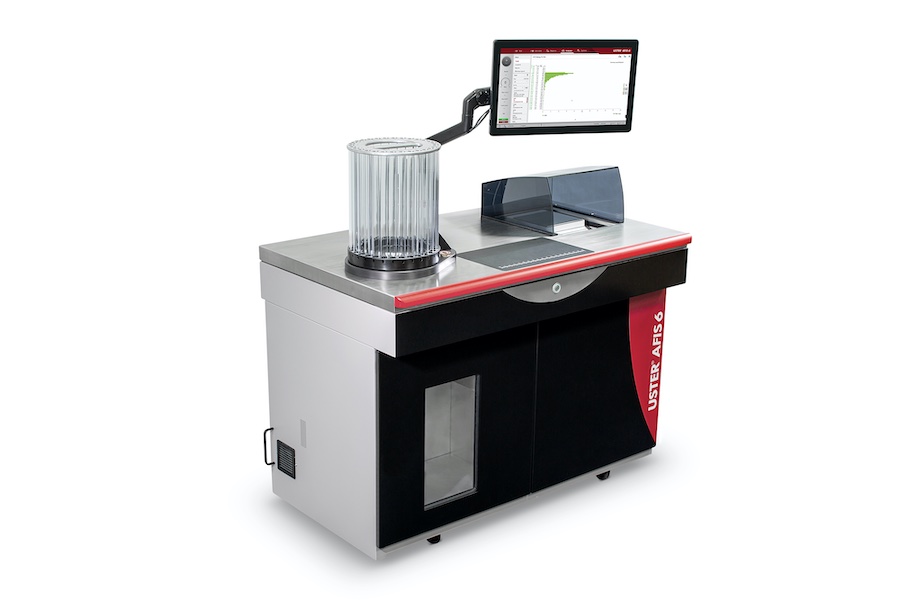
Uster, Switzerland, 15th May 2025 – Fiber quality measurement in spinning preparation is crucial for optimizing waste and meeting yarn quality specifications. The brand-new Uster AFIS 6 – the next-generation laboratory instrument from Uster Technologies – uniquely tests man-made fiber properties in addition to cotton. It provides critical data to optimize fiber process control for cotton, man-made fibers, and blended yarns.

More News on Recycling / Circular Economy

#Research & Development

How innovations drive BASF’s success

“Innovation has always been part of BASF’s DNA. Especially in these volatile times, it is crucial to leverage our innovative strength to develop competitive solutions that differentiate us as a company in our markets and give us a competitive edge,” said Dr. Stephan Kothrade, Member of the Board of Executive Directors of BASF and Chief Technology Officer, at the company’s Research Press Briefing held today. To achieve this, BASF implemented its “Winning Ways” strategy about a year ago with the clear goal of becoming the preferred chemical company to enable its customers’ green transformation.

#Recycling / Circular Economy

Textiles Recycling Expo announces collaboration with Future Fabrics Expo for 2026

The Textiles Recycling Expo has entered a major new collaboration with the Future Fabrics Expo which means that both events will run alongside each other at the Brussels Expo, Belgium on 24–25 June 2026. This co-location marks a significant step forward for the textile and fashion industries, bringing together two influential and complementary events under one roof.

#Recycling / Circular Economy

Between 121 and 142 million people are employed in the circular economy globally, new study finds

Between 121 and 142 million people worldwide are employed in sectors that contribute to the circular economy, such as repair, recycling, second-hand trade and waste management. This represents roughly between 5 and 5.8 percent of total global employment (excluding agriculture), according to a new joint report by Circle Economy, the International Labour Organization (ILO) and the World Bank Group, in partnership with the UN Partnership for Action on Green Economy (UN-PAGE).

Latest News

#Spinning

First PA66 spinning plant with EvoQuench successfully commissioned

With the successful commissioning of a multi-digit PA66 spinning line for microfiber yarns, Chinese textile company Shandong Nanshan Fashion Technology Co., Ltd. has added yarn production to its textile value chain.

#Knitting & Hosiery

SHIMA SEIKI returns to ShanghaiTex

Leading flat knitting solutions provider SHIMA SEIKI MFG., LTD. of Wakayama, Japan, together with its Hong Kong and Chinese market subsidiary SHIMA SEIKI (HONG KONG) LTD., will exhibit at the ShanghaiTex 2025 exhibition (Booth No.: Hall N3, Booth A20) held in Shanghai, China this month. This marks the return of SHIMA SEIKI to ShanghaiTex after a 14-year hiatus, its last exhibit at the show having been in 2011.

#Research & Development

Fraunhofer CCPE presents the “Monomaterial Design Set” – Innovative solutions for circular product design

Composite materials made from different types of plastic often extend the lifetime of products but make recycling more difficult in the circular economy. That is why Fraunhofer CCPE has developed the “Monomaterial Design Set”. This new approach helps to reduce the variety of plastics used in durable products and offers circular solutions for designers and product developers.

#Man-Made Fibers

arena introduces renewable LYCRA® EcoMade fiber in its latest swimwear collection

Italian swimwear specialist arena has unveiled a new collection that brings sustainability and performance even closer together. Launched on December 4, the line features swimsuits made from recycled nylon and renewable LYCRA® EcoMade fiber — the first time the bio-based spandex has been used commercially in swimwear.

TOP