[pageLogInLogOut]

#Textile chemistry

AFFIX Labs launches world’s first long-lasting surface treatment to kill the coronavirus
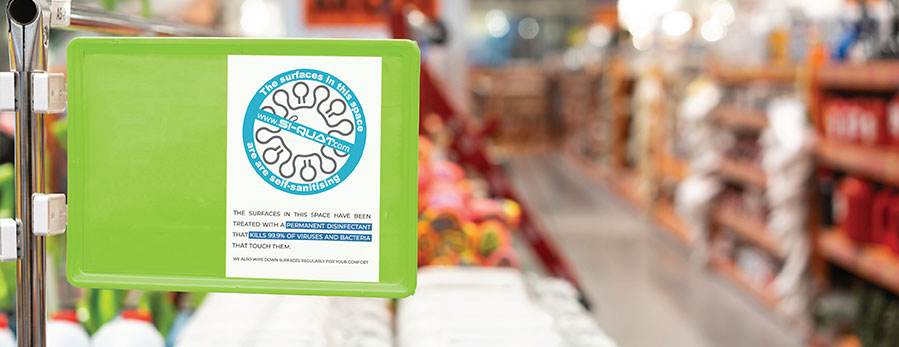
Photo © 2020 by AFFIX Labs
Quat by AFFIX Labs is a versatile anti-viral surface treatment that has been scientifically proven to last for months on any surface or textile while effectively killing the COVID-19 pathogen upon contact.

Leading chemical binding expert AFFIX Labs has harnessed its global experience in disease prevention to create the first long-lasting surface treatment proven to kill COVID-19. Si-Quat combines a safe and well-established disinfectant and a proprietary chemical binding technique, so that the active ingredient can kill viruses, including SARS-COV-2. Testing at Portugal’s Biochemistry Institute at the University of Lisbon proves that Si-Quat effectively kills the COVID-19 pathogens that it comes into contact with.

“Tragedies have unfolded across the globe, affecting different countries at varying degrees. The second waves of COVID-19 are just appearing on the horizon. This long-lasting surface treatment is a viable, accessible solution across cultures. By killing the COVID-19 pathogen on surfaces before it can infect people, the Si-Quat solution is a game changer. It can provide increased security and peace of mind to your communities, as well as your customers,” says Tom Sam, CEO of AFFIX Labs.
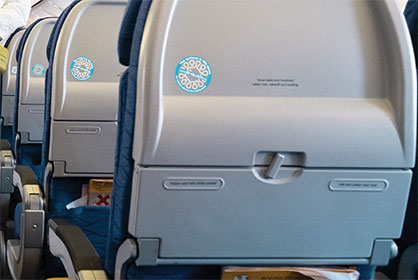
Photo © 2020 by AFFIX Labs


Si-Quat has been tested to kill 99.99% of microbes within minutes, while still being fully safe to touch. Proven to be effective for about a month on frequently touched surfaces, it is the longest lasting anti-viral surface treatment available to reduce the spread of the novel coronavirus. The product is non-corrosive, free from silver salts and heavy metal nanoparticles, and perfectly safe to touch.

Several major agencies around the globe have already accepted quaternary ammonium, the main ingredient in the surface coating, to be an effective surface treatment against the novel coronavirus, including the World Health Organization (WHO), the US Environmental Protection Agency, the American Chemistry Council (ACC) and the European Chemical Agency (ECHA).

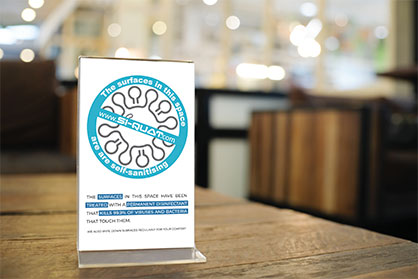
Photo © 2020 by AFFIX Labs


Photo © 2020 by AFFIX Labs


Si-Quat was invented in January 2020 by the AFFIX Labs’ Repeltec development team to specifically help combat the COVID-19 outbreak. The product is based on the trusted and safe disinfectant quaternary ammonium, which is chemically bound to align silane quaternary ammonium molecules (silane quats) in a highly effective manner. Positively charged nitrogen particles then actively attract viruses and bacteria, penetrating the membranes and killing them within minutes.

Rigorous testing has shown Si-Quat to adhere to almost any surface, performing as the most durable surface treatment commercially available. Due to its incredibly strong layer, the solution only wears down on surfaces after thousands of touches or multiple cleaning cycles. This means that on heavily used surfaces, such as door handles and counters, Si-Quat will be effective for about a month. On rarely touched surfaces like walls, it has the potential to protect for years. Since the product is incredibly easy to apply, technicians require minimal training and only basic protection. They simply have to brush or spray Si-Quat onto the surface and allow it to dry for 6 hours.

“Other sanitising solutions require reapplication to every surface several times daily, interrupting business operations. This results in additional costs and disruptions at a time when many companies are already struggling,” Sam explains. “By combining proven efficacy, safety and long durability, Si-Quat is emerging as an important weapon in the battle against the spread of COVID-19.”

AFFIX Labs has begun to roll out the distribution of Si-Quat across the globe, with new regions being serviced every week. It is currently looking for distribution partners in local markets.

The project leading to the development of Si-Quat included funding from the European Institute of Innovation and Technology, a body of the European Union, under the Horizon 2020 Framework for Research and Innovation.

Learn more on:

http://www.si-quat.com.


More News from TEXDATA International

#ITM 2026

ITM 2026: The new geography of textile production

New production hubs are emerging across North Africa and Central Asia, while Türkiye is accelerating its transformation toward higher-value, technology-driven and more sustainable textile manufacturing.

#Research & Development

“Production is a product”

From technical textiles and AI-driven robotics to the limitations of textile circularity: Professor Dr Thomas Gries looks back on more than two decades of development at ITA Aachen. In the interview, he explains why production technology remains a decisive success factor, discusses international collaborations and innovation ecosystems, and shares his views on the transformation of production landscapes and the challenges facing an increasingly regulated industry.

#Knitting & Hosiery

“We need to move away from the price trap and return to a value-driven mindset.”

With its new Textile Innovation Center, KARL MAYER is sending a strong signal for innovation, collaboration, and the future of textile applications. In this interview, Karl Josef Mayer discusses new opportunities in warp knitting, the processing of staple fibres, recycling, the changing role of machinery manufacturers, and why the textile industry must once again focus more strongly on the value of textiles. by Oliver Schmidt

#Associations

“Innovation, resilience and international experience remain the great strengths of the Swiss textile machinery industry”

Geopolitical uncertainty, growing competitive pressure from China, new free trade agreements and the shift towards a circular economy are currently reshaping the global textile industry. In this interview, Cornelia Buchwalder discusses the current mood within the Swiss textile machinery sector, the industry’s distinctive innovative strength, new market opportunities in India and Asia, and the technological trends that could shape the upcoming trade fair cycle leading up to ITMA 2027.

More News on Textile chemistry

Latest News

#Spinning

"We will become a recycling powerhouse"

The textile industry is now in its fourth consecutive year of crisis, while automation, artificial intelligence and recycling are reshaping the rules of the game. In this interview, Rieter CEO Thomas Oetterli discusses the first signs of a market recovery, reflects on his first three years at the helm of the company, explains the integration of Barmag, outlines Rieter’s vision of the fully automated spinning mill and highlights the strategic importance of recycling. In doing so, he explains why the new Rieter Group aims to play a leading role in transforming the textile value chain into a circular economy.

#Man-Made Fibers

ROICA™ launches new global brand identity and digital experience

ROICA™, the premium stretch fiber developed by Asahi Kasei, today announced the launch of its new global brand identity, including a new key visual and a fully redesigned website. This milestone initiative marks the beginning of a new phase in ROICA™’s evolution as a global brand.

#Nonwovens

EDANA launches landmark continence report to mark the start of the World Continence Week

Today marks the official commencement of the World Continence Week. To honour this global awareness initiative, EDANA has published a comprehensive report titled "The Central Role of Absorbent Hygiene Products in the Management of Adult Urinary Incontinence: Benefits, Costs and Environmental Impact." The World Continence Week (WCW) is an annual global initiative dedicated to raising public awareness about incontinence and bladder or bowel health issues. Traditionally held in June, this awareness week aims to shed light on a condition that affects millions of people worldwide but is frequently kept secret due to widespread social stigma, embarrassment, and taboo.

#Associations

Mario Jorge Machado re-elected President of EURATEX

The EURATEX General Assembly has re-elected Mario Jorge Machado as President of EURATEX, renewing its confidence in his leadership at a crucial moment for the European textile and clothing industry. The sector is facing rising costs, global competitive pressure and an increasingly challenging transition towards sustainability and digitalisation.

TOP