[pageLogInLogOut]

#Sustainability

Footwear: a new initiative by Fashion For Good

Fashion for Good and its footwear focused partners adidas, Inditex, ON Running, PVH Corp., Reformation, Target, and Zalando announce an ambitious new initiative aimed at accelerating and validating the next generation of footwear innovations. This builds on the organisation’s existing work leveraging their expertise in scouting, validation, and pioneering innovation and collaboration. This initiative will address the key intervention points needed to drive footwear circularity spanning four work streams across the supply chain from materials to end of use.

Industry wide collaboration will be vital to overcome the various roadblocks we face in this space. Therefore, Fashion for Good is launching a call for action, asking all relevant innovators to apply and collaborators to join in the movement.

Tackling the footwear complexity challenge

Around 23.9Bn shoes are produced globally each year, they are often made using over 40 different components from a range of different materials including TPU, EVA, PU and rubber. The industry faces significant challenges due to this high complexity of shoe construction. This combined with a low collection rate, results in a vast majority of discarded footwear ending up in landfills. Fashion for Good sees the need to address this challenge and focus on laying the foundation for footwear circularity as well as accelerating innovation. 

Therefore, Fashion for Good will double down their work in this space, building on their existing projects including the Fast Feet Grinded pilot, which tests and validates Fast Feet Grinded’s footwear recycling process. Expanding on existing workstreams Fashion for Good will collaborate with our footwear focused partners, including adidas, Inditex, ON Running, PVH Corp., Reformation, Target, and Zalando.

Four core workstreams

To effectively address the challenges in footwear sustainability, Fashion for Good has identified the key intervention points across the shoe lifecycle and structured work into four core workstreams.
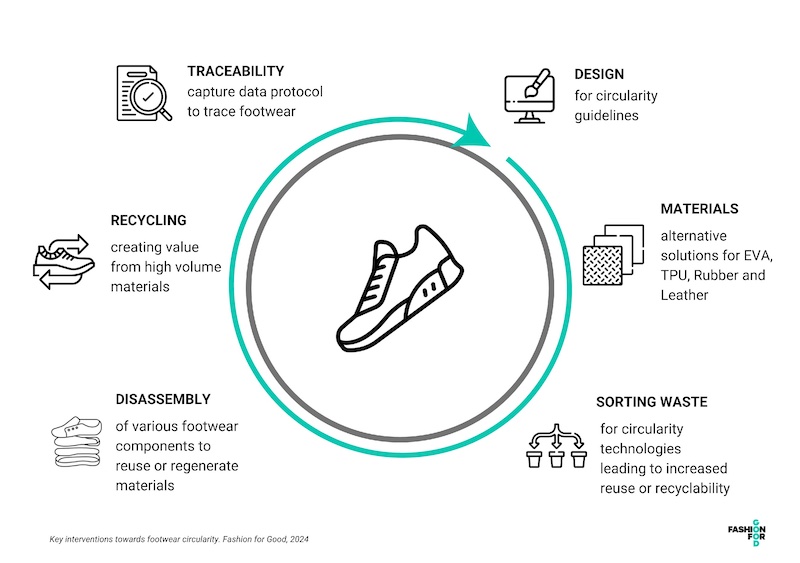
CREDIT: Fashion for Good


These workstreams include:

Materials - Scouting and validating sustainable alternatives for footwear materials including TPU, PU, EVA, leather, and rubber

Design - Defining circular design in the footwear space and collectively driving guidelines to build a circular infrastructure

End of Use: Sorting, Disassembly, & Recycling - Developing a comprehensive data set on post-consumer footwear waste flows, including (non-)rewearable fractions, volumes, construction and composition. As well as scouting and validating solutions for repair, end of use, disassembly and recycling of footwear

Traceability - Laying the foundation by amalgamating a footwear traceability data protocol to build traceability for evidence to substantiate sustainability claims

This initiative will leverage Fashion for Good’s extensive experience in orchestrating multi stakeholder projects as well as driving innovation pipeline and validation work. Collaboration with ecosystem partners, including The Footwear Collective will align efforts to achieve impactful results. 

"Fashion for Good and our corporate partners, including adidas, recognize the urgent need to accelerate innovation in footwear sustainability. Over the past seven years, we have consistently broken norms across various segments and are now leveraging our expertise to radically reimagine footwear. By doubling down on our efforts, we aim to drive circularity and validate sustainable solutions in a segment ripe for disruption", says Katrin Ley, Managing Director, Fashion for Good.

“adidas has been a partner of Fashion for Good for over six years now. Through this partnership, we have collaborated on a number of different sustainable innovation initiatives that are benefitting the fashion industry. Now we want to build on this know-how and expand our focus into the Footwear space. Currently, there is a limited portfolio of low-impact materials which also meet the necessary performance requirements that are also scalable. We hope this initiative will help overcome some of these hurdles", says Sigrid Buehrle, SVP Product Operations, adidas.

Call for innovations

Fashion for Good is on the lookout for breakthrough sustainable solutions in the footwear sector that maintain performance and durability. If you have a relevant technology, whether you're an innovator, university, or established company, we invite you to apply by 20th September 2024.

Brands, manufacturers, and ecosystem partners interested in learning more or getting involved can contact us at: projects@fashionforgood.com.
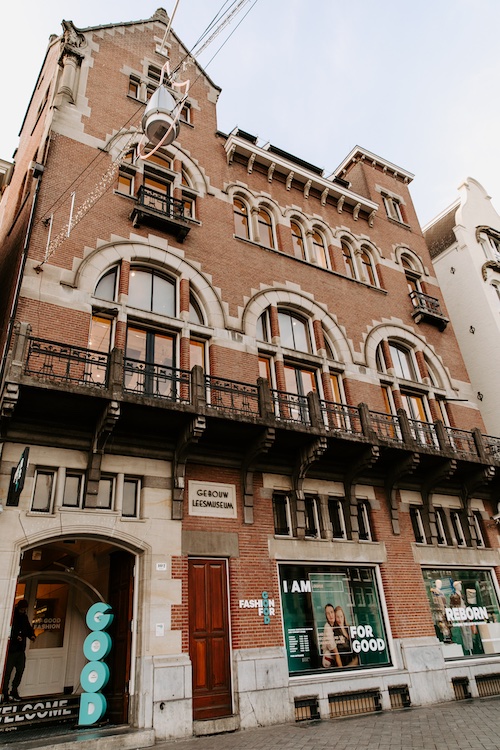
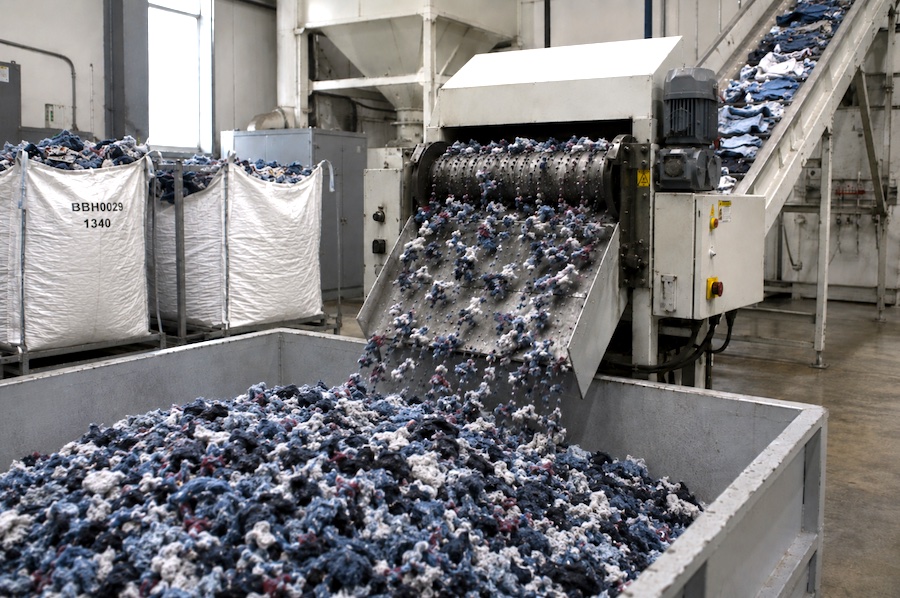
Fashion for Good HQ in Amsterdam, the Netherlands. CREDITS: Presstigieux


More News from Fashion for Good

#Recycled_Fibers

Advancing the future of stretch: Fashion for Good launches new project to validate bio-based and recycled elastane

Launched today, Stretching Circularity is a collaborative project initiated by Fashion for Good dedicated to accelerating the adoption of lower-impact elastane alternatives that are compatible with circular textile systems. By validating bio-based and recycled elastane solutions through pilot-scale testing and demonstrator garments, the initiative aims to remove one of the most significant technical barriers to a circular textile economy.

#Recycling / Circular Economy

Fashion for Good releases open-source blueprint for near-net-zero textile manufacturing

Fashion for Good launches the first open-source blueprint for near-net-zero textile manufacturing, tackling one of fashion’s biggest emissions hotspots. Developed under the Future Forward Factory project, the blueprint offers Tier 2 manufacturers in India five practical, financially viable pathways to reduce carbon emissions by up to 93%.

#New Materials

From premiums to parity: How Fashion for Good is rewriting the economics of new materials

Fashion for Good launches Price Parity Toolkit: developed with support from Laudes Foundation, Canopy and Finance Earth, the framework introduces an innovative financing approach (premium decoupling) to remove price premiums from the supply chain and unlock faster adoption of lower-impact materials across the industry.

#Natural Fibers

Fashion For Good launches “Beyond50 Denim” to address hemp integration barriers in global denim production

Fashion for Good, together with leading global brands BESTSELLER, C&A, PDS Limited, Reformation, and Target, launched Beyond50 Denim: Combining Cottonised Hemp and Green Chemistry, a project accelerating the use of hemp as an alternative to conventional cotton in denim. By combining two pioneering innovations (SEFF’s Nano-Pulse™ cottonised hemp fibres and FIBRE52™’s proprietary chemistry formulations with soft handfeel), the project seeks to demonstrate that hemp-based denim can match or even surpass cotton in both performance and appeal.

More News on Sustainability

#Sustainability

GOTS version 8.0 released: advanced supply chain accountability, from fibre to finished product

Global Standard is pleased to announce the release of GOTS Version 8.0, the latest update to the world's leading processing standard for organic textiles. The updated Standard strengthens requirements for air emissions and waste management, as well as criteria for product safety. It introduces new provisions on circularity, microfibre management and updates in residue testing. Version 8.0 also elevates due diligence obligations and formalises governance requirements, including ESG disclosure, anti-corruption policies and conflict-of-interest safeguards, to support credible, responsible business conduct.

#Sustainability

The nova-Institute establishes new Renewable Feedstock Department to lay the groundwork for industrial defossilisation

The transition from fossil-based to renewable carbon – sourced from biomass, CO₂ utilisation and recycling – is the cornerstone of a climate-neutral chemical industry. The nova-Institute’s new department is dedicated to providing the essential data, analyses and strategic roadmaps required to secure a reliable future feedstock supply and make this transition a commercial and ecological reality.

#Sustainability

Textile Exchange unveils commitment-based pathway for members to accelerate responsible raw material production

Textile Exchange has unveiled further details about its new membership structure, designed to guide the fashion, textile, and apparel industry in a collective course of action toward preferred production systems for raw materials and fibers.

#Textile chemistry

Jeanologia urges industry to accelerate PP Spray phase-out following ZDHC Watchlist update

Potassium permanganate has officially entered the Chemical Watchlist of the ZDHC Foundation, signaling increased scrutiny and potential phase-out of one of the most hazardous chemicals still used in denim finishing. The inclusion confirms an industry shift that Jeanologia anticipated more than a decade ago.

Latest News

#INDEX 2026

EDANA unveils nominees for INDEX™26 Awards: Highlighting the next generation of nonwoven excellence

EDANA is proud to unveil the highly anticipated nominees for the INDEX™26 Awards, the nonwoven industry’s highest accolade for technical and sustainable excellence. Out of a record-breaking field of entries, these finalists represent the cutting edge of material science—from bio-based hygiene fibers and PFAS-free protective textiles to revolutionary water-filtration machinery. Each nominee has been selected by a jury of industry experts for their ability to solve critical global challenges, including the transition to a circular economy and the pursuit of enhanced consumer performance.

#Raw Materials

Lenzing Group positions bio‑based materials as a strategic asset for Europe’s economic security

The Lenzing Group, a leading supplier of regenerated cellulose fibers for the textile and nonwovens industries, hosted a high‑level roundtable in Brussels to discuss how bio‑based materials can strengthen Europe’s economic security and support the shift toward a fossil‑free future. Organized in cooperation with Euractiv, the event brought together representatives of the European Commission, the UK Mission to the EU, academia, civil society, and industry.

#Natural Fibers

Beyond Cotton: Natural Fibres in the Spotlight at the Bremen Cotton Conference - Branded by DNFI

Climate targets, fragile supply chains, and rising regulatory requirements are fundamentally changing the perspective of the textile industry - the focus is increasingly shifting toward the base material. Not only cotton, but natural fibres are gaining significant importance: they stand out not only because of their outstanding functional properties, but also because they make a valuable contribution to the bioeconomy and responsible product development.

#Textiles & Apparel / Garment

Coats to showcase innovative reinforcement and filler materials for leather goods and accessories at APLF 2026

Coats, a world-class Tier 2 manufacturer and trusted partner for the apparel and footwear industries, will be promoting four advanced materials from its ‘Lifestyle Solutions’ portfolio at APLF 2026 in Hong Kong in March. Each innovation has been specifically engineered to help luxury and premium brands elevate the craft, durability, sustainability and creative expression required in the manufacturing of handbags, purses, and other high-end designer accessories.

TOP