[pageLogInLogOut]

#Textile chemistry

Conagen develops debondable adhesive for textiles and soft materials from natural bioingredients

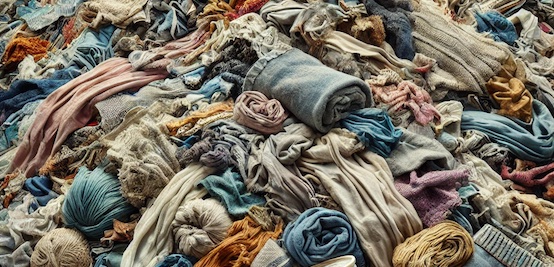
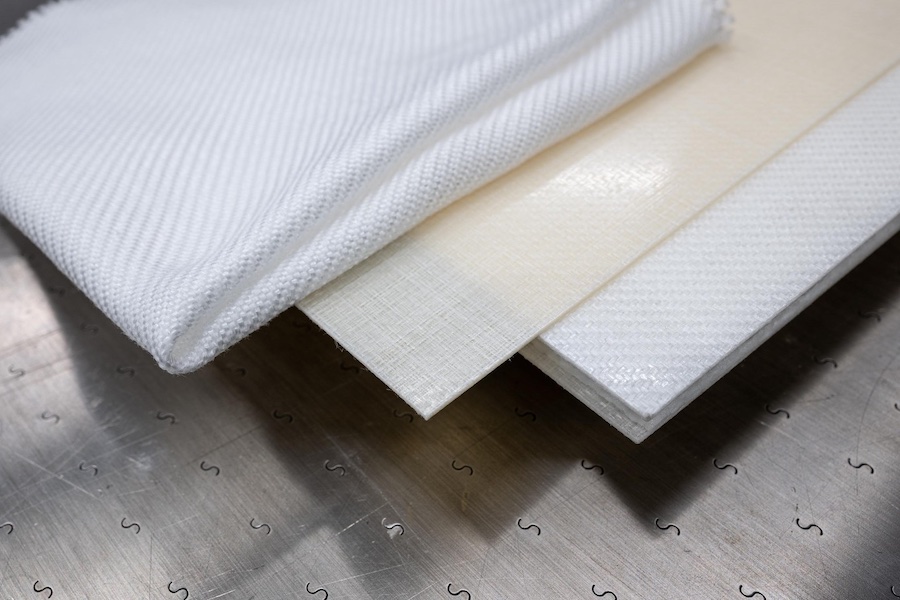
When more than 92 million tons of textile waste are landfilled annually, new solutions are needed to enable fabric reworking in manufacturing and recycling on a mass scale. Conagen, the biotechnology innovator, announced the development of a groundbreaking debondable textile adhesive made from high-performance materials sourced from sustainable and natural biomolecules.

Sustainable hot melt adhesives pave the way for textile reworking and recycling.

Conagen's debondable adhesive offers a major application in the realm of reworkability during clothing production. Traditionally, when mistakes occur during manufacturing, it can lead to material wastage and additional production costs.

The reworkability aspect of Conagen's adhesive presents a game-changing solution for the clothing industry. It allows for quick and efficient correction of errors without the need to discard and waste valuable materials. Adjustments can be made by simply debonding the adhesive and the fabric components can be seamlessly reworked, resulting in improved production efficiency, reduced material waste, and significant cost savings for manufacturers.

Moreover, debonding textile fabric plays a vital role in textile recycling by enabling efficient material separation, preserving material quality, expanding recycling opportunities, and advancing the goals of a circular economy.

Traditional adhesives used in garment manufacturing often create a permanent bond, making it challenging to separate fabric components during recycling. Conagen's debondable adhesive not only drives sustainability through fabric recycling but also offers a practical and economical solution for optimizing production processes in the clothing industry. The ability to debond and rework materials bring newfound flexibility and efficiency, benefiting manufacturers and the environment.

"Conagen's pioneering adhesive has unlocked new possibilities and opportunities. This groundbreaking development enables efficient material separation during reworking and recycling processes and preserves the integrity of textile fibers, ensuring their quality for future utilization," stated Sara Johnson, senior materials scientist. "With the introduction of Conagen's adhesive, we are taking a significant stride towards achieving a more sustainable and environmentally responsible textile industry."

Having previously created debondable adhesives for other sectors, such as appliances, smartphones, cars, and more, Conagen identified the significant benefits such an adhesive could bring to the textile and clothing industry and tailored a new product specifically to its needs.

Adhesives and tapes are commonly used today in garment manufacturing, either alone or in combination with stitching. This is particularly evident in the manufacturing of women's underwear, where up to six layers of material are often glued together to achieve the desired fit and comfort. It is essential to bring attention to these modern manufacturing methods as they reflect the evolution of textile production.


Conagen’s new adhesive offering provides strength comparable to existing fabric adhesives but with the added feature of controlled debondability at end-of-life. Inspired by self-healing materials, Conagen utilizes sustainable and natural ingredients to create high-strength debondable hot melt adhesives. Unlike traditional offerings, this new adhesive is designed with reversibility, exhibiting the strength of conventionally cured adhesives, with the added benefit of transitioning to a flowable material after heating.

Conagen’s high-strength debondable textile adhesive can be used for garments, but also extends to accessories and other soft goods applications. Furthermore, the technology is compatible with both natural and synthetic fibers and materials.

To develop sustainable debondable textile adhesives, Conagen leverages its precision fermentation technology, independent of plant source materials, to create more efficient and sustainable bio-based ingredients compared to chemically-synthesized versions.

"Conagen's fermentation technology is forging a path towards a more sustainable future, where the utilization of sustainable biocompounds and biomaterials takes center stage in propelling high-performance solutions that prioritize environmental consciousness,” said J. McNamara, vice president of chemical applications.

The seam tapes market stood at $128 million in 2020. It was projected to exhibit a CAGR of 6.9% between 2020 and 2025, making Conagen’s adhesive formulation lucrative for a supplier to distribute to clothing manufacturers.

Debondable adhesives have the potential to significantly impact the market by offering a more sustainable and efficient solution for fabric bonding. The ability to easily debond materials could lead to increased adoption of adhesive-based manufacturing techniques and open up new opportunities for textile reworking and recycling, thereby potentially expanding the market for debondable adhesive products.

Conagen’s hallmark in biotech specialty and industrial space lies in discovering applications from the platform of natural biocompounds and biomaterials, ushering in a new era of high-performing and sustainable materials.

“By harnessing the power of fermentation, Conagen is leading the charge in promoting greener alternatives and revolutionizing industries with its commitment to sustainability and innovation,” said McNamara.

Conagen's commitment to green chemicals and sustainability has been greatly reinforced by its strategic partnership with Sumitomo Chemical. The collaboration represents a major step forward in their shared vision of developing biosolutions for a more sustainable future.


More News from TEXDATA International

#Recycling / Circular Economy

textile.4U publishes special edition “Top 100 Textile Recycling Companies 2025”

With a comprehensive 176-page special edition, textile.4U is dedicating its latest issue entirely to one of the most dynamic and influential topics in today’s textile industry: textile recycling. The new issue, published exclusively in high-quality print, presents the Top 100 textile recycling companies researched and selected by TexData – organizations that already play a key role in the transition to circular textiles or are expected to have a significant impact in the near future.

#Recycling / Circular Economy

Responsible Textile Recovery Act of 2024 signed by Governor

Senator Josh Newman (D-Fullerton) is proud to announce that Senate Bill 707 (SB 707), the Responsible Textile Recovery Act of 2024, has been signed into law by the Governor of California, Gavin Newsom. This groundbreaking legislation establishes the country’s first Extended Producer Responsibility (EPR) textile recycling program, marking a significant step forward in the state’s efforts to combat waste and promote sustainability.

#Textiles & Apparel / Garment

Modtissimo promotes sustainability with 28 coordinates in the Green Circle

Modtissimo is proving more and more to be a textile and clothing show that delivers the latest innovations in the area of sustainability, with the iTechStyle Green Circle being the main showcase for companies' creations. In this 60+4 edition, taking place on 12 and 13 September, 28 coordinates will be exhibited in a section organised by CITEVE and curated by Paulo Gomes.

#Europe

The EU and Egypt team up to mobilise private sector investments at Investment Conference and sign a Memorandum of Understanding underpinning €1 billion in macro-financial assistance for Egypt

At the EU-Egypt Investment Conference, co-organised by the EU and the Government of Egypt on 29-30 June, the EU and Egypt are teaming up to intensify private sector investments in Egypt. They are also signing a Memorandum of Understanding (MoU) for the disbursement to Egypt of up to €1 billion in Macro-Financial Assistance.

More News on Textile chemistry

#Textile chemistry

PIGMENTURA by CHT wins the German Sustainability Award in the Products category

On Thursday, December 4, 2025, the German Sustainability Award was granted in Düsseldorf for the CHT Group's state-of-the-art pigment dyeing process PIGMENTURA.

#Textile chemistry

Archroma and Lilienweiss join forces to deliver faster and localized color management services in Europe

Archroma, a global leader in specialty chemicals focused on sustainable solutions, today announced its partnership with Lilienweiss, who will begin offering Archroma Color Management solutions across Europe starting January 2026.

#Man-Made Fibers

Ascend Performance Materials secures court approval for restructuring and appoints new CEO

Ascend Performance Materials has reached a major milestone in its Chapter 11 process: the U.S. Bankruptcy Court for the Southern District of Texas has confirmed the company’s Plan of Reorganization. Ascend expects to emerge from Chapter 11 by year’s end with a significantly improved capital structure. In parallel with the restructuring progress, Ascend announced a leadership change.

#Textile chemistry

Indorama Ventures ranks first globally in ChemScore 2025 for excellence in chemicals management and environmental performance

Indorama Ventures Public Company Limited (IVL), a global sustainable chemicals company, has been ranked first globally with a green card in ChemScore 2025, the internationally recognized benchmark developed by ChemSec, assessing the environmental performance and chemical management of the world’s 40 largest chemical companies. The company has consistently found itself in the top three ChemScore companies and scored twice as high on average as the Asia-based companies taken together.

Latest News

#Spinning

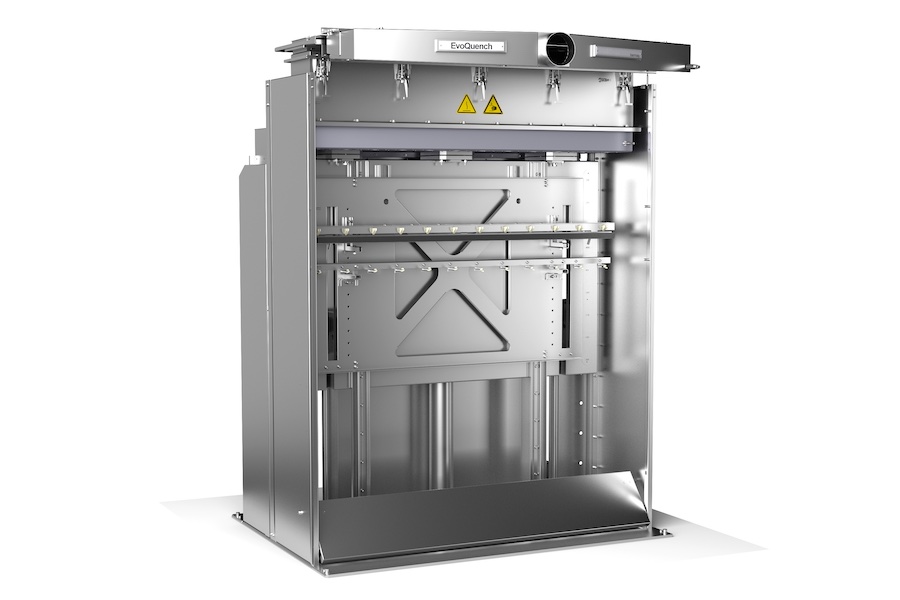
First PA66 spinning plant with EvoQuench successfully commissioned

With the successful commissioning of a multi-digit PA66 spinning line for microfiber yarns, Chinese textile company Shandong Nanshan Fashion Technology Co., Ltd. has added yarn production to its textile value chain.

#Knitting & Hosiery

SHIMA SEIKI returns to ShanghaiTex

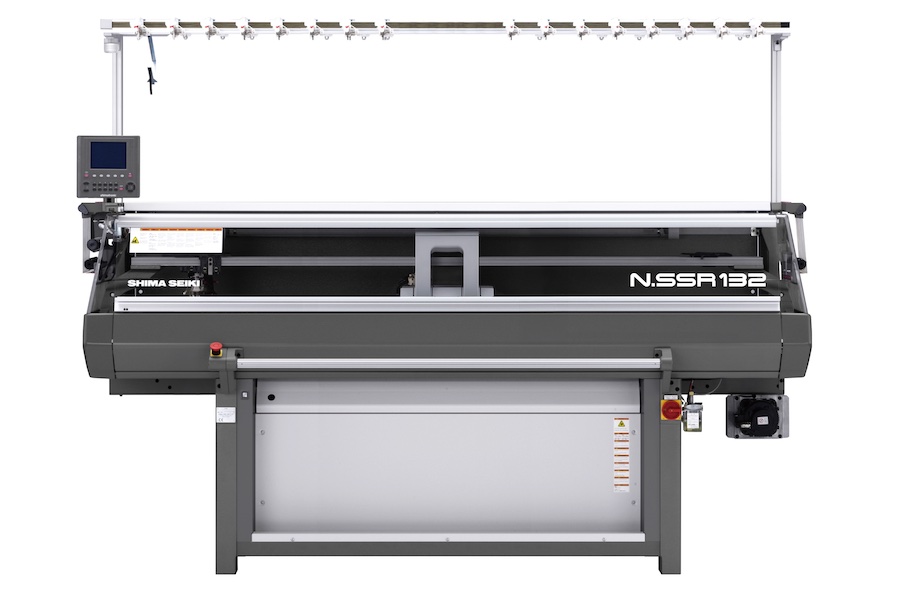
Leading flat knitting solutions provider SHIMA SEIKI MFG., LTD. of Wakayama, Japan, together with its Hong Kong and Chinese market subsidiary SHIMA SEIKI (HONG KONG) LTD., will exhibit at the ShanghaiTex 2025 exhibition (Booth No.: Hall N3, Booth A20) held in Shanghai, China this month. This marks the return of SHIMA SEIKI to ShanghaiTex after a 14-year hiatus, its last exhibit at the show having been in 2011.

#Research & Development

Fraunhofer CCPE presents the “Monomaterial Design Set” – Innovative solutions for circular product design

Composite materials made from different types of plastic often extend the lifetime of products but make recycling more difficult in the circular economy. That is why Fraunhofer CCPE has developed the “Monomaterial Design Set”. This new approach helps to reduce the variety of plastics used in durable products and offers circular solutions for designers and product developers.

#Man-Made Fibers

arena introduces renewable LYCRA® EcoMade fiber in its latest swimwear collection

Italian swimwear specialist arena has unveiled a new collection that brings sustainability and performance even closer together. Launched on December 4, the line features swimsuits made from recycled nylon and renewable LYCRA® EcoMade fiber — the first time the bio-based spandex has been used commercially in swimwear.

TOP