[pageLogInLogOut]

#Sustainability

OEKO-TEX® new regulations 2023
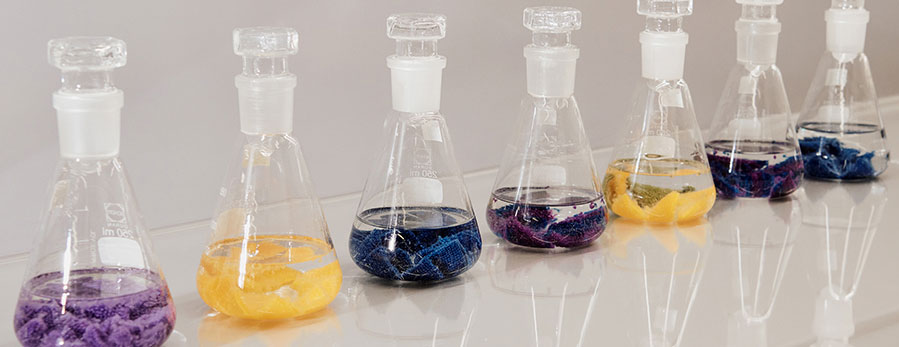
Photo credit: © OEKO-TEX®
Creating trust within the textile and leather industry and for its customers is the mission of OEKO-TEX®. Since trust is based on consistently high quality, the OEKO-TEX® Association is again publishing updates to the applicable test criteria, limit values and guidelines for its certifications.

The new regulations will finally come into force in Q1 2023, after a transition period. Other introductions include integration of the BHive® app from GoBlu into STeP, which will enable certified production companies to check sustainability requirements and chemical management in global supply chains. The new OEKO-TEX® ORGANIC COTTON certification will verify reliable labelling of organic cotton textiles starting April 2023. In addition, OEKO-TEX® has issued a general ban on the use of perfluorinated and polyfluorinated alkyl substances (PFAS/PFC) in textiles, leather and footwear for the STANDARD 100, LEATHER STANDARD and ECO PASSPORT certifications. Further changes to OEKO-TEX® ECO PASSPORT certification will make the previously voluntary self-assessment mandatory for all production sites from April 2023.

New integration: OEKO-TEX® STeP goes BHive®

Cooperation and exchange with experts from the textile and leather industry are of great importance to the OEKO-TEX® Association. An important partnership was created with sustainability accelerator GoBlu International Ltd.

The BHive® app, developed by GoBlu, enables manufacturers to collect information on all chemical products used on site, via smartphone, and determine which products meet the sustainability requirements of different brands and retailers. All information is automatically recorded in a chemical inventory so that brands can directly access transparent and precise data. Starting April 2023, OEKO-TEX® STeP customers can utilize this comprehensive chemical database to reduce labor, time and costs. The intelligent system also aligns compliance with recognized industry standards such as the STeP and ZDHC MRSLs.

New certification: OEKO-TEX® ORGANIC COTTON

Starting April 2023, the new OEKO-TEX® ORGANIC COTTON certification will focus on reliable labelling of organic cotton textiles. "More and more consumers prefer sustainable textiles, and demand for organic cotton is growing rapidly," said OEKO-TEX® Secretary General Georg Dieners, "But how reliable is their labelling?" In addition to the qualitative DNA analysis of the sample material (i.e., Does a product contain genetically modified cotton, yes or no?), a second step involves quantification - determining the proportion of genetically modified cotton in a cotton product. The aim is not only to check production, but to make the raw materials traceable through the supply chain. Georg Dieners explains: "What's new is that we will start checking for genetically modified cotton at the beginning of the supply chain - at the ginning stage when the cotton fibres are separated from the seed. Then we can follow the flow of goods through all stages."


OEKO-TEX® ECO PASSPORT: Self-assessment to be mandatory in future plus adaptation to ZDHC update

OEKO-TEX® ECO PASSPORT certification has consisted of a mandatory CAS number screening and laboratory analysis. The self-assessment and the on-site visit to customers were voluntary. While the on-site visit will remain voluntary until further notice, the self-assessment will become mandatory for all customers' production sites from April 2023. All certifications issued after April 1, 2023, must be accompanied by a valid self-assessment. For existing customers, there is a possible transition period. OEKO-TEX® has issued a general ban on the use of perfluorinated and polyfluorinated alkyl substances (PFAS/PFC) in textiles, leather and footwear for the STANDARD 100, LEATHER STANDARD and ECO PASSPORT certifications. This is in coordination with the ZDHC Manufacturing Restricted Substances List (ZDHC MRSL) version 3.0 and its new Conformance Guidance 2.0. ECO PASSPORT will comply with these requirements in February 2023 to ensure a smooth transition for all customers.

Updates to STANDARD 100, LEATHER STANDARD and ECO PASSPORT limit value catalogues

Additional pesticides have been added to STANDARD 100, LEATHER STANDARD and ECO PASSPORT certifications, such as chlorothalonil in Annex 4 and 6, which were previously under observation. Also, three substances have been reclassified as Substances of Very High Concern (SVHC) that may have serious effects on human health and the environment. In general, having strict requirements for certain substances reduces exposure to the environment, workers and consumers.

New under observation

In 2023, OEKO-TEX® will continue to monitor various substances based on the latest scientific findings and conformity with relevant specifications. This primarily concerns the antioxidant drometrizole and the chemical compound N-ethyl-2-pyrrolidone.

The 2023 new regulations are available in detail for OEKO-TEX® products on the website www.oeko-tex.com/news.

In addition, a webinar with detailed information is available to all interested parties on 16. January 2023. Register at oeko-tex.com.



More News from Hohenstein Institute

#Sustainability

A new standard to combat plastic waste in forests

With DIN SPEC 35808 “Tree Shelter for Forestry Applications,” the testing and research service provider Hohenstein, in collaboration with Rottenburg University of Forestry, as well as forestry authorities and industry partners, has established a clear framework for bio-based and fully biodegradable tree shelters. The pre-standard defines requirements and practical testing methods designed to reduce plastic waste in forests and strengthen the long-term protection of soil and the environment.

#Research & Development

Hohenstein publishes 2025 Sustainability Report

The testing and research service provider Hohenstein has published its latest sustainability report, outlining key progress and strategic initiatives. The report focuses on ambitious CO₂ reduction targets, the company’s new mission statement and the systematic expansion of sustainable services for customers worldwide.

#Research & Development

New DIN SPEC assesses environmental impact of textile fragments in soil

Textile products made from synthetic fibres, finished fabrics or dyed materials release fibre fragments into the environment at every stage of their life cycle. With the new DIN SPEC 19296, Hohenstein has developed a standardised testing method to analyse how these fragments behave in soil under natural conditions. Until now, little was known about their environmental behaviour or potential ecological effects once released.

#Research & Development

Testing and research laboratory ensures safe and more sustainable products worldwide

For 80 years, Hohenstein has stood for independent testing, scientific expertise and practical solutions. Today, the testing and research service provider supports manufacturers and brands worldwide in making textiles, hardlines and medical devices safe, more sustainable and market-ready – thereby building trust among consumers. With an international presence and interdisciplinary expertise, Hohenstein supports its customers from production through to market launch, helping them navigate an environment of growing regulatory and societal demands.

More News on Sustainability

#Denim

Denim moves towards sustainability

EIM (Environmental Impact Measurement), the global reference platform for measuring the environmental impact of garment finishing, presents the second edition of its annual report Denim Industry Progress & Insights 2025. The study analyses over 100,000 real denim finishing processes, providing an accurate and up-to-date view of the industry’s evolution towards more sustainable models.

#Recycling / Circular Economy

Europe’s textile future at a turning point: New 2030 Circularity Blueprint aims to scale recycling and unlock investment opportunities

The EU textile system is at a critical crossroads. Today, less than 1% of discarded garments are recycled into new garments, despite EU-wide obligations for separate collection. In response, Global Fashion Agenda (GFA) is launching the 2030 Circularity Blueprint, in partnership with ReHubs. This ambitious initiative is designed to support the transformation of the EU textile ecosystem to advance textile-to-textile recycling and drive the transition to a circular economy.

#Sustainability

Number of GOTS-certified facilities grow 15% globally as demand for credible sustainability standards continues to strengthen

Global Organic Textile Standard (GOTS) certification continued to grow in 2025, with nearly 18,000 certified facilities worldwide, despite ongoing geopolitical uncertainty and rapidly evolving regulatory requirements across global textile supply chains.

#Sustainability

bluesign technologies introduces bluepass

bluesign technologies ag (www.bluesign.com) today announces the launch of bluepass, a new certification mark and product labeling system created to deliver clear, substantiated, and verifiable sustainability claims at scale.

Latest News

#INDEX 2026

ANDRITZ at INDEX ’26: Driving sustainability with next-generation nonwoven technologies

From May 19-22, ANDRITZ Nonwoven & Textile is presenting its innovative solutions for the nonwoven & textile industry in Geneva, Switzerland. ANDRITZ will focus on technologies for sustainable and durable nonwovens, converting, sustainable fiber processes, textile recycling, and life-cycle services on booth 2114 in hall 02.

#INDEX 2026

INDEX™26: World’s leading nonwovens exhibition presents groundbreaking product launches, exclusive seminars and immersive experiences

From 19 to 22 May 2026, 620 exhibitors from 44 countries will gather in Geneva at Palexpo for INDEX™26. The exhibition aims to demonstrate how the future of technical materials will increasingly be shaped by collaborative supply chains and integrated innovation across the nonwovens industry. This year’s edition focuses not only on individual technological advances, but also on how cooperation throughout the value chain can enhance the performance, sustainability and value of nonwoven solutions.

#INDEX 2026

The LYCRA Company launches LYCRA® ADAPTIV fiber for nonwovens, advancing comfort and fit in disposable hygiene at INDEX™ 26

The LYCRA Company, a leader in innovative and sustainable fibers for apparel and personal care, today announced the official global launch of LYCRA® ADAPTIV fiber for nonwovens at INDEX™ 26, in Geneva, Switzerland, May 19–22. This breakthrough stretch fiber, already trusted by leading global apparel brands, now ushers in a new era of comfort, fit, and performance for baby diapers, disposable hygiene products, adult incontinence, and feminine care.

#INDEX 2026

Innovations for today – solutions for tomorrow: Trützschler Nonwovens at INDEX™ 2026

From 19 to 22 May, Trützschler Nonwovens will present itself at booth 1641 as a long-term partner to its customers. The focus will be on new products for all nonwoven processes, further developments of the digital working environment T‑ONE, and an expanded service portfolio.

TOP