#Recycling / Circular Economy
Europe’s textile future at a turning point: New 2030 Circularity Blueprint aims to scale recycling and unlock investment opportunities
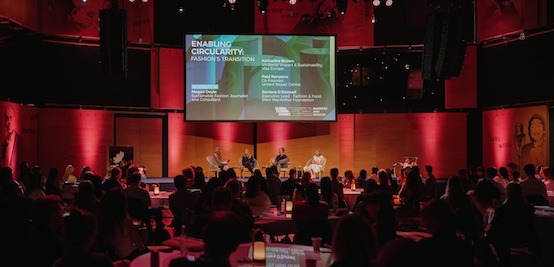
The Blueprint will be officially presented at the Global Fashion Summit: Copenhagen Edition on 6 May - one of the world’s leading forums for sustainability in fashion - bringing together industry leaders, policymakers, and innovators to accelerate collective action.
Building on the ambitions of GFA’s 2020 Circular Fashion System Commitment and grounded in robust industry and value chain engagement, the Blueprint identifies and addresses the systemic fragmentation that has long hindered progress. It introduces a coordinated roadmap to close collection gaps, align stakeholders, and unlock the estimated €8–11 billion Capital Expenditure required to build Europe’s textile-to-textile recycling infrastructure.
Accelerating system-level change
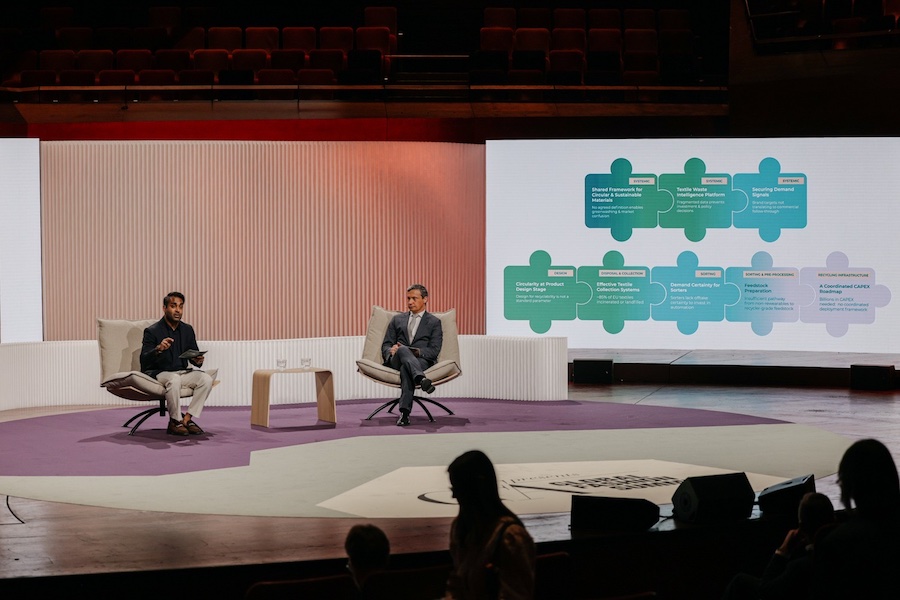
The 2030 Circularity Blueprint sets out a clear implementation pathway - presenting eight interconnected intervention areas that have been designed to address systemic barriers in a coordinated way:
Systemic Conditions:
- Shared Framework for Circular & Sustainable Materials
- Textile Waste Intelligence Platform
- Demand Signal Initiative: Long-Term Offtake Commitments
Value Chain Interventions
- Designing for the Loop: Circularity at Product Design Stage
- Closing the Collection Gap: Effective Textile Collection Systems
- Closing the Sorting Investment Gap: Demand Certainty for Sorters
- Pre-Sorting & Feedstock Preparation: Regional Hub Infrastructure
- Recycling Infrastructure at Scale: A Coordinated CAPEX Roadmap
Learn more about the intervention areas here:
https://globalfashionagenda.org/2030-circularity-blueprint/
When implemented correctly, the eight interventions are designed to create a system that turns voluntary ambition into investment-grade infrastructure and scalable industrial capacity by 2030, with the ambition to reach a target of 2.7 million tonnes of textile-to-textile recycling capacity by 2035.
As part of the 2030 Circularity Blueprint, GFA and ReHubs will bring two collaborative programmes to life. The first, led by ReHubs, centres on the 'Textile Waste Intelligence Platform'. The second tackles the critical challenge of closing the collection and sorting gap.
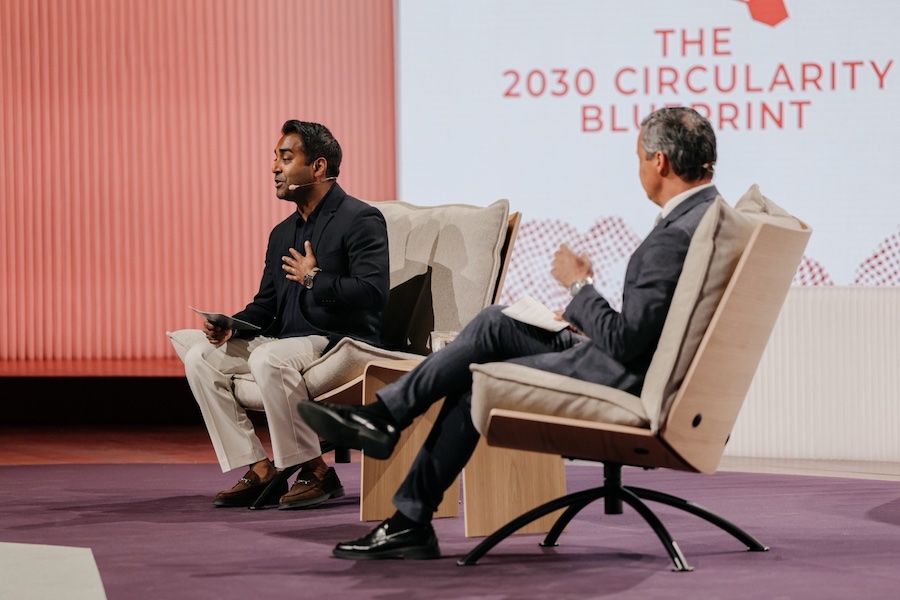
A collaborative path forward
The 2030 Circularity Blueprint is designed as a dynamic, collaborative ecosystem, bringing together stakeholders across the value chain to co-create solutions, share ownership, and track progress. It will require coordinated, cohesive effort from all stakeholders - across brands, sorters, recyclers, infrastructure operators, and policymakers - working in alignment rather than in parallel. The intervention areas will be advanced in partnership with other organisations ready to lead and invest.
Call to Action:
GFA and ReHubs are actively seeking funding, partnerships, and contributions to bring the full 2030 Circularity Blueprint to life. Organisations are invited to lead and support the remaining intervention areas critical to achieving Europe’s circular textile ambitions.
To further catalyse progress, GFA is issuing a Call to Action for a Targeted Policy Incentive Framework, with concrete suggestions on how to unlock the secondary raw materials market in the EU. While demand for recycled feedstock is rising, cost remains a key barrier: recycled inputs currently command a premium ranging from approximately 20% to as much as double the price of virgin materials. Addressing this will require stronger demand through public procurement, more harmonised and fit-for-purpose Extended Producer Responsibility (EPR) systems across countries, clearer requirements for the use of recycled materials, and increased investment in recycling infrastructure.
Recognising that scaling circular textiles requires aligning economic drivers with policy ambition, the proposal sets out targeted incentive measures across EU legislative and financial instruments. It urges the European Commission to integrate these across existing and forthcoming frameworks, while encouraging Member States to operationalise them at national level, ensuring that circular solutions can compete and scale in practice.
Federica Marchionni, CEO, GFA, says: "The vision for a textile circular economy is clear, and innovation is gaining ground. Yet progress is stalled by supply–demand deadlocks, compounded by a fragmented landscape where initiatives and stakeholders operate in silos, often unaware of their interdependence. Furthermore, without precise incentives to align efforts and investment, progress cannot move at the pace required.
Evan Wiener, Interim COO and Board Advisor to ReHubs, says: “Unlocking textile circularity at scale requires the full value chain to move together. ReHubs brings leading organisations from across the textile recycling value chain to the same table to align interests, orchestrate investment, and turn fragmented efforts into a functioning ecosystem. This collaborative initiative directly supports our strategy to industrialise textile-to-textile recycling and break the supply–demand deadlock at scale.”
The 2030 Circularity Blueprint aims to change that—identifying key bottlenecks and leveraging interconnections to unlock the potential of the circular value chain: turning ambition into tangible progress.
View the Call to Action for a Targeted Policy Incentive Framework here:
https://globalfashionagenda.org/resource/gfas-call-to-action/