[pageLogInLogOut]

#Research & Development

Hohenstein: 80 Years of Setting Standards

Testing and research laboratory ensures safe and more sustainable products worldwide
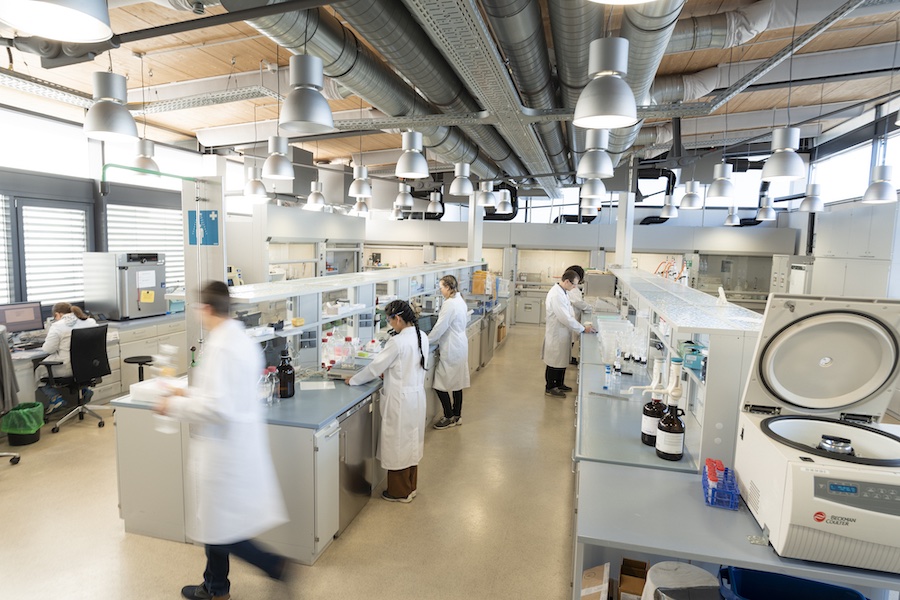
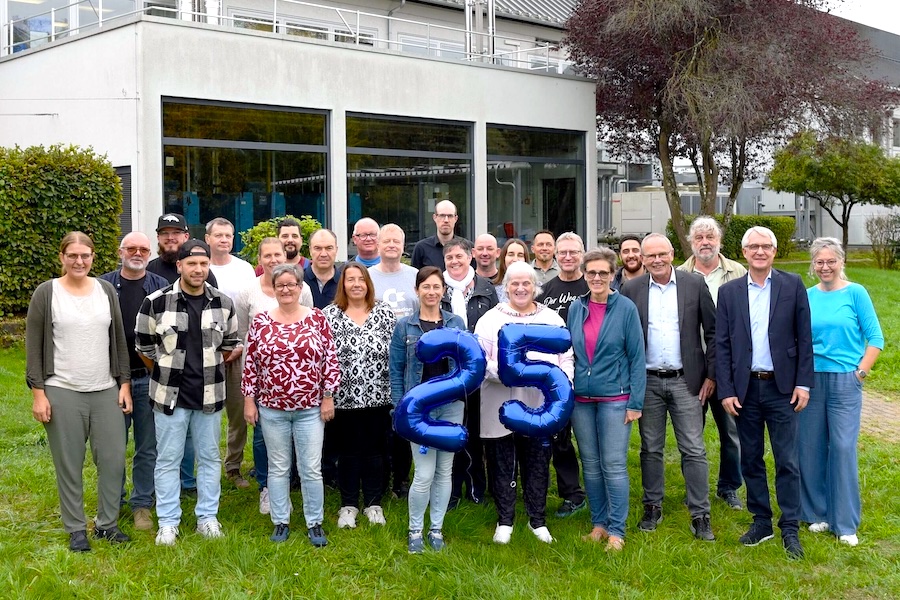
With a global network in more than 50 countries, modern laboratories and short turnaround times, Hohenstein supports companies in bringing textiles, hardlines and medical devices to market safely, more sustainably and reliably. © Hohenstein
For 80 years, Hohenstein has stood for independent testing, scientific expertise and practical solutions. Today, the testing and research service provider supports manufacturers and brands worldwide in making textiles, hardlines and medical devices safe, more sustainable and market-ready – thereby building trust among consumers. With an international presence and interdisciplinary expertise, Hohenstein supports its customers from production through to market launch, helping them navigate an environment of growing regulatory and societal demands.


Pioneers of Textile Safety

Hohenstein was founded in 1946 by Otto Mecheels as a research institute for the textile industry and clothing physiology. From the very beginning, the institute combined scientific research with practical application – an approach that continues to define Hohenstein to this day. Early series measurements for body-size charts laid the foundation for the company’s fit expertise and knowledge transfer played a central role from the start, with research, teaching and testing closely interlinked.
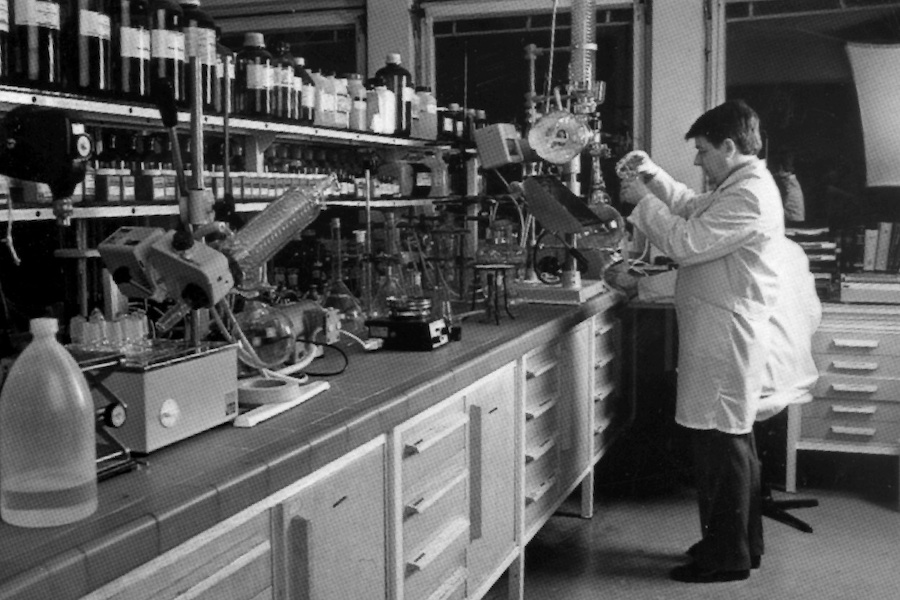
Founded in 1946 by Otto Mecheels as a research institute for the textile industry and clothing physiology, Hohenstein has combined scientific research with practical application from the very beginning. © Hohenstein


In 1962, Jürgen Mecheels took over the management of the institute. During this period, Hohenstein developed new testing methods and became a central hub connecting textiles, microbiology and consumer protection. A major milestone followed in 1992, when Hohenstein, as a founding member of OEKO-TEX®, helped set important benchmarks for safe and more sustainable textiles.
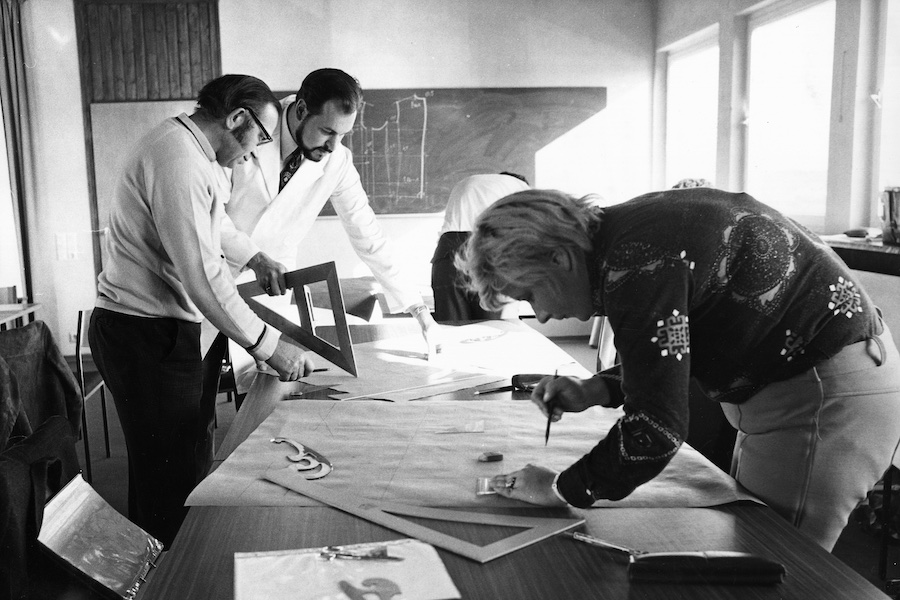
With its first series measurements for body size charts, Hohenstein laid the foundation for its fit expertise. Through pattern services, fit testing and sizing solutions, the company ensures that garments achieve an optimal fit. © Hohenstein


A Period of Dynamic Change

In 1995, under the leadership of Stefan Mecheels, Hohenstein began its consistent international expansion. New laboratories in Hong Kong, India and Bangladesh extended the global network. At the same time, the Hohenstein Academy evolved into an established provider of professional training and education. Today, the company is managed by two external CEOs, supported by a family advisory board. “In 2025, I deliberately entrusted the management of Hohenstein to people whom my family and I deeply trust,” explains Stefan Mecheels. “Even after 80 years, Hohenstein therefore stands for continuity and responsibility – while at the same time embracing fresh momentum and innovation.”

Diversification for Global Success

Under the leadership of Stefan Droste and Timo Hammer, Hohenstein has strategically expanded its portfolio. Alongside textiles, hardlines and medical devices have become key areas of Hohenstein’s testing expertise. In the modern hardlines laboratories, products such as toys, frying pans, and suitcases are tested. The medical devices division is certified according to recognized GLP standards (Good Laboratory Practice) and underscores Hohenstein’s high quality standards.

The portfolio is further complemented by the Apparel Fit Solutions division, which combines innovative 3D technologies with classical expertise to provide customers with optimal fit and perfect cut. In this way, Hohenstein individually supports its clients from testing through certification to market launch – ensuring safe and reliable products worldwide. “For us, excellence means more than simply meeting standards,” says CEO Stefan Droste. “Our testing and certifications build trust – both among our partners and among the people who use the products.” Accordingly, Hohenstein is actively involved in the OEKO-TEX® Association, standardization committees, the development of new testing methods, and the research of sustainable processes.

Hohenstein’s Apparel Fit Solutions team combines years of fit and pattern expertise with cutting-edge 3D technology to support clients individually. © Hohenstein


Setting New Standards

With a global network in more than 50 countries, state-of-the-art laboratories and short turnaround times, Hohenstein will continue to support companies in bringing products to market reliably, more sustainably and safely. Today, more than 1,500 employees work for the testing and research service provider worldwide. “We are continuously evolving – both technologically and as an organization,” emphasizes CEO Timo Hammer. “Care and integrity form the foundation of our daily work. Our success in the medical devices and hardlines sectors demonstrates the value of our interdisciplinary expertise. Our ambition goes beyond technical excellence: we take responsibility – for tested products, for their users and for a future that concerns us all.”

Hohenstein at a Glance

  • 1,500+ employees worldwide
  • Accredited testing laboratories in 6 countries
  • 1992 Co-founder of OEKO-TEX®
  • Founded in 1946
  • 650+ employees at headquarters in Germany
  • Representative offices in 50+ countries
  • 10.000+ OEKO-TEX® MADE IN GREEN Labels
  • 80 years of expertise


More News from Hohenstein Institute

#Textiles & Apparel / Garment

Global size study for brands and retailers to optimize fit and market coverage

Hohenstein Apparel Fit Solutions, a global leader in apparel fit, sizing, and product development, today announces the launch of its Global Size Study, a new initiative designed to equip brands to better understand and serve their target consumers through more accurate, market-relevant sizing.

#Sustainability

A new standard to combat plastic waste in forests

With DIN SPEC 35808 “Tree Shelter for Forestry Applications,” the testing and research service provider Hohenstein, in collaboration with Rottenburg University of Forestry, as well as forestry authorities and industry partners, has established a clear framework for bio-based and fully biodegradable tree shelters. The pre-standard defines requirements and practical testing methods designed to reduce plastic waste in forests and strengthen the long-term protection of soil and the environment.

#Research & Development

Hohenstein publishes 2025 Sustainability Report

The testing and research service provider Hohenstein has published its latest sustainability report, outlining key progress and strategic initiatives. The report focuses on ambitious CO₂ reduction targets, the company’s new mission statement and the systematic expansion of sustainable services for customers worldwide.

#Research & Development

New DIN SPEC assesses environmental impact of textile fragments in soil

Textile products made from synthetic fibres, finished fabrics or dyed materials release fibre fragments into the environment at every stage of their life cycle. With the new DIN SPEC 19296, Hohenstein has developed a standardised testing method to analyse how these fragments behave in soil under natural conditions. Until now, little was known about their environmental behaviour or potential ecological effects once released.

More News on Research & Development

#Research & Development

From smart jackets to laser technology: Mona Neubaur explores Textile Factory 7.0

As part of her summer tour, North Rhine-Westphalia’s Minister for Economic Affairs and Climate Action, Mona Neubaur, visited Textilfabrik 7.0 in Mönchengladbach to experience the project’s innovations first-hand. Under the motto “smart and clean”, the visit focused on innovative technologies and sustainable alternatives for textile production - from smart jackets to the decolourisation of textiles using fungal cultures.

#Research & Development

MELANGE starts with a co-creative design workshop at Aalto University to shape the visual identity of this new project transforming colouration in textiles

Over the next three years, MELANGE will lower the environmental impact of interior textile production by moving colour design to the beginning of the manufacturing process. This Horizon Europe project officially started on 1 August 2026, and will be publicly launched on 27 August 2026.

#Research & Development

Outdoor Industry Association completes Clean Heat CoLab initiative

The Outdoor Industry Association (OIA) has completed its multi-year Clean Heat CoLab initiative, bringing together outdoor brands and technology experts to accelerate the adoption of electrified process heating in textile manufacturing. The collaboration focused on reducing emissions from thermal processes such as dyeing, washing and finishing, which remain among the most carbon-intensive stages of textile production.

#Research & Development

Europe is committed to recycling end-of-life wind turbine blades

Starting in 2026, Europe’s wind energy industry has committed itself to ensuring that wind turbine blades do not end up in landfills once they reach the end of their service life. The EU-funded research project REWIND is exploring ways to reuse this composite waste. The German Institutes of Textile and Fiber Research Denkendorf (DITF) are one of 13 project partners from seven countries.

Latest News

#Raw Materials

Global cotton production projected to outpace consumption, but risks remain

Global cotton production is projected to reach 26.2 million tonnes in the 2026/27 season, marginally outpacing estimated consumption of 25.9 million tonnes. However, early-season production risks — including weather volatility and pest pressures — could narrow that buffer as the crop progresses, according to the September 2026 issue of Cotton This Month, published by the International Cotton Advisory Committee (ICAC).

#Europe

European textile industry calls for €10 handling fee on ultra-fast-fashion imports

The introduction of the €3 customs duty on low-value imports marks an important milestone in Europe’s efforts to address the challenges created by the rapid growth of ultra-fast-fashion imports. Together with the abolition of the €150 customs duty exemption, it demonstrates that policymakers are willing to act when market distortions become impossible to ignore. However, the European textile and clothing industry considers this a first step rather than the final destination.

#CINTE Techtextil China 2026

Cinte Techtextil China 2026 has opened today, bringing global innovations and resources to Shanghai

As Asia’s premier platform catering to the evolving needs in technical textiles and nonwovens, Cinte Techtextil China has opened today at the Shanghai New International Expo Centre, gathering over 300 exhibitors from 15 countries and regions. Across Halls W3 to W5, this edition will create chances for fast-growing sectors and emerging trends – such as Mobiltech, Medtech & Protech, Indutech and more. The curated zones, pavilions, and fringe programme are designed to better connect exhibitors with targeted buyers from across China, Asia-Pacific, and further afield. Meanwhile, the Association Village will gather international industry associations to foster even more global collaboration.

#Natural Fibers

Global garment trade nears $550 billion as competition intensifies

The global garment industry has undergone a dramatic transformation over the past two decades, with knit and woven garments together accounting for nearly 60% of world textile exports in 2025, according to the August 2026 issue of The Textiles Observer, a free publication from the International Cotton Advisory Committee (ICAC).

TOP