[pageLogInLogOut]

#Sustainability

Lenzing recognized for the second year in a row as global sustainable leader with triple “A” score by CDP

© 2022 Lenzing
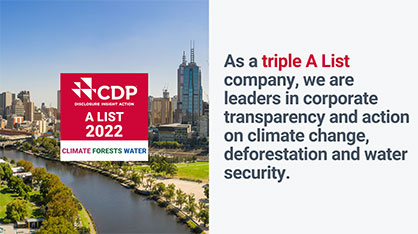
The Lenzing Group, the world’s leading supplier of sustainably produced specialty fibers, has been recognized for leadership in corporate transparency and performance on climate change, forests and water security by global environmental non-profit CDP, securing a place on its annual ”A List”.
  • Lenzing one of only 12 companies worldwide that were recognized with an outstanding triple ”A”
  • Environmental leadership in climate change, water security and forests
  • CDP as the gold standard of environmental reporting


Through significant demonstrable action on reducing climate impacts, water security risks and deforestation, Lenzing is leading on corporate environmental ambition, action and transparency worldwide. The world’s economy looks to CDP as the gold standard of environmental reporting with the richest and most comprehensive dataset on corporate and city action. In 2022, over 680 investors with over USD 130 trillion in assets and 280 major purchasers with USD 6.4 trillion in procurement spend requested companies to disclose data on environmental impacts, risks and opportunities through CDP’s platform. A record-breaking 18,700 companies responded.

”We are very proud that we have now been awarded a triple ’A‘ rating by CDP for the second time in a row. The rating shows that we are already on a very good path with our sustainability strategy and that the steps we are taking as the Lenzing Group to continuously improve and find solutions to the most pressing problems of our time are being seen and honored,” says Stephan Sielaff, CEO of the Lenzing Group. ”We are working hard to make our industries even more sustainable and to drive the transformation of the textile business model from linear to circular. Further efforts from the entire industry are needed for this transformation to take place“, Sielaff said.

“CDP saw nearly 20,000 companies disclose environmental data this year, including 70 per cent of European companies by market value. COP27 showed the need for transformational change is more critical than ever if we are to limit warming to 1.5 °C. I’m therefore delighted that European companies make up nearly half of all ’A List‘ companies around the world, including 15 with two A scores and eight with triple ’A‘ scores for climate change, forests, and water security leadership. We must cut emissions by half and eliminate deforestation by 2030, alongside achieving water security on the same timescale – there is no route to 1.5°C without nature.


With the EU’s ground-breaking new reporting regulation, the CSRD, now agreed, CDP ’A List‘ companies are showing they are ahead of the game – taking clear action to reduce emissions and to address environmental impacts throughout their value chains. This is the type of environmental transparency and action we need economy-wide to prevent ecological collapse’’, says Maxfield Weiss, Executive Director CDP Europe.

Efficient use of resources

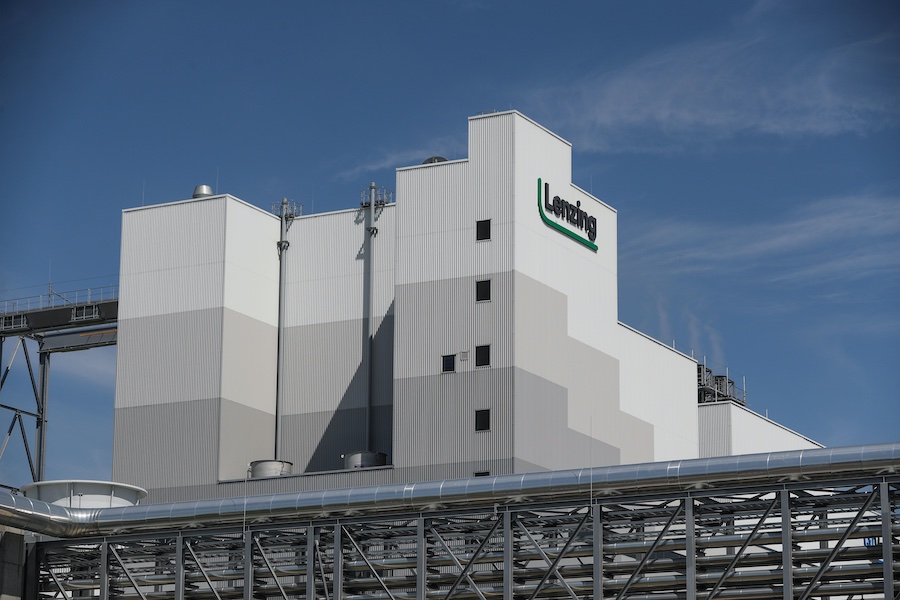
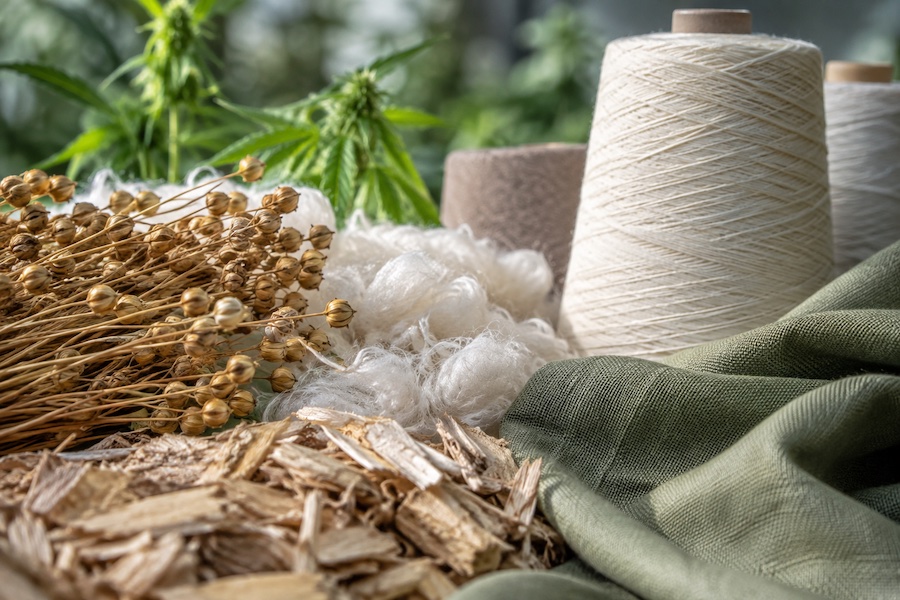
Wood, the pulp derived from it and water are some of the most important raw materials for the sustainable production of cellulosic fibers from Lenzing and also part of the most important focus areas of the Lenzing Group’s sustainability strategy. Lenzing assumes responsibility by striving for sustainable procurement based on environmental certificates and responsible and efficient use of these valuable resources. Lenzing sources wood and dissolving pulp from sustainably managed forests and plantations and not from ancient, protected or endangered forests. Lenzing’s biorefinery process ensures that 100 percent of wood constituents are used: to produce dissolving wood pulp for fiber production, biorefinery products, and bioenergy.
© 2022 CDP
© 2022 CDP


With its REFIBRA™ and Eco Cycle technologies, Lenzing offers solutions for transforming the textile and nonwovens industries towards a circular economy. In line with its vision for the circular economy, “We give waste a new life. Every day.” Lenzing is driving the industry toward a full circular economy by striving to give waste a new life in all aspects of its core business and developing circular solutions together with potential partners inside and outside the current value chain.

Transparency and traceability of supply chains

Transparency forms the basis for credible sustainability performance and also creates trust among customers and consumers. That is why Lenzing is committed to promoting digital solutions throughout the supply chain and improving transparency and traceability in the textile and nonwovens industry. This is crucial as only an honest engagement with the industry can ensure traceability that verifies the origin of Lenzing fibers throughout the supply chain, all the way to the finished garment. Lenzing’s fiber identification system and e-branding service form the basis of the overall approach to transparency, while the TextileGenesis™ blockchain project leverages data to enable maximum traceability. This demonstrates Lenzing’s leadership in a very opaque industry and offers products with better sustainability credentials. A more comprehensive understanding of Lenzing’s suppliers as well as downstream customers is equally critical to minimizing the Lenzing Group’s overall environmental impact, leading the company on the right path to achieve a low-emission and CO2 neutral footprint by 2050. Close digital connections throughout the network help to close loops in an efficient and holistic way and facilitate the transition from a linear to a circular supply chain.


More News from Lenzing

#Man-Made Fibers

Lenzing AG to become majority owner of TreeToTextile AB and accelerates industrialization of new fibers

The Lenzing Group is taking another strategic milestone by acquiring a controlling majority in the Swedish innovation company TreeToTextile AB. This step strengthens Lenzing’s position as a leading provider of sustainable, wood‑based specialty fibers and expands its innovation pipeline with a highly scalable, patent‑protected technology platform. The transaction is executed through the issuance of new shares.

#Man-Made Fibers

Fourth CDP Triple “A” Rating reinforces Lenzing’s leadership in sustainability

Lenzing AG has once again been recognized by the global nonprofit organization CDP for its transparent reporting performance in the areas of climate change, forests, and water security. This places Lenzing among only 23 companies worldwide that made it on the “Corporate A List” across all three categories in 2025 – out of more than 22,000 companies that disclosed their environmental data. For Lenzing, this marks the fourth time the company has achieved this prestigious triple‑“A” rating.

#Man-Made Fibers

Lenzing AG announces new leadership and establishment of Executive Committee

Lenzing AG announced that Rohit Aggarwal, Managing Board Member and Chief Executive Officer of Lenzing AG, has informed the Supervisory Board of his decision to resign from his position due to personal reasons, effective 31 January 2026. To support a smooth transition, Mr. Aggarwal will remain with Lenzing AG as an advisor to the company until end of September 2026. The Supervisory Board expresses its appreciation for Mr. Aggarwal’s leadership and contributions during his tenure.

#Man-Made Fibers

Lenzing invests EUR 15 mn to strengthen position in the hygiene market

The Lenzing AG is investing approximately EUR 15 mn to expand its production capacity for premium viscose fibers at its site in Lenzing, Austria. This strategic investment is part of the recently announced investment program of EUR 100 mn in total to secure the long-term competitiveness of Lenzing’s Austrian production sites. The capacity expansion reinforces the company’s commitment to providing sustainable solutions to the global hygiene market. It also strengthens the company's role as a trusted provider of high-quality fibers for feminine care applications.

More News on Sustainability

#Sustainability

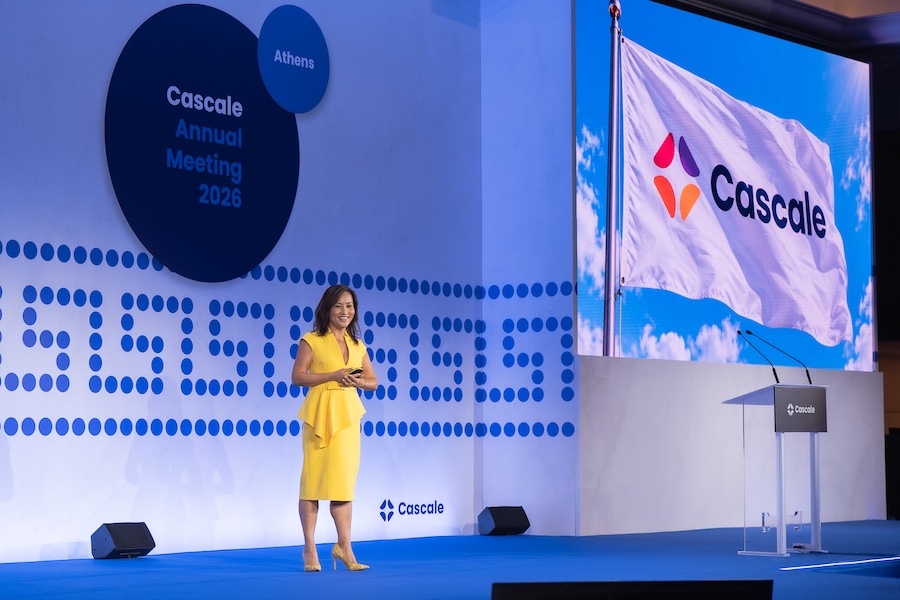
Ying McGuire becomes new CEO of Cascale

Cascale today announced the appointment of Ying McGuire as Chief Executive Officer, effective June 1, 2026.

#Sustainability

VAUDE eliminates PFAS from all products

PFAS (per- and polyfluoroalkyl substances) are now detectable worldwide – in drinking water, soil and the human body. These so-called “forever chemicals” are considered hazardous to health and potentially carcinogenic, as they do not break down and remain in the environment permanently. Despite these risks, PFAS are still used in a wide range of products. More than 15 years ago, VAUDE made a strategic decision to gradually eliminate PFAS from all product categories.

#Sustainability

OEKO-TEX® chooses TextileGenesis to advance digital traceability for organic cotton

OEKO-TEX® today announced a full collaboration with TextileGenesis, a Lectra company, to digitally trace and authenticate organic cotton, strengthening fraud prevention across the supply chain. This announcement follows a successful pilot and brings together OEKO-TEX®’s certification expertise and closed testing system with TextileGenesis’ digital traceability platform to deliver a secure, end-to-end solution for managing certified organic cotton flows.

#Europe

ICAC to support European Commission on pending PEF legislation

The International Cotton Advisory Committee (ICAC) is proud to announce that it has been included as a member of the European Commission’s Technical Advisory Board (TAB) on the Product Environmental Footprint methodology. The Commission developed the Product Environmental Footprint (PEF) to assess and communicate the life cycle environmental performance of products and organizations.

Latest News

#Recycling / Circular Economy

Circulose restarts commercial-scale production at Ortviken plant in Sundsvall

Circulose today announced the restart of its commercial-scale production plant at Ortviken in Sundsvall, Sweden, marking a significant step in scaling next-generation materials for the global fashion industry. The company plans to resume production of CIRCULOSE®, a recycled pulp made entirely from discarded cotton textiles, in the fourth quarter of 2026.

#Textiles & Apparel / Garment

VIATT 2026 to debut German Pavilion, strengthening European participation alongside key Asian textile hubs

Vietnam’s textile and garment sector continues to be a major contributor to the country’s economic growth, with export revenues expected to reach USD 46 billion in 2025, a 5.6% increase from 2024 . From 26 – 28 February, the Vietnam International Trade Fair for Apparel, Textiles and Textile Technologies (VIATT) is set to contribute to economic growth opportunities by accelerating digital transformation and green transition across the entire textile value chain. The upcoming edition will respond to the rising demand for advanced technologies and sustainable materials with the introduction of the German Pavilion, alongside strong exhibitor participation from key Asian sectors, as well as several high-profile fringe events.

#Technical Textiles

Sustainable, lightweight, and sound absorbing: Polyester-based front trunk solution for BEVs

As car manufacturers look to further reduce their carbon footprint, Autoneum has developed an innovative front trunk solution for battery electric vehicles (BEVs), made entirely from polyester-based textile. The Ultra-Silent Frunk offers significant weight reduction, improved acoustic and thermal insulation, and uses up to 70 percent recycled material, supporting sustainable and efficient vehicle design. Autoneum, global technology leader in acoustic and thermal management for vehicles, has already received orders for the new frunk from three major OEMs in Asia and Europe to be built in three BEV models. Series production for two BEVs has been underway in China and Germany since last year.

#Raw Materials

Modern testing methods for raw cotton

The 38th International Cotton Conference Bremen will take place from 25 to 27 March 2026 at the Bremen Parliament. This conference has traditionally stood for in-depth expertise and international exchange. The program will focus on technical innovations, market trends, and regulatory frameworks across the entire value chain – from agriculture to the circular economy. With high-profile speakers, the conference is regarded as the key meeting point for the global cotton industry. Today’s focus: Cotton quality and testing methods.

TOP