#Sustainability
Cascale launches member-led process to shape 2030 strategy
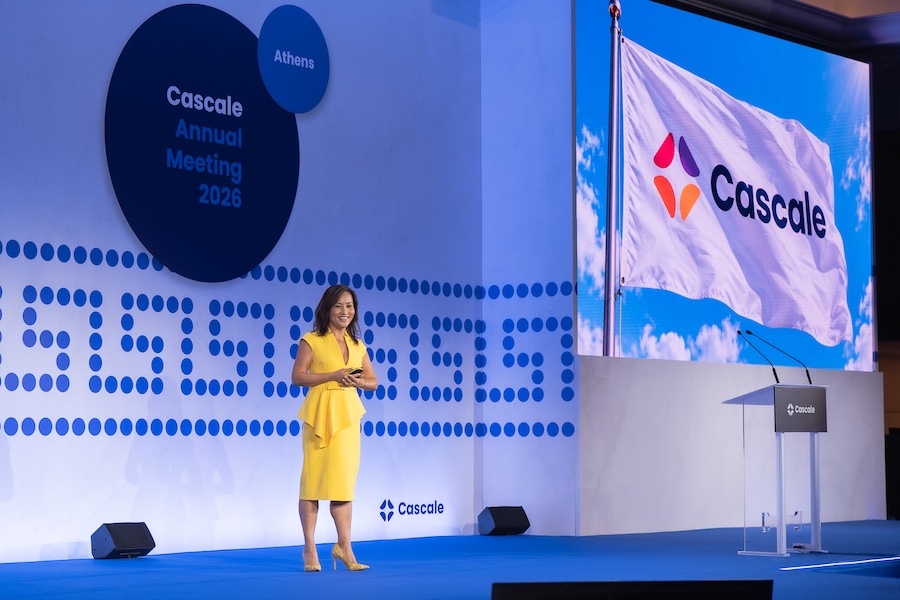
Speaking at her first Cascale Annual Meeting since taking over as CEO, Ying McGuire said the organization would develop its future strategy together with its membership rather than presenting a predetermined plan.
“Athens is not where I unveil Cascale’s next strategy,” said McGuire. “Athens is where we start drawing it together. I want you to look at that strategy in December and say: I can see my fingerprints on it. Because Cascale does not belong to the CEO. It belongs to this community.”
Cascale brings together more than 300 members across the consumer goods industry, including brands, retailers, manufacturers and other organizations. The new strategic process follows McGuire’s first 90 days as CEO, during which she held around 150 conversations with organizations across the value chain as well as meetings with Cascale employees.
According to Cascale, the discussions highlighted several recurring priorities: a clearer value proposition for the organization, better definition of roles across an increasingly fragmented landscape of industry initiatives and stronger involvement of manufacturers as partners.
These findings are now feeding into a systems-mapping exercise involving members participating in Athens and online. The process is designed to identify areas where existing industry structures are working, where progress is being blocked and which interventions could have the greatest impact. The results will feed directly into Cascale’s 2030 strategy and its operational priorities for 2027.
From measurement to action
A central theme of the new strategic direction is the transition from sustainability measurement towards actions based on the data collected.
Over the past 15 years, Cascale and its predecessor, the Sustainable Apparel Coalition, have developed the Higg Index suite of tools for measuring environmental and social performance across the apparel and wider consumer goods value chain. The frameworks are now deployed through the Worldly platform.
McGuire pointed to the scale of the resulting data infrastructure, which Cascale says encompasses hundreds of millions of metric tons of carbon emissions, trillions of liters of water and data relating to the working lives of millions of people across global supply chains.
“That is not just a database,” McGuire said. “That is an enormous responsibility.”
At the same time, she acknowledged that measurement in itself does not deliver improvements in environmental or social performance.
“A thermometer can tell us we have a fever. It cannot cure us,” McGuire said. “Our next chapter is about turning measurement into treatment – insight into investment, action, and measurable results.”
The statement signals an increased emphasis on using existing sustainability data and assessment infrastructure to support decisions, investments and concrete interventions. Cascale also aims to reduce duplication between different industry initiatives by clarifying where the organization should lead, where it should work with partners and where other organizations are better positioned to act.
Stronger role for manufacturers
Another priority emerging from McGuire’s consultations is the role of manufacturers within industry sustainability initiatives. Cascale said feedback during the listening process showed a desire for manufacturers to be involved more directly as partners rather than primarily being evaluated through measurement frameworks.
This approach is expected to influence both the development of Cascale’s strategy and the organization’s role as a convening platform for brands, retailers, manufacturers, investors, NGOs, service providers, policymakers and academia.
McGuire described Cascale’s future role as providing shared infrastructure for collective action rather than determining the individual strategies of its members. Using the metaphor of a common “passage”, she said the organization should help different parts of the value chain identify barriers and coordinate efforts while allowing individual organizations to pursue their own objectives.
The member input gathered during the Annual Meeting will now be incorporated into Cascale’s strategic development process. The resulting 10-year vision, 2030 strategy and 2027 priorities are expected to be presented in December 2026.