[pageLogInLogOut]

#Research & Development

180 years of TESTEX: From Zurich silk testing to global certification
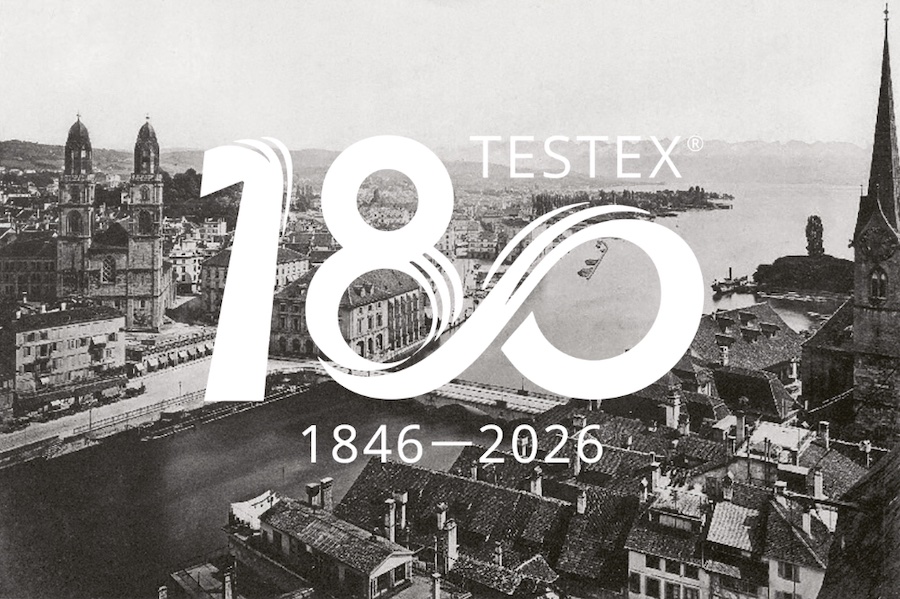
For 180 years, TESTEX has developed alongside the textile industry while maintaining the same underlying purpose: creating trust through independent and reliable measurement. Founded in Zurich in 1846 as the Zurich Silk Conditioning Institute, TESTEX has grown from a local institution serving the silk trade into an international Swiss testing and certification institute for textiles and leather.

For brands, manufacturers and compliance and sustainability professionals, this history also illustrates how testing expertise has evolved as materials, supply chains and market requirements have changed.

From silk conditioning to textile testing

TESTEX began with a practical challenge. In the nineteenth-century silk trade, the weight of raw silk varied depending on its moisture content, making reliable commercial comparisons difficult.

The Zurich Silk Conditioning Institute was founded in 1846 to provide an independent basis for determining the commercial weight of silk. By conditioning the material and establishing a comparable weight, the institute helped make transactions more transparent and measurable.

TESTEX began expanding beyond silk relatively early. In 1890, the institute added a chemistry laboratory. As Zurich's silk industry later declined, its activities increasingly extended to other fibres, yarns and textile products.

In 1970, the Zurich Silk Conditioning Institute became TESTEX AG, reflecting a transformation that had already been underway for decades: silk was no longer the sole focus, while textile testing had become central to the organisation's work.

From textile quality to product safety

By the beginning of the 1990s, environmental and health-related questions were becoming increasingly important in the textile sector. In 1993, TESTEX joined OEKO-TEX® and began testing textiles according to human-ecological requirements.

This marked another stage in the company's development. Testing increasingly extended beyond material properties and quality to the assessment of textiles against defined product safety criteria.

As textile production and sourcing became more international, consistent requirements also gained importance. Today, the TESTEX Group is an accredited certification body of OEKO-TEX® and serves as the official OEKO-TEX® representative in multiple countries and regions.

Swiss roots, international presence

The international expansion of TESTEX followed the changing geography of textile production. In 1995, the company opened its first branch outside Switzerland in Hong Kong, bringing its services closer to increasingly global supply chains.

In 2013, TESTEX AG and Austrian company OETI formed the TESTEX Group. Today, the group employs more than 400 people at over 45 locations worldwide.

The combination of Swiss roots and international presence reflects the changing role of testing and certification: globally consistent requirements need to be applied across different markets and production regions while maintaining independence and comparability.

180 years of continuous transformation

The history of TESTEX spans the transformation from silk conditioning to textile testing, from a local Zurich institution to an international organisation, and from traditional quality assessment to a broader range of testing and certification activities for textiles and leather.

The textile and leather industries continue to face new materials, regulatory requirements and growing expectations around product safety, quality and sustainability. While today's challenges differ fundamentally from those of 1846, the underlying task remains similar: making complex properties and requirements measurable and comparable.

TESTEX's 180th anniversary therefore marks both continuity and change – continuity in the commitment to dependable results and change in the methods, expertise and international structures required to provide them.

More News from TESTEX

More News on Research & Development

#Recycling / Circular Economy

Moving Advanced Recycling from Innovation to Implementation

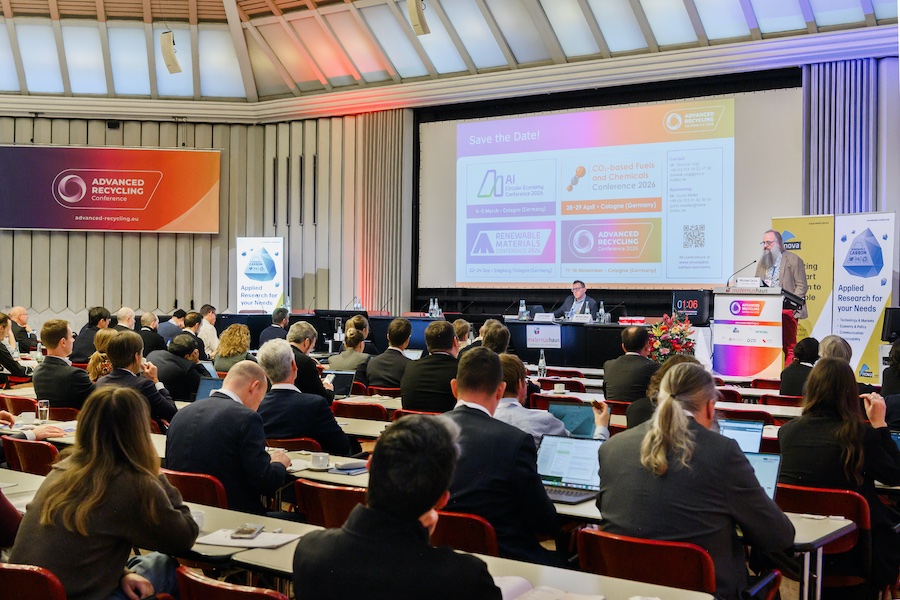
The Advanced Recycling Conference 2026 explores technologies, markets, financing and scale-up of innovative recycling solutions for waste streams including mixed plastic waste, textiles and PVC. Europe’s chemical and materials sector faces growing pressure to close carbon loops, strengthen raw-material safety and resilience and meet increasingly ambitious EU recycling targets. Against this backdrop, the Advanced Recycling Conference (ARC) will bring together industry leaders, technology providers, researchers, innovators and policy-makers on 17–18 November 2026 in Cologne, Germany.

#Research & Development

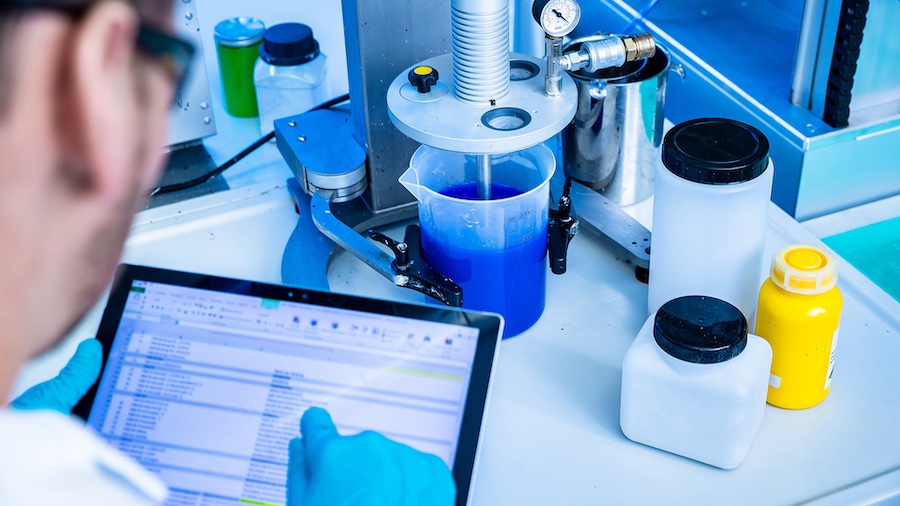
Reducing development times for technical textiles by accelerated thermo-oxidative aging in a high-pressure autoclave

Synthetic polymers used in technical textiles can be effectively protected against degradation caused by heat, oxygen, and water through the use of stabilizer systems. This enables service lives of several decades, extending to more than 50 years. As the use of durable technical textiles continues to grow, so does the demand for reliable methods to predict their service life within economically feasible testing periods. For the first time the German Institutes of Textile and Fiber Research Denkendorf (DITF) developed methods for robust service life prediction for textiles in an IGF research project.

#Research & Development

ITA has developed a washable digital smart jacket with real-time feedback and an AI-powered app for rehabilitation

As part of the PhysioTaix research project, the Institut für Textiltechnik (ITA) of RWTH Aachen University is developing a digital smart jacket with integrated sensors. The jacket is washable and reusable; it tracks movements during rehabilitation exercises in real time and transmits the data to an app.

#Research & Development

ADD-ITC 2026 highlights strong industry participation

The Aachen-Dresden-Denkendorf International Textile Conference (ADD-ITC) 2026 will place a strong focus on the exchange between textile research and industry when it takes place on November 26–27, 2026, at the International Congress Center Dresden. According to the preliminary conference program, more than two-thirds of all presentations will be contributed by companies or jointly presented by industry and research institutions.

Latest News

#Associations

German textile industry and retailers form alliance to shape textile EPR system

Germany’s textile and fashion industry and retail sector have joined forces to establish the “Alliance for Textile Circularity” (Allianz für textile Kreisläufe). Initiated by the German Textile and Fashion Industry Association (Gesamtverband textil+mode) and the German Retail Federation (HDE), the alliance aims to contribute industry expertise to the development of Germany’s future Extended Producer Responsibility (EPR) system for textiles and footwear.

#Sustainability

Cascale launches member-led process to shape 2030 strategy

Cascale has launched a member-led process to define the industry alliance’s strategic direction for the next decade. At the Cascale Annual Meeting 2026 in Athens, CEO Ying McGuire announced that members will contribute to an industry system map that will inform Cascale’s 10-year vision, its 2030 strategy and priorities for 2027. The new strategy is scheduled to be finalized in December.

#Functional Fabrics

PERFORMANCE DAYS introduces Digital Design Journey with CLO and VIZOO

PERFORMANCE DAYS will introduce a new Digital Design Journey at its upcoming edition in Munich, connecting physical fabric sourcing with 3D product development. Supported by CLO and VIZOO, the installation will demonstrate how real performance fabrics can be digitized and incorporated into virtual garment development workflows.

#Nonwovens

INDA hires Ben Muller as executive director

INDA, the Association of the Nonwoven Fabrics Industry, announced that Ben Muller has joined the association as executive director. Muller brings more than 20 years of leadership experience spanning nonprofit organizations, corporations and trade associations.

TOP