[pageLogInLogOut]

#Sustainability

On presents the first ever shoe made from carbon emissions in partnership with LanzaTech, Borealis and Technip Energies

On presents the first ever shoe made from carbon emissions in partnership with Borealis, LanzaTech and Technip Energies. © ON
Swiss sports brand creates supply chain coalition to reshape carbon waste into running shoes. Today, the next critical step in this project has been reached – the reveal of Cloudprime.
  • On is revealing the first ever shoe made from carbon emissions, called Cloudprime.
  • Cloudprime is made from CleanCloud™ EVA foam that uses carbon emissions as a raw material.
  • On is the first company in the footwear industry to explore using carbon emissions as a primary raw material for a shoe’s midsole.
  • On is moving away from using fossil feedstock and exploring alternative materials for producing high-performance sports products.
  • On is partnering with LanzaTech, Borealis and Technip Energies, three of the most innovative companies in biochemicals, process, and material innovation.


Swiss sports brand On presents the first shoe made from carbon emissions, called Cloudprime. This is a significant moment in On’s journey to move away from petroleum-based resources by creating a new foam material called CleanCloud™, made using carbon emissions as a raw material. On is the first company in the footwear industry to explore carbon emissions as a primary raw material for a shoe’s midsole, specifically EVA (ethylene vinyl acetate) foam, that could also be used in other shoe parts and products in the future.
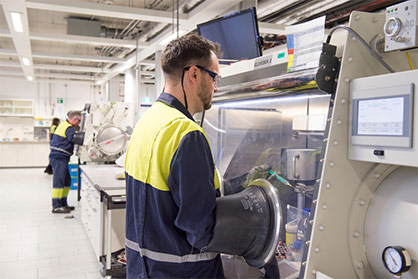
Borealis is a leading provider of advanced, circular and renewable plastic solutions and essential in creating high-performance, easy-to-process EVA foam for CleanCloud™. © Borealis


On’s ambitions are high: The sports brand born in the Swiss Alps envisions a future where every On product is fossil free and fully circular. CleanCloud™ is the result of five years of dedicated work, which began with finding the best possible partners. This collaborative approach is key to overcoming the challenges of developing this complex technology at a commercial scale.

“Holding the first-ever shoe made of carbon emissions in my hands is a huge milestone – not only for On, but for the whole sports industry”, explains Caspar Coppetti, Co-Founder and Executive Co-Chairman of On. “Five years ago, this was barely a dream. Imagine what can happen in the future as we unlock the potential of alternative carbon sources with further research and in collaboration with the best partners.”
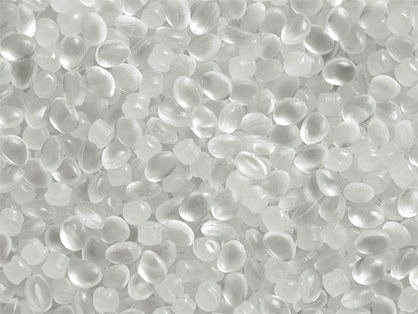
Borealis is a leading provider of advanced, circular and renewable plastic solutions and essential in creating high-performance, easy-to-process EVA foam for CleanCloud™. © Borealis


CleanCloud™ is the result of a pioneering supply chain partnership with some of the most innovative companies in biochemicals, process and material innovation, including LanzaTech, Borealis and Technip Energies. LanzaTech is using a combination of cutting-edge genetic engineering, state-of-the-art biotechnology, artificial intelligence, and innovations in mechanical and chemical engineering to manufacture chemicals using a process that soaks up waste carbon rather than emitting it.


“Today we continue our journey to show the world that recycled carbon is a resource rather than a liability,” says Jennifer Holmgren, CEO of LanzaTech. “As we increasingly convert pollution into the products we use in our daily lives, we will reduce the need to extract more carbon from the ground! The partnership between On, Borealis,Technip and LanzaTech will change how the world thinks about sourcing carbon, enabling us to bend the carbon curve, keep our skies blue, and create a sustainable future for all.”

Technip Energies is a leading engineering and technology company for the energy transition and in this consortium in charge of the process of dehydrating ethanol to the gas ethylene, which is a monomer and the most important building block of widely used plastics.

Bhaskar Patel, SVP Sustainable Fuels, Chemicals & Circularity at Technip Energies: “Technip Energies is proud to be supporting On in this exciting project to make CleanCloud™ a reality. The application of our Hummingbird™ technology to produce bio-ethylene is one step to a more sustainable future. We look forward to working with the On team to scale up and help bring CleanCloud™ to the world.”

On presents the first ever shoe made from carbon emissions in partnership with Borealis, LanzaTech and Technip Energies. © ON


Borealis is a leading provider of advanced, circular and renewable plastic solutions and essential in creating high-performance, easy-to-process EVA foam for CleanCloud™. This collaboration clearly underlines Borealis’ commitment to a net zero future and fully aligns with its EverMinds™ ambition of accelerating circularity through partnerships.

Lucrèce Foufopoulos, Borealis Executive Vice President Polyolefins, Circularity and Innovation & Technology: “Borealis is thrilled to be part of this unique value chain collaboration. With our creative partners On, LanzaTech, and Technip Energies we are proud to co-create circularity in carbon and decouple plastic from its reliance on fossil-based resources. Through innovation and collaboration, we continue re-inventing essentials for sustainable living.”

This is how it works: Technology from LanzaTech captures carbon monoxide emitted from industrial sources like steel mills before being released into the atmosphere. Once captured, these emissions enter a patented fermentation process. Thanks to specially selected and naturally occurring bacteria, the carbon rich gas ferments naturally and is converted to ethanol. This natural fermentation process is similar to that of conventional alcohol production – e.g., beer brewing. The ethanol is then dehydrated to create ethylene by Technip Energies, which is then polymerized by Borealis to become EVA (ethylene vinyl acetate) in a form of solid small plastic pellets – the versatile and lightweight material that On starts working with to create a performance foam for shoes.

On’s ambition is to bring the CleanCloud™ technology to as many consumers as possible in the near future. “We believe that On can be an agent for positive change through enabling and accelerating the scale up of sustainable technologies such as CleanCloud™”, says Caspar Coppetti.

Driven by the same spirit of sustainable innovation, On is collaborating with circular start-up Novoloop on the CleanCloud™ outsole, by utilizing the world’s first chemically upcycled TPU from post-consumer plastic waste. The outsole was put under rigorous lab and athlete testing, meeting specifications comparable to fossil derived TPUs with a significant carbon footprint reduction. For the upper, On is collaborating with the young French start-up Fairbrics to create a polyester-based textile made from carbon emissions.



More News from TEXDATA International

#Techtextil 2026

Performance Apparels: Functional textiles drive innovation at Techtextil 2026

From high-performance fibres and advanced membranes to smart textiles and sustainable material concepts – functional apparel is becoming one of the most dynamic innovation fields in technical textiles. At Techtextil 2026, exhibitors demonstrate how new materials, finishing technologies and digital functions are shaping the next generation of protective, workwear and outdoor systems.

#Texprocess 2026

Texprocess 2026: Automation, digitalisation and AI reshape textile processing

Investment decisions in textile processing have become increasingly complex. Rising energy prices, labour shortages and geopolitical uncertainties are forcing companies to prioritise technologies that deliver measurable improvements in efficiency and process stability. This applies not only to apparel production, but also to the processing of technical textiles and high-performance materials. Modernisation projects are therefore being evaluated more selectively – but the pressure to upgrade production systems continues to grow. Texprocess 2026 reflects this tension between cautious investment behaviour and increasing technological demand.

#Techtextil 2026

Textile Chemicals & Dyes: Innovation in Textile Chemistry moves into focus at Techtextil 2026

From PFAS-free finishes and water-saving dyeing technologies to advanced coatings and recycling-compatible formulations, innovation in textile chemistry is accelerating across the industry. Reflecting this development, Techtextil 2026 introduces Textile Chemicals & Dyes as a dedicated product segment, highlighting the growing role of chemical solutions in shaping the next generation of technical textiles.

#Recycling / Circular Economy

textile.4U publishes special edition “Top 100 Textile Recycling Companies 2025”

With a comprehensive 176-page special edition, textile.4U is dedicating its latest issue entirely to one of the most dynamic and influential topics in today’s textile industry: textile recycling. The new issue, published exclusively in high-quality print, presents the Top 100 textile recycling companies researched and selected by TexData – organizations that already play a key role in the transition to circular textiles or are expected to have a significant impact in the near future.

More News on Sustainability

#Natural Fibers

Global Standard gGmbH launches second public consultation for GRTS Draft 2 for the textile industry (1–30 April 2026)

Global Standard gGmbH is pleased to announce the release of Draft 2 of the Global Responsible Textile Standard (GRTS) for its second public consultation. The consultation will be open from 1 April 2026 to 30 April 2026, inviting stakeholders across the textile and apparel value chain to provide input and contribute to the further development of this new Standard.

#Sustainability

Practical toolkit to drive coordinated climate action launched

An open-access workshop toolkit enables brands, suppliers, policymakers and investors across the textile industry to apply the System Map in their own work, identifying leverage points to halve emissions and enable a just transition.

#Raw Materials

Textile Exchange publishes cotton Life Cycle Assessment study to strengthen impact data

Textile Exchange has published the first in a series of seven Life Cycle Assessment (LCA) studies designed to improve the quality and robustness of environmental impact data for raw material production across the fashion, textile, and apparel industry. The first LCA study focuses on cotton and addresses critical data gaps and methodology variability through new high-quality data across key producing countries. The study includes organic, regenerative, recycled, and country averages for conventional cotton production systems, providing a clearer picture of the associated environmental impact.

#Sustainability

Experts publish APAC policy priorities

Cascale today announced the publication of its APAC Policy Priorities Paper, developed by the Asia-Pacific (APAC) Policy Member Expert Team (MET) to identify key regional sustainability challenges and provide practical, aligned recommendations for policymakers and industry stakeholders across Asia-Pacific.

Latest News

#Raw Materials

New study shows low environmental impact by Cotton made in Africa Organic Cotton from Tanzania

Today, the Aid by Trade Foundation (AbTF) is announcing the results of a comprehensive life-cycle analysis (LCA) for cotton produced in Tanzania under the Cotton made in Africa Organic (CmiA Organic) standard. The study emphasises the small ecological footprint of CmiA Organic verified cotton. This can largely be traced back to the absence of synthetic pesticides, artificial fertilisers, and artificial irrigation. Consequently, CmiA Organic cotton can help the textile industry meet regulatory requirements as well as science-based targets. The results also show that the consequences of climate change threaten the livelihoods of these cotton farmers, even though the type of agriculture they practise barely contributes to climate change.

#Raw Materials

Better Cotton Initiative strengthens regenerative focus in standard update

The Better Cotton Initiative (BCI) has strengthened the regenerative focus of its field-level standard with the launch of a new version of its Principles & Criteria (P&C), which marks the next step in the organisation’s journey to becoming a regenerative standards system.

#Man-Made Fibers

Selenis and Kintra Fibers partner to scale 100% bio-based synthetic fiber technology

Selenis, a leading global specialty polyester manufacturer, today announced a strategic manufacturing partnership with materials science company Kintra Fibers to scale Kintra’s patented fiber-grade PBS resin - a 100% bio-based and biodegradable material designed for textile applications.

#Functional Fabrics

PERFORMANCE DAYS proves its relevance as the industry’s key meeting point

Held on March 18–19, 2026, PERFORMANCE DAYS once again confirmed its position as a leading international platform for functional textiles. A total of 3.366 trade visitors and around 560 exhibitors gathered in Munich, with the event already kicking off successfully on DAY 0, which received highly positive feedback for its interactive format. Despite challenging conditions caused by the public transport strike in Munich, the event saw strong attendance and a consistently high level of activity across both exhibition days.

TOP