[pageLogInLogOut]

#Sustainability

Asahi Kasei renews membership in business call to action led by United Nations development programme
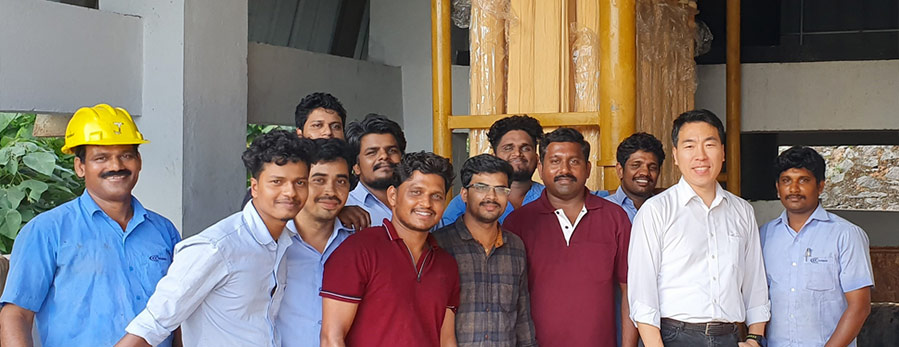
A plant using Microza(TM) (seen at the back) (Photo: Business Wire)
Asahi Kasei renewed its membership in the Business Call to Action (BCtA) led by the United Nations Development Programme (UNDP) in February 2021 with businesses in India for Bemberg™ regenerated cellulose fiber (cupro) and Microza™ polyvinylidene fluoride (PVDF) hollow-fiber membrane.

Since joining BCtA in 2016, Asahi Kasei’s support for stakeholders in the Bemberg™ value chain in India from raw material to garment as well as our collaboration with academia have been highly evaluated as a business model combining commercial activities and sustainable development.

While continuing to create new employment opportunities in the textile industry in India and to foster young talent that will lead the next generation of India’s fashion industry, we are additionally advancing plans to install industrial wastewater treatment systems which are essential for the environmentally friendly sustainable development of the textile industry.

Bemberg™ is the brand name of a regenerated cellulose fiber made from cotton linter, the fuzz around cotton seeds. It is widely used for the lining of high-quality suits as well as many other applications such as outerwear, innerwear, bedding, and sportswear.

Microza™ is a hollow-fiber membrane for filtration systems used in a wide range of fields spanning from chemicals and high-precision electronics to potable water, wastewater, foods, pharmaceuticals, power plants, and environmental protection. It is highly appraised by customers based on an established track record of performance.

Outline of Bemberg™ business in India ?This is the 45th year since Bemberg™ yarn was first exported to India in 1976. Traditional garments worn by many women are made of Bemberg™ in India. With export volumes growing to over 4,000 tons per year, India is currently at the heart of the Bemberg™ business.

Through direct and indirect involvement in the Bemberg™ value chain in India from raw material to garment, Asahi Kasei contributes to the development of techniques and the growth of human resources in India including the enhancement of skills, the securement of stable incomes, and the creation of new employment opportunities. Asahi Kasei procures from India a great amount of the cotton linter used for the production of Bemberg™ yarn. To support local manufacturers, Asahi Kasei lends equipment to remove linter from cotton seeds free of charge, and has our own engineers provide the local workers with training and technical instructions for improving productivity. Cotton linter imported to Japan is processed into Bemberg™ yarn, which is exported to India and sold to weavers. Asahi Kasei also provides ongoing technical guidance on weaving and dyeing in the fabric production process in India.

Asahi Kasei also focuses efforts on the education of young people and students who will lead the next generation of India’s textile and fashion industry, and contributes to human resource development by supporting the enhancement of skills at several Indian universities.


New endeavor with Microza™ in India ?In addition to the above, Asahi Kasei also proposes that customers install Microza™ systems to treat wastewater from fabric dyeing, aiming for zero wastewater emission from dyeing plants, in order to protect the environment surrounding the plants and to conserve valuable natural water resources by recycling the water which is used.

More information regarding Asahi Kasei’s BCtA activities is available on the following website:

https://www.asahi-kasei.co.jp/fibers/en/bemberg/sustainability/sdgs.html

United Nations Development Programme (UNDP): ?UNDP was founded in 1966 as one of the UN’s subsidiary bodies under the UN General Assembly and the UN Economic and Social Council. Headquartered in New York, UNDP provides development assistance in nearly 170 countries with focuses on sustainable development; democratic governance and peacebuilding; and climate and disaster resilience.

Business Call to Action (BCtA): ?BCtA is a unique multilateral alliance led by six development agencies and governments, including the UNDP. Launched in 2008, BCtA aims to accelerate progress towards the Sustainable Development Goals (SDGs) by challenging companies to develop inclusive business models that engage people at the base of the economic pyramid.

More News from TEXDATA International

#People

Happy Holidays!

Dear reader, the year 2025 is drawing to a close. We are entering what we hope will be a peaceful holiday season, spending time with our families and taking a moment to pause and reflect. We hope we have been able to support you once again this year with relevant news and articles, and we look forward to surprising you with many innovations in the coming year. Enjoy the festive season, stay healthy, and we wish you a happy and joyful holiday season.

#Recycling / Circular Economy

textile.4U publishes special edition “Top 100 Textile Recycling Companies 2025”

With a comprehensive 176-page special edition, textile.4U is dedicating its latest issue entirely to one of the most dynamic and influential topics in today’s textile industry: textile recycling. The new issue, published exclusively in high-quality print, presents the Top 100 textile recycling companies researched and selected by TexData – organizations that already play a key role in the transition to circular textiles or are expected to have a significant impact in the near future.

#Recycling / Circular Economy

Responsible Textile Recovery Act of 2024 signed by Governor

Senator Josh Newman (D-Fullerton) is proud to announce that Senate Bill 707 (SB 707), the Responsible Textile Recovery Act of 2024, has been signed into law by the Governor of California, Gavin Newsom. This groundbreaking legislation establishes the country’s first Extended Producer Responsibility (EPR) textile recycling program, marking a significant step forward in the state’s efforts to combat waste and promote sustainability.

#Textiles & Apparel / Garment

Modtissimo promotes sustainability with 28 coordinates in the Green Circle

Modtissimo is proving more and more to be a textile and clothing show that delivers the latest innovations in the area of sustainability, with the iTechStyle Green Circle being the main showcase for companies' creations. In this 60+4 edition, taking place on 12 and 13 September, 28 coordinates will be exhibited in a section organised by CITEVE and curated by Paulo Gomes.

More News on Sustainability

#Yarns

Textile Exchange publishes the final criteria for its new Materials Matter Standard, marking a pivotal shift in connecting certification to impact

Textile Exchange has published the final criteria for its Materials Matter Standard—a major milestone in the organization’s multi-year transition toward a unified, impact-driven standards system for raw material production and primary processing. 

#Nonwovens

EDANA wraps up its Sustainability & Policy Forum 2025: Uniting the industry and EU policymakers to navigate the future of nonwovens

Against a backdrop of rapidly evolving environmental legislation, the EDANA Sustainability & Policy Forum 2025 concluded the past week in Brussels, marking a step forward in the dialogue between the nonwovens industry and European policymakers. Held from 9-10 December at the historic Residence Palace, the two-day event successfully brought together business leaders, sustainability experts, and EU officials to address the dual challenges of circularity and industrial competitiveness.

#Sustainability

YKK recognized with Top ‘A’ rating by CDP for climate change leadership for third consecutive year

YKK Corporation announced its achievement of the highest “A List” rating in the 2025 Climate Change survey conducted by the global environmental disclosure nonprofit, CDP . This marks the third consecutive year YKK has received this prestigious recognition.

#Weaving

Itema announces strategic partnership with Ivy Decarb to accelerate decarbonization in weaving process

Itema is pleased to announce the strategic partnership with Ivy Decarb, the digital platform helping textile companies measure and reduce their carbon footprint.

Latest News

#Weaving

Lindauer Dornier announces leadership transition in weaving machine business

After more than ten successful years at Lindauer DORNIER GmbH, Mr Wolfgang Schöffl will leave the family-owned company at the end of the year to enter well-deserved retirement.

#Heimtextil 2026

Texpertise Focus AI: Messe Frankfurt puts Artificial Intelligence centre stage at its international textile and apparel trade fairs

Under the banner 'Texpertise Focus AI, Messe Frankfurt will place a strong emphasis on Artificial Intelligence (AI) across its international textile and apparel trade fairs from 2026 onwards, setting a future-shaping signal for the industry. The initiative highlights the responsible use of AI along the entire textile value chain, from fibre production to the point of sale. The programme will launch at Heimtextil in Frankfurt in January 2026.

#Technical Textiles

Autoneum and Polestar set new benchmarks for passenger experience and sustainability

As the global market leader in sustainable acoustic and thermal management, Autoneum is a key supplier of interior and exterior components for the highly anticipated Polestar 5 model. The successful collaboration between Autoneum and Polestar marks a significant milestone in sustainable automotive engineering: the electric grand tourer sports car features several innovations in lightweight, fully recyclable polyester-based components that ensure a superior driving experience. Polestar 5 was revealed at the IAA Mobility 2025 in Munich and is available in 24 markets.

#Natural Fibers

Cashmere producers stress the importance of The Good Cashmere Standard®

At the invitation of the Aid by Trade Foundation (AbTF), over 70 experts from the cashmere production and supply chain, as well as other specialists, met at the GCS Unit Meeting in Shanghai, China to discuss the progress and new objectives of The Good Cashmere Standard (GCS). The meeting focused on implementation and verification of the standard, important aspects of animal welfare and the importance of the standard in the global textile market.

TOP